The United States is once again at the center of the international conversation — but today the tone of that conversation is noticeably different from a few years ago. At the intersection of the war in Ukraine, the crisis around Iran, and a redefinition of American leadership, countries from Ankara to Moscow and Kyiv are discussing not so much Washington's "might" as its inconsistency, internal fragmentation, and willingness to barter allies' security for tactical gains. Turkish columnists argue whether America is becoming an unpredictable partner in the Middle East and Asia. Russian commentators, with grim satisfaction, talk about the "shrinking" of support for Ukraine and the "tactical games" of the US. Ukrainian journalists and experts, by contrast, try to rationalize a painful fact: Washington remains indispensable on air defense and deterrence against Russia, but is no longer prepared to automatically supply financial and military backing.
One of the key nerves of the debate is American policy in Russia's war against Ukraine. In Moscow it is interpreted as a sign of strategic exhaustion and cynical bargaining with the Kremlin; in Kyiv — as a risky but still reversible "drift" away from unconditional support toward managed pressure on both sides; and in Ankara — as part of a broader crisis of confidence in the US among regional powers.
If you look by themes, several common narratives emerge across the three countries: the future of American aid to Ukraine and sanctions on Russia; Washington's stance on Iran and the associated "resource fatigue"; the overall US ability to provide security for allies from the Black Sea to Taiwan; and finally, the style of Donald Trump's presidency, which everywhere is seen as a distinct factor of global instability rather than merely another administration.
The most emotional topic is the fate of American support for Ukraine. In the Ukrainian expert and media space, the past weeks have been dominated by anxious but pragmatic discussions that Congress is "unlikely to approve" a new large financial aid package for Kyiv, although it may strengthen sanctions on Russia and continue separate defense programs. As Ukrainska Pravda reminded readers, one influential lawmaker in Washington bluntly stated he did not believe in a new "security supplemental" for either $6 billion or $60 billion, effectively setting the ceiling for American generosity under current political conditions. The same piece emphasized that the US is simultaneously maintaining channels of military support, including a recent $400 million package the Pentagon noted, thus signaling: "there will be no money-on-a-plane carpet anymore, but a baseline level of military assistance will remain, especially if Europe agrees to take on a 'greater responsibility' for the war in its own 'backyard'." As one American interlocutor put it to the publication, Europe must stop assuming Washington will always foot the bill for its security.
Ukrainian commentators read these signals far less detachedly. In a Russian-language analysis in Ukrainska Pravda the emphasis shifts to the political subtext: behind rhetoric about "greater responsibility for Europe" there is a reluctance by Trump to bind himself to new large commitments. Against this backdrop, Volodymyr Zelensky's letter to the US president and to congressmen acquired special sharpness, in which he explicitly writes that Ukraine "almost exclusively" relies on the US for protection against Russian ballistic missiles. Ukrainian media singled out the phrasing that a shortage of Patriot air defense systems and their interceptors is a vulnerability that no one but Washington can close in the short term. After this, the US defense secretary was forced to publicly assure reporters of "ongoing support to Ukraine in defending against Russian attacks," and Democratic Senator Richard Blumenthal promised that Zelensky's letter would be "responded to" in Washington. For Kyiv's commentators this scene became a symbol of a new asymmetry: Ukraine remains dependent on the US in a critical segment of defense, while Washington increasingly treats assistance to Kyiv as one of many foreign-policy files.
The Russian conversation about the same issue is arranged quite differently. In the Moscow media space, statements by American lawmakers that there will be no new large aid packages, as well as US extensions of licenses to buy Russian oil, are presented as "the end of support for Kyiv." One business portal retold a New York Times article in precisely that key: the approval to purchase oil from Russia, though linked to the Middle Eastern crisis and the logic of sanction exceptions, became for Ukrainian officials proof that Washington's priorities have shifted and that the war in Europe no longer defines the White House's agenda. Russian analysts fit this into a broader narrative of the "West's fatigue" and Moscow's successful adaptation to sanctions.
At the same time, Russian outlets actively quote Western, including American, critics of Ukraine's strategy. Thus, Moskovsky Komsomolets headlined the words of former US military intelligence officer Scott Ritter that Western support for Ukrainian strikes on Russian territory would allegedly provoke a harsh response from Moscow and the collapse of the "Kyiv regime." The internal meaning of such publications is to show audiences that even the American expert community views Washington's line as provocative and untenable, and therefore sooner or later the US will step aside, giving Russia the opportunity to "settle" the conflict on its terms.
An important Russian motive is to portray current American policy not as strategy but as "tactical games." In a characteristic column on Vzglyad's website, political scientist Timofey Bordachev argues that the US still claims to manage whole regions, but is objectively no longer able to monopolize Latin America, the Middle East, or, especially, the post-Soviet space. His thesis is that any negative consequences of American policy immediately become resources for Washington's competitors — Russia, China, and possibly India tomorrow. In this logic, the Ukraine issue is just one case demonstrating the gap between US ambitions and capabilities and offering Moscow a chance to integrate itself into a new, more multipolar order.
The Ukrainian perspective on this divergence is very different and much more painful. In a Russian-language piece by The Moscow Times' Ukrainian service, written with Ukrainian sources, it is stated bluntly that "real negotiations are over" and Kyiv "is preparing to continue the war without US aid" at the level it has been used to since 2022. The authors document a series of Zelensky's complaints about Washington: from American negotiators having "no time for Ukraine" to sharp criticism of the US decision to suspend sanctions on Russian oil exports, which, according to the Ukrainian president, gives the Kremlin "a sense of impunity." The piece also emphasizes that the Trump administration, by pushing Kyiv toward territorial concessions for peace, still exerts "more pressure on the Ukrainian side than on Russia." For the Ukrainian audience, this reads as an admission: today's US is an ally willing to help only as long as the cost of assistance does not conflict with domestic politics and global energy and Middle Eastern calculations.
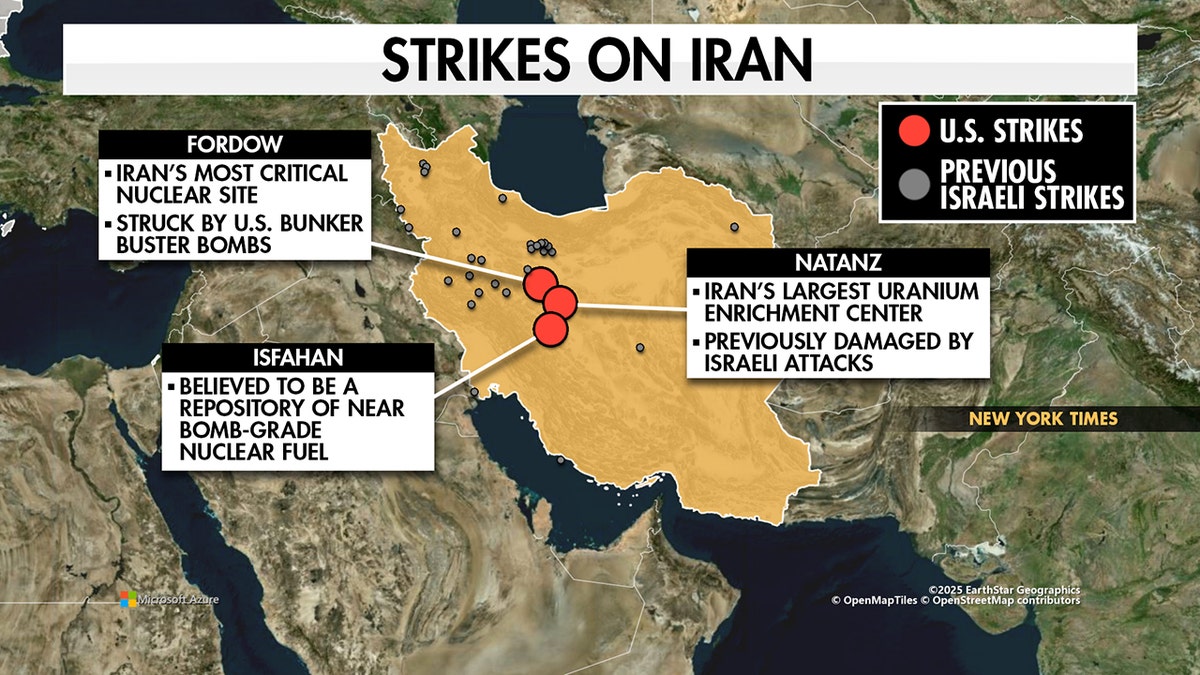
In this context Ukrainian experts draw active parallels with the Middle Eastern front of American policy. In Turkey, as in Kyiv, observers are closely watching how Washington balances between the war between Israel and the US against Iran, oil markets, and containing Russia. Turkish press in recent days has discussed not only Donald Trump's direct threats to "renew strikes" on Iran but also the general meaning of US signals to Tehran and Havana. One commentator in Yeni Birlik, analyzing Washington's "Iranian and Cuban messages," notes that America has effectively resigned itself to Iran as a "nuclear country on the threshold," while worrying that such an example could become a model for other Middle Eastern actors. The author stresses that during the "12-day war" and the subsequent February 2026 crisis, the US failed to put Iran's enriched uranium under tight control — and is now betting on demonstrative strike plans against Iranian infrastructure, while Israel is already carrying out such strikes in practice. For Turkish readers the important point is not so much the Iranian dossier itself as the resulting thought: Washington is increasingly operating "from crisis to crisis," focusing on tactical successes and forgetting long-term security guarantees for allies.
This line of "tact without strategy" also appears in Turkish analyses of American policy in Asia. In an analytical column for Anadolu Agency, Professor Tarik Ouzlu examines Trump's recent visit to China as a shift from "trade wars to pragmatic bargaining." The author notes that the Trump–Xi meeting in Beijing — the first in more than eight years — touches not only on trade and Taiwan but also on "the future of the US's global leadership capability." Particular concern among the Turkish author and audience is that Washington is slowing the implementation of an arms package for Taiwan and postponing the second phase of deliveries until after the Beijing visit. The article emphasizes that this has already led to a "serious erosion of trust" in America not only in Taipei but also among its traditional allies in the region. From Ankara's perspective, with its own experience of frozen F‑35 deliveries and difficult F‑16 negotiations, this is a familiar script: an ally that promises much but in a critical moment begins to tie a partner's security to broad transactional logic with Beijing or Moscow.
Finally, another Turkish storyline concerns American policy toward Iran and Cuba, which the same Yeni Birlik interprets as a test of the limits of US influence in the Western Hemisphere and the Middle East. The article stresses that Washington is simultaneously demonstrating its readiness for military pressure on Tehran and diplomatic maneuvers, but is doing so with an evident eye toward domestic constraints: rising defense spending, exhaustion of "strategic munitions," higher energy prices, and general economic uncertainty in the US. For the Turkish audience this explains why America increasingly demands that middle powers — whether Turkey, Saudi Arabia, or European allies — "provide for their own security," while reserving the final say on sanctions or strikes.
Interestingly, the Ukrainian discourse about the same "resource fatigue" is hardly inclined to blame other allies, as sometimes happens in Turkey. Ukrainian analytical centers and commentators instead insist: even with reduced financial aid, the US remains a critically important partner in high-tech segments of the war — from air defense to cyber defense and joint efforts to counter Iranian drones. Overlaying this is a new storyline: the US itself asking for Ukrainian experience in counter‑drone warfare. Discussing a piece in a major American newspaper about how the Pentagon is turning to Ukrainian developments to protect its bases from Iranian Shahed drones, Ukrainian experts emphasize: for the first time in a long while dependence is becoming mutual, and this gives Kyiv an additional lever in dialogue with Washington, even if it does not compensate for cuts in other areas.
In the Russian information space such stories of "mutual dependence" are almost absent; instead the dominant thesis is that the US is increasingly unable to hold fronts in multiple regions simultaneously and therefore must make concessions to strong regional players — including Russia. This is especially visible in commentary on American mediating efforts around a ceasefire in Ukraine, where Russian outlets happily quote Trump's statements that it was Zelensky who allegedly "scuttled" a peace deal, while Moscow "demonstrates readiness" to agree. In this view, Ukraine is an ungrateful client and the US a cynical arbiter that can at any moment shift blame onto a weaker ally.
The result is a mosaic but tellingly contradictory picture. In Turkey the US is seen primarily as still powerful but increasingly transactional, with its capacity to provide extended security guarantees consistently questioned — from Iran to Taiwan. In Russia the same set of facts is read as confirmation of the "decline of American hegemony" and the rising weight of regional powers, including Moscow, which is seen as capable of imposing its terms on the West in Ukraine and the energy markets. In Ukraine, by contrast, this is felt as a painful departure from the era of a "great patron" and a shift to a mode where every dollar and every Patriot must be won politically, competing for attention with Iran, China and domestic American conflicts.
The paradox is that all three discourses converge on one point: America can no longer be what it was in the 1990s and even the 2010s, yet no one is capable of replacing it. Around that contradiction is built today's sometimes very tense but therefore even more illustrative foreign debate on the role of the US — from the pages of Turkish newspapers to Russian and Ukrainian analytical columns.