At the end of February 2026, the United States simultaneously appears in the headlines of very different publications — from South African portals to Russian analytical sites and South Korean business newspapers. But this is no longer the classic conversation about the "leader of the free world": the discussion centers primarily on how Washington's domestic politics hits external partners, how American democracy itself is changing, and how resilient the U.S. financial‑economic gravity center is. At the intersection of these narratives a surprisingly coherent international portrait of the United States emerges: a country with colossal weight, but increasingly seen as an unpredictable and unreliable partner.
One of the key reasons for discussion in South Africa and the wider African press is the February decision of the U.S. Supreme Court, which declared illegal a number of import tariffs the White House had imposed under the International Emergency Economic Powers Act (IEEPA). It was precisely this legal basis that the 2025 tariffs on South African imports relied on. African analytical resource Fatshimetrie writes directly that the 30‑percent tariffs introduced in August 2025, according to South African authorities, threatened to reduce GDP growth by 0.4 percentage points and cost up to 30,000 jobs, and the government had to introduce a temporary employer support scheme to cushion the employment shock. Now the same portal views the Supreme Court's verdict as a chance for South Africa and the continent to "reconsider the terms of trade with the US" and as a reminder that Washington's legal system can, paradoxically, serve as protection against the White House's own protectionist instincts. In the South African discourse this sits alongside a critique of the logic itself: why should the fate of tens of thousands of jobs in Pretoria depend on an internal dispute between American branches of government over the limits of presidential powers? (fbroker.kz)
There, in the South African press and in statements by politicians, a broader theme resurfaces: the politicization of aid and financial flows from the United States. In 2025 the Donald Trump administration froze virtually all bilateral aid to South Africa, including PEPFAR, the world's largest HIV/AIDS program. American and African reports described the dismissal of thousands of healthcare workers and the closure of specialized clinics funded by USAID. South African debate at the level of parties and civil society revolved around the question: how acceptable is it that changes in U.S. domestic politics — from a change of president to battles in Congress — instantly jeopardize the livelihoods of millions in another country. An Inkatha Freedom Party MP in parliamentary debates on the suspension of aid emphasized that Washington acts "within its sovereignty," and precisely for that reason South Africa must sovereignly craft its own response — to protect the most vulnerable without making domestic stability dependent on the will of a foreign donor. (clickorlando.com)
Layered onto this is concern about climate finance. The African Climate Council, citing Bloomberg, describes how in 2025 the United States effectively blocked the approval of a $500 million "green" investment package for South African energy under the Climate Investment Funds, which was supposed to "unlock" another roughly $2.1 billion from multilateral banks. This was a key element of the transition from coal to clean energy. The delay and potential cancellation of these funds in South Africa are interpreted not as a technical episode but as part of a broader Washington trend: withdrawal from multilateral climate mechanisms and reduced participation in climate funds. The authors stress that for countries like South Africa this is not abstract diplomacy, but a question of who and on what terms will finance the painful transformation of the economy. Thus, in the South African view, the US becomes simultaneously a vital but capricious creditor that can suddenly cut off financial life support. (africc.org)
The politically explosive theme of Washington's initiative to accept white South Africans, primarily Afrikaners, as refugees under the pretext of "genocide" of farmers also shapes South African discourse. The Mission South Africa program, launched in February 2025, was perceived in Pretoria as direct interference in internal affairs and an attempt to recast the post‑apartheid land reform agenda in racial terms. President Cyril Ramaphosa's official position, set out in response to the program, is that the white minority is not experiencing persecution that would meet refugee criteria, and the "white genocide" rhetoric is entirely discredited by research. Against this backdrop the expulsion of former South African ambassador to the US Ebrahim Rasool gained special resonance: in March 2025 Secretary of State Marco Rubio declared him persona non grata over accusations directed at Trump and South African billionaire Elon Musk of promoting white supremacy. In South African commentary this step was seen as punishment for trying to name American policies that stoke fears; the trade unions promised Rasool a "hero's welcome" at home, and the opposition Congress of the People even proposed expelling the US chargé d'affaires in response. For South African audiences these episodes confirm that the question of race and historical injustice is not just an internal wound for South Africa but a field of struggle over interpretation in the global discourse, where Washington seeks to impose its reading. (en.wikipedia.org)
Against this background the Trump administration's decision not to invite South Africa to the G20 summit in Miami in December 2026 appears in South African and broader African analyses as the culmination of cooling ties. The official rationale — "treatment of Afrikaners" and a dispute over transferring to South Africa the rights to host a summit — is presented as an example of how Washington turns multilateral platforms into instruments of bilateral pressure. For many commentators in Pretoria this signals that the "Global South" can be excluded from clubs when the White House agenda conflicts with local debates on racial justice and land reform. (en.wikipedia.org)
If Cape Town views the US through the prism of inequality and dependency, Moscow sees it primarily through the prism of strategic rivalry, which in 2026 acquires unusual shades. Russian media and official comments in February discuss not so much the usual confrontation as a complex and contradictory attempt at normalizing relations against the backdrop of Donald Trump's return to the White House. The Russian Foreign Ministry in a recent statement acknowledges that "the process of normalizing Russian‑American relations is going not smoothly," although both sides declare interest, and the presidents agreed on a "high pace of work" and on preventing divergences from escalating into direct confrontation. For the Russian audience this is a double signal: on the one hand, the Kremlin shows it is ready to talk with the White House about lifting some sanctions, cooperating on commodity markets (even to the point of increasing supplies of aluminum and rare earth metals to the US), while on the other it emphasizes that the key knot remains the same: settlement of the conflict around Ukraine. Russian analysts and the presidential press secretary Dmitry Peskov openly link prospects for improved relations to the sequence of steps toward such a settlement. (fontanka.ru)
Equally telling is how Russian experts discuss American domestic political turbulence and its impact on U.S. external strength. One recent analytical article about mass layoffs at The Washington Post treats the media crisis not as a private problem of a single outlet but as "a symptom of an institutional crisis affecting the architecture of democratic discourse" in the US. It's not only about the fate of the "era of big newsrooms" but about how commercialization and politicization of the media market undermine American society's capacity for reasoned discussion — and therefore, in Russian logic, the legitimacy of the US to claim the role of moral arbiter in international affairs. This interpretation finds fertile ground: official Moscow has long claimed that American democracy is degrading, and therefore Washington's accusations against Russia on human rights and freedom of speech are hypocritical. (bakunetwork.org)
At the same time the Russian financial discourse watches American economic decisions closely, especially where they affect global trade and commodity prices. A recent review by a Kazakh‑Russian broker, widely cited in the post‑Soviet information space, analyzes in detail the consequences of the February U.S. Supreme Court decision to cancel import tariffs and the White House's ensuing reaction. According to analysts, the key market driver is that President Trump, in response to the court defeat, announced a "global tariff" first of 10, then 15 percent, using other trade authorities. For the Russian reader this is a story not only about legal subtleties of American law but about Washington's unpredictability as an economic partner: yesterday tariffs are declared illegal, today the same White House finds a workaround. In that picture, a world dependent on the dollar and access to the American market becomes hostage to an internal politico‑legal struggle in the US. (fbroker.kz)
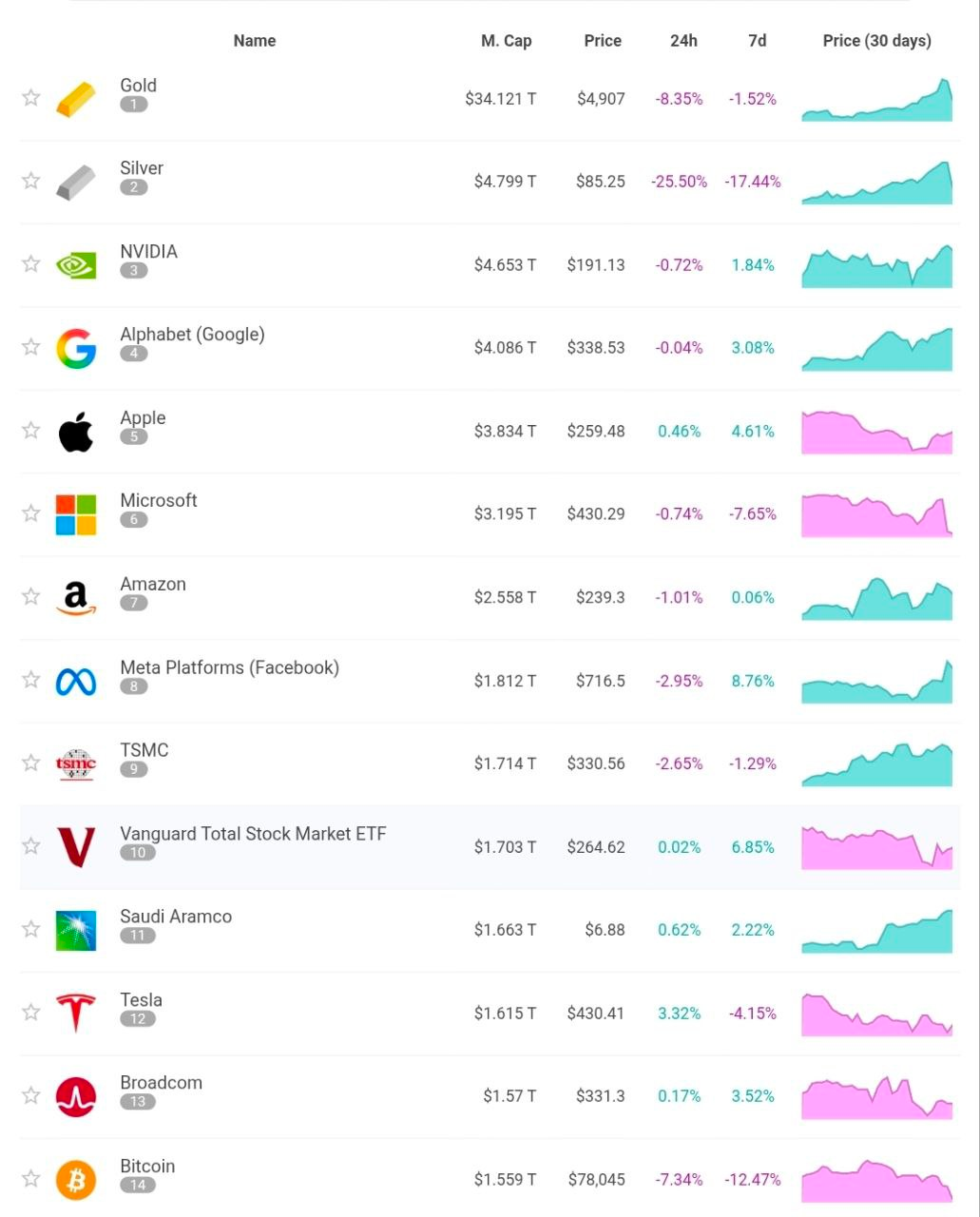
South Korea in recent weeks has looked at the United States primarily through a financial‑economic lens, but the angle here is quite different from Moscow and Pretoria: Washington remains the main reference point and center of gravity, but anxiety about its stability has noticeably risen. Korean business and academic blogs analyzing February newspapers tell readers about sharp market swings following the nomination of a new candidate to chair the Federal Reserve — Fed governor and former external director of American "Coupang Inc.," Kevin Warsh. Korean writers note that immediately after his nomination he resigned from his position as an independent director at Coupang, and markets took the appointment as a signal of dollar strength and reduced attractiveness of "safe‑haven" assets: gold, silver and cryptocurrencies plunged, and bitcoin fell below $80,000. In the Korean discourse this is presented as an illustration of the enormous influence of U.S. monetary policy on the fate of national corporations investing in the US and on the strategies of households actively investing in crypto assets and precious metals. (moneymaker1000.com)
Interestingly, few Korean commentators question the centrality of the US in the global financial architecture — on the contrary, they discuss how best to adapt to it. Authors advise private investors to account for a possible change in the Fed cycle: if the new chair is less aggressive in cutting rates than expected, the dollar will remain strong longer, which would make the stocks of exporters from developing countries and high‑risk assets vulnerable. Against this backdrop Korean discussion scarcely deals with American political polarization as such: domestic storms in Washington matter only insofar as they determine the trajectory of the dollar and interest rates.
Despite the differences among the three perspectives — South African, Russian and South Korean — common themes emerge. First, there is a sense of heightened unpredictability of the United States. For South Africa this shows up in the fact that a court decision or a presidential decree in Washington determines tariffs, the fate of HIV programs and climate finance; for Russia — that the US has in a few years gone from maximum pressure to attempts at "normalization," while easily changing tone depending on the domestic political cycle; for South Korea — market nervousness at every hint of a change in Fed leadership, when one day of news triggers tens of billions of dollars of asset repricing.
Second, in all three cases American domestic politics ceases to be perceived as separate from foreign policy. South Africa sees how internal struggles over racial issues and the ideological stance of the Trump administration spill over into programs accepting "white refugees" and into diplomatic scandals affecting its image and participation in the G20. Russia observes with interest how crises in the American media and court rulings on trade policy undermine basic institutions, giving Moscow arguments about "double standards." South Korea, through the Fed lens, realizes that the outcome of U.S. political processes determines the cost of credit and savings for Korean households.
And finally, a third shared trend is the rise of efforts toward autonomy, but at different levels. In South African texts and political speeches the motive of "diversifying trading partners" and not relying solely on American aid programs — whether in health or energy — is heard more frequently. The Russian elite continues rhetoric of "sovereignization," using every American move — from tariffs to a media crisis — as an argument for reorienting economic and political ties toward the "non‑Western" world. South Korea, less inclined to geopolitical ruptures, speaks of autonomy in a more technocratic key: hedging risks, diversifying portfolios, increasing the resilience of national companies to American cycles.
The result is a paradoxical image: America remains the principal source of global impulses — financial, political, ideological — but is less and less perceived as a guarantor of stability. For South Africa it is a partner whose aid can save millions of lives, yet whose political leadership can cut that flow off overnight. For Russia it is an adversary and at the same time a necessary participant in any serious negotiations about war and peace, on which commodity prices and the scale of sanctions depend. For South Korea it is the center of the world monetary system, whose decisions make Asian exchanges and the fates of tech giants tremble.
These three perspectives, despite their different starting interests and ideological positions, converge in one point: the future of relations with the United States, in their view, can no longer be built on the assumption of Washington as a reliable and consistent "anchor" of the world system. Rather, the US is becoming a powerful but capricious node in the global network, whose signals require constant adaptation while simultaneously building one's own mechanisms to protect against American decisions made far beyond Pretoria, Moscow or Seoul. And it is precisely this — not only specific scandals, tariffs or appointments — that is shaping the tone of discussions about the United States in various corners of the world today.