In early May 2026, the United States again finds itself at the center of foreign newspapers’ pages — but far from only as the “leader of the free world.” For India, Japan and Saudi Arabia today, America is above all a factor of their own security, a source of energy and a provider of technological future. Across the pages of major outlets and in experts’ speeches, the US appears less as an untouchable hegemon and more as a partner whose decisions determine oil prices, the risk of a large war with Iran, and the balance between Washington and Beijing in Asia. Running themes are the crisis around Iran and the Strait of Hormuz, a new realism in relations with Trump, energy and nuclear matters, and the struggle for a role in a world where the US increasingly shares influence with other power centers.
The first major nexus of these discussions is the Iranian crisis and the de facto blockade of the Strait of Hormuz, around which perceptions of current US foreign policy are being built. In Indian and Japanese discourse this episode is viewed primarily through the prism of the vulnerability of their own economies and sea lines of communication, whereas in Saudi Arabia the emphasis shifts to the question: how reliably can Washington still guarantee the security of the Gulf monarchies while simultaneously not dragging the region into a protracted war.
Indian English‑language and Hindi media discuss the US course toward escalation with Iran almost exclusively in connection with energy security and the price of imported oil. Editorial commentaries emphasize that the 2026 crisis was the culmination of several years of instability in the Middle East, aggravated by sanctions and US and Israeli strikes on Iranian infrastructure. A Russian compendium of reactions to the conflict in Iran notes that New Delhi officially called for “maximum restraint” and “prioritizing protection of civilians,” stressing the danger of external powers being drawn into this war. (https://ru.wikipedia.org/wiki/РеакциянаконфликтвИранев2026году?utmsource=openai) At the level of Indian independent experts this is often interpreted as an attempt to preserve balance: not to break with Washington, but also not to let the crisis undermine its course toward “strategic autonomy.” One Indian international affairs specialist writing in a Delhi business outlet argued that “each new turn in the US‑Iran confrontation reminds India that reliance on a single power center is a risk, not insurance.”
For Tokyo, the situation around Hormuz has become litmus test for how sustainable American leadership is in ensuring freedom of navigation. In an analytical essay by former Washington correspondent for Kyodo, now Meiji University professor Hiroki Sugita, published by the Japanese Institute of International Affairs, the Iranian crisis is seen as part of a “new G2 era” — a world in which the US and China are forced to coexist, and the “self‑sufficiency” (自存自立) of regional players becomes a third, equally important current. (https://www.joi.or.jp/wp-content/uploads/2026/01/Mag20260110seriesUSsugita.pdf?utmsource=openai) The author directly asks: if crises flare simultaneously in the Taiwan Strait and Hormuz, will the US have the resources and political will to protect both directions equally? In Japanese newspaper columns the criticism of Washington on this topic is less loud than in Indian debates, but skepticism is stronger: America is less and less described as an unconditional guarantor and more often as a “necessary but limited” ally, with which Japan will have to measure its risks.
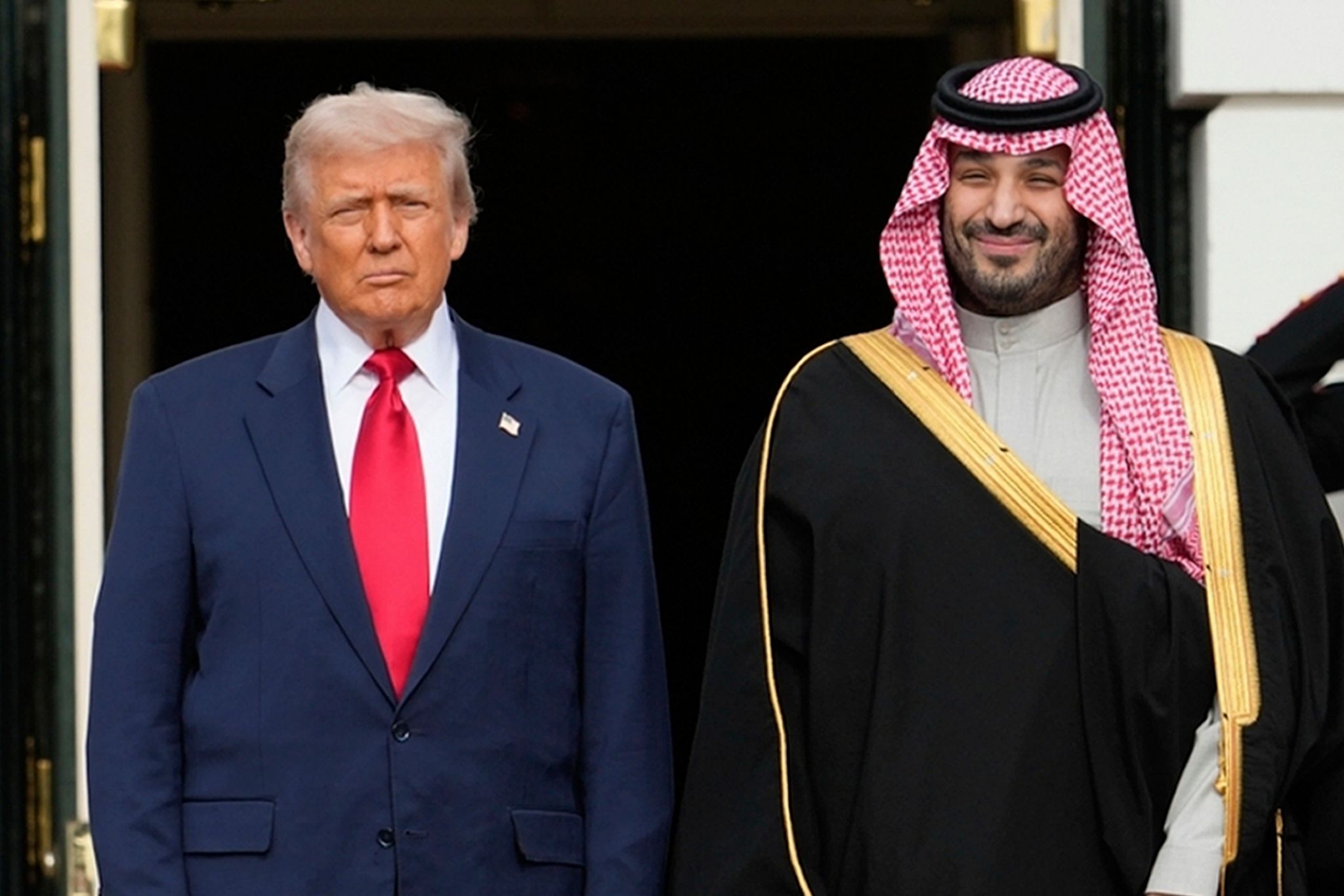
In the Saudi and broader Arab conversation about the US and Iran, a very different nerve is felt — this is a discussion not so much about oil as about regime survival. Several analysts in Saudi and regional press note that recent rounds of US‑Israeli strikes on Iran and Iran’s retaliatory actions are pushing Riyadh toward a multi‑vector “hedging” policy — simultaneously moving closer to Washington, Beijing and Moscow. An Asia Times commentator analyzing Crown Prince Mohammed bin Salman’s foreign policy describes this as “the hard realism of Saudi hedging”: the Kingdom, recognizing US military power, nonetheless seeks to reframe its relationship with Washington in more pragmatic terms, where security is not automatically American aircraft carriers but a set of flexible deals, from normalization with Israel to energy maneuvering. (https://asiatimes.com/2026/05/the-cold-hard-realism-of-saudi-hedging/?utm_source=openai) Against this backdrop, for Saudi commentators Iran is not only an enemy but also a lever of pressure on the US: any American step toward war raises the price Washington must pay Riyadh for cooperation.
The second major theme is how these three countries are reinterpreting a “Trumpist” Washington and the concept of “America First.” In India this is more often discussed as an opportunity for its own “Bharat First,” in Japan — as a dangerous interference in domestic politics, and in Saudi Arabia — as a chance to extract unprecedented concessions from the White House.
In Indian discourse the new American strategies are increasingly described in the language of “realism.” A characteristic example is comments by former senior US security official Elbridge Colby in New Delhi, where he compared “America First and Flexible Realism” with the Indian doctrine “Bharat First” and the concept of the “India Way,” calling both lines “realistic approaches to foreign policy that place national interests first.” (https://www.tribuneindia.com/news/world/america-first-and-flexible-realism-bharat-first-and-india-way-emphasise-realistic-approach-to-foreign-policy-senior-us-official-elbridge-colby/?utm_source=openai) Indian commentators in English‑language columns interpreted this as a rare frankness: in their view Washington is finally ceasing to speak to India in the language of values and returning to geopolitics, acknowledging that New Delhi is not a junior partner but an “independent pole.” Against this backdrop even tough American moves toward Iran or China are seen in Indian commentary not as moral gestures but as elements of a larger game for a “favorable balance of power in Asia” — a formulation freely used by both American and Indian strategists.
The image of Trump and “America First” is packaged very differently in Japanese public debate. An important episode of early 2026 were comments about Donald Trump’s interference in Japan’s domestic politics — his open support for certain forces ahead of the lower house elections. The Japanese economic newspaper Nikkei, in an editorial widely discussed on social media and even recounted on Reddit, called such interference “inappropriate” and contrary to the principle of non‑interference in internal affairs (内政不干渉原則). (https://www.reddit.com/r/uGeoKaw2020/comments/1qyy3ov/%E8%A1%86%E8%AD%B0%E9%99%A2%E9%81%B8%E6%8C%992026%E6%97%A5%E7%B5%8C%E7%A4%BE%E8%AA%AC%E3%83%88%E3%83%A9%E3%83%B3%E3%83%97%E6%B0%8F%E3%81%AE%E5%B9%B2%E6%B8%89%E3%81%AF%E4%B8%8D%E9%81%A9%E5%88%87%E3%81%A02026%E5%B9%B42%E6%9C%886%E6%97%A51930/?utm_source=openai) In the Japanese political context, where memories of postwar dependence on the US are still fresh, such actions by Trump are felt painfully: even those who advocate strengthening the alliance with Washington see a threat in a renewed “Americanization” of Japan’s political field.
For Saudi Arabia, by contrast, “Trump’s America” is a window of opportunity. In Saudi and Emirati commentary about a hypothetical US‑Saudi “grand bargain” — including security guarantees, normalization with Israel and Riyadh’s access to certain types of nuclear technology — the thesis appears that it is precisely Trump’s transactional approach that offers a chance to secure unprecedented terms. Western reports about a possible agreement allowing Saudi Arabia limited uranium enrichment under such a deal — which have already alarmed non‑proliferation experts — are seized on by Saudi commentators as proof: Washington, driven by “America First,” is ready to go further than previous administrations if it sees direct benefit. (https://www.timesunion.com/news/world/article/saudi-arabia-may-have-uranium-enrichment-under-21368839.php?utm_source=openai) In the local lens this is less a risk than confirmation of a new balance: the US does not dictate rules but negotiates as an equal.
From this follows the third central layer of discussions — energy, oil and nuclear as a field where the US is simultaneously partner and competitor. For India this theme is intertwined with Russian oil, sanctions and American “permissions”; for Saudi Arabia — with its role in OPEC and the search for technological guarantees for the future; for Japan — with the need to diversify energy sources amid intensifying crises.
In the Indian press in spring 2026 there was lively debate over whether the US “allowed” India to buy Russian oil or, conversely, asked New Delhi to help stabilize the market by continuing such purchases. One of India’s largest outlets reminded readers how the ruling BJP framed Washington’s position as a request for help, while the opposition Congress cited statements by American officials suggesting that initially it was actually an “opening” for Indian purchases under a sanctions umbrella. (https://www.hindustantimes.com/india-news/bjp-recasts-permission-to-buy-russian-oil-as-us-seeking-india-help-congress-hits-back-with-us-energy-secy-statement-101772877352651.html?utm_source=openai) The dispute over nuances of American phrasing became in Indian discourse something more than an energy story: it turned into an argument about who needs whom — India needs the US or the US needs India. In nationalist columns the US is depicted as a country that “had to recognize India’s indispensability” in containing Russia and China, and the oil conflict is presented as the moment New Delhi learned to hard‑nosedly monetize its position.
Saudi Arabia discusses the US primarily in connection with OPEC+, oil prices and a “post‑oil” future. Regional analytical pieces emphasize that American sanction policy and its simultaneous verbal criticism of OPEC have posed a choice for Saudi Arabia: either continue to adapt to Washington’s fluctuations or build a more aggressive strategy inside and outside the cartel, freely balancing between the US and China as buyers and partners. A recent OPEC review in English‑language Middle East analysis describes the situation as a “crossroads,” from which both a scenario of closer coordination with Washington and one of an actual energy bloc with Beijing are possible if the US continues to use the dollar and sanctions as weapons. (https://citybaseblog.net/2026/05/04/opec-at-a-crossroads/?utm_source=openai) Against this backdrop a potential US‑Saudi nuclear deal including local uranium enrichment is presented in local discourse not merely as a technological issue but as a symbol of a transition to a new type of relationship with the US — less paternalistic, more parity‑based.
The Japanese conversation about energy and the US is less loud but no less important. Against the background of discussion about the Strait of Hormuz crisis and mounting US‑China rivalry, Japanese analysts write about the need to build energy security so that no external player — neither Washington, nor Beijing, nor oil monarchies — has a critical lever of pressure on Tokyo. The idea frequently appears in columns, articulated by the same Hiroki Sugita: a world where the US and China stand side by side as two main power centers requires Japan to pursue “self‑reliance” not only in defense but also in energy. (https://www.joi.or.jp/wp-content/uploads/2026/01/Mag20260110seriesUSsugita.pdf?utmsource=openai) This includes cautious discussions about the role of US LNG and the search for alternative supply routes, including via Australia and Southeast Asia.
Finally, a crosscutting motif in all three countries is a colder, instrumental view of the very nature of American power — from the dollar and debt policy to technological leadership in AI. Indian and Japanese economic columns discuss pressure on the dollar as the dominant reserve currency, including in the context of what analysts call “the end of the Yellen debt‑playbook era” — a period when the US could almost with impunity expand debt while remaining the “only” anchor of the global financial system. (https://www.theglobaltreasurer.com/2026/05/06/the-end-of-the-yellen-era-debt-playbook/?utm_source=openai) For India this is a reason to more actively promote transactions in rupees and experiment with bilateral currency schemes; for Saudi Arabia — another argument for cautious “insurance” against excessive dollar dependence; for Japan — a new headache for an already fragile monetary policy.
The technological dimension, notably artificial intelligence, becomes yet another field of comparison. In most national discussions the US is still described as the “AI superpower,” but no longer alone; an analytical report within the European AI Alliance platform directly states that Washington created a world where it is forced to share technological primacy with China and other centers. (https://futurium.ec.europa.eu/en/apply-ai-alliance/community-content/united-states-age-ai-superpower-world-it-gave-away?utmsource=openai) For India this fits into a discourse of a “catching‑up but sovereign” player that can benefit from cooperation with the US as well as from its own digital market and programs like Digital India. In the Gulf countries, including Saudi Arabia, studies on AI strategies in GCC states show that local elites view American technologies as a key resource but carefully compare them with Chinese offerings, building their own digital transformation roadmaps without unequivocal orientation to a single center. (https://arxiv.org/abs/2505.02174?utmsource=openai)
Against this backdrop, perhaps the main thing that unites India, Japan and Saudi Arabia in their current view of the US is the rejection of illusions. Indian columnists increasingly call Washington a partner of calculation rather than values; Japanese editors remind readers that even the closest ally has no right to interfere in the electoral process; Saudi analysts coldly weigh how many security guarantees and technology accesses can be extracted from the White House in exchange for oil, deals on Iran and normalization with Israel. In their texts America remains powerful but not omnipotent; desirable but not the only option. And in this new, more sober view one can clearly see what Hiroki Sugita calls the “third stream” of the world order: a stream of states that no longer want to be objects of American policy but aim to be its co‑authors — on their own terms.