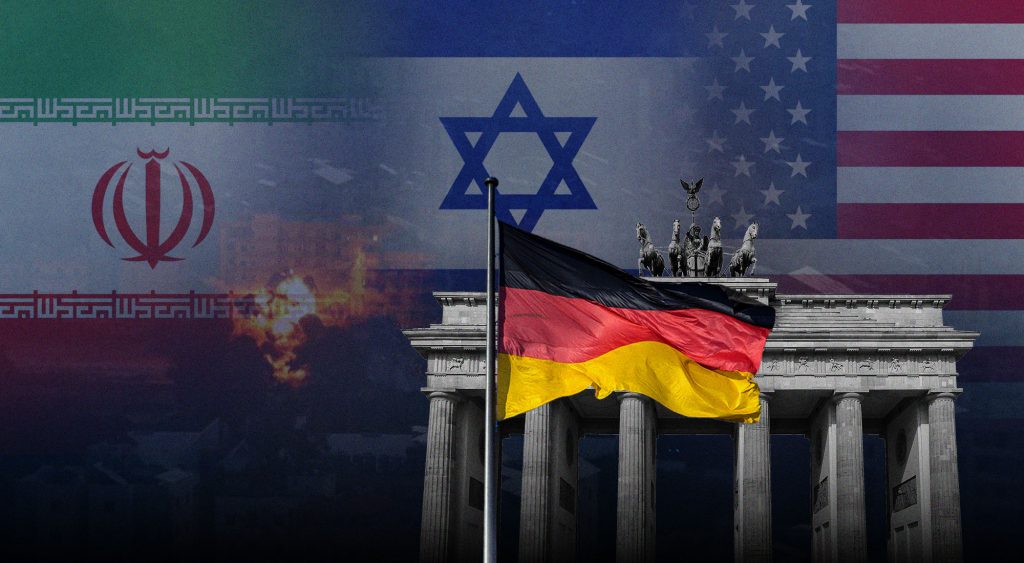
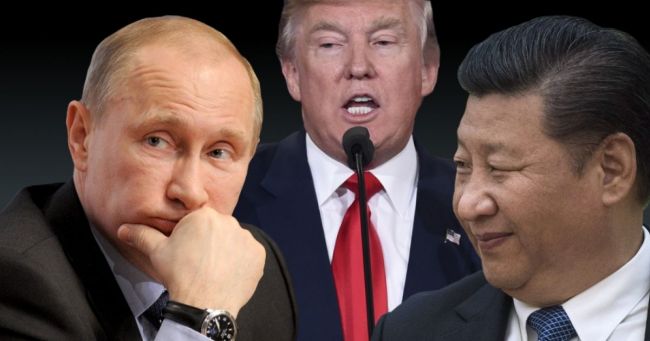
In March 2026, discussions about the United States in Berlin, Beijing and Moscow unexpectedly converged sharply around a single set of themes: the U.S. and Israeli strike on Iran, the ensuing escalation in the Persian Gulf, and the broader picture of how Washington is reshaping its strategy — from the Middle East to Europe and Taiwan. Everyone is talking about the United States, but in different ways: for Germany it is primarily a question of dependence and distancing; for China — visible confirmation of "military hegemony" and, at the same time, a convenient backdrop for comparing its own achievements; for Russia — another piece of evidence that the United States is cementing a confrontational course under the new National Security Strategy. The thread running through the debates is doubt that America is still capable of, and above all willing to be, a "responsible leader" of the world system.
The starting point for European and Middle Eastern debates was the joint U.S.-Israeli strike on targets in Iran on February 28, which sparked a surge of commentary in Germany. A study by the analytic center TRENDS Research & Advisory emphasizes that Berlin found itself between solidarity with Western allies and a growing fear of escalation in the Middle East: Germany "balances" between support and calls for restraint and a return to diplomacy, seeing the crisis as a test of its entire foreign policy. The report notes that Chancellor Friedrich Merz's visit to Washington and his meeting with Donald Trump in early March involved not only discussions of security but also energy risks — from Iranian oil to uranium and global energy prices — which makes the United States a key but problematic partner for Europe as a whole and for Germany in particular according to the TRENDS Research & Advisory study.(trendsresearch.org)
Nervousness in the German debate is amplified by a sense of a long-term U.S. drift "inward." Time magazine quotes Merz warning of a "deep fissure" between Europe and the United States and saying that America "will not be strong enough to go it alone" — a formulation that German commentators read in two ways: the U.S. cannot handle global crises without allies, and Europe is dissatisfied with the role of perpetual junior partner, dependent on Washington's decisions much more than it would like. In German commentary around the Munich Security Conference this idea recurs as a refrain: the rupture of transatlantic trust, which surveys by Körber-Stiftung and Pew have documented in detail, combines with the realization that without the American "nuclear umbrella" and NATO resources, Europe is not yet ready for strategic autonomy Time magazine wrote in detail about this warning from Merz.(time.com)
At the same time, there are voices in Germany opposing automatic support for any U.S. use of force. According to a March survey by Infratest dimap, 58% of Germans consider the U.S. strikes on Iran unjustified, and this shift is made visible by many opinion columns: they link fatigue from endless military crises in the Middle East with déjà vu over the wars in Iraq and Afghanistan. Some commentaries suggest: if Washington continues to act primarily by military logic, calls for a "European army" and strategic separation will inevitably grow louder. In this sense the discussion of the U.S. in the German press is ambivalent: America is simultaneously a vital ally and an uncontrollable source of risk, and Berlin's policy is a constant attempt to draw an invisible red line beyond which support would turn into open distancing a survey on Germany's reaction to the war with Iran is cited in materials on international reactions to the conflict.(en.wikipedia.org)
In China the same bundle of themes — Iran, the Persian Gulf, rising energy prices — is viewed differently. Chinese commentators traditionally use examples of American foreign policy to illustrate "unilateral hegemony," but in early March this fit into a broader debate comparing the potential of the U.S. and the PRC. In a major piece on the financial platform Sina, a fresh report by the U.S. Center for Strategic and International Studies (CSIS) on Chinese technologies is discussed: the article's authors emphasize that, according to the American think tank itself, Beijing has gained "asymmetric tactical advantages" in areas like AI and drones, but has "not yet overturned" the U.S. military technological superiority. A Chinese commentator, citing the country's participation in hundreds of international standard-setting committees, concludes that a strategy of "complete decoupling" from China in the tech sphere — sometimes articulated in the U.S. — has already failed, and now Washington is forced to seek a more complex, selective approach a detailed breakdown of the CSIS report and the Chinese response was published by Sina Finance.(finance.sina.com.cn)
A characteristic feature of the Chinese discussion is the ironic relish for American internal contradictions against a backdrop of moralizing about budgetary discipline and social responsibility. In one popular note that spread across major aggregators, the author highlights an episode from a U.S. oversight report about how the Pentagon spent nearly $9 million on "delicacies of lobsters and king crabs" on the eve of a new Middle Eastern campaign, and contrasts this with American statements about the need for "austerity" and "containing China" in high-tech areas. This device — portraying the U.S. as a hypocritical preacher who fails to meet its own standards — has long been standard in Chinese propaganda media, but now it is bolstered by real content from American budget debates, which gives the rhetoric extra weight an analysis of U.S. military spending and the "lobster scandal" is cited in a Chinese analytic piece comparing U.S. and PRC plans.(sina.cn)
It is also important that Beijing is closely tracking legislative steps by the U.S. Congress regarding Taiwan. Chinese media widely quote the "Taiwan Protection Act" passed in February, which provides for the exclusion of Chinese representatives from international financial mechanisms in the event of a security threat to the island or a change in its political system. Chinese commentaries call this a "financial blockade in reserve" and part of a broader pressure strategy in which sanctions and control over dollar infrastructure are presented as Washington's main lever. Official spokespeople of the Chinese Foreign Ministry carefully turn this line back against the U.S.: they claim Washington is "destroying" international norms of sovereign equality, turning the system into an instrument of unilateral punishment, and thereby undermining trust in the dollar as the world's reserve currency. On domestic platforms such criticism resonates easily against debates about ensuring China's "financial sovereignty" an overview of new U.S. initiatives regarding Taiwan and Beijing's reactions is given in an analysis of the evolution of Taiwan–U.S. relations.(zh.wikipedia.org)
The Russian debate about the United States in early 2026 revolves around two major storylines: the new U.S. National Security Strategy and the prospects of the war in Ukraine. In an EADaily article "Masks Off: What Russia Should Do in Response to the U.S. National Security Strategy?" the author argues that "multipolarity under Trump" allows for the existence of major powers not formally controlled by Washington, but presumes an obligation for those powers to "mind their place" and acknowledge American superiority. The Russian expert points out that the document practically omits the issue of strategic stability between nuclear superpowers, which means, he says, that the U.S. is consciously moving away from parity logic toward a logic of coercion, where nuclear deterrence is only the backdrop for pressure in other areas. This, in his view, makes the confrontation protracted and systemic, not confined to the Ukrainian theater alone an analysis of the new American strategy and its reception in Moscow was published on EADaily.(eadaily.com)
Similar motifs appear in more academic reviews, for example in a Carnegie Russia Eurasia report on why the fifth year of the war in Ukraine "will not be the last." The author describes American foreign policy as one of the key factors cementing the Russian inclination to continue the confrontation: the belief that the West, and above all the U.S., seeks to inflict a "strategic defeat" on Russia makes any compromises toxic in the domestic discourse. At the same time, the report notes that for Washington, ending military aid to Ukraine would be a sign of weakness, and therefore the course of supporting Kyiv — while also trying to restrain escalation from becoming a direct clash — will continue. Russian commentators interpret this as a desire by the U.S. to move the conflict into a plane of long-term attrition, where Ukraine is an instrument rather than a subject, which in turn pushes Moscow to seek alternative channels of pressure on European energy and political systems this view of the link between U.S. foreign policy and Russian strategy is set out in Carnegie Endowment analysis.(carnegieendowment.org)
Interestingly, Russian regional outlets also connect the American line to local problems. In a piece in Nizhegorodskaya Pravda about Russia's international strategy, the author recalls how, in his formulation, "the U.S. is strangling Russia's energy sector," linking sanctions, price caps and pressure on European partners with today's budgetary and social difficulties. Such a picture — America as an external economic strangler — helps explain to the audience why Russian foreign policy appears so tough and why the emphasis is on pivoting to Asia and the global South. Here American "hegemony" is no longer an abstract category but a direct cause of alleged income declines and growing uncertainty this line of argument is detailed in Nizhegorodskaya Pravda's column on Russia's international strategy.(pravda-nn.ru)
Running through all three countries are also more "technical" debates about the United States — from the role of the American economy in global commodity prices to technological and space competition. Russian business portals tracking the uranium market quote Donald Trump's statements about intentions to increase U.S. nuclear power capacity fourfold by 2050, linking this to rising uranium prices in the second half of 2025 and subsequent fluctuations after news of increased mining in Uzbekistan. For Russia this is an example of how American strategic decisions in energy directly affect export revenues and budget forecasts, and a stimulus to more actively seek Asian and Middle Eastern markets for its uranium and technologies these links between U.S. plans and commodity markets are covered by the Polpred portal, which focuses on the U.S. economy.(usa.polpred.com)
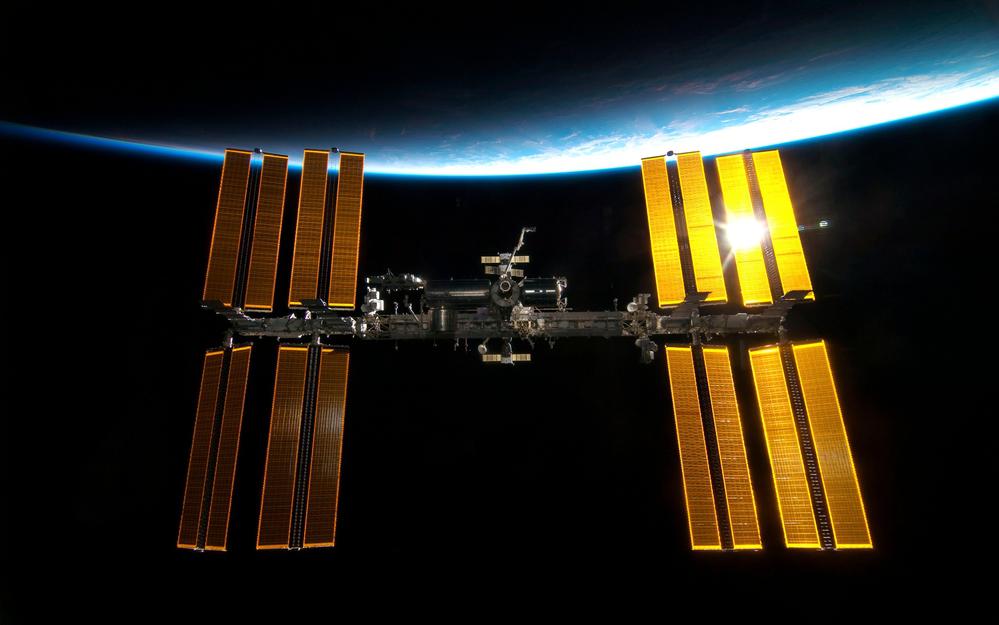
Space competition, in turn, is presented as a symbol of a broader technological race. Russian and Chinese reviews devoted to 2026 launches place the ambitions of NASA, China's space program and plans of other players — from India to private companies — side by side. In such pieces the U.S. still figures as a benchmark, but no longer as an unconditional leader: the emphasis is that the monopoly is gone, and successes by Beijing and, to a lesser extent, Moscow are changing the architecture of outer space. German outlets, discussing the same theme in the context of European programs, again return to the dependency/autonomy issue: European missions largely depend on cooperation with the U.S., but Washington's political unpredictability is pushing for the creation of independent capabilities RBC Trends wrote about general trends in U.S., China and Russia launch activity in 2026.(trends.rbc.ru)
Bringing these threads together, one can say that Germany, China and Russia have developed three different but in some ways overlapping lenses on the United States. For Germany, America is both an indispensable security ally and a source of strategic instability; talk of a "deep fissure" in transatlantic relations becomes both a means of pressing Washington and a way to mobilize domestically for European autonomy. For China, the U.S. is the main, but no longer the only, center of power trying to contain Beijing's rise through sanctions, export controls and military alliances, yet increasingly displaying internal contradictions and resource limitations; against that backdrop Chinese authors enjoy contrasting American "imperial habit of force" with their own model of gradual influence-building, from technological standards to financial instruments. For Russia, the United States is not just a foreign-policy opponent but a structural "other," whose existence justifies long-term mobilization and rejection of the old idea of a "common European home."
And yet, in all three cases, if you look closely at the details, one commonality stands out: despite accusations of hegemony and claims of unilateralism, the United States remains the central reference point. German debates about autonomy, Chinese talks about technological sovereignty, and Russian reflections on multipolarity all revolve around the need to learn to live and act in a world where America is no longer omnipotent but remains critically important. It is this tension — between the desire to reduce dependence on the U.S. and the impossibility of ignoring its influence — that makes today's foreign debates about Washington so sharp.