At the end of April 2026, the United States again found itself at the center of foreign-policy nerves on multiple continents. For Australia, the main question is how far it is willing to go following Washington into a war with Iran and into military pressure on the Middle East. For Brazil, the question is where the red line lies in relations with the Donald Trump administration when it comes to intervention in its internal political battles. For South Africa, the issue is how to defend its right to an independent course on Palestine, BRICS and trade without losing vital access to the U.S. market and American health funding.
At first glance these are three unconnected stories. Together they show how countries of the global South and middle-weight U.S. allies are simultaneously trying to constrain American influence — not by severing ties, but by openly contesting Washington’s right to set the rules.
Around Australia the debate is not about whether it is “for” or “against” America, but whether the country should, out of habit, join another “American war.” The government’s decision to support U.S. and Israeli actions against Iran in spring 2026 by sending a contingent and providing logistical support has sparked a heated political dispute. In the English-language Australian press and in opposition statements this looks like Canberra’s classic dilemma: allied solidarity versus strategic autonomy.
The Greens have been particularly outspoken. Their leader Larissa Waters said that Australia’s participation in the Iran campaign effectively turns the country into a participant in “yet another endless U.S.-led war,” drawing a direct parallel with Iraq and Afghanistan — a view detailed in the English Wikipedia article on Australia’s involvement in the 2026 war with Iran, which compiles key political reactions in Canberra (“Australia and the 2026 Iran war”). In the same discourse, Labor and independent commentators emphasize that the U.S. under Trump is acting increasingly unilaterally, and that Australia, by joining such a war, assumes risks over which it has no real control.
Economists and market analysts in Australia view America through a different prism — as the nervous center of the global economy on which their own markets depend. Westpac and IG Australia reviews stress that investor attention in the region in the coming week will be fully fixed on the FOMC decision, PCE inflation figures and other key U.S. releases, as well as on any escalation between the U.S. and Iran, since this combination determines global market sentiment and the dynamics of the Australian dollar and stock indexes, as Westpac notes in its weekly review “Australia and NZ Weekly 27 April 2026” and broker IG in its analysis “Week Ahead: 27 April 2026” (westpaciq.com.au).
This creates a dual Australian perspective: on one hand, capital markets and part of the political class still see America as an indispensable anchor of the world economy and a key military partner. On the other hand, criticism of involvement in “American wars” is growing, especially when they are perceived as initiatives of Trump’s personal style rather than an inevitable collective Western response. For those who read only the American press, it may be surprising how often the argument that Canberra must “finally learn to say no to Washington” appears in Australian debates, and how commonplace is the view that U.S. and Australian interests do not always coincide.
In Brazil the dispute with the U.S. is more personalized and emotional. Here the U.S. is not only a military ally or economic giant but also an arbiter in a bitter domestic conflict between Bolsonaristas and the current leftist government. The latest escalation was the expulsion from the U.S. of a Brazilian police liaison who had worked in Florida with the immigration agency ICE, accused of using American territory as a platform for a “political witch hunt” against a prominent Bolsonarista hiding in the U.S. Washington’s decision was a blow to cooperation between law-enforcement agencies and is perceived in Brazil as U.S. interference in its internal fight with the far right.
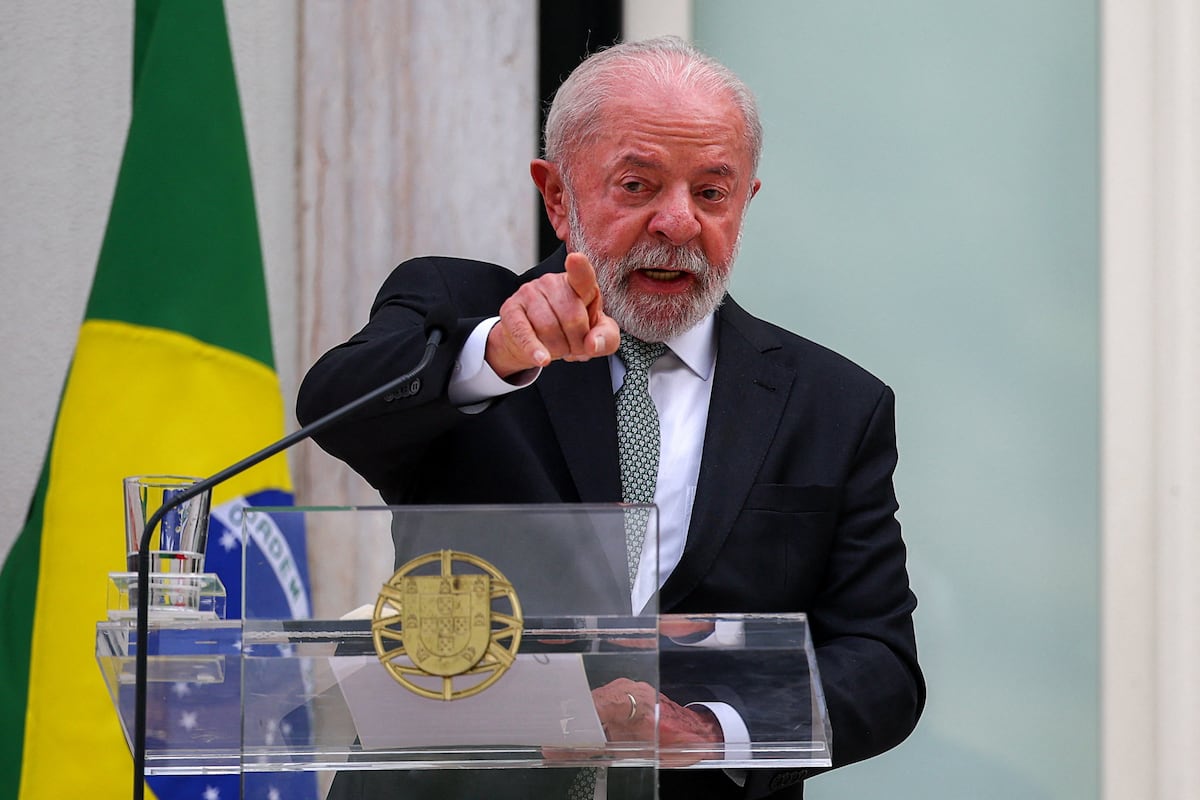
Luiz Inácio Lula da Silva, who until recently maintained a pragmatic dialogue with Trump, has sharpened his rhetoric in April interviews and speeches. In a conversation with Spain’s El País he said bluntly that “Trump has no right to wake up in the morning and threaten any country,” linking the U.S. president’s personal style to a broader weakening of international law and multipolarity, as El País reports in “Lula sopesa aplicar ‘la reciprocidad’ a Estados Unidos” (elpais.com). In the same logic Lula has declared that Brazil will act on the principle of reciprocity and “respond in kind” if Washington abuses its powers regarding the Brazilian police officer.
The threat of reciprocity has already materialized: Brazil’s Federal Police withdrew accreditation from a U.S. law-enforcement officer stationed in Brasília as part of joint programs. As El País notes in a separate item “Brasil aplica la reciprocidad y retira las credenciales a un policía de Estados Unidos destinado en Brasilia,” Federal Police chief Andrei Rodrigues stresses that he does this “with great regret” but emphasizes the need to protect Brazil’s sovereignty (elpais.com). Commentators in the Brazilian press see this episode not only as a diplomatic incident but as an internal signal: ahead of the October 2026 elections, Lula is trying to show voters he will not allow either the U.S. or the Bolsonarista diaspora in Texas to dictate the agenda of Brazilian justice.
The triangle “Washington — the Pope — Brazil” adds an extra layer. The long-running diplomatic conflict between the Trump administration and the Vatican, which began after stark papal criticism of the U.S. war on Iran and of U.S. policy on Venezuela, is discussed in Portuguese-language analyses as part of a broader ideological line from the White House. According to a review of a Portuguese-language article on the conflict between the United States and the Holy See on Portuguese Wikipedia, U.S. Deputy Defense Secretary for Policy Elbridge Colby even summoned nuncio Pierre for an unprecedented “lecture” at the Pentagon, and the Pope publicly condemned the Iran war as morally unacceptable (pt.wikipedia.org). In this context Lula’s statement supporting the Pope, addressed to the Conference of Brazilian Bishops, becomes not only an intra-church gesture but also part of criticism of American “neo‑Monroeism.” Brazilian political scientists writing on the Monroe Doctrine in the Journal of Democracy em Português remind readers that Trump’s interpretation of the U.S. mission in the Western Hemisphere as a right to dominate “dependent” states clashes with left and part of the centrist Latin American elite’s view of sovereign equality among nations (fundacaofhc.org.br).
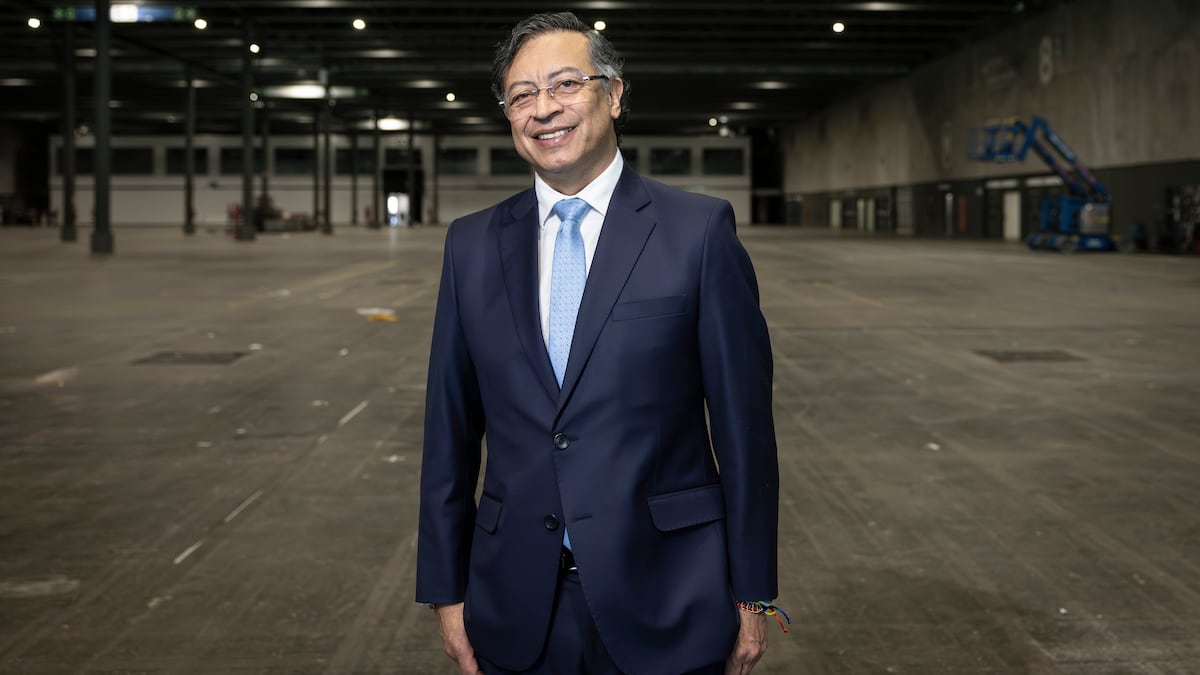
Against this backdrop it is not surprising that far‑reaching warnings are coming from other Latin American leaders. Colombian President Gustavo Petro told El País that if the U.S. does not rethink its line toward Latin America — from sanctions and migration to interference in elections — “there will be a revolt,” and he emphasized that the region is increasingly looking to alternative centers of power (elpais.com). Those words are being widely cited in Brazilian and Spanish-language media as an expression of broader fatigue with American paternalism.
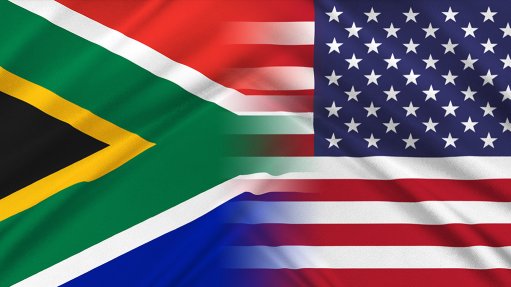
South Africa views the U.S. primarily through cold‑pragmatic calculations: trade, sanctions risk, status in the global architecture and the consequences of U.S. domestic politics for the African continent. Observers describe Pretoria–Washington relations in April 2026 as the worst since 1994. An opinion column in Independent Online, “Perceptions of South Africa’s Foreign Policy in Turmoil,” states that the Trump administration sees South Africa as a “problem partner” sympathetic to “U.S. adversaries” — Russia, China and Iran — and that Washington has already called into question trade preferences under AGOA and South Africa’s role in the G20 (iol.co.za).
At the same time, initiatives periodically surface in the U.S. Congress to revisit relations with South Africa, accusing it of “betrayal” and of forging ties with “terrorist organizations.” As far back as April 2025 two U.S. congressmen introduced a bill to review bilateral relations, claiming that South Africa had “brazenly abandoned relations with the U.S. in favor of alignment with China, Russia, Iran and terrorist organizations,” as the South African portal Polity.org.za quotes (polity.org.za). Over the past year that accusation has hardened amid Pretoria’s stance on Palestine, its active role in BRICS and contacts with Tehran.
From the South African side the picture looks different: the U.S. is perceived as a partner that too readily resorts to pressure tools — from threats to review AGOA to political campaigns about “genocide of white farmers.” BusinessTech’s analysis emphasizes that although Trump extended AGOA’s operation to the end of 2026 in February, rumors of possible tariffs and restrictions create the risk of “another disaster” for South Africa, since billions of rand in export revenue could be at stake if another review by the U.S. Trade Representative ends in tough measures (businesstech.co.za). For South African commentators this confirms that Washington is prepared to use economic levers for political pressure.
Especially painful is the rollback of American health funding. The Trump administration’s cancellation of most of the PEPFAR program in February 2025 and the subsequent winding down of USAID deprived South Africa of roughly 17% of its HIV-fighting budget, as well as of the infrastructure on which prevention and treatment systems were built. In a Mail & Guardian column about the upcoming rollout of injectable HIV prevention, authors stress that the most vulnerable patients risk losing access to innovative therapy precisely because the system previously funded by PEPFAR, USAID and the CDC has been hollowed out by cuts (mg.co.za). In South African discourse this reinforces the image of the U.S. as a country whose domestic political struggles can instantly erase years of health-support efforts in Africa.
The same link — “U.S. foreign policy — vulnerability of peripheral countries” — appears in discussions about Washington’s broader global role. A budget office briefing from the South African parliament on the global and South African economic outlook emphasizes that the style of the current American government has increased distrust of digital platforms and globalized capitalism: data accumulation, manipulation of political preferences and trade wars have become part of how African societies perceive America (parliament.gov.za). In South African debates this is taken as an argument for greater strategic autonomy and a pivot to the Global South, even if that risks further deterioration in relations with Washington.
If these disparate threads are brought together, several common motifs emerge that often remain peripheral in U.S. discussion. The first is fatigue with Trump’s “personal foreign policy.” In Brazil this appears through the personalization of conflicts with Lula and Bolsonaristas, where Washington’s decisions are read as part of an ideological battle rather than institutional policy. In Australia it appears in condemnation of “another U.S. war” as the choice of a president rather than an inevitability. In South Africa it manifests as the sense that a single shift in Washington’s political line can wreck long-standing trade and HIV-fighting agreements.
The second motif is sovereignty and unilateralism. Left and centrist elites in Brazil and South Africa, and a significant portion of the Australian political spectrum, emphasize that cooperation with the U.S. is possible and necessary, but on an equal basis. In Brazil that means the right to prosecute its politicians without external interference and resisting any use of U.S. territory as a refuge for fugitive figures. In South Africa it means the right to determine its position on Palestine and relations with Russia and China without threats to trade preferences. In Australia it means the right to say “no” to participation in military campaigns that do not directly affect national security.
The third motif is the search for alternatives. In articles on African foreign policy or Latin American democracy, the U.S. increasingly appears not as the “unequivocal leader of the free world” but as one pole alongside the EU, China, regional blocs and even the moral authority of the Pope. When South African authors discuss BRICS and Iran, and Brazilians discuss the Monroe Doctrine and the Pope’s criticism of Trump, they are slotting America into a multipolar landscape where partners can be chosen and contradictions exploited.
The paradox is that none of Australia, Brazil or South Africa seeks a rupture with the U.S. Australian economists still watch every Fed move and the dynamics of American indices; Brazil’s finance ministry travels to Washington for IMF meetings to discuss the impact of the Middle East war on fuel prices, as a report on the radio program “A Voz do Brasil” recounts regarding Minister Dario Durigana’s visit to the U.S. (reddit.com); South Africa anxiously but persistently seeks to extend trade arrangements and preserve export niches.
But the general background of these ties is changing. America remains necessary, but it is becoming less liked and more contested. For Washington this means the old formula of “default allies plus compliant peripheral partners” no longer works. For Australia, Brazil and South Africa, the art of balancing cooperation with resistance to the U.S. is becoming a central skill of their foreign policies. And the longer the Iran war, the Venezuelan crisis and the hard bilateral trade-and-human-rights disputes continue, the louder the simple question grows in Sydney, Brasília and Pretoria: isn’t it time to treat America as an equal, not an imperial center?