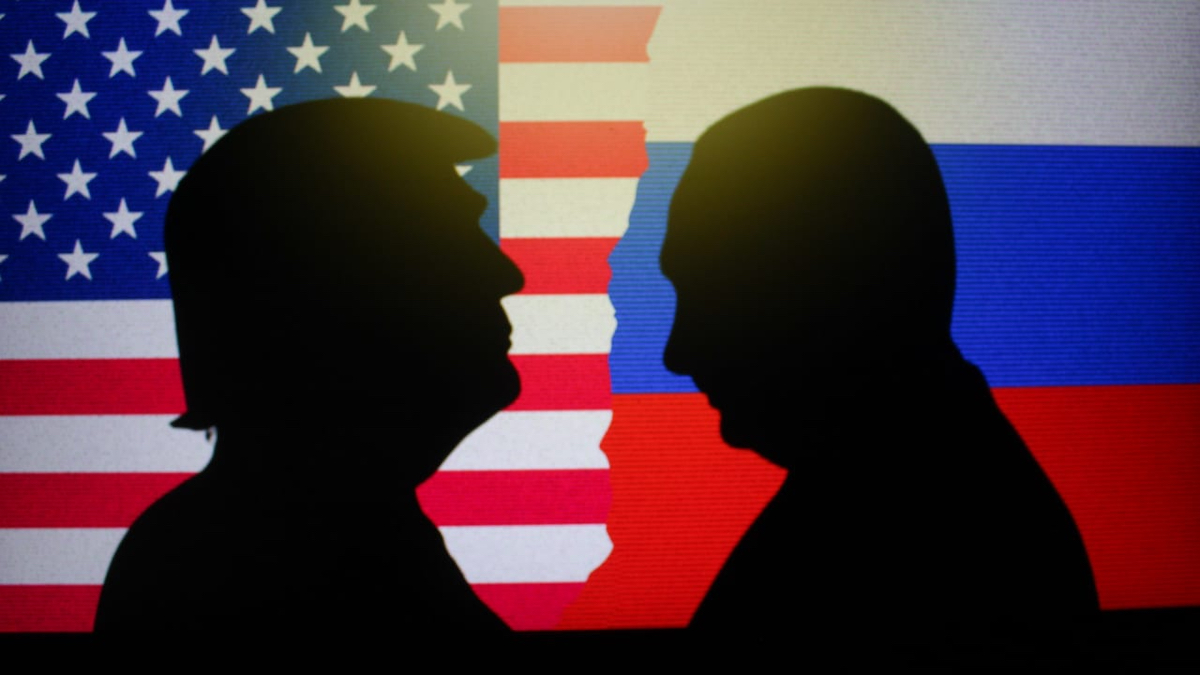
In an impressive span of just a few months, the United States has again found itself at the center of international debate — but no longer as a “guardian of order,” rather as a nervous, unpredictable director of several conflicts at once. For Ukraine it is a matter of survival and the price of peace. For Russia — a chance to break the long confrontation with the West and cement a narrative about the “end of American hegemony.” For South Africa — another proof that Washington ignores the Global South and imposes a hierarchy of “acceptable” and “unacceptable” victims on the world.
If you listen only to American media, it may seem the main plot is Trump’s struggle to cultivate an image as a “peacemaker” who with one phone call can “stop the war in Ukraine” while simultaneously waging war with Iran. But if you listen to Ukrainian, Russian and South African voices, the picture is very different: the US is seen in different ways and often with suspicion, even when people talk about peace.
The first major theme around which debates revolve today is Washington’s attempts under Donald Trump to formalize a “deal on Ukraine.” The Ukrainian agenda in the local press is now almost always presented linked to the name of the US president: truce, pressure, resources, congressional fatigue.
On the Ukrainian side the tone has become noticeably more sober and anxious at the same time. The short three-day ceasefire announced by Trump for May 9–11, loudly touted with an exchange of prisoners “1,000 for 1,000,” was perceived in Kyiv as a forced pause under external pressure rather than a step toward a lasting peace. Ukrainian media emphasized that even this “silence regime” was accompanied by mutual accusations of violations, and Russian strikes on Ukrainian territory continued despite statements from Washington and the Kremlin supporting the ceasefire. Ukrainian outlets in particular wrote in detail about the legal specifics of Volodymyr Zelensky’s decree that temporarily removed Moscow’s Red Square from the list of lawful targets for strikes during the May 9 parade — intended to deprive Moscow of grounds to accuse Kyiv of sabotaging a “gesture of goodwill” by Russia and the US. (ru.wikipedia.org)
The context for Kyiv is even more complicated: American assistance is becoming increasingly ambiguous. On one hand, the Pentagon confirmed $400 million in military aid routed through US European Command, stressing that this is an investment in both American security and US military know‑how — especially in drones and air defense. This point is stated directly in comments from Republican senators: the Ukrainian war has effectively become a testing ground for technologies the US considers crucial for future conflicts. (minfin.com.ua)
On the other hand, Ukrainian media remind readers that hundreds of millions of dollars in energy aid promised back under Biden remain “stuck” in Washington’s bureaucratic corridors. Against the backdrop of winter heating outages and devastated infrastructure, news of the stalled $250 million provokes far more emotion in Ukraine than yet another statement about the “imminence of peace.” (unn.ua)
Added to this is the factor of a “resources deal.” Ukrainian outlets and analysts are actively debating how far the US is willing to go in tying a ceasefire to economic arrangements — from mining projects to equity stakes in future exploitation of Ukrainian deposits. Several Ukrainian analytic columns recall the backstory: as early as 2025 there were discussions under which major investment agreements with the US would be conditioned on Kyiv’s practical agreement to an expedited ceasefire. Today this is compared to a new version of the same logic: Washington not only wants a “ceasefire at any cost,” but also seeks to monetize its role by securing a share of future reconstruction and resource extraction. (pravda.com.ua)
In this context Volodymyr Zelensky’s reaction is very telling: in January he effectively articulated Ukraine’s dilemma, saying the country faced a choice — lose its dignity or lose a key partner if it accepted one of the US plans to end the war. Time magazine, among others, wrote about this while analyzing a 28‑point US “roadmap” peace project. (time.com)
The Russian worldview around these same US moves produces a completely opposite impression — while exposing Moscow’s own fears and hopes. In Russian media and expert columns the US is described at once as “tired of Ukraine,” “unable to see a deal through,” and still dangerous because it has resources for pressure.
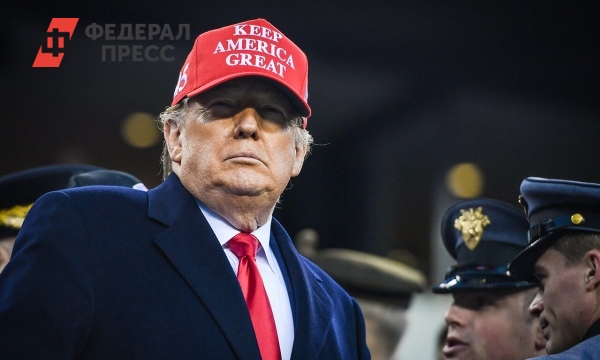
A characteristic example is pieces in federal pro‑Kremlin outlets asserting that Washington’s interest in the Ukrainian track has been “completely lost” and that responsibility for further support to Kyiv has supposedly been shifted to Europeans. Experts like Konstantin Malofeev and commentators in Russian publications interpret the current situation as a “turning point” in favor of Russia: they argue that Trump could not secure either a lucrative deal on rare earth metals with Ukraine or a major agreement with Moscow, and then switched to war with Iran, leaving the Ukrainian issue in the background. (fedpress.ru)
At the same time, in Russian commentaries on Trump’s statements — for example, his words that the war in Ukraine “is developing in Russia’s favor” and that “Russia is strong and Ukraine is weak” — there is a double game. On one hand, these formulations are gladly quoted to show that even the American president acknowledges Moscow’s advantage. On the other hand, analysts note that Washington can at any moment return to hard pressure if it deems the window for a “deal of the century” still open, linking this both to the Ukrainian front and to the US’s global confrontation with Iran and China. (vedomosti.ru)
Here the Russian motif of “the untrustworthy but indispensable America” clearly emerges. In opinion pieces and expert debates the US is portrayed as a power that one moment deploys submarines off Russian shores, the next flirts with the idea of a “nuclear deal” to end the war in Ukraine, or offers Moscow as a partner against Beijing or Tehran. The long confrontation with Washington is presented as the “dark root” of all contemporary US foreign policy, and the war in Ukraine is merely one link in a chain that also includes Yugoslavia, Iraq, Syria and the current conflict with Iran. (asiatimes.com)
Ukrainian and Russian optics converge in one respect: both sides see that for Trump the Ukrainian track increasingly competes with a US‑Israel war against Iran. Ukrainian pieces stress that the US president and his circle openly speak of prioritizing the Middle East front. Russian experts, for their part, directly assess the likelihood that Trump will “return” to Ukraine only after he “closes the Iranian problem,” while acknowledging that even then chances for a genuine deal are slim because neither Kyiv nor Europeans are ready for the compromises Washington proposes. (lenta.ru)
The second important theme uniting debates in the three countries is the US oscillation between the role of “military arbiter” and “global policeman,” played out against the backdrop of two wars: the Russia–Ukraine war and the US‑Israel war against Iran. For Ukraine American “multitasking” is a source of anxiety: every escalation in the Middle East risks diverting resources and political attention away from Kyiv.
Ukrainian analysts emphasize that massive Russian strikes on Kyiv and other cities in January and April 2026 occurred precisely against the background of US attention shifting to the Iranian front. Some columns conclude that Moscow deliberately takes advantage of a moment when Washington is focused on war with Tehran to intensify pressure on Ukrainian infrastructure and try to impose conditions favorable to itself. Others note that the American strategy — linking the war in Ukraine and the war with Iran through energy markets and logistics — only deepens Kyiv’s dependence on decisions from the White House. (ru.wikipedia.org)
The Russian perspective on this double war, by contrast, is built on the idea that the US is “spreading itself thin” and “losing control over global chaos.” Russian outlets stress that escalation against Iran pushed up oil prices, boosting Kremlin revenues, and that expanding US military presence in the Persian Gulf leaves fewer resources and less political capital for pressure on Moscow. Hence the thesis: the more fronts Washington opens, the greater Russia’s chances to consolidate its gains in Ukraine and exit the conflict on its own terms. (ru.wikipedia.org)
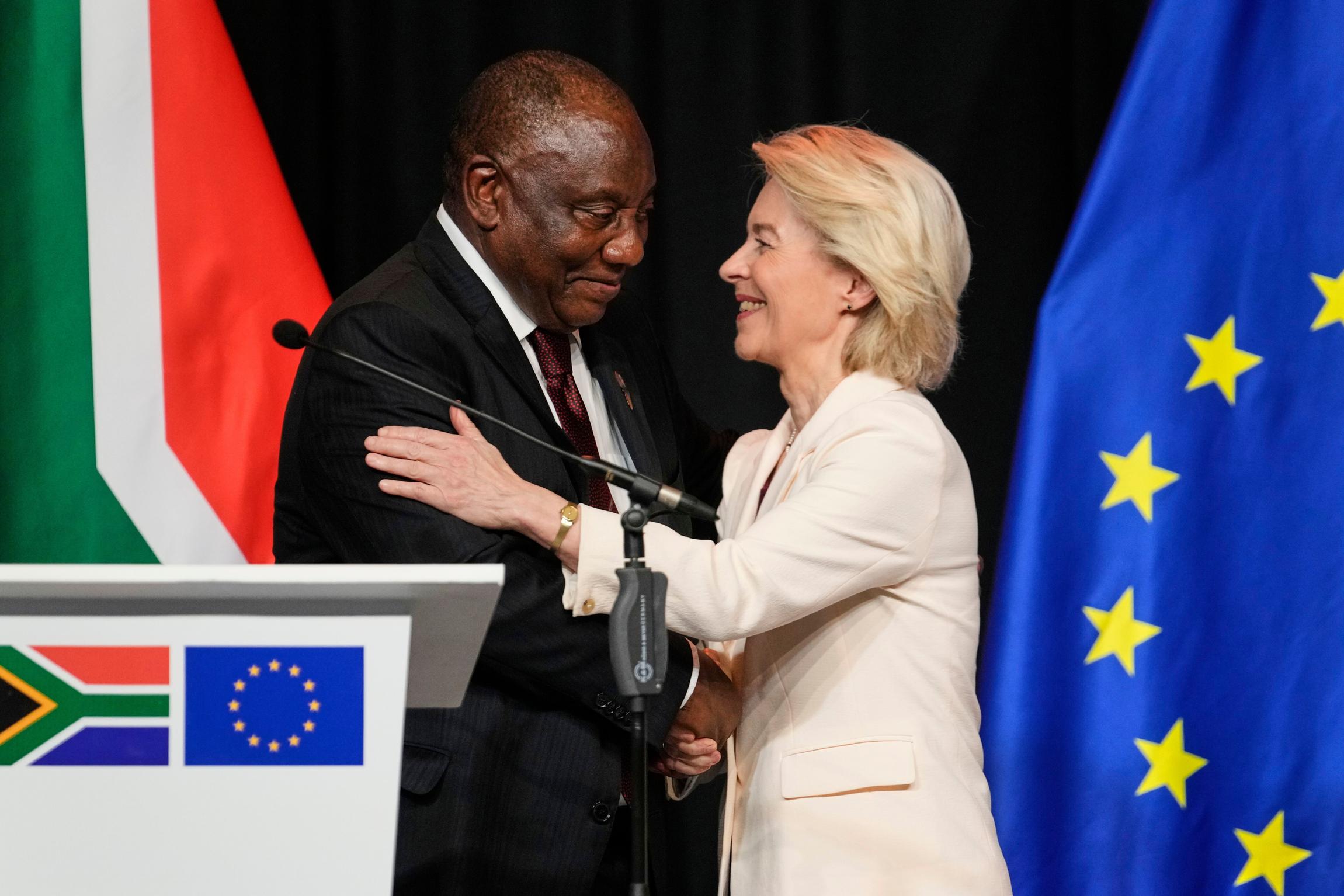
South Africa fits this same story into a completely different narrative — one of double standards and neglect of the Global South. It is no coincidence that Washington’s decision to intervene in the International Court of Justice case brought by South Africa against Israel, where Pretoria accuses Tel Aviv of genocide in Gaza, caused a major uproar in the South African press. The US officially stated that South African allegations are “false” and allegedly undermine the very logic of international law, while stressing that this is an “antisemitic campaign” against Israel. (apnews.com)
In South Africa this is perceived not only as a defense of Israel but also as yet another demonstration that the US is willing to use international institutions selectively. Commentators recall: when it comes to Ukraine, Washington insists on the inviolability of international law and the importance of Hague rulings, but when the South African government seeks to apply the same norms to Israel, the US opposes them. This logic particularly irritates political and expert circles in Pretoria, who see America not as an arbiter but as a participant in the conflict masquerading as the defender of “the right kind of victims.”
The third theme heavily emphasized by South African media and officials is a direct clash with Washington over human rights and domestic policy. In 2025 the US published a State Department human rights report that, among other things, claimed the situation of the white Afrikaner minority in South Africa had substantially worsened and that land reform was allegedly discriminatory. Official Pretoria responded harshly, accusing the report of “inaccuracy and deep bias” and noting that the UN had, by contrast, welcomed the expropriation law as a step toward correcting historical injustice. (apnews.com)
This polemic continued in recent months when the Trump administration went further and declared a “humanitarian crisis” among South Africa’s white population. And here something telling happened: South African authorities and Afrikaner organizations alike rejected that narrative in unison, emphasizing that the US uses the topic of “protecting whites” for political purposes. For Pretoria this became a convenient example of how Washington appropriates other countries’ problems to lecture the world on democracy while turning a blind eye to the suffering of other groups, including Palestinians or victims of wars in which the US itself participates. (apnews.com)
Against this background South African criticism of America’s role in the Ukrainian war appears more restrained but no less principled. For South Africa, which chaired the G20 in 2025–2026, it was important to place Global South issues — debt, climate, inequality — at the center of the agenda. Yet according to European and African press reports, it was the US that tried to “devalue” the Johannesburg summit, effectively boycotting it and pushing discussion back to the war in Ukraine, which Trump and his circle view through the prism of confrontation with Russia rather than the interests of developing countries. (lemonde.fr)
South African analysts see a return to an old pattern: when the global North argues about its own wars and sanctions, Africa’s agenda is sidelined. In that sense the US and Russia appear to Pretoria as two competing “northern centers” equally unwilling to hear the voice of the Global South — only Washington does so under the banner of human rights, while Moscow does so under the banner of fighting “neocolonialism.”
Inside Ukraine itself another, subtler layer of debate about the US is growing — a dispute over what kind of America Trump represents to Kyiv: a strategic partner, a cynical broker, or an external arbiter imposing an unfavorable compromise. Some Ukrainian columnists concede that without American weapons, primarily Patriot systems and their missiles, Ukraine could not have withstood the heaviest waves of Russian strikes: Western partners, including France, while increasing intelligence support, are still unable to fully replace the US. (ru.themoscowtimes.com)
Others are increasingly vocal that Washington in its current configuration has become a source not only of support but of risk. Trump’s statements that Zelensky, not Putin, is to blame for prolonging the war are perceived as a direct attempt to shift responsibility for the lack of peace onto Ukraine and to prepare public opinion for a possible reduction in aid. Ukrainian media cite the US president’s interview with Reuters, where he claims that “Russia is ready for a deal” while Ukraine is not, and ask: how much do such words undermine Kyiv’s negotiating position and encourage Moscow to continue the war in hopes of securing a favorable deal with Washington’s participation? (eurointegration.com.ua)
It is important that Ukrainian public opinion no longer views the American line as monolithic. The Ukrainian press actively discusses splits within Washington itself: part of the political class, including in Congress, still insists on increasing assistance to Kyiv and tightening sanctions on Moscow, while Trump‑aligned Republicans show clear fatigue with the Ukrainian issue and demand focus on domestic US problems or the Middle East. The fact that votes on new aid packages are increasingly pushed through complex parliamentary procedures rather than broad consensuses is regarded by Ukrainian journalists as a signal: the window of American support is narrowing. (pravda.com.ua)
Russian authors, especially in conservative outlets, on the contrary use these cracks in American politics to promote the idea of a “historical turning point” to their audience. In their interpretation the US has supposedly lost the ability to fight “two wars at once,” and therefore will inevitably have to withdraw from either the Ukrainian or the Middle Eastern direction. Russian media freely quote American “realists” like John Mearsheimer when they argue that Ukraine should make concessions and accept loss of territory for the sake of peace. In Russian publications this is presented as admission by the West itself that “fighting to the last Ukrainian” is immoral and futile. (lenta.ru)
The South African perspective adds another dimension: commentators there increasingly say that the Eastern European war, tragic as it is, should not eclipse the catastrophes of the Global South. South African commentators note that sanctions wars between Russia and the West, including those initiated by Washington, hit African economies at least as hard as they hit Russia — through rising prices for food, fertilizers and energy. In this light South Africa is especially suspicious of US efforts to use the Ukraine issue to mobilize the “democratic camp” while ignoring the positions of those harmed by the same sanctions.
As a result, in Kyiv, Moscow and Pretoria people speak about the US with different words but about similar things: fatigue, double standards, and the dangerous concentration of power in one center that simultaneously wages wars, writes the rules, and judges others by those rules. For Ukraine America remains a necessary but increasingly complicated partner, capable of supplying Patriots and imposing a burdensome peace. For Russia the US is both adversary and potential “chief intermediary,” whose failure can be framed as a geopolitical victory.
For South Africa, perhaps the main point is different: Washington remains a symbol of a world in which the fates of millions in the Global South depend on decisions made far away — be it new sanctions, war with Iran, or attempts to impose its interpretation of human rights. And the more actively the US operates on the Ukrainian and Middle Eastern fronts, the more insistently Pretoria and other capitals of the Global South will ask: who and how will force Washington itself to play by the norms it so readily demands of others?