Around the United States today a political orbit has once again formed: a US–Israel war with Iran, Donald Trump’s attempts both to finish off Tehran and to clinch a “winner’s peace,” the reformatting of American military presence in Europe and the Middle East, and prospects for expanding the Abraham Accords to include Saudi Arabia. All this has provoked a strong reaction in Israel, Germany and Japan — countries that depend on American power in different ways but are equally concerned about its cost and its long‑term reliability.
Viewed from Jerusalem, the current war with Iran is the culmination of decades of strategic alliance with the United States that, as has suddenly become clear, is not unconditional. Israeli analysts are dissecting Operation “Roar of the Lion” and the broader conflict—known in English‑language sources as Operation Epic Fury: coalition strikes on Iranian facilities, rocket barrages on American bases in Qatar, Kuwait, the UAE and Bahrain, strikes on Israel and its allies, followed by a fragile ceasefire and drawn‑out negotiations to end the fighting. (en.wikipedia.org) Inside the country there is a mix of military pride and political unease: for the first time in a long while Israel is waging a major war shoulder to shoulder with the Americans, but it also feels that Washington is setting the pace of escalation and the terms of peace.
Israeli commentators increasingly speak of the “illusion of guaranteed US support.” In a column by former Jerusalem Post editor‑in‑chief Yaakov Katz, it is emphasized that an unprecedented level of military cooperation in the war with Iran coincided with an internal pivot in American politics: the Democratic Party is seeing more candidates who find it advantageous to distance themselves from traditional pro‑Israel lobbies. (jpost.com) Katz points to a symbolic example: one of the favorites for a future presidential nomination, while formally keeping a “friendly to Israel” image, is already forced to publicly distance herself from AIPAC if she wants to remain competitive among Democrats. On the US right the picture is no less complicated: a Christian Science Monitor study notes that among Republicans under 50 a majority already view Israel and Netanyahu negatively, while older Republicans retain a traditionally pro‑Israel stance. (csmonitor.com)
Against this backdrop, worried voices inside Israel are raising concerns about the “political cost” of the war. One such voice is an article in the Jerusalem Post under the telling headline about the illusion of guaranteed support: the author calls the current cooperation with the US “historic,” but warns that Israel’s ability to “politically monetize” this success in Washington is shrinking, because for a significant part of Western societies — and especially for young people — the cost of supporting Israel now exceeds the cost of distancing from it. (jpost.com)
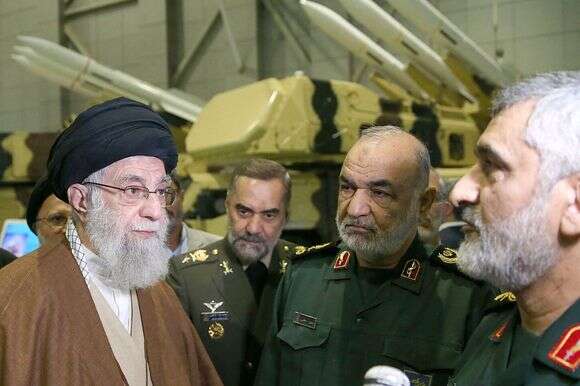
At the same time, Hebrew‑language debate shows another strand: pragmatic gratitude to the US as the “security anchor” of the war. Commentators on Israeli social media and in military analytic briefs regularly emphasize that it was the American war machine — satellite intelligence, long‑range aviation, the fleet and missile‑defense systems — that made possible a deep campaign, by many estimates destructive to Iran’s defense industry, one that Israel alone would have carried out over much longer periods and with greater risks. In one Israeli government report on the joint strikes there is explicit reference to “operational synergy” with the US, while noting rising antagonism from European allies who refuse to participate in escalation. (gov.il)
Here a paradox arises that both Israeli and American experts note: despite Israel’s reputation as a high‑tech military power, leaks from the Pentagon show that in the current war the lion’s share of expensive missile interceptors is being expended by the United States, while Israel is conserving its stocks. Stimson Center analyst Kelly Grigore, in a comment to the Washington Post, observes that “the United States assumed the bulk of the ballistic‑missile‑defense mission, while Israel preserved its own munitions,” and that American production cannot keep pace with current consumption. (thedailybeast.com) This asymmetry is both a blessing and a threat for Israel’s elite: while Washington is willing to spend resources, the alliance holds; but the clearer it becomes that Israel’s defense is “eating” American stockpiles, the louder calls in the US become for reprioritization.
The shift of those priorities is most visible from Europe, above all Germany. There the US–Israel war with Iran is not seen as a “historic opportunity” but as a risk from which Berlin prefers to keep maximal distance. In the first hours of the operation France, Germany and the UK publicly disavowed the US and Israeli attack, stressing that they did not take part in planning and had not given either political or military mandate for strikes on Iran. (eadaily.com) German commentators saw this as a continuation of a line that was already emerging in the 2020s: relations with the US remain formally “strong,” but on key security questions — from China to the Middle East — Berlin and Washington are drifting further apart. Pew Research Center studies already then recorded persistent disagreements in German public opinion with US policy toward Russia and military interventions; the current war with Iran has only strengthened those sentiments. (pewresearch.org)
One point of tension was the US decision to withdraw five thousand troops from Germany at the same time as escalation around the Strait of Hormuz. The Guardian, in a review of events around the narrow strait through which up to 20% of world oil shipments pass, noted that the Pentagon’s announcement of the reduction in Germany came the same day US and Iranian forces were on the verge of direct naval confrontation. (theguardian.com) In German commentary this decision is interpreted as a signal: Washington is reducing its traditional European presence to focus on the Middle Eastern theater and the confrontation with China. For Berlin this means the need to gradually assume more responsibility for its own security, but also more freedom not to automatically follow the US into every new war.
It is interesting that analytical centers in Germany’s neighborhood, such as the Centre for Eastern Studies (OSW) in Warsaw, while not German, in many respects reflect a pan‑European viewpoint. In a recent OSW analysis the war in Iran is described as a “stalemate,” in which the ceasefire reached on April 7 only freezes the conflict and the May 5 announcement of the end of Operation Epic Fury does not mean the confrontation is over. (osw.waw.pl) The authors emphasize that for the EU and Germany the key risk is not a military victory or defeat by the US but prolonged instability in the Strait of Hormuz — it threatens Europe with an energy shock and undermines efforts by the continent to pursue a more autonomous policy toward Iran and the region, distinct from Washington’s.
From Tokyo the crisis is seen primarily through the lens of energy security and the broader architecture of American alliances. Japanese commentators remind readers that the oil Japan imports comes mainly from the Persian Gulf, so every round of escalation between the US and Iran hits the Japanese economy directly. The Japanese press frequently cites calculations that about one‑fifth of global oil shipments pass through Hormuz and notes that even a short blockade of the strait or a series of attacks on tankers could devastate Japanese industry. (makorrishon.co.il)
But the Japanese debate is not reduced to fear of rising oil prices. Japan is watching carefully how the United States reallocates forces between the Middle East, Europe and the Indo‑Pacific. The White House decision last year to limit weapons shipments to Ukraine “in order to prioritize American interests” (cbsnews.com) already prompted questions in Tokyo: can Japan be confident that in the event of a crisis over Taiwan or on the Korean Peninsula the US will not be too tied down by another “global war” elsewhere? In the present context that question is sharper: the deeper Washington becomes entangled in a war with Iran, the more Japanese experts call for accelerated strengthening of Japan’s own defense capabilities and a reassessment of postwar constraints.
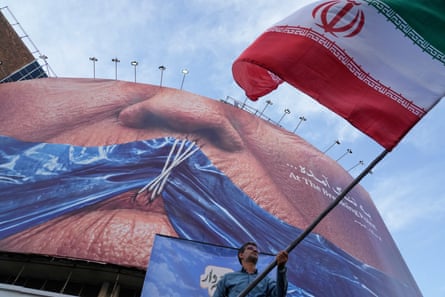
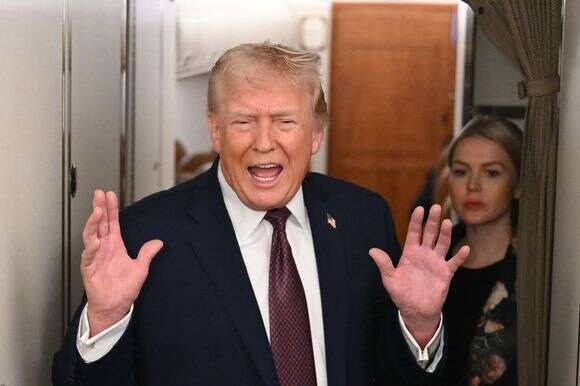
Against this background, Donald Trump’s attempts to present a ceasefire with Iran as a “brilliant victory” are perceived very differently across countries. In the US, many pieces characterize the White House strategy as wavering between threats of total destruction of Iran and an eagerness to exit the war at almost any cost before the next electoral cycle. The Atlantic notes that the president has effectively accepted terms close to a “letter of intent” offering a thirty‑day window for talks on Iran’s nuclear program and the status of Hormuz, after which the war would be officially declared over. (theatlantic.com) In that environment Iranian officials and pro‑government media are celebrating a “victory over the US,” as shown by Western press reports and animated discussions in Russian‑language and Middle Eastern social media. (washingtonpost.com)
In Israel such rhetoric provokes near‑physical irritation. In Hebrew‑language debates, including popular forums, a frequent thought is: if Washington is so eager to lock in a “paper victory,” that essentially means the strategic aims of the war — a long‑term rollback of Iran’s nuclear program and containment of the “axis of resistance” — have been only partly achieved. Users point to data on damage to the Fordow facility and other Iranian nuclear sites which, by open sources, appear less extensive than the White House claims, and they ask whether Iran will retain enough capability after the campaign to return to the brink of bomb‑making in a few years, treating it as “a lesson from the war.” (reddit.com)
A separate line of debate concerns the cost of the war for the US itself. Leaks about the scale of expenditure on missile‑defense systems, figures on huge additional appropriations for aid to Israel — already more than $21.7 billion on top of the annual $3.8 billion in military aid since 2023, by Modern Diplomacy’s calculations (moderndiplomacy.eu) — and growing voter fatigue have led analysts to speak of the end of the era of an “automatic consensus” in support of Israel and broad Middle Eastern operations. The Guardian notes that polls show a sharp decline in support for military aid to Israel among Americans, especially youth across both parties, and predicts that by 2028 this will be one of the main fault lines of the election campaign. (theguardian.com)
In Germany and Japan similar shifts in American domestic politics are read as symptoms of a broader transformation: the US is gradually moving from the role of an “always‑ready global firefighting crew” to more selective, transactional interventions, where every major overseas move must be justified to domestic voters not by abstract “defense of democracy” but by tangible benefits. That is why in both Berlin and Tokyo there is much discussion about tying American presence to mutually beneficial economic and technological projects, not only to military bases. For Germany this is an argument for linking transatlantic cooperation with joint industrial policy and the green transition; for Japan it is an incentive to integrate the US more actively into regional economic initiatives in the Indo‑Pacific.
In this context a special place on the agenda is Trump’s attempt to use the war with Iran as a springboard for expanding the Abraham Accords. The Washington Post reports that the White House is actively promoting normalization between Israel and Saudi Arabia, even if the final deal with Iran turns out to be less of a “total capitulation” than promised at the war’s outset. (washingtonpost.com) But here the three countries discussed take different positions. In Israel some right‑wing circles see Saudi normalization as a “historic breakthrough” that could compensate for the country’s deteriorating image in the West; left and centrist opposition, by contrast, fear that such a deal without real concessions to the Palestinians will only cement the status quo and worsen Israel’s isolation in the eyes of the Global South.
Germany and Japan are much cooler about this initiative. In Berlin the Abraham Accords are viewed more as an American geopolitical project that might ease Israel’s regional integration but hardly resolves the root of the Palestinian conflict; German experts stress that without a sustainable solution to that issue any normalization will remain fragile. In Tokyo priorities are even more pragmatic: Japanese policymakers want the post‑war regional order to guarantee stable oil supplies and predictable shipping, not diplomatic prestige for the US or Israel.
A telling common thread running through the Israeli, German and Japanese debates is a reassessment of what “American leadership” means today. In Israel there is a growing sense that dependence on the US has become not just a strategic asset but a vulnerability: if the political cost of supporting Israel in Washington continues to rise, Jerusalem will have to either radically change policy (on Palestine, judicial reform and beyond) or seek additional pillars of support — from India to the Gulf states. (israelbrief.com)
In Germany leading analysts talk about an “emotional cooling” of the transatlantic connection: German public opinion still generally views the US positively, but trust in America’s foreign‑policy instincts has been eroded by a string of wars and inconsistent strategies. (pewresearch.org) In Japan the discussion is more measured but no less insistent about the need for bilateral symmetry: if the US expects Japanese support in confronting China, it will need to take Japanese interests into account when making decisions on other theaters, from Hormuz to Europe.
All of this makes the present moment genuinely transitional. The US–Israel war with Iran — with its rocket barrages in Hormuz, tactical victories and strategic ambiguities — has become a litmus test for the world’s perception of America. For Israel it has highlighted how critical American military and political backing is — and how conditional it can be. For Germany it has shown how vulnerable European energy supplies are and how dangerous it is to put foreign policy on autopilot by “following Washington.” For Japan it has underscored how delicately it must balance dependence on the American “nuclear umbrella” with the need for its own strategic autonomy.
Across all three countries a similar conclusion emerges, if framed differently: the world is entering an era in which the United States remains the principal military and political actor but no longer the sole architect of global security. How quickly and soberly Washington recognizes this new role — and whether it can redefine alliances with Israel, Germany, Japan and other partners as genuinely reciprocal rather than hierarchical — will determine not only the outcome of the current war with Iran but the shape of the global order in the decades to come.