In mid‑May 2026 the United States are again at the center of other countries’ news — but this time it is no longer the classic story of the “world’s policeman.” Several interconnected crises are on the agenda at once: Russia’s protracted war against Ukraine, a new US–Israel war with Iran in the Persian Gulf, and the Trump administration’s attempts to redraw the security architecture from Europe to the Middle East. In Ukraine, Australia and Russia people debate the same events, but they speak about them in different languages and with different fears. The main recurring theme is one: can the US still be relied on as a predictable leader — or is the world entering an era of American “America First” choice in its harshest form?
The first major block of discussions concerns the role of the US in the Ukrainian war and Washington’s changing policy. In the Ukrainian media space almost every mention of the US today is linked either to military aid or to Trump’s peace initiatives, which in Kyiv are perceived as an attempt to impose a “bad peace.” Ukrainian outlets closely analyzed the meeting of Ukrainian and US delegations in Miami in March: political consultant Serhiy Posternak noted on Freedom channel that US media “are dominated by the view that the US is pressuring Kyiv to make deeper compromises,” but Ukrainian diplomacy “is not ready and did not plan” to make territorial concessions, whatever the signals from Washington. For that reason, in his assessment, prolonged negotiations are “rather good news,” meaning that Ukraine is defending its red lines rather than adjusting to the White House’s electoral timetable. (uatv.ua)
Against this backdrop, news stories about reductions in American support provoke a nervous reaction in Ukraine. Ukrainian magazine Focus, in an analysis of the new US defense budget, highlighted the dissonance: nearly $900 billion in total military spending and only $400 million in direct aid to Ukraine, plus a separate $800 million package that looks modest compared with previous years. The authors read this as a signal: Ukraine has ceased to be Washington’s central priority, having been displaced by the war with Iran, so Kyiv needs to diversify sources of weapons and take European initiatives more seriously. (focus.ua)
Russian media discuss the same topic — but through the lens of declining American will and “fatigue with Ukraine.” Conservative outlets such as MK and RT in Russian promote the narrative that the US is effectively “abandoning Kyiv.” Military analyst Ihor Korotchenko, commenting on American behavior, claims that under diplomatic cover the US is “secretly arming Ukraine,” while simultaneously losing strategic control over escalation — both in Donbas and in the Persian Gulf. (mk.ru) On the other flank, more systematic political scientists, such as Dmytro Drobnitsky in an interview with Ukraina.ru, articulate the opposite view: even if the White House cuts aid, “American elites are not prepared to allow its real disappearance,” and therefore Trump will be “forced to restore support for Ukraine” once the military campaign in Iran requires stabilizing the European front. (ukraina.ru) This duality is a key element of the Russian debate: on one hand, a pleased acknowledgement of a “Western crisis,” on the other, an understanding that the US still controls the corridor of escalation relevant to Russia.
The Ukrainian elite, in turn, increasingly argue not only with Moscow but with Washington as well. Against the backdrop of the three‑day ceasefire of 9–11 May announced by Trump, Ukrainian commentators recalled that similar “gestures of goodwill” have more than once ended in Ukraine losing ground. Notably, Foreign Minister Andriy Sybyha, in an interview cited by several Ukrainian outlets, emphasized a basic principle: “Ukraine will make no concessions on questions of territorial integrity and sovereignty.” (kurs.com.ua) In Ukrainian online discussions on Russian‑language platforms a separate narrative is forming: “The US admits failure in attempts to achieve peace,” as they quote a statement by Secretary of State Marco Rubio, and now Washington “does not want to waste time and effort on something that brings no progress.” Users in such discussions note that “real negotiations no longer exist,” and that Zelensky “is making a trial break with Washington,” criticizing the US in ways that “would have been unthinkable a year ago.” (reddit.com)
The second major theme linking the three countries is the US–Israel war with Iran and its consequences for global security and the economy. For Australia this war is the main prism through which it views Washington. Australian ABC News has extensively covered the stalemate in US–Iran negotiations: analysts emphasize that talks on a ceasefire have reached an impasse, and the UN humanitarian agencies warn of “weeks until the start of a large‑scale humanitarian crisis” due to the disruption of tanker traffic through the Strait of Hormuz. (abc.net.au) In Australian debate a motive typical of middle powers appears: a country dependent on sea lanes is worried not only about the war itself but also that the US, in defending “freedom of navigation,” is effectively endangering global energy chains on which both Sydney and Melbourne depend. In analytical pieces and expert remarks discussing Australia’s participation in operations, a familiar formula emerges: “we share values, but we cannot ignore the costs.” Mentions that Australia traditionally follows the US into military campaigns prompt commentators to cautiously ask whether the Iraq scenario is repeating itself in a new configuration.
The Ukrainian perspective on the war in the Persian Gulf is different but no less telling. In Russian‑ and Ukrainian‑language discussions the theme of “Washington’s attention shifting” is noticeable: the deeper the US becomes entangled in conflict with Iran, the harder it is for Kyiv to secure prompt arms deliveries. Ukrainian commentators actively cite Western analysts: by their estimates, the war with Iran is already causing delays in US supplies to Ukraine, since the Pentagon is expending precision weapons in the Middle East and is more cautious about depleting its stockpiles. Even more interesting is the turn when the Ukrainian segment discusses the security of Gulf countries. Journalist Michael Weiss, in a piece widely shared on local social networks, notes that the Gulf states “are effectively telling the US: ‘You failed to protect us from Iranian drones, but Ukraine succeeded’” and are therefore now cooperating with Kyiv on counter‑drone defense. The discussion draws a pointed conclusion: while Washington argues over aid to Ukraine, others are already adopting Ukrainian experience and paying for it directly. (reddit.com) This creates an argument for Kyiv in its dialogue with the US: Ukrainian expertise is not a supplicant dependency, but an exportable security resource.
In Russia the US war with Iran is seen as confirmation of the old doctrine of “irresponsible hegemony.” Articles in Russian international affairs magazines and columns in mass outlets call the escalation with Iran a logical continuation of American foreign policy, which former diplomat Chas Freeman described as “relying on forceful solutions and neglecting the interests of other countries.” (ru.wikipedia.org) Russian authors stress that the war with Iran coincided with the US withdrawing from several dozen international organizations — which they interpret as a strengthening of isolationism and a renunciation of “rules written by the Americans themselves.” Newspaper commentary traces a line: Trump “sabotaged” peace talks on Ukraine, dragged Washington into a new Middle Eastern war, and now global energy stability and European security are under threat — even though the US are united only in words.
The third important theme is the changing architecture of alliances and trust in the US as a security guarantor. In Russian and Ukrainian debates this is directly related to NATO’s eastern flank and visibly growing fears in Europe. Russian newspapers draw attention to reports that the US “thinned out” the eastern flank of NATO by redeploying some assets and munitions to the Middle Eastern theater, linking this to a weakening of deterrence against Russia. At the same time, expert journals discuss ideas of a European “nuclear shield” and even the possible transfer to Ukraine of certain “elements of nuclear potential,” with Russian intelligence, such publications claim, regularly “warning” of these scenarios. (interaffairs.ru) This fuels Moscow’s traditional narrative of the US as a power that, lacking strength and resources, nonetheless provokes NATO expansion and pushes Europe toward dangerous militarization.
In Australia the question of trust in the US as an ally takes on a more pragmatic form. Commentators recall long‑running debates about whether Canberra should participate by default in every American campaign. Against the backdrop of Iran and Ukraine some experts stress that when Washington is simultaneously involved in wars in Europe and the Middle East, its ability to quickly come to the aid of the Indo‑Pacific region in a crisis (for example, over Taiwan) no longer looks limitless. Articles in major media discuss not only the specific stalemate in US–Iran talks but also how American overextension is perceived in Beijing and Pyongyang. (abc.net.au) Here the Australian perspective is especially contrasted with the Ukrainian one: Kyiv fears that America is “tired” of Ukraine, while Canberra fears America is too bogged down elsewhere to be able to turn to the Pacific when needed.
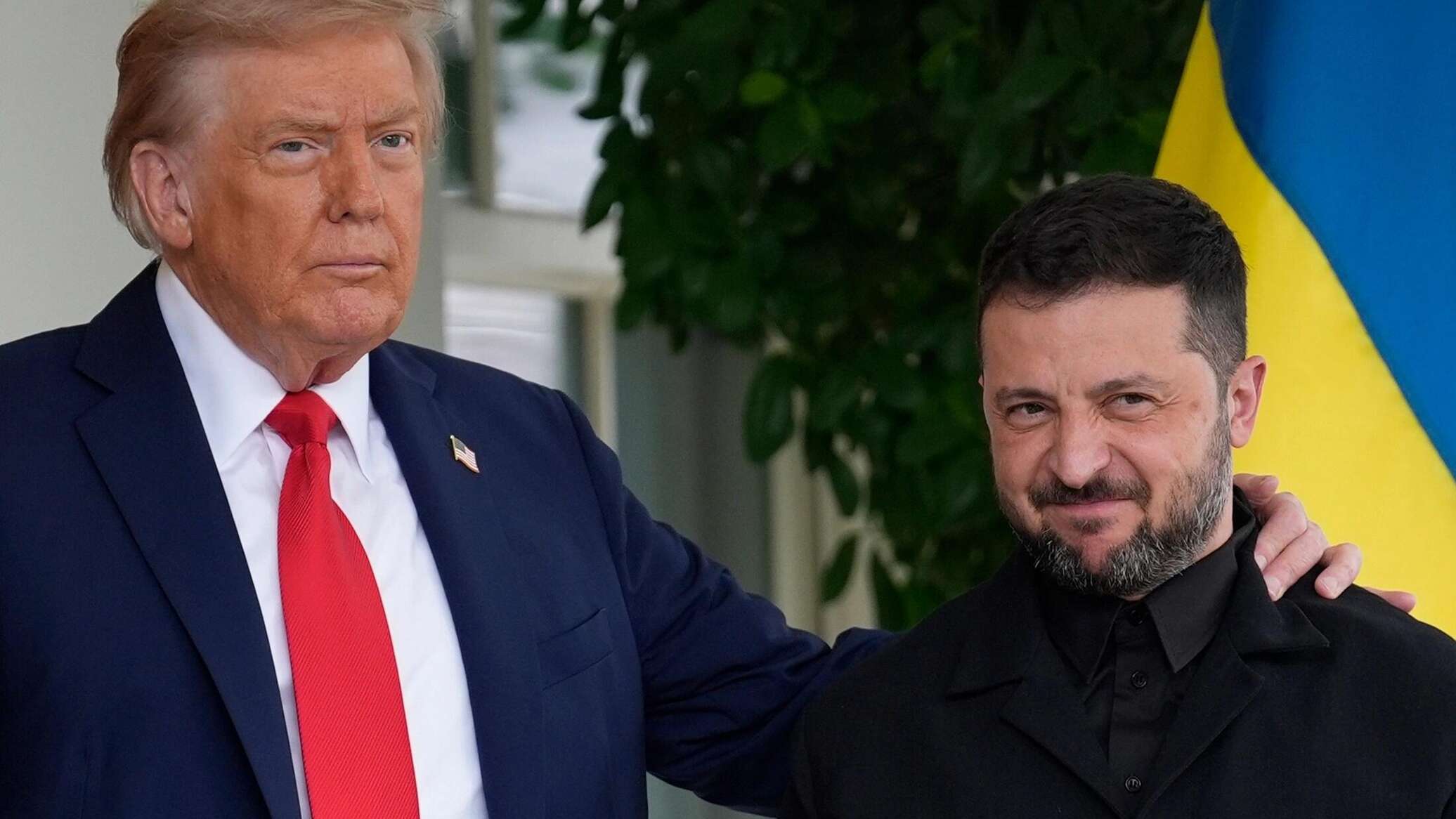
The fourth theme is the image of Trump himself and his approach to the war in Ukraine as seen by the three societies. In Ukraine Trump’s assertions that “the end of the war is very near” and that “the problem is Zelensky, not Putin” are perceived as almost a personal insult and an attempt to shift responsibility for the aggression. Ukrainian media extensively quote his statements to Reuters and subsequent interviews: Trump insists that Putin “is ready for peace,” while Ukraine is “less ready” to agree. In response Ukrainian politicians reiterate the thesis “nothing about Ukraine without Ukraine,” and the Foreign Ministry stresses that the fundamental condition of any agreement remains full respect for territorial integrity. (eurointegration.com.ua) In public debate Trump appears as a figure for whom Ukraine is more an object of bargaining with Moscow, Brussels and his own electorate than an ally with an independent voice.
In Russia Trump, by contrast, is described as a “rational isolationist” who “doesn’t want to spend US money on Ukraine.” Russian official and semi‑official media readily cite his statements about the “imminent end” of the conflict and about “Kyiv’s mistakes,” presenting them as proof that even in Washington it is understood: betting on a military defeat of Russia was a “delusion.” (rg.ru) In more cynical columns the idea is voiced that it would benefit the Kremlin if Trump, rather than a more classic interventionist, defined American policy: he can “sell” any compromise to his voters as a “great peace deal” while at the same time undermining allies’ trust in the US.
In Ukraine, however, an increasing motif is emotional distancing from Washington. Based on publications in The New York Times and other Western outlets, commentators note that Zelensky has begun to criticize the US “in ways that would have been unthinkable a year ago,” since attempts to impose a quick peace on terms close to Russia’s are seen as betrayal. Notably, users of Ukrainian and Russian‑language forums discuss not only White House policy but also the responsibility of Europeans: “Europe will supply the AFU with everything until the White House gets the ‘right guy,’” one Russian political scientist paraphrases the mood among Western elites. (ukraina.ru) Here a unique perspective for Ukraine emerges: the US cease to be the unambiguous patron and become a complex, often opposed partner, while the EU and certain Asian players (from South Korea to Gulf states) become equally important for survival.
Finally, all three countries discuss a more abstract but important storyline: what American leadership means in a world where Washington sometimes exits dozens of international organizations, sometimes starts new wars, and sometimes announces short‑term ceasefires in old conflicts. Russian Wikipedia and expert commentary directly link the January US withdrawal from 66 international institutions with “a strengthening of isolationist policy” and the abandonment of multilateral governance. (ru.wikipedia.org) For Russian authors this is a reason to speak of “the end of the unipolar world,” although they admit that neither China nor the EU is yet capable of offering a comparable security architecture. In Australia the same process is described much more mildly: as a potential reformatting of global institutions in which middle powers — including Australia and Ukraine — are forced to become more “self‑sufficient” in defense and diplomacy, not relying entirely on Washington.
Perhaps the most unexpected development is how the lens through which Ukraine, Australia and Russia view the US is gradually changing: instead of the customary division into “friend” and “enemy,” discussions increasingly focus on reliability, predictability and the cost of alliance. In Kyiv they are learning simultaneously to argue with Washington and to sell their military expertise to it, turning dependence into exchange. In Canberra they count on American resources and ask whether they will be sufficient for the Pacific in a world where the US is fighting on two fronts. In Moscow, while continuing to demonize Washington, they watch every tactical move in the White House closely and acknowledge: no matter how much is said about the “decline of America,” decisions in the White House determine how far Russia can go in Ukraine and in other regions.
Thus a new, far more complex picture is taking shape. The US remain a central player, but no longer one whose role is interpreted unambiguously. Ukrainian newspapers, Australian analytical programs and Russian columns argue about Washington — but they now debate not only power, but the quality of leadership, the ability to reconcile American interests with those of allies, and whether the world has a Plan B if America continues to oscillate between isolationism and global intervention.