In Turkey, India, and Ukraine, the main American story in recent weeks has been less about the midterm elections on November 3, 2026, themselves than about their practical implications: how much power weakened President Donald Trump still has to shape U.S. foreign policy on his own. Democrats won control of both chambers of Congress, but commentators in all three countries share an important conclusion: this is not a shift in U.S. policy, but a return of institutional constraints. The result is three very different national reactions. Ankara is thinking about F-35s, CAATSA sanctions, and the personal Erdoğan–Trump channel; New Delhi, about tariffs, Russian oil, H-1B visas, and a trade deal; Kyiv, about whether congressional control will translate into air defenses, ammunition, and tighter oversight of negotiations with Moscow. (aa.com.tr)
The Turkish perspective is especially revealing for its pragmatism. In an analysis by Anadolu Ajansı, Aydın Tarık Oğuzlu, a professor at Istanbul University, warns that it would be a mistake to expect Democrats and Trump to differ radically in their assessment of Turkey’s strategic role. The disagreement, he says, lies in the “political and normative conditions” under which that role is translated into cooperation. For Ankara, this means that a friendly White House alone will not resolve long-standing issues: rejoining the F-35 program, F-16 deliveries and upgrades, lifting sanctions under the CAATSA law, and reviving defense-industrial cooperation. Oğuzlu puts the concern in Ankara plainly: relations will now be shaped not only by the closeness between Erdoğan and Trump, but also by the balance of power in Washington. (aa.com.tr)
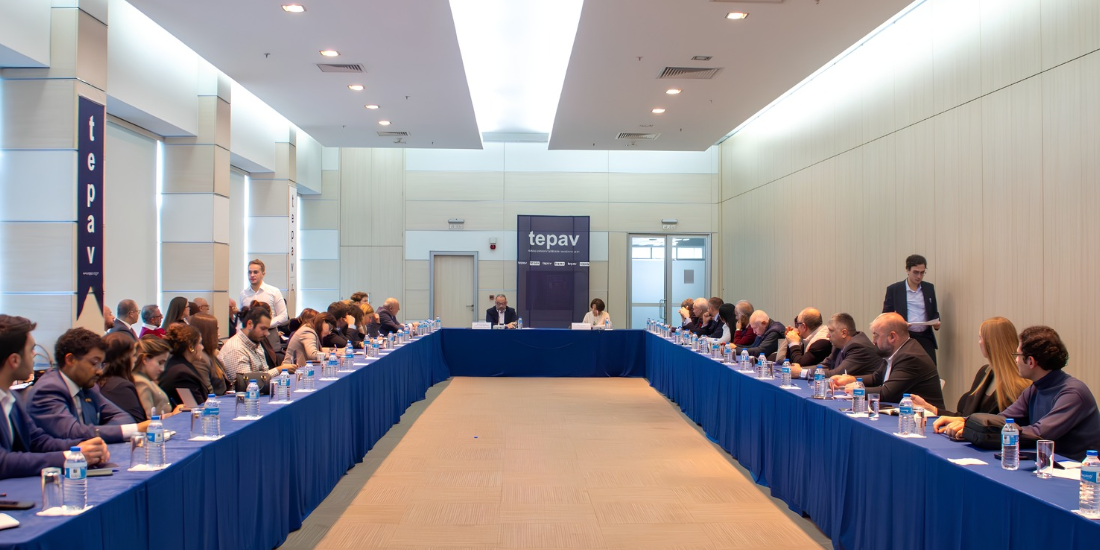
This is what sets Turkey’s response apart from the familiar American debates about democracy and personalities. Ankara is neither celebrating the limits placed on Trump nor lamenting them; it sees them as a change in the mechanics of negotiation. At the Turkish think tank TEPAV, former ambassador Tahsin Timur Söylemez and other participants in a discussion stressed the need to supplement leaders’ dialogue with regular contacts with both parties and congressional committees. Another sober observation was made there: American voters’ reaction to the war with Iran should not automatically be read as a mandate to normalize relations with Tehran; the parties’ differences are more about means than ultimate goals. For Turkey, which borders a conflict-ridden Middle East while also depending on NATO, this means U.S. unpredictability is not going away—it will simply have to pass through more centers of power. (tepav.org.tr)
India’s debate is even less inclined to mistake Trump’s domestic political setback for an automatic gain for U.S. partners. In a column for Navbharat Times, commentator Manish Gupta calls two popular conclusions— that Trump’s weakened position will immediately bring India relief, and that Democrats will automatically become New Delhi’s “old friends”—only partly true. His central point reads like a guide for Indian diplomacy: relations should be built not with one president, but with the entire U.S. system. China, the Indo-Pacific, and defense and technology cooperation remain areas of bipartisan agreement; tariffs, immigration, and human rights concerns, however, could return in a new form. (navbharattimes.indiatimes.com)
But the sharpest issue in India is not geopolitical rhetoric; it is the price of access to the U.S. market. Ajay Srivastava, founder of the Global Trade Research Initiative, argues in a Business Standard Hindi article that the Republicans’ defeat does not deprive Trump of tools for unilateral pressure: he can still use trade laws, executive orders, Treasury sanctions, and the rules enforced by the Office of the U.S. Trade Representative. Srivastava believes the White House, seeking a quick foreign-policy win, may press India harder to reach an agreement that opens its market to American agricultural and industrial products. Former Indian foreign secretary for economic relations Dammu Ravi proposes the opposite tactic: don’t rush, and take advantage of a changed Congress, where criticism of unilateral tariffs may grow louder. (hindi.business-standard.com)
In this way, India’s response turns the American elections into a debate about the sovereignty of economic policy. The issue of Russian oil is particularly sensitive: the threat of secondary tariffs remains a potential lever for Washington, while temporary exemptions are not seen in New Delhi as a reliable guarantee. Indian commentators therefore advise against trading long-term freedom in energy and industrial policy for short-term tariff relief. This is a far more skeptical position than the idea that a Democratic Congress will automatically soften America: for India, the new Congress could both curb the White House’s arbitrary use of tariffs and intensify scrutiny of Russian oil purchases. (hindi.business-standard.com)
The Ukrainian debate views the same shift in Washington through the lens of physical survival. In a column published on November 23 in Ukrainska Pravda, American political strategist and lawyer Yuriy Vanetik stresses that the new Congress can demand documents, investigate delivery delays, monitor sanctions enforcement, and make the administration’s negotiations with Moscow less opaque. But he is just as emphatic in rejecting hopes for a miracle: the president retains freedom of action in diplomacy, intelligence sharing, and the implementation of aid programs, while any new funding must go through the legislative process and may have to overcome a presidential veto. (pravda.com.ua)
That is why Kyiv does not see the Democrats’ victory as an automatic “return of America.” Ukraine’s request is much more specific: interceptors against ballistic missiles, air defenses, ammunition, intelligence cooperation, and protection for its energy infrastructure. On November 21, President Volodymyr Zelenskyy put this caution even more plainly: the new Congress’s pre-election statements may turn out to be just promises, but if Americans really want to help, they know what Ukraine needs—above all, interceptors. (zn.ua) Ukrainian analysts argue that the case should be made not only in terms of moral duty, but also in terms of American interests: supporting Ukraine contributes to European security and bolsters confidence in U.S. deterrence policy. (pravda.com.ua)
The most unexpected common thread in the three countries’ responses is that none expects clarity from Washington. Turkey sees a chance to anchor a personal deal in institutions; India, an opportunity to bargain harder without becoming dependent on temporary exemptions; Ukraine, a chance to turn political discontent with Trump into real budgetary and oversight mechanisms. But the same caveat applies everywhere: Congress constrains the president; it does not replace him. For Ankara, that means a more complicated path to defense contracts; for New Delhi, the need to resist tariff threats; for Kyiv, the need to build a bipartisan coalition rather than bet on one victorious party.
U.S. policy is therefore seen in these countries not as an abstract struggle between Trump and the Democrats, but as a struggle for predictability. Local observers assess Washington differently, but with the same pragmatism: not by the volume of its statements, but by whether the new balance of power changes arms deliveries, sanctions, market access, and the price of diplomatic concessions.