The world increasingly looks at US foreign policy through the lens of risks and consequences: in some places it is seen as a driver of conflict, in others as a source of friction among allies, and overall as a factor that heightens the sense of instability and pushes countries to reconsider their position. Focus is placed both on reactions to escalation around Iran, on how tensions within NATO could affect the coherence of actions, and on how individual decisions by Washington turn into broader international concerns. Against this backdrop, the discussion shifts from specific diplomatic moves to the question of who—and how—US priorities pull into crises: allies, partners, or entire regions.
This piece is based on data from BBC (Turkey) and Instagram (Ukraine).
F-35, Erdogan and the dispute over Turkey’s new role
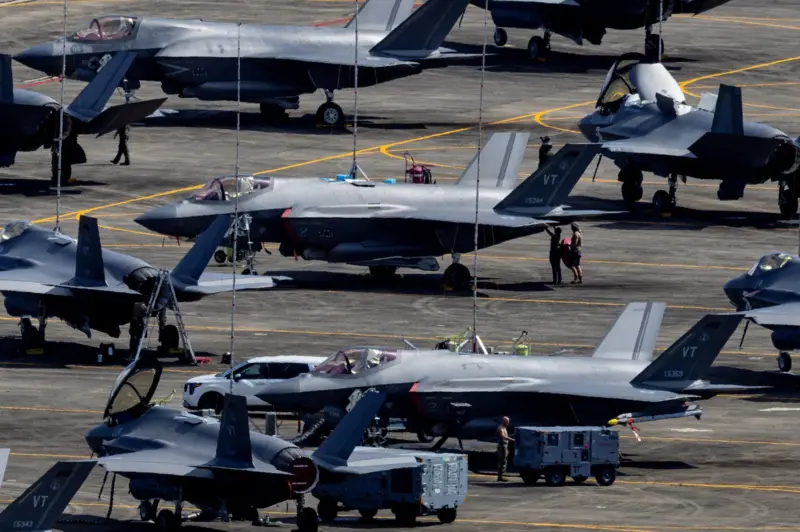
The debate surrounding a possible US sale of F-35 fighter jets to Turkey is presented in the Turkish press not as an ordinary military deal, but as a question of the regional balance of power, Israeli pressure, and Ankara’s place within NATO. In a BBC Türkçe report (link), this issue is explored through the Turkish perspective: the return to the F-35 is viewed as a symbol of Turkey restoring its status, not simply as the purchase of weapons.
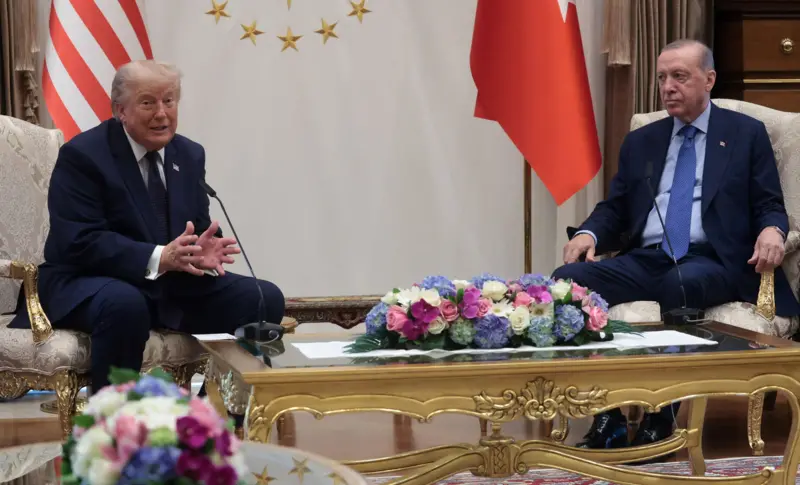
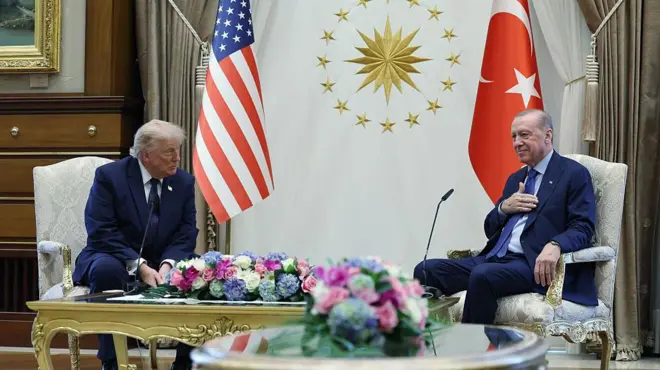
For a Turkish audience, this storyline is directly tied to CAATSA sanctions, Turkey’s exclusion from the F-35 program after buying Russia’s S-400s, and Recep Tayyip Erdoğan’s personal diplomacy with Donald Trump. In Ankara, this is seen not as an abstract international conflict, but as a continuation of a long-running dispute with the United States. Turkey believes it was punished politically, even though it remains a NATO member and a Washington ally. That is why Trump’s remarks about potentially lifting sanctions and discussing F-35s in Turkey are interpreted as a possible turning point—one that could restore the country’s lost role.
The report gives special attention to Benjamin Netanyahu’s sharp reaction. He argues that selling F-35 jets to Turkey would “destroy the balance of power” in the Middle East and calls Ankara a state with “aggressive ambitions.” For a Turkish reader, this seems like confirmation that Israel is increasingly viewing Turkey as a competitor. Just as sensitive is his jab about a “regime tainted by the ‘Muslim Brotherhood’,” since in Turkey such accusations are often understood as part of a broader campaign against Ankara’s foreign policy in the Middle East.
One of the central lines in the text is Erdogan’s response. He says that the F-35 is “not a new topic,” reminding people of “five aircraft” and of Trump’s personal promise. In Turkish political culture, such phrasing is especially important: it underscores the idea that issues like these can be resolved not only through institutions, but through direct leader-to-leader diplomacy. This helps build a picture of Erdogan as a politician who negotiates directly with Washington and is capable of bringing Turkey access to advanced technologies.
The material also reflects domestic Turkish sentiments related to sovereignty and defense independence. In Ankara, exclusion from the F-35 program and delays in aircraft that had already been paid for were perceived as an injustice and as a reminder of dependence on Western partners. That is why discussion of F-35s in Turkey is linked not only to military power, but also to prestige, technological status, and the question of whether Turkey can be an equal ally rather than a junior partner.
In this sense, BBC Türkçe’s article differs from a dry straight news report: the Turkish perspective on the conflict is expressed more strongly through quotes from Erdogan, references to CAATSA, the S-400s, and the earlier exclusion from the program. It is not just about what Netanyahu said, but also about how Turkey perceives external pressure—as part of a larger bargaining process over the country’s place in a new Middle Eastern architecture.
Trump and the NATO summit: in Ukraine, fears of cracks in the Alliance
News that Donald Trump is going to a NATO summit with “serious complaints about allies” is received in Ukraine not as a routine in-faction spat, but as a direct signal of possible risks to its own security. That is the context set by the Ukrainian reaction to CNN’s report, relayed on glavcom.ua: as the article notes, European leaders “fear the unpredictable behavior of the US president” and are trying to prevent a new conflict within the Alliance.
For a Ukrainian audience, the news sounds especially alarming. After Russia’s full-scale invasion of Ukraine, NATO is seen not just as an international organization, but as the key political and military framework on which deterrence of Moscow and the durability of assistance to Ukraine depend. That is why any signs of tension between Washington and European capitals are automatically read through the prism of war.
The main concern in Ukraine’s perception is not Trump himself, but the risk of a split within NATO. Ukrainians remember well that disagreements between the US and European allies usually show up in the pace of decisions on weapons, financing, and security guarantees for Kyiv. If Washington starts pressing partners more forcefully—demanding higher spending or changing the tone in relations with Europe—this could also affect discussions of aid to Ukraine, which is often hostage to disputes within the Alliance.
In Kyiv, the very phrase about Trump’s unpredictability is also received particularly sensitively. It matches a broader Ukrainian sense of things: Western support is important, but politically vulnerable and dependent on electoral cycles in the US. Against this backdrop, Europe looks less confident than concerned, and the summit itself is not a routine diplomatic meeting, but a test of strength for the entire system of Western support.
For Ukraine, the NATO summit is the place where it will be decided whether the West will act as a unified front. Any conflict between Trump and allies could slow down new aid packages, weaken a unified signal to Russia, increase doubts about the long-term reliability of American guarantees, and give Moscow an argument that the West is tired and fragmenting. That is why such news in the Ukrainian agenda is read almost like part of the military chronicle.
This is where the Ukrainian reaction differs from a typical factual update. It adds not only a description of the conflict between Trump and allies, but also a broader strategic meaning: this is not just a dispute about spending and obligations, but a potential risk for Ukraine and an indicator of how willing the West is to preserve unity in the face of Russia. In the Ukrainian lens, the NATO summit question is not US foreign policy by itself, but a test of the reliability of the entire Western coalition that Ukraine is relying on—in the war and in the future security arrangement.