In February 2026 the image of the United States abroad is shaped not by a single issue but by a knot of events: a military intervention in Venezuela, a sharp turn in Washington's foreign policy, a slowdown of the American economy, and the way the new administration speaks to the world — especially to Europe and the global South. Germany, Russia and Turkey respond to these processes differently, but their debates unexpectedly converge on several key points: alarm about unilateral US use of force, growing distrust of "American leadership," and a pragmatic interest in the dollar and the US economy on which they still depend.
The first and most sensitive nerve is the January US intervention in Venezuela. German, Russian and Turkish media discuss it not as a local episode in Latin America but as a symptom of a broader American readiness to bypass international law. In Germany this theme overlays the painful cooling of transatlantic relations; in Russia it fits into a long-standing narrative about "US hegemony"; in Turkey it prompts a pragmatic, almost cynical question: what does this mean for global turbulence, oil prices and the dollar exchange rate.
In Germany the Venezuela episode has sparked an unusually heated debate. Bundestag party reactions were split: the CDU/CSU foreign policy spokesman presented Maduro's removal as an "encouraging signal" for Venezuela, while the SPD and Greens faction leaders called US actions a "serious violation of international law" and demanded that the German government formally adopt that legal assessment. The Left Party leader went further, accusing Donald Trump of "state terrorism," while an AfD MP emphasized the principle of non‑intervention and urged to "hear the American justification for the strike" before drawing final conclusions, as reported in a review of German politicians' reactions to the intervention published by Deutschlandfunk and catalogued in the Wikipedia article "International reactions to the 2026 United States intervention in Venezuela." This is a rare case in which even traditional transatlanticists in Berlin are forced to navigate between past loyalty to the US and the legal frameworks of the UN. (en.wikipedia.org)
Against this background the old German‑American conflict over values and the style of US politics has only intensified. The British Financial Times, in a recent piece on Germany's "painful estrangement" from the United States, quotes figures of the old West German elite — such as former Munich Security Conference head Wolfgang Ischinger — speaking no longer of a "crisis" but of "betrayal" by Washington. According to that analysis, Germany is experiencing a deep value split with America: from disappointment with Trump to distrust of the new right‑conservative course and the manner in which American leadership addresses Europe through the prism of migration, "civilizational" struggle and Christian nationalism. (ft.com)
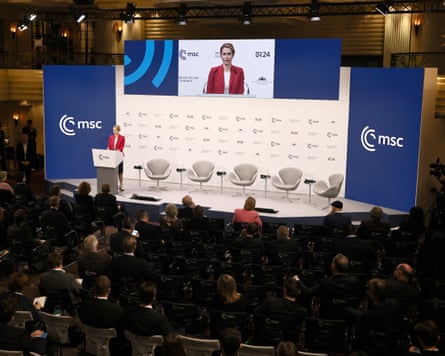
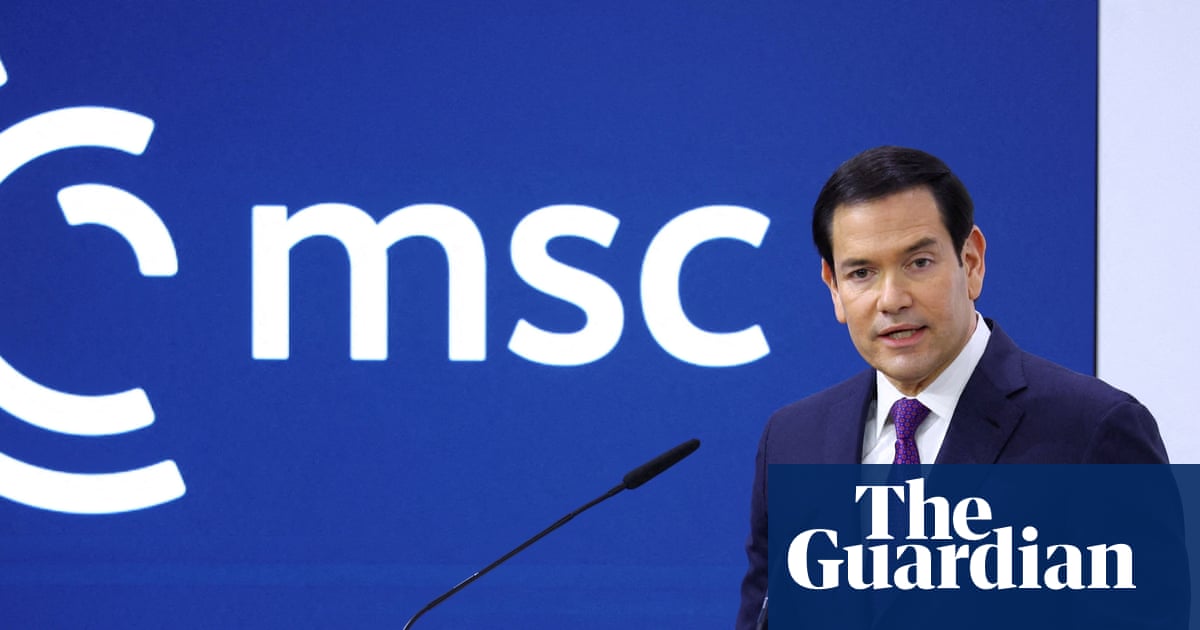
The emotional tone intensified after speeches by senior members of the current US administration at the Munich Security Conference. A column in The Guardian, analyzing Secretary of State Marco Rubio's speech in Munich, notes that Europeans received it as a softer version of last year's hard rhetoric by J.D. Vance, but that it carried the same set of MAGA ideas: skepticism toward international institutions, an emphasis on "white Christian civilization," rejection of globalism and migration. European leaders, including Chancellor Friedrich Merz and French President Emmanuel Macron, publicly distanced themselves from that worldview and again spoke about the need for "strategic autonomy for Europe," even discussing independent nuclear deterrence. (theguardian.com) For the German debate this is important: criticism of the US increasingly sounds less like the stance of "leftist pacifists" and more like that of the mainstream center, worried that America is pushing Europe into a world where it will have to rely on its own strength.
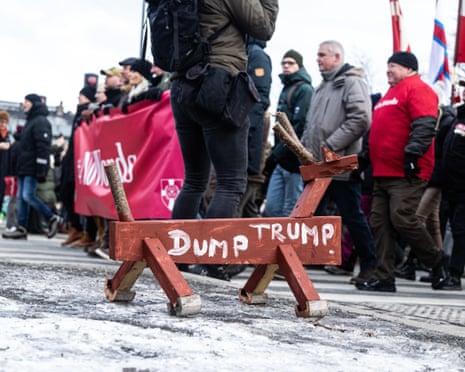
German public opinion confirms this evolution. A YouGov poll, recently reported by The Guardian, showed a sharp drop in positive attitudes toward the US across the Western European belt after a series of provocative US moves, including the high‑profile episode of an attempt to "buy" Greenland: in Denmark 84% of respondents expressed an unfriendly view of the US, in France — 62%, and in Germany, Italy, Spain and the UK antipathy toward America reached its worst levels in a decade. The characteristic conclusion of the German debate follows: US military and economic power is not denied, but more and more people say Europe should build an autonomous policy rather than automatically relying on Washington. (theguardian.com)
In Russia discussion of the United States is traditionally colored by anti‑hegemonic rhetoric, but the Venezuela intervention and Washington's current line give that rhetoric fresh material. Officials in Moscow emphasize that US actions in Caracas fit a "long series of illegal regime changes" — from Iraq to Libya — and try to use them to mobilize the global South against Western sanctions and military support for Ukraine. The fact that Germany and other EU countries now more loudly speak of US "violations of international law" is presented by Russian commentators as confirmation of their own narrative: the West, they say, can no longer claim a moral monopoly.
Within Russia itself, where state media have long portrayed the US as the main rival, the Venezuela theme is used to show: "they can, but we cannot." Talk shows and columns draw parallels between the American operation in Venezuela and Russia's actions in Ukraine, pushing the message of "double standards" and "the right of the strong." Unlike the German press, there is almost no discussion of legal subtleties or internal US political debates: for the Russian media field the symbolic gesture matters — another proof of Washington's "aggressive nature."
The Turkish debate about the US is the most down‑to‑earth and pragmatic. The key angle is economic: the United States is both a source of instability and a key player on which the dollar, global demand and Federal Reserve decisions depend. Turkish financial outlets analyze fresh US GDP data in detail: for example, Dünya in the article "ABD ekonomisinde sert yavaşlama" emphasizes that in Q4 2025 the US economy grew only 1.4% annualized while expectations were 2.8%, and annual growth was 2.2% — significantly below 2024. The authors link this to the 43‑day federal government shutdown and cuts in public spending. (dunya.com)
In the left‑nationalist paper Aydınlık the British economist Michael Roberts writes that the much‑praised "economic boom" of the Trump team looks far less impressive against the real numbers: without a surge in investment in equipment and software related to AI investments, 2025 GDP growth would have been below 2%. Roberts notes that despite these problems the US economy still grows faster than most G7 countries, but concludes: for Turkey and other emerging markets this means a combination of continued dependence on American demand and growing vulnerability to dollar policy volatility. (aydinlik.com.tr)
At the same time Turkish analysts read Fed minutes closely. The magazine Ekonomist, in a note on the latest "Fed tutanakları," records that some FOMC members are ready to support rate cuts if inflation continues to slow, while others insist on keeping the current 3.50–3.75% range longer due to uncertainty around growth and the labor market. For Ankara this is not an academic question: how long the dollar remains expensive and US bond yields stay high affects pressure on the lira and the need to keep domestic rates tight, which constrains lending and growth in Turkey. (ekonomist.com.tr)
Turkish markets also live in the logic of geopolitics. Broker and investment bank comments, for example in GCM Yatırım's USD/TRY review, directly link exchange rate volatility with accumulating geopolitical risks on the US–Iran line and in the Middle East more broadly: "ABD–İran hattındaki jeopolitik risklerin ekonomik göstergelerin önüne geçtiği bir haftayı geride bırakıyoruz," one bulletin states, noting that the dollar index DXY remains in the upper part of the medium‑term 95–100 range. (gcmyatirim.com.tr) In translation from professional jargon this means: however much authorities would like to focus on domestic inflation and the budget, Turkey is forced to keep looking to Washington — its sanction decisions, military moves and rhetoric.
At the intersection of these three debates — German, Russian and Turkish — common motifs emerge that often escape readers who rely only on American media. First, the Venezuela intervention has become a kind of litmus test: in Germany it further undermines the moral authority of the US as "guardian of the international order," in Russia it serves as a handy case for anti‑Western propaganda, and in Turkey it marks that Washington remains willing to take unilateral forceful actions that can crash oil prices and increase market turbulence.
Second, in almost all three countries there is growing desire for greater autonomy — but understood differently. For Germany it is Europe's strategic autonomy: discussion of its own nuclear option, NATO reform, strengthening the EU defense industry under the Zeitenwende slogans written about extensively in German and English‑language press. (ft.com) For Russia "autonomy" means de facto opposing the American world, betting on alternative blocs and settlements in national currencies. For Turkey it is the art of balancing between the US, Russia and regional players to maximize gains and minimize risks for its own economy.
Third, a motif of fatigue with American exceptionalism is audible everywhere. In Germany this appears in polls and the emotional words of former ambassadors and diplomats who ten years ago were convinced Atlanticists. (theguardian.com) In Russia — in the now‑familiar skepticism toward any "democratic" arguments coming from Washington. In Turkey — in irritation at the fact that any Fed policy shift or new US sanctions against third countries immediately hit the lira, inflation and the social well‑being of Turkish citizens.
And yet none of the three countries harbors illusions: the United States remains a central link in the world economy and security. German factories depend on the American market and technologies; German security depends on the American nuclear umbrella and NATO infrastructure. Russian elites, however much they talk about dedollarization, understand the weight of the US in global financial flows and the sanctions system. Turkey, standing on the front line of many conflicts, proceeds from the fact that no serious regional balance is possible without taking Washington into account.
Therefore today's attitudes toward the US in Berlin, Moscow and Ankara cannot be reduced either to simple anti‑Americanism or to past admiration of American power. They are more complex: a mixture of dependence and resistance, pragmatism and emotional disappointment. And the more often Washington demonstrates a willingness to take unilateral forceful steps, as in Venezuela, and the harsher its tone toward allies in Munich, the stronger the conviction grows in these countries that the world has entered an era in which one must not only cooperate with the US but also learn to live with them while relying on them less and less.