Throughout the first months of 2026 the United States once again found itself at the center of global debate — but this time not because of trade wars or internal political battles, rather because of a sharp foreign-policy turning point. A US military operation in Venezuela, a deterioration of the crisis with Iran and an attempt to “rewrite” the security architecture in Eastern Europe have forced governments, experts and public opinion in Brazil, Ukraine and Saudi Arabia to rethink the very nature of American power. In these three countries, very different in political systems and geography, discussion of the US unexpectedly converged around the same themes: the legitimacy of using force, the logic of “spheres of influence,” the cost of alliance with Washington and the degree of national maneuvering room.
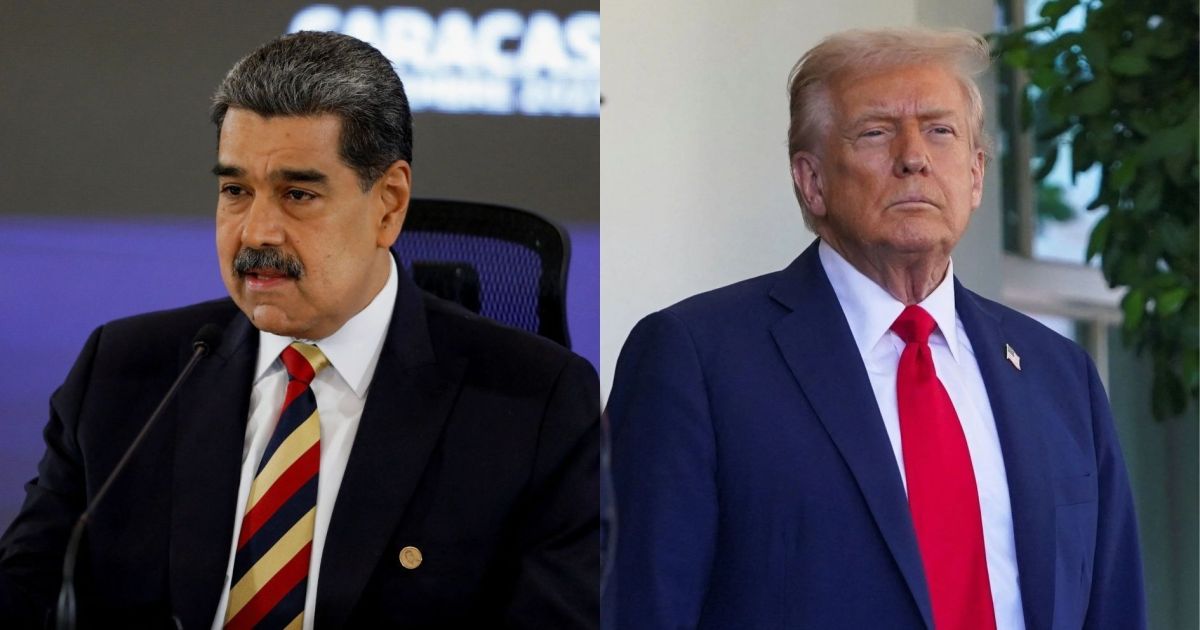
The lightning US operation in Venezuela in January 2026 became the focal point of these debates; it ended with the capture of Nicolás Maduro, a change of power in Caracas and the effective establishment of American control over Venezuela’s oil industry. Formally the operation was portrayed by Washington as an action to defend democracy and fight drug cartels, but in Latin America it was perceived as a return to the “Big Stick” logic of the early 20th century. The Spanish Wikipedia article “Bombardeo estadounidense a Venezuela de 2026,” which collects international reactions, captured the tone of much of the regional press precisely: this is not just another intervention, but a demonstrative violation of international law and the principle of sovereign equality of states — a point made, for example, in the editorial of Spain’s El País, “Fuerza bruta en Venezuela” — which emphasizes that the operation “exposes a dangerous scenario in which force is placed above law” and where Washington no longer pretends to be a “guarantor of democracy” but acts as a global sheriff for whom law is an obstacle rather than the framework of policy. An overview of these reactions is available in the English Wikipedia article “International reactions to the 2026 United States intervention in Venezuela,” which cites both regional criticism and European commentary. (es.wikipedia.org)
It is around Venezuela that the most emotional and contentious debate about the US has unfolded in Brazil. On one hand, a poll conducted by research firm Ipsos-Ipec in January showed that 51% of Brazilians to some degree approve of the US military action against Venezuela, while 28% disagree, and a notable share of respondents were undecided. The poll release highlights not only this split but also that, despite broad support for the ideal of Brazil’s “neutrality,” practical sympathy for American intervention proved stronger than might be expected in a country with a long tradition of rhetoric about “non-intervention” and “Latin solidarity.” The document bluntly headlines: “Brasileiros concordam com a ação militar dos EUA na Venezuela e preferem a neutralidade do Brasil” — that is, Brazilians both agree with the US intervention and want their own country to stay out of it. (ipsos.com)
This duality is especially visible in opinion columns. In a special edition of CNN Brasil’s “Perspectivas 2026,” international affairs commentator Fernanda Magnotta explained why many in the Brazilian establishment view the Venezuelan campaign not only as a norms violation but as a hard geopolitical play in which Latin America has once again become the chessboard for someone else’s game. She described current US President Donald Trump as “a 19th-century man” who thinks in terms of “zones of influence” and is deliberately returning the world to a doctrine of spheres of influence where continents are divided among great powers. According to her, Venezuela has become a “central element” of Washington’s new Latin American strategy aimed at pushing Russia, China and Iran out of the region and cementing the US as an unchallenged arbiter. The segment notes that the operation in Caracas, along with the related concept of a “managed transition” under external control, is perceived by part of the Brazilian elite as a “tempting but dangerous precedent”: if it’s Venezuela today, tomorrow the “zones of influence” logic could be applied to the Amazon, energy resources or the digital space of South American neighbors. (cnnbrasil.com.br)
At the opposite pole of the Brazilian debate are church and left-wing voices. Several publications, such as an early-January issue of the regional newspaper Opinião, extensively reported statements from the National Conference of Brazilian Bishops (CNBB), which expressed solidarity with the Venezuelan church and people after the US strikes. In the CNBB letter quoted by the paper, the operation is described as “an act of violence that risks destabilizing an entire region” and is compared with historical US interventions in Latin America. The newspaper stresses that even without sympathy for Maduro’s regime, many Brazilian Catholic leaders see Washington’s actions as a threat to the principle of sovereignty. (opiniaoce.com.br) Leftist parties, in joint statements with colleagues from other Latin American countries, draw a direct line from the “old” Monroe doctrine to today’s move by Trump, invoking Cuba and Nicaragua as historical parallels.
Interestingly, even critics of the operation in Brazil, for example, experts at military schools, describe it as a “realistic” US move that fits Washington’s long-term aim of retaining control over the “security of the Western Hemisphere.” In one analytical note published by the Brazilian War School (ESG), prospects for the US–Venezuela crisis are interpreted through the lens of a “covert war” and a “reprogramming” of the entire regional security system, in which Brazil, as a middle power, will have to navigate between the desire to preserve strategic autonomy and the necessity of accounting for new American red lines in energy and migration. (gov.br)
Ukraine views the US in 2026 from a very different angle — as the principal arbiter of its chances to survive the war with Russia. Yet even here the Venezuelan operation became an important lens for discussing American policy. Even before the attacks began, Ukrainian research and analysis centers warned that a US invasion of Venezuela, if it occurred, would divert Washington’s attention from Eastern Europe and demonstrate the White House’s willingness to act decisively where the stakes for the US are closer to its “home yard.” In a January analytical bulletin from the Vernadsky National Library, a characteristic phrase from a Ukrainian expert is quoted: “If the US invades Venezuela today, tomorrow they could just as easily indicate that Ukraine is in someone else’s ‘sphere of influence.’” The authors stressed that any signal prioritizing the Western Hemisphere at the expense of the Eastern European front would be perceived in Moscow as an invitation to continue the war. (nbuviap.gov.ua)
After the operation in Caracas did in fact take place and Maduro was captured during a night raid, the Ukrainian press — especially military and expert outlets — closely analyzed its tactical and political dimensions. Defense News reported in “Ukrainian leaders find lessons in Trump’s daring Venezuela raid” that a Ukrainian official, speaking off the record, asked: “Would you be ready to do the same against Russian troops attacking our cities?” According to the outlet, Ukrainian officials see in the operation both a “display of power” and a “test of the limits” of the “America First” slogan — how far Washington is willing to go beyond its traditional backyard when the security of an ally, rather than control over resources, is at stake. (defensenews.com)
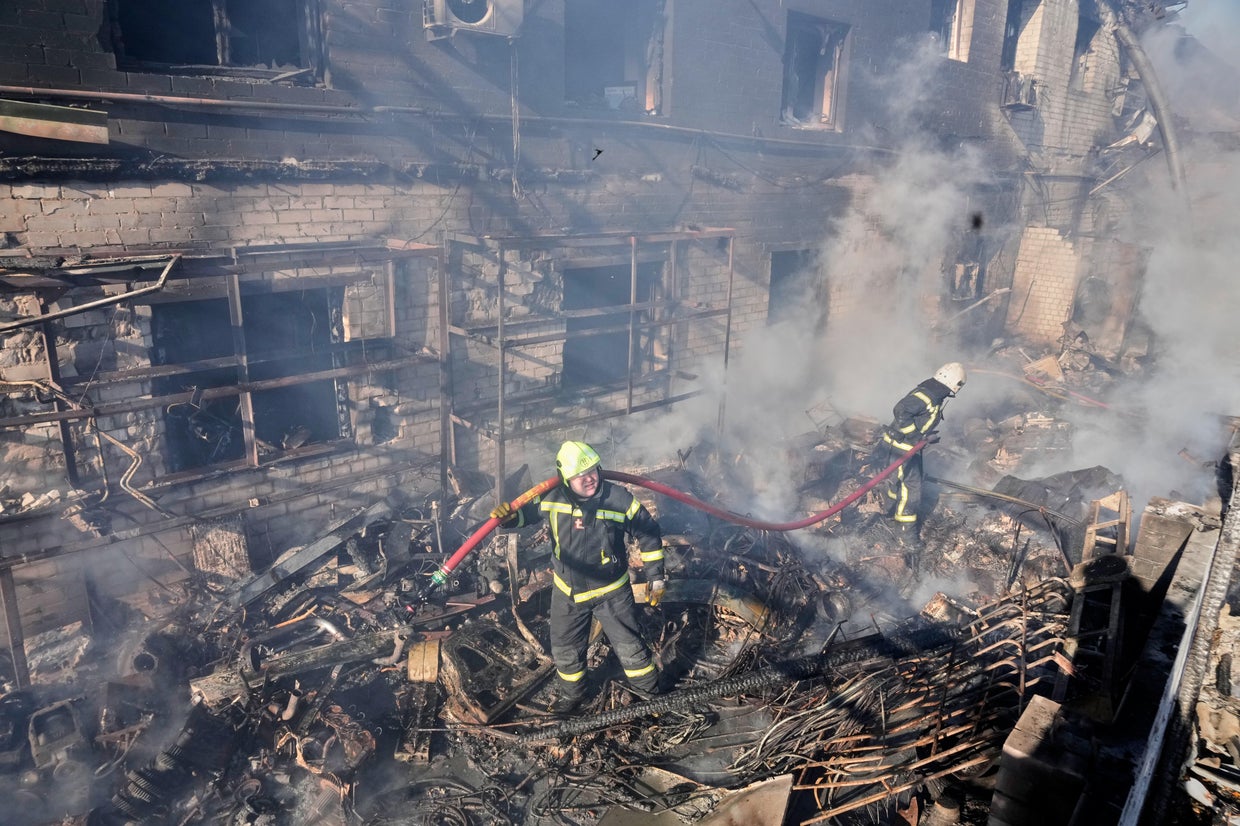
This tension is intertwined with discussion of how US involvement in the Middle East crisis and an escalation with Iran affect the Ukrainian track. In a thematic report by the humanitarian analysis platform ACAPS on the impact of the Middle East conflict on Ukraine, the authors emphasize that Kyiv feels “a significant shift in diplomatic attention”: the more Washington is occupied with the Gulf and Venezuela, the harder it becomes to maintain previous levels of support for Ukraine and pressure on Moscow. The report warns that a protracted crisis with Iran — which the US approached after talks in Oman and the deployment of a carrier strike group in the region — along with rising oil prices from strikes and reprisals, objectively creates an additional window of opportunity for Russia and a threat of marginalization for Ukraine’s agenda. (acaps.org)
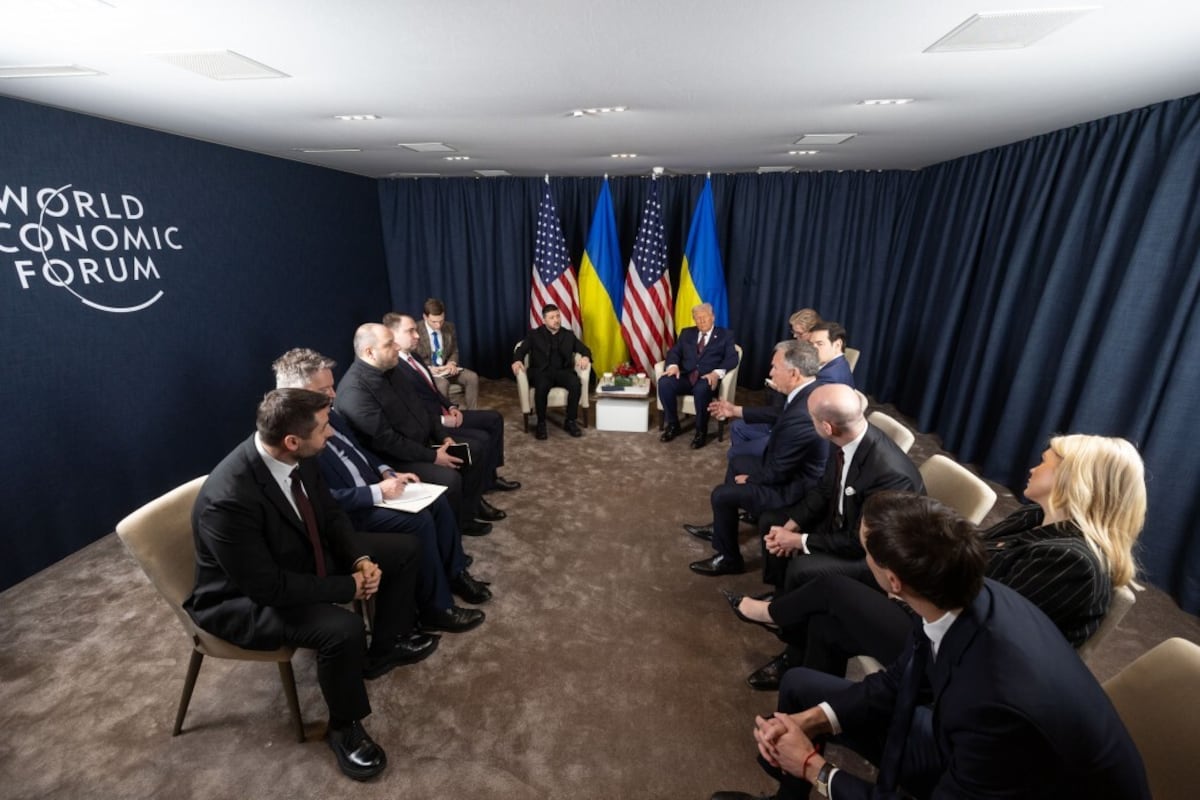
Ukrainian media, however, are not yet inclined toward panic. First, Kyiv still counts on concrete US support: the allocation of $500 million in military aid as part of the 2026 fiscal year budget, approved by the Senate Armed Services Committee. As Ukrainian outlets noted, citing Reuters, this decision was seen as a signal that even amid internal budget disputes and foreign-policy lurches the White House is not abandoning its role as a key guarantor of Ukrainian defense. (rbc.ua) Second, President Volodymyr Zelenskyy has stressed in several interviews that Washington remains an indispensable moderator for potential peace negotiations with Moscow: in his view, the holding of the next round of trilateral talks depends on the willingness of the US and Russia to agree, and Kyiv “is ready for any format that will stop strikes on Ukrainian cities.” (cbsnews.com)
But in Ukraine the Venezuela topic inevitably invites comparisons. “If Trump can conduct a night raid to capture Maduro,” reasons one Ukrainian military analyst in comment to a Kyiv outlet, “then he believes international law will allow him to explain it as a ‘special operation.’ For us it’s important that the US be ready to apply at least a fraction of that resolve to defending the Ukrainian sky.” Here the key difference emerges: Ukrainian public opinion by and large sees American power not as a threat but as a resource that is currently insufficient. And precisely for that reason every American action outside Ukraine — whether in Venezuela or Iran — is viewed in Kyiv primarily through the lens of White House priorities.
Saudi Arabia, unlike Brazil and Ukraine, discusses the current US line less through Venezuela than through three interconnected themes: its own strategic autonomy, the changed security configuration in the Persian Gulf and the fear that Washington might abruptly change course at any moment — from hard confrontation with Iran to an equally sharp deal with it. Saudi commentators closely watch how the US is simultaneously “managing” Venezuela and ramping up pressure on Tehran. In the Arabic edition of Euronews, an interview with Trump after the Oman talks with the Iranian delegation is presented under the telling headline: “Trump says talks with Iran will either lead to an agreement or be a ‘bad day’ for Tehran.” The US president, the channel reports, links his readiness to strike Iran with the already executed “Venezuela option” and boastfully claims US strategic self-sufficiency in oil: Washington, he says, “does not need” the Strait of Hormuz and holds reserves exceeding those of Saudi Arabia and Russia. (arabic.euronews.com)
Saudi newspaper Okaz, in a January piece about Trump’s plans to strike drug cartels and his comments that the US will “manage Venezuela,” draws a direct parallel between White House rhetoric on Latin America and its approach to the Gulf. Commentators ask: if Washington can so openly declare its intention to “manage” a sovereign country for a “safe transition,” what prevents it from offering similar “guardianship” over regional hotspots where the interests of Saudi Arabia, Iran and Turkey intersect? At the same time, they stress that unlike Venezuela, the kingdom has long built a partnership with the US not on “external governance” but on mutual benefit and decades of military cooperation. (okaz.com.sa)
At a more academic level this concern is framed as Saudi Arabia’s “strategic autonomy” from the US and China. In the analytical article “Saudi Arabia’s Strategic Autonomy: Balancing the US, China, and Regional Security” it is emphasized that the kingdom is gradually moving away from a model of one-sided dependence on the American “umbrella” and seeking a more balanced, multi-vector policy, including deepening ties with Beijing and independent initiatives to resolve regional crises. The authors note that one lesson for Riyadh in recent years has been the “unreliability” of American guarantees, manifested, among other things, in Washington’s restrained response to drone attacks on Saudi oil facilities during Trump’s first presidential term. Today’s show of force in Venezuela and the hard line on Iran, they argue, reinforce among Saudi elites the sense that the US can be both a necessary partner and a source of strategic unpredictability. (cescube.com)
Interestingly, in Saudi debates the US also appears in the context of technology. A study on perceptions of generative AI in the kingdom, published in early 2026, records an ambivalent attitude toward American technological leadership: on one hand it’s seen as an opportunity to accelerate digital transformation under Vision 2030, on the other as a risk of deepening dependence on American platforms and standards. The authors, comparing national AI strategies of GCC countries, note that the Saudi model is built around “soft regulation” and active cooperation with global players, while clearly aiming for greater sovereignty of data and infrastructure. In this logic the US is a desirable but not the only partner, and discussions of “digital sovereignty” increasingly intertwine in the Saudi expert community with conversations about military and energy sovereignty. (arxiv.org)
Comparing the three countries reveals several common threads. First, the Venezuelan operation became a global test of perceptions of the US as a power willing to openly breach international law in pursuit of its interests. In Brazil this produces a mix of sympathy for the goals and alarm at the methods; in Ukraine — an envious hope that at least some of this resolve will be turned against Russian aggression; in Saudi Arabia — a cool calculation about how far the US is willing to go in the Gulf if it acts so confidently in Latin America.
Second, the language of “spheres” and “zones of influence” is reemerging everywhere. Brazilian analysis explicitly calls Trump a 19th-century-style politician who thinks in terms of global partitioning; Ukrainian commentators see a dangerous precedent for justifying Russian claims to its own sphere in Eastern Europe; Saudi strategists use the same terms when thinking about how not to be reduced to a pawn in a US–China confrontation. Thus American policy is simultaneously reintroducing into international discourse language Washington itself criticized for decades and giving other actors a convenient framework for symmetrical demands.
Third, in all three countries the US is no longer perceived as an unequivocal “center” of the world system. In Brazil and Saudi Arabia the discourse is about seeking strategic autonomy — a chance to engage with Washington on more equal terms and avoid total tethering to its agenda. In Ukraine, where such autonomy is currently impossible due to a heavy dependence on American military and financial support, the aim is rather to find ways to embed Ukrainian interests within White House priorities without becoming a victim of “fatigue” or a bargaining chip in larger games — whether Venezuela, Iran or rivalry with China.
Finally, in all these local conversations a temporal motif is audible. In Brazil, especially on the left, there is a warning: every time the US “temporarily” takes control of a foreign oil sector, it tends to be for a long time. In Saudi columns time is measured by political cycles in Washington: one generation of Saudi leaders has already lived through a period when American protection seemed absolute, and is now devising strategies in case in the next crisis the US prefers Venezuela or domestic politics. In Ukraine, by contrast, every month of delay or reorientation of US attention can cost new losses — and therefore any major foreign-policy move by Washington is treated as a factor that can speed up or slow the path to peace.
So the mosaic takes shape: the same America of 2026, entering a new phase of demonstrative power and geopolitical bargaining, in Brazil sparks debate about the limits of permissible intervention, in Ukraine raises hope for projection of that same power in its favor, and in Saudi Arabia pushes the idea of living alongside the US but not under it. And it is in these local debates, often available only in Portuguese, Ukrainian or Arabic, that the real price and perception of the American course become visible — a picture rarely captured from Washington or New York.