Reports from Venezuela and Turkey examine the consequences of the Trump administration’s forceful foreign policy. Washington is stepping up pressure on Cuba and taking measures to gather intelligence, threatening Iran with further military action and displaying its naval presence near Cuba. At the same time, signs are emerging that Arab Americans are moving away from supporting Trump. In this way, external pressure is causing alarm abroad and triggering a political backlash within the United States and its diasporas. This article draws on reporting by Daily Ummah (Turkey) and Yahoo Noticias en Español (Venezuela).
Arab Americans Turn Away from Trump Over Gaza and Iran
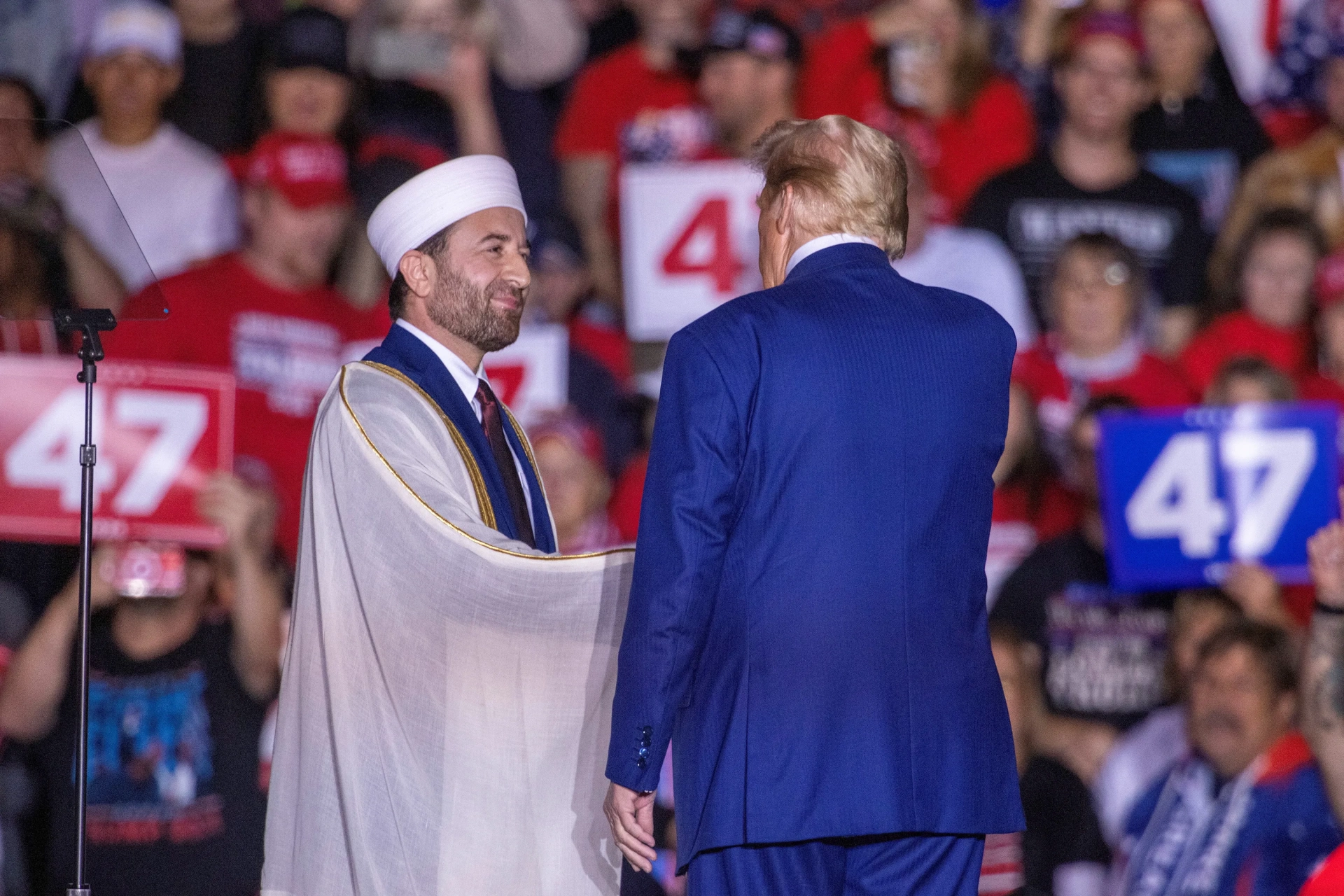
Arab American voters are increasingly leaning toward the Democratic Party ahead of the U.S. midterm elections. According to Turkish outlet Daily Ummah, the shift is primarily linked to the war in Gaza, Washington’s support for Israel, and rising tensions with Iran.
According to a poll by The Washington Post and George Mason University’s Schar School of Policy and Government, 58% of registered Arab American voters intend to vote for Democrats. Some 34% of respondents are prepared to support Republicans. These figures differ sharply from the 2024 presidential campaign, when Arab American votes were split almost evenly: Kamala Harris received 41% support, while Donald Trump received 39%.
The Turkish publication interprets this shift as disillusionment with Trump’s promise to “bring peace to the region.” During the war in Gaza, dissatisfaction with Joe Biden’s administration may have led some Arab voters to support the Republican candidate. But the continuation of hostilities, support for Israel, and confrontational rhetoric toward Iran, the outlet argues, have dashed the hopes of those who saw Trump as a possible alternative.
The poll reflects particularly strong opposition to his Middle East policy. Eighty percent of Arab American voters disapprove of Trump’s approach to Israel and Gaza. About 70% believe Israel is committing war crimes and genocide against Palestinians in Gaza. Roughly 80% favor reducing U.S. military aid to Israel, and six in ten support ending it altogether.
Dissatisfaction with Washington’s hard line toward Tehran is equally pronounced: 75% of respondents oppose the U.S. military policy toward Iran. Daily Ummah links this stance to fears that a policy of pressure and threats could widen the regional conflict and lead to even greater humanitarian and political instability.
Foreign policy crises, the outlet stresses, also have economic consequences at home. Seven in ten poll respondents are dissatisfied with the Trump administration’s economic policy. Even among those who voted for him in 2024, about 40% express dissatisfaction with the economic situation. Rising fuel and grocery costs, attributed to tariffs and the Iran crisis, are turning international confrontation into a day-to-day financial problem for American families.
Cultural and political factors are also deepening the sense of alienation. About half of those surveyed consider the Republican Party cold or hostile toward the Arab community. Sixty percent say the same of Trump himself. The Turkish outlet links these views to anti-immigrant and anti-Muslim rhetoric among some Republicans, noting that Islamophobia, discrimination against Muslims, and attitudes toward immigrants remain highly sensitive issues for Arab voters.
Democrats, however, are not seen as unquestioned allies of the community. The Biden administration’s policy toward Israel left deep distrust: 45% of respondents doubt the Democratic Party’s sincerity. This is therefore not a complete shift in political identity, but a temporary swing toward Democrats as the less undesirable alternative amid a broader crisis of trust in the U.S. establishment.
The electoral shift could be especially significant in Michigan, home to a large Arab American community. The state is holding a competitive Senate race between Democrat Abdul El-Sayed, who is of Egyptian descent, and Republican Mike Rogers. For Daily Ummah, the race illustrates how the Palestinian issue, the war in Gaza, and U.S. policy toward Iran can affect not only Washington’s international image but also the balance of power in Congress.
The Turkish outlet’s main conclusion is that Trump’s pro-Israel and military-first approach carries a domestic political cost for the United States. By this logic, support for Israel, military pressure on Iran, and neglect of the Palestinian issue have failed to bring peace to the Middle East while also eroding Republican support among Americans whose families, heritage, and community identities are directly connected to the region.
Cuba Accuses the U.S. of a New Pressure Campaign and CIA Recruitment
U.S. Secretary of State Marco Rubio’s call for Cubans to “discreetly” work with the CIA to bring about “positive change” on the island prompted a sharp response from Havana and drew particular attention in Venezuela’s media. As Yahoo Noticias reports, Caracas sees this not as an isolated episode in the U.S.-Cuba dispute, but as part of Washington’s broader effort to pressure governments it opposes across the Caribbean and Latin America.
According to the report, the U.S. is offering potential informants instructions on secure communications, VPNs, private browsers, and disposable email addresses. In the Cuban and Venezuelan interpretation, this looks less like a diplomatic appeal than a public recruitment campaign and evidence of active intelligence operations against the island.
Cuba’s Deputy Foreign Minister Carlos Fernández de Cossío said sarcastically that the U.S. had “resorted to publicly recruiting for the CIA.” He said U.S. intelligence was probably in “a state of great desperation or poverty” if it had to advertise its offers “like toothpaste.” Cuba’s Foreign Minister Bruno Rodríguez, for his part, rejected Washington’s threats and warned that Cuba’s shores would not welcome those arriving “with hostile aims and a thirst for domination.”
The regional context adds to the tension surrounding these statements. Venezuelan audiences draw direct parallels between the situation in Cuba and their own experience of sanctions, diplomatic isolation, and threats against Caracas. The report notes that Donald Trump previously used a U.S. criminal indictment as justification for a military operation against Venezuelan President Nicolás Maduro. Against this backdrop, the charges against Raúl Castro, related to the 1996 shootdown of aircraft, are seen in Havana not merely as a legal matter but also as a possible instrument of political and military pressure.
Cuban President Miguel Díaz-Canel called the prosecution of Castro legally baseless and said it was an attempt to justify aggression against the country. Cuban authorities link such actions to a policy of “maximum pressure” that, in their view, is aimed at changing the government and undermining national sovereignty.
The energy crisis is another part of this picture. According to the figures cited, Cuba produces only about 40% of the oil it needs domestically, while its power system depends on seven aging thermal power plants. The article says that the U.S. oil blockade and restrictions are worsening fuel shortages and power outages. In Venezuela, where the oil industry and the effects of sanctions remain central political issues, this is seen as a familiar pattern: economic restrictions create shortages and social discontent, after which those consequences are presented as proof of the government’s failure and a reason to call for its removal.
Distrust of U.S. initiatives is also fueled by historical memory of the CIA operation associated with the 1961 Bay of Pigs invasion. The failed attempt to overthrow Cuba’s revolutionary government remains a symbol, for Cuba and its allies, of American covert operations and interference in the domestic affairs of countries in the region.
In Venezuela’s reading, the current situation involving Cuba is a warning to all of Latin America. Pressure through sanctions, criminal charges, information campaigns, and intelligence methods is viewed as part of a single strategy of external coercion. Cuba is thus presented not as a distant object of a U.S.-Cuba conflict, but as an ally of Venezuela whose fate is tied to the region’s broader struggle for political independence.