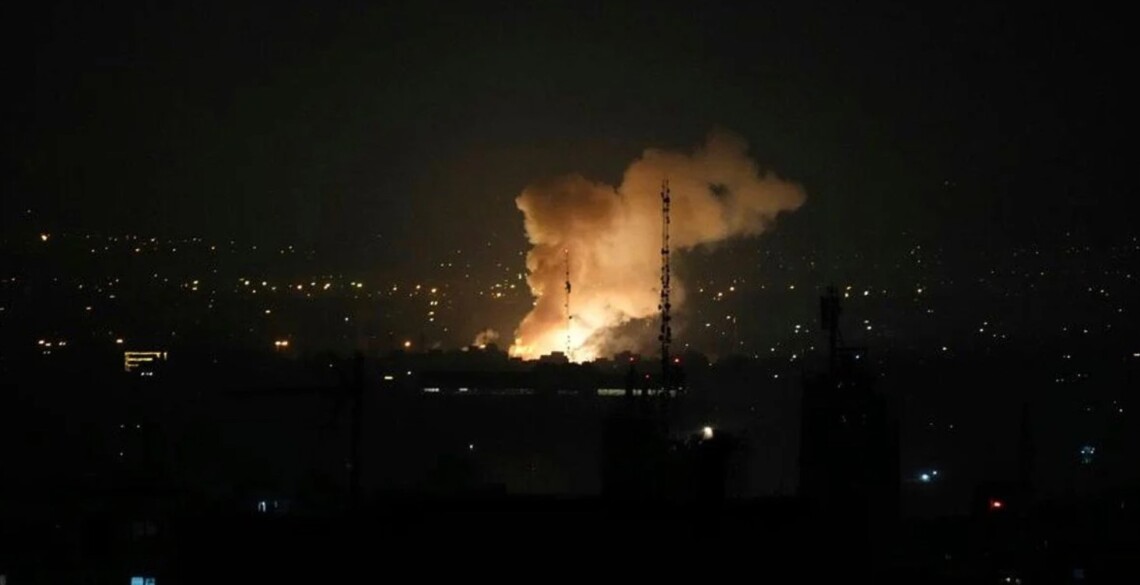
The focus is on new strikes and the growing standoff between the United States and Iran. Most coverage frames what is happening as a worrying escalation: the number of questions is rising about whether Washington and Tehran still have room to reach an agreement, and what risks there are that the current round of clashes could spill over into a larger phase. Particular emphasis is placed on what strategic consequences this could have for the United States, and how predictable the next steps of the administration will be—especially in the context of the following decisions by Washington. This material is prepared based on publications from www.slovoidilo.ua (Ukraine).
The United States and Iran: A Ukrainian View of the Escalation Threat
In Ukraine’s information space, the new flare-up between the United States and Iran is read not as a distant Middle East episode, but as an event directly tied to global security, energy prices, and the overall nervousness of the international agenda. This is how “Slovo i Dilo” writes, emphasizing that for Ukraine any strike on the Strait of Hormuz is automatically seen as a risk to the global oil market—and therefore to fuel, logistics, and economic stability.
The publication notes that the United States responded with strikes after an attack on a tanker, and that Donald Trump has shifted to exceptionally hardline rhetoric. According to the material, he said that if there are new violations, Iran may “cease to exist.” For the Ukrainian audience, this wording sounds especially harsh in light of the familiarity—after the full-scale war—with a language of ultimatums and threats that has become part of everyday perceptions of international politics. That is why Ukrainian media interpret the US–Iran conflict through the lens of power, demonstrations of resolve, and the risk of an uncontrolled escalation.
The article pays special attention to the security of sea routes. The Strait of Hormuz and attacks on a tanker matter not only as an episode in the confrontation, but also as a symbol of the vulnerability of global trade. For Ukraine, this is a familiar logic: when military actions hit transport corridors, the consequences go far beyond the conflict zone. The material separately mentions the transport of more than two million barrels of oil—this fact is precisely what makes the situation sensitive for fuel prices. In the Ukrainian context, this feels especially acute because the country has long grown accustomed to the way external crises quickly feed into the domestic market.
The factor of American hardness is no less important. Trump’s statements, relayed through Reuters, and the CENTCOM position are presented as a signal that Washington is ready to respond with force. For Ukraine, this serves as an important marker: US policy toward threats is often perceived as a test of allies’ reliability and the resilience of Western leadership. Against this backdrop, even the declared truce does not look like a guarantee of calm—the article emphasizes that blockades and shelling have not disappeared, creating a sense of a “frozen conflict,” which is well known to the Ukrainian audience from its own experience of war and from years of instability in the east before 2022.
Although the material contains no direct comments from Ukrainian politicians or experts, the way it is presented through “Slovo i Dilo” shows the local editorial framing: here, not only diplomatic statements matter, but also the consequences of escalation. Ukrainian readers are reminded of how fragile international arrangements can be—and how quickly they collapse if one side believes it has gained a tactical advantage. This approach resonates with Ukrainian public experience, where the topic of a truce without real security has long been met with skepticism.
For Ukraine, a story like this is important on several levels at once: a possible rise in oil and fuel prices, the diversion of attention by the United States and allies to other hot spots, the strengthening of the image of a world in which power politics becomes normal again, and confirmation that maritime security and control over transport routes are a strategic issue rather than only a regional one. That is why, in the Ukrainian reading, the US–Iran conflict is not just another international news item, but also a signal of just how vulnerable the global order remains.