Over the past days, in Indian, Russian and Ukrainian debates the United States has almost everywhere become the center of three concurrent storylines. First, there is the American‑Israeli war with Iran and the scale of Washington’s involvement in the Middle East. Second, the role of the United States in finding a formula to end the war in Ukraine and the pressure on Kyiv. And finally, the growing competition between the United States and China in high technology, against the backdrop of which India is trying to forge its own “third way” and use the American factor to its advantage. Each of the three countries views America through the prism of its own vulnerabilities and interests — energy, military and economic.
The main theme uniting news feeds and opinion columns is the suddenly begun US‑Israeli war with Iran, which started on 28 February 2026 and has already been described analytically as a distinct American‑Israeli‑Iranian war. Russian and Ukrainian sources recount the chronology of escalation in detail, from the deployment of American forces in the Persian Gulf in January to the strike against Iranian leadership and Tehran’s retaliatory actions, noting that the US operation quickly grew from “limited” pressure into a full theater of war involving carrier strike groups and a wide range of missile weapons.(ru.wikipedia.org) Against this backdrop, India and Russia are discussing not only the military aspects but also how American decisions hit the global economy and the domestic politics of other countries.
In the Indian context, the United States in recent days figures primarily as a co‑author of the strike on Iran and the cause of a new wave of instability in the oil and gas market. The Russian newspaper Rossiyskaya Gazeta, citing Indian interlocutors in New Delhi, conveys the position of local experts: India has taken a conspicuously cautious line, limited to the formula of being “deeply concerned” over the US‑Israeli attack and calling on all parties for restraint, but has not condemned the killing of Iran’s supreme leader, Ayatollah Ali Khamenei. Indian analysts quoted by the Economic Times directly link the hostilities to a threat to India’s macroeconomic stability, whose energy security critically depends on supplies from the Middle East.(rg.ru)
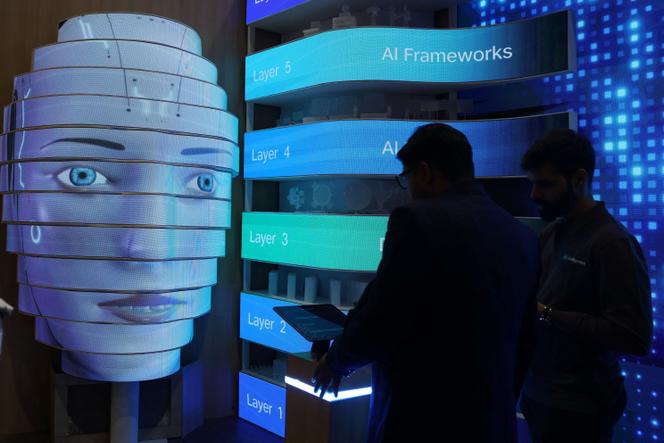
The tone of the Indian discussion is pragmatic: the US is criticized not so much for “imperialism” as for repeatedly creating price shocks in commodity markets that hit developing economies. Overlaid on this is a longer‑term perspective, visible in analysis of the Global Summit on Artificial Intelligence held in Delhi in February: Indian authors speak of the need to form a “third way” in AI — between the American and Chinese techno‑blocs. One piece, recounted in a Russian aggregator, emphasizes that the summit was “the first of its kind in the Global South” and that India seeks not to be merely a field of competition between the US and China but to shape standards and coalitions itself.(nachedeu.com) In this context the American factor looks double‑edged: on the one hand, Washington is a needed partner for technology and investment; on the other, it is a source of strategic and price shocks.
Russian commentary about the United States today is also concentrated around the same war with Iran, but the emphases differ. For Moscow this is primarily an occasion to examine how Washington conducts the war, what resources it has and what it actually seeks to achieve. Senator Alexey Pushkov, in an interview and on his Telegram channel — as reported by Lenta.ru — speculates that the United States may seek to exit the conflict by declaring victory: in his formulation, Iran’s missile potential has been reduced, many targets hit, the supreme leader toppled — and this can be sold as success, “although few will believe such a ‘victory’.”(lenta.ru) Pushkov also points to the role of Secretary of State Marco Rubio (note: Rubio is a US senator in reality), who, in his view, “is preparing public opinion” for a possible winding down of the operation while simultaneously claiming an allegedly averted direct threat of war from Iran and a reduction in Tehran’s missile potential.
In the Russian media environment these assessments are embedded in a broader narrative: the United States is portrayed as a power that fans the conflict and then tries to exit it while saving face, describing any intermediate state as its strategic victory. At the same time Russian economic and market analysts treat Washington’s actions as a factor of global turbulence. The Ukrainian company xDirect, focused on the forex market, in its weekly review calls the Middle Eastern escalation the key event supporting the dollar, which in a supply shock is acting as a reserve currency and a beneficiary of geographical distance from the conflict. The authors recommend “playing the downside” on American indices and simultaneously buying gold, linking this to US policy and its market consequences.(xdirect.ua) In the Ukrainian view, this is also a reminder of how quickly external American campaigns can change financial conditions for debtor countries.
The Ukrainian discussion about the United States is now shadowed by two processes: the ongoing war with Russia and the Geneva negotiations on a possible end to the conflict, where Washington is the key interlocutor for Kyiv. The Russian TV channel REN TV in its political program emphasizes that the new round of talks on 26 February in Geneva is effectively taking place in a “bilateral” US–Ukraine format and that a few hours before it Donald Trump allegedly demanded by phone that Volodymyr Zelensky “conclude peace by the end of March.”(ren.tv) In Kremlin and pro‑Kremlin sources this line develops into the thesis that Washington is forcing Kyiv into an unfavorable peace, tired of the conflict.
On the Ukrainian side, especially in economic analysis, a different note is more evident: dependence on US decisions is taken as a given, but public concern is growing that Washington may shift attention to Iran and the Middle East. Reviews like the mentioned analysis on the dollar and prices for food and fuel stress that the dollar exchange rate remains a key parameter for Ukraine — and it is increasingly determined by US foreign‑policy moves, from sanctions to military operations.(24tv.ua) At the same time the very prospect of Geneva talks mediated by the United States provokes mixed feelings in Ukrainian society: on the one hand — hope for real security guarantees; on the other — fear that Washington may agree to “freeze” the conflict on terms less favorable than expectations from 2022–2023.
Against this backdrop another motif appears in the Russian and pro‑Russian information space: linking US actions against Iran to their strategy regarding Ukraine. In a column on Sputnik Abkhazia’s site the author openly speculates about the assassination of Iranian leadership, arguing that Trump allegedly “showed Russia what to do with Zelensky,” and drawing grim parallels: if the United States takes such radical steps in Iran, then it demonstrates a willingness to escalate in other conflicts.(sputnik-abkhazia.ru) This presentation is obviously designed to demoralize the Ukrainian audience and create a sense of Kyiv’s total dependence on Washington’s decisions, but indirectly it also reflects Russian fear of the unpredictability of current American policy.
While Russia and Ukraine experience the United States primarily as a military and political actor, the Indian discourse more strongly features long‑term technological and structural themes. The Global Summit on Artificial Intelligence in Delhi, which drew Western press attention and became a source of pride for local elites, is described in Indian commentary as an attempt to institutionalize its own AI development track — copying neither the American model based on private big tech and liberal regulation nor the Chinese model, tightly centralized and closely tied to state control.(nachedeu.com)
In this light the United States is at once partner and rival: India counts on American investment, access to cloud infrastructure and chips, but fears becoming merely a “junior partner” in a technological architecture where key standards and profits remain in the hands of California and Seattle. That makes India’s reaction to the American‑Israeli war with Iran especially layered: every new crisis launched by Washington forces New Delhi to balance between strategic partnership with the United States (against China) and the need to preserve stable channels with Iran, Russia and Arab energy suppliers.
Notably, in Russia, India and Ukraine, in almost all discussed materials the United States appears not as a “distant observer” but as a central factor around which each must adjust its own strategies. Russian politicians like Pushkov debate whether Washington will “sell” its version of victory in Iran and what the Americans’ next step will be.(lenta.ru) Indian economists calculate whether their energy balance can withstand a new round of Middle Eastern turbulence and to what extent the blow can be shifted onto Russian and other alternative supplies.(rg.ru) Ukrainian analysts try to guess how quickly the US will switch resources between theaters — from Ukraine to the Persian Gulf and back — and whether the Geneva consultations will presage deals made “over Kyiv’s head.”(ren.tv)
Looking at all three countries together, a common motif stands out: fatigue with American crisis management, where each new Washington initiative brings not only promises of security or investment but also a chain of side effects — price, political and military. However, the details of that fatigue differ. For Russia it is fodder for sarcastic forecasts about how the US will declare defeat a victory. For Ukraine it is anxiety that its fate may become part of a bargain where an American administration rushes toward a tidy deadline. For India it is cold calculation about how to leverage American presence in both security and technology while minimizing damage to its own economy.
This palette of local voices shows how heterogeneous the image of the United States is outside the English‑speaking world. Where the American press speaks of strategy, values and “responsibility for democracy,” Indian, Russian and Ukrainian commentators far more often count barrels of oil, rockets in arsenals and possible peace deadlines — and ask themselves a simple question: what price exactly are their countries paying for the latest turn in American foreign policy?