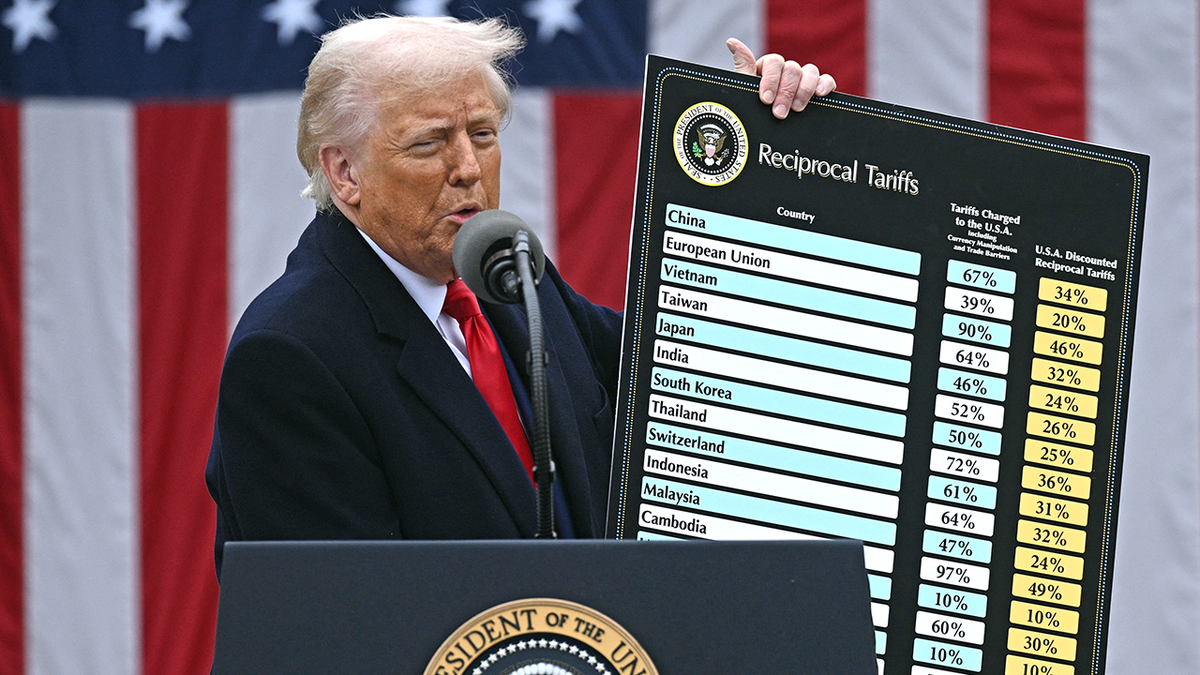
At the beginning of 2026, discussions about the United States in other countries almost always boil down to the same name — Donald Trump. But the tone of those conversations in Brazil, South Africa and Australia differs noticeably. For some, Washington is an aggressive trading partner; for others, an unreliable climate donor and architect of an unjust world order; and for others still, a heavy but still indispensable pillar of global security and markets. The agenda centers on three major knots: the tariff war and its consequences, the sharp U.S. reversal on climate policy, and Trump’s ambitiously scandalous plan for Gaza.
The first layer is trade wars. In Brazil and South Africa the U.S. is viewed through the prism of how "America First" hits jobs and foreign-exchange accounts. Brazilian press notes a sixth consecutive monthly decline in exports to the United States: according to Amcham Brasil, in January 2026 shipments to the American market fell 25.5% year on year, while Brazil’s deficit in bilateral trade tripled to $700 million. In an interview with O Estado de S. Paulo, Amcham head Abraão Neto calls for a "diálogo econômico de alto nível" with Washington to lower tariffs and restore predictability to trade, directly linking current distortions to the U.S.’s tough protectionist policy. As the Brazilian business association notes in the same piece, the combination of falling Brazilian exports and persistently high U.S. duties "aprofundou o desequilíbrio" in trade between the countries, pushing some elites to talk about diversifying export destinations, above all to Asia and Europe. In the same clipping Brazilian economists compare weak external demand from the U.S. with U.S. labor market data, where, despite job gains at the start of the year, 2025 figures were sharply revised downward.
The political contours of this conflict in Brazil are even more acute: escalation of duties to 50% and linking them to the case against Jair Bolsonaro already led to a formal diplomatic "crise" in 2025, detailed in the Portuguese-language Wikipedia article on the crisis between the two countries, which records Brazil’s retaliatory measures through the WTO and a reciprocity tariff law. Just days ago the Infobae portal in Spanish, widely cited in Brazil, reported on a new note from Trump demanding that Lula stop "attacks" on Bolsonaro and threatening further tariffs — an example of how trade instruments in the region are perceived not as economic measures but as political pressure. Latin American analysts note that this personalization of U.S. foreign policy strengthens nationalist and at times anti-American sentiments among Lula’s voters. Eurasia Group expert Christopher Garman told UOL that Trump’s tariffs feed a wave of "sentimento anti-EUA" and in the short term benefit the left, but could backfire if economic damage to Brazil becomes too palpable by 2026. As Garman emphasizes in his UOL assessment, the nationalist upswing "has a shelf life," and the longer the tariff standoff continues, the higher the risk voters will blame domestic authorities.
South Africa views the same tariff policy as an undermining of a long-established architecture of privileged access to the American market. The official site of President Cyril Ramaphosa published his sharp statement about the "unilateral" 30% tariff the U.S. introduced on August 1, 2025. Ramaphosa stresses that Washington’s calculation is based on a "disputable" interpretation of the trade balance, and reminds readers that 77% of American goods enter South Africa at a 0% rate, making a 30% duty on South African exports clearly disproportionate. In the same statement he urges South African firms to accelerate market diversification to "increase the resilience" of the economy to external shocks, effectively preparing the public for an end to the special AGOA regime and preferential U.S. terms. Analysis by the Economic Research Southern Africa (ERSA) highlights that a move to a 30% level practically nullifies previous benefits: calculations show the weighted-average rate on South African exports to the U.S. jumping from 0.4% to 16.8%, with over 80% of product lines fully hit, and the potential non-renewal of AGOA would only worsen the situation. ERSA’s report explicitly states that under such conditions U.S. tariffs could shave several tenths of a percent off South Africa’s GDP growth in 2025–2026, threatening export-oriented sectors from autos to citrus.
Legal criticism sounds even harsher: a column by South African lawyer Mmiselo Kuma in Mail & Guardian titled "Trump’s tariffs are illegal under international trade law" argues this policy goes beyond the WTO and violates basic principles of most-favored-nation treatment and bound tariff commitments. The author points out that by introducing "reciprocal tariffs" without negotiations or compensation, the U.S. is effectively abandoning the regime it helped build and undermining the special and differential treatment for developing countries. Kuma believes Africa should speak louder about this violation, otherwise the breakdown of legal norms will become irreversible. This linking of economic arguments with legal and moral claims is a striking motif in the South African debate: it’s not just about money but about the erosion of the rule-based order South Africa has tried to integrate into since the end of apartheid.
Australia sounds more pragmatic and wryly nervous. Here the U.S. remains a key security ally and the direct impact of tariffs is limited: the federal Treasury, cited by Nine News, models only a "moderate" 0.2% GDP decline by the end of 2026 and a slight inflation uptick of about 0.2 percentage points. Treasurer Jim Chalmers told Nine News that "we expect a big hit to growth in the U.S. and China and a much more manageable one for Australia," but warned that escalating a global tariff war would harm Canberra too. Meanwhile the Productivity Commission in its annual review, covered by ABC News, makes a provocative conclusion: provided Australia does not retaliate with mirror tariffs and lowers its own nuisance tariffs, it could even gain slightly — in their model up to +0.37% in output in the long run due to the reorientation of global capital away from the U.S. Deputy Commission Chair Alex Robson told ABC that Australia’s growth could accelerate amid "capital outflow from the United States" if the country remains open. This cold economic view sparks debate: opponents insist political risks of such asymmetry cannot be ignored, but overall in Australia the U.S. is still seen more as a source of external uncertainty than an immediate threat.
The second major theme is climate policy and the U.S. retreat from international commitments. For South Africa this is not only ideological but also very concrete money. Pretoria was the first to sign with a group of developed countries the so-called Just Energy Transition Partnership (JETP), in which the United States was one of the key donors. So the South African foreign ministry’s March 2025 statement that Washington had withdrawn from the scheme provoked an outcry. Euronews Green and the Associated Press quote South African Foreign Ministry spokesperson Crispian Veary, who speaks of more than $1 billion in lost promised investments for the energy transition. At the same time the Trump administration almost simultaneously pulled out of the new international "loss and damage" fund intended to help countries already suffering from climate disasters, as the Washington Post reported, noting this fits a broader White House retreat from global climate finance. South African commentators see this as confirmation of a long-held suspicion: the U.S. uses climate justice rhetoric while it’s cheap, but when real money and resource redistribution are on the table, the "America First" logic kicks in.
Brazil’s public sphere goes further, portraying the American turn almost as a "hurricane of denial." In a Jornal da USP piece titled "Furacão negacionista" the author analyzes how the Trump administration began to scrub the concept of a "climate crisis" from official rhetoric: the Department of Energy and other agencies were advised to avoid terms like "crise climática," "energia limpa," and "poluição," and the EPA announced the "maior desregulamentação ambiental da história." The USP author warns this is not just a change of words: data-gathering structures and institutional memory are being dismantled, leaving future administrations less able to respond adequately to threats. The climate portal ClimaInfo follows a similar line, analyzing the ultra-conservative "Projeto 2025" on which Trump’s team relies. It emphasizes that the document consciously rejects the idea of a "climate emergency" and proposes ramping up fossil-fuel use and weakening environmental rules as engines of the American economy, even at the cost of undermining global decarbonization efforts.
In Brazil this overlaps with preparations for COP30 in Belém: a Spanish-language El País piece about the "Trump no nos representa" campaign aimed at an international audience discusses how American climate activists plan to travel to Brazil to show that "the U.S. is not monolithic" and that a powerful climate movement exists within American society. For Brazilian commentators, especially in academia, this nuance matters: criticism of official U.S. policy is increasingly accompanied by attempts to separate "the Trump state" from American civil society, so as not to break horizontal scientific and activist ties. Professor Glauco Arbix wrote for Rádio USP sketching a dual scenario: on one hand, a "high-risk experience" with Trump leading to deregulation and strengthened oligopolies in AI and technology; on the other, hope for international coordination to create a "global regulatory agency" for AI and climate.
The Australian climate debate is more restrained, but the throughline is the same — the U.S. is becoming a less reliable partner in the green transition. A United States Studies Centre analytical report on Australia’s economic security prospects for 2026 states the paradox: while the U.S. destabilizes global trade and climate finance, it retains technological leadership in areas like AI and quantum tech that are critical for future productivity. The authors conclude Canberra will need to further diversify economic ties without severing the strategic alliance with Washington, and that ignoring the climate role of the U.S. is dangerous not only for the environment but also for the alliance architecture in the Indo-Pacific.
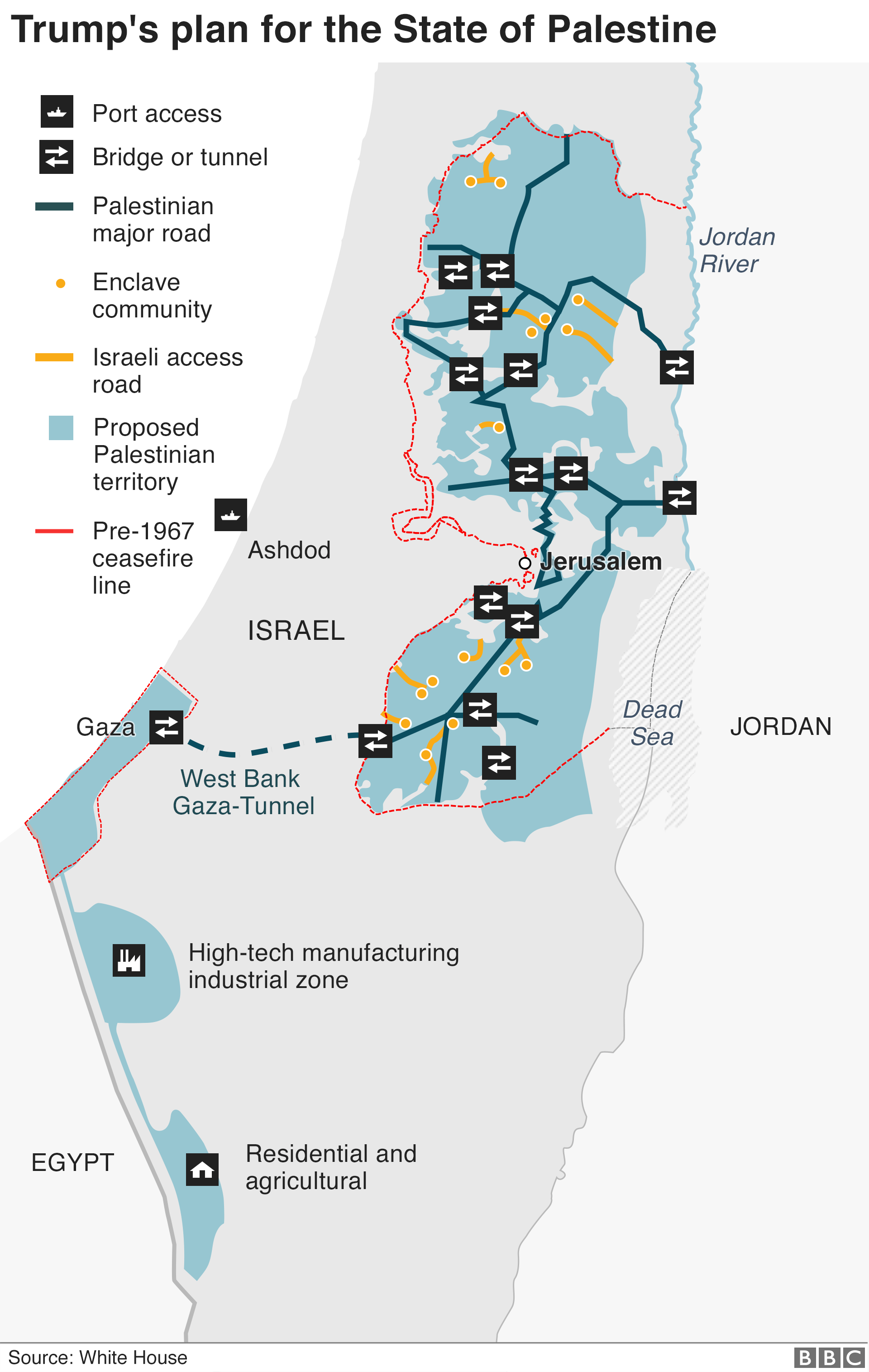
The most emotionally charged area of discussion is U.S. Middle East policy and Trump’s plan for Gaza. His February 2025 statement that the U.S. should "take control" of the Strip, turn it into a "Riviera of the Middle East" and resettle two million Palestinians in a "beautiful place" outside Gaza was dissected in the Portuguese-language Wikipedia and provoked a storm of criticism. Deutsche Welle’s Portuguese service collected initial reactions: Hamas called the plan "racist" and a "recipe for creating chaos," refusing to allow mass displacement; Palestinian Authority President Mahmoud Abbas said he would not permit violations of "the rights of our people, for which we have fought for decades"; Germany, Saudi Arabia and China publicly rejected the idea of American occupation of Gaza. A later DW analysis titled "Países árabes podem impedir planos de Trump para Gaza?" explained to Brazilian readers that the plan, based on a document by American economist Joseph Peltzman, envisaged a factual "complete emptying" of the territory, with pressure on Egypt to accept the displaced under the pretext of debt obligations, and that this directly contradicted Arab countries’ plans to keep the population in place with a technocratic administration under the League of Arab States. This contrast is seen as emblematic of a wider problem: the U.S., even under the banner of "peace plans," acts primarily from a logic of strategic control and ignores the right to self-determination.
The South African perspective on Gaza is even sharper, though voiced primarily through the lens of international law rather than bilateral relations with the U.S. Against the backdrop of South Africa’s lawsuit against Israel at the International Court of Justice and Washington’s withdrawal from the climate agreement with Pretoria, the American Gaza initiative is seen here as part of a pattern: Washington as an "architect" of the postwar order that now undermines the norms it once promoted. South African lawyers and academics writing in the press and for global outlets draw parallels between "unilateral tariffs" and "unilateral occupation decisions," arguing that in both cases the U.S. ignores multilateral mechanisms. When the U.S. later brought a Security Council resolution proposing deployment of an international stabilization force in Gaza with a transit administration effectively led by Washington, as Le Monde reported, South African experts reacted with ambivalence: on one hand, they acknowledged the need to stop the fighting; on the other, they feared the plan would entrench an unequal status for Palestinians and push aside the two-state idea.
Australian commentary on Gaza is usually tied to domestic debates about the limits of supporting the U.S. and Israel. There are fewer outright harsh statements against the American plan than in the global South, but discomfort is growing: think tanks note Canberra’s difficulty in balancing alliance obligations with a society increasingly sensitive to humanitarian crises. Against the background of discussions at the Munich Security Conference — where Representative Alexandria Ocasio-Cortez accused unconditional U.S. military aid to Israel of having "enabled genocide in Gaza" — Australian commentators increasingly write that the American political spectrum itself is fracturing over the war, which means allies can afford a more independent stance.
A unifying thread for Brazil, South Africa and Australia is growing distrust in U.S. predictability. Brazilian international law professor Pedro Dallari argued on Rádio USP that Washington’s decisions are increasingly the product of internal political shifts — from electoral coalition choices to the influence of ultra-conservative think tanks — rather than consistent strategy. For Brazil this means any bet on close alignment with the U.S. must be made with an eye to the risk of abrupt course changes. In South Africa this manifests as a simultaneous desire to keep trade and investment dialogue with America while deepening ties with other power centers, from the EU to China, to avoid dependence on "the White House’s whims." In Australia, where the military alliance with the U.S. remains a cornerstone, the priority is an "insurance" through closer work with regional partners and strengthening domestic economic resilience to external shocks, as seen in Productivity Commission and USSC recommendations.
But this skepticism also has an unexpected constructive effect. Criticism of American tariffs forces Brazil, South Africa and Australia to reassess their trade regimes and industrial policies, prompting debates about national industrial strategy, job protection and the state’s role in the energy transition. Outrage over the U.S. retreat from climate agreements raises questions about the responsibility of developing countries and middle powers: can they build regional climate funds and agreements that don’t depend on Washington’s will? And paradoxically, Trump’s Gaza plan intensifies discussion about Security Council reform — a reform actively promoted by Brazil and South Africa — with the argument that as long as the global West monopolizes the right to "peace-making," unilateral initiatives like these will recur.
In that sense, today’s reactions to the U.S. are not just a collection of complaints and anxieties, but a laboratory of a new multipolar policy. Brazilian, South African and Australian authors, each in their own context, converge on one point: the era in which Washington can play with tariffs, climate funds and the fates of whole peoples with impunity is coming to an end. Either the United States will find a way to fit into a more predictable and fair architecture, or the rest of the world will increasingly look for life "after America" — albeit so far in partial, contradictory, but increasingly bold steps.