In Ukrainian commentary, Donald Trump’s policy is described as a decisive factor in the war: Washington may be unable or unwilling to pressure Moscow, while still forcing Kyiv to make concessions. The authors warn that such a scenario threatens not only Ukraine, but also the security of democracy as a whole, including Taiwan, and that the United States’ retreat from supporting its allies could bring strategic losses. Based on reporting by Espreso.tv and Flashnews.com.ua (Ukraine).
Ukraine Wants Real Guarantees, Not Hopes for U.S. Pressure
Ukrainian analysts are increasingly skeptical that Washington can quickly force Moscow to end the war. They view a possible resumption of talks between Kyiv, the United States and Russia only as a means of achieving concrete results: protecting energy infrastructure, exchanging prisoners and establishing reliable security guarantees.
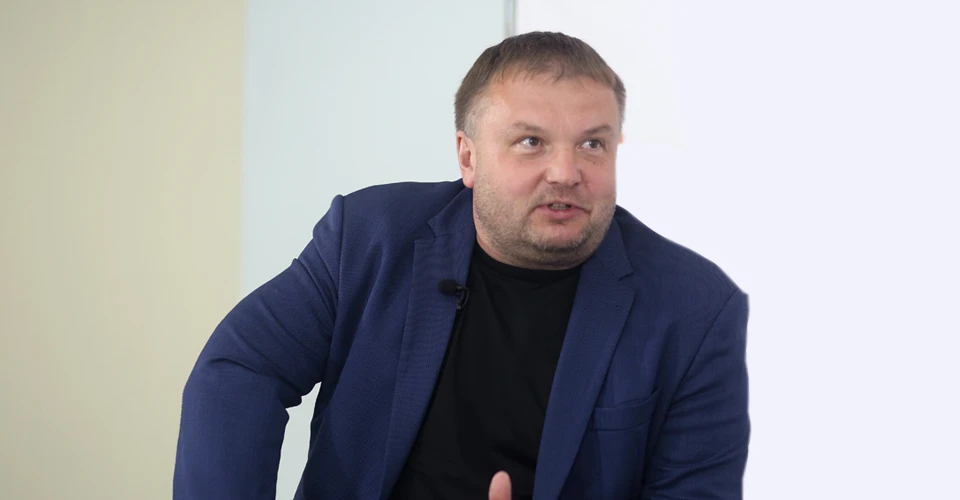
As Vadym Denysenko, head of the Business Capital analytical center, notes in an Espreso article, Ukraine and its partners overestimated the United States’ ability to exert decisive pressure on Russia. In his view, a window of opportunity may have existed only during the first months of Donald Trump’s presidency, when Vladimir Putin may have feared an unpredictable response from the new U.S. leader.
Denysenko believes that the Kremlin later concluded that Trump was not prepared to take steps that could lead to a direct confrontation between the United States and Russia. “Our overestimation of the U.S. role in putting pressure on the Russian Federation was very misleading,” the analyst said.
From Kyiv’s perspective, the most effective options for putting pressure on Moscow—military intervention or blocking Russian ships—would inevitably create a risk of direct confrontation between nuclear powers. According to Denysenko, this risk defines the limits of U.S. policy. In that case, Washington’s restraint appears not to be a temporary problem or the result of individual political decisions, but a fundamental constraint: the United States may remain Ukraine’s key ally without necessarily being willing to escalate in order to force Russia to make peace.
The analyst is also skeptical about economic leverage. Direct trade and economic ties between the United States and Russia, in his view, are not substantial enough to serve as a decisive tool of pressure. Moreover, the U.S. market depends on some Russian goods, including fertilizers. “There simply are no other levers of influence,” Denysenko says, casting doubt on the ability of sanctions and diplomatic statements alone to change the Kremlin’s strategic calculations.
For Ukraine, this means it must reduce its reliance on expectations of an outside “savior.” The experience since 2014—and especially since the full-scale invasion in 2022—has led Kyiv to judge international promises primarily by their practical effect: can they stop aggression, protect civilians and prevent a new offensive? The priorities are now strengthening Ukraine’s own defense, developing its defense industry, securing long-term European assistance and obtaining security guarantees that do not depend solely on the position of one U.S. president.
The same logic is evident in assessments of a possible resumption of trilateral contacts between Ukraine, the United States and Russia. An article in The Flash News stresses that Kyiv’s willingness to take part in talks does not mean it trusts Moscow’s intentions or believes a political settlement is imminent.
President Volodymyr Zelensky supports Washington’s efforts to speed up contacts and hopes a meeting of delegations can take place no later than early November. But agreeing on a date, location and format for talks does not, by itself, bring peace any closer. What matters to Ukraine is the outcome: a halt to hostilities, preparations for decisions at the level of national leaders, and the creation of a durable security architecture.
Kyiv is ready to discuss a ceasefire, including a possible “energy truce,” as well as humanitarian issues—above all, an exchange of prisoners of war. For Ukrainian society, these are not secondary items on the agenda, but matters of everyday survival. As winter approaches, protecting energy infrastructure—electricity supplies, heating, hospitals and other critical services—takes on particular importance.
At the same time, Ukraine believes an agreement to refrain from striking energy infrastructure will be meaningful only if its terms are clearly defined. The parties need to specify in advance which facilities will be protected, establish a mechanism for recording violations and provide for independent verification of compliance. Otherwise, any “energy truce” risks becoming a source of mutual accusations, while Russia retains the ability to pressure civilians by attacking infrastructure.
Moscow has formally signaled that it is open to returning to a trilateral format. However, Ukrainian analysis notes, it has shown no willingness to abandon demands that are incompatible with Ukraine’s sovereignty. These include territorial claims, attempts to limit the Ukrainian army and pressure on Kyiv’s ties with Western defense structures. For this reason, Kyiv does not see the Kremlin’s readiness to talk as proof of compromise: any commitments that may be made will still have to be tested in practice.
The central question remains the role of the United States. Ukraine is seeking clarity on what commitments Washington is prepared to make, whether military support will continue and how partners would respond if any future agreements were violated. In Ukraine’s view, security guarantees cannot be a secondary add-on to a peace agreement. Peace that leaves the country defenseless against another Russian invasion will not be durable.
Europe’s involvement is equally important. Meetings in Oslo with representatives of Finland, Norway, the European Union, NATO, the United Kingdom, Germany and Italy are seen as confirmation that the war is not simply a bilateral dispute between Kyiv and Moscow or a narrow U.S.-Russian dialogue. For Ukraine, European participation is both a source of military and financial support and a way to ensure that decisions about its future are not made without its full involvement.
Past rounds of diplomacy fuel this cautious skepticism: the 2025 talks in Istanbul and contacts in Abu Dhabi and Geneva in early 2026. Meetings and statements continued, but the war, the shelling and key political disagreements did not disappear. At the same time, prisoner exchanges and the repatriation of the bodies of the dead show that limited but vital practical agreements are possible even without a comprehensive political settlement.
Ukraine’s main criterion for judging negotiations, therefore, is not the mere fact of dialogue, but measurable results: whether prisoners return home, shelling decreases, the country can get through the winter without a large-scale energy collapse, and real protection emerges against a recurrence of war. In this view, diplomacy has value only when it is backed by enforceable commitments, allied support and guarantees capable of protecting the country not just on paper, but in the face of a renewed threat.