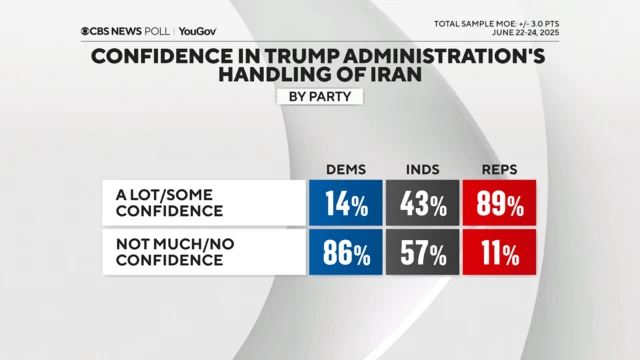
The election results have heightened doubts about the durability of Donald Trump’s political course, but have not clarified what to expect from Washington next. The focus is on possible escalation or restraint toward Iran, tensions in U.S.-Israeli relations, the domestic response to the president’s policies, and the consequences of these changes for America’s allies. Based on reporting by Maariv (Israel) and The Astana Times (South Africa).
Israel Urged to Prepare for a Post-Trump Future
Israel should not base its long-term security strategy on confidence in the support of any one U.S. president—whether Donald Trump or his successors. That is the conclusion reached by Ilana Shoshan in an opinion column for Maariv, headlined “The President Who Didn’t Know Joseph: Israel Must Prepare for the Day After Trump.”
The piece does not claim to offer neutral news analysis and provides no detailed statistics on the scale of U.S. aid, the terms of bilateral agreements, or the positions of Israel’s critics in the United States. It is an opinion article that reflects a visible concern in Israeli society: Washington remains the country’s principal strategic ally, yet excessive dependence on it could limit Israel’s freedom to make decisions about war, defense, and its national future.
Shoshan challenges the common perception that U.S. military aid is nothing more than one-way financial support for Israel. She argues that a significant portion of the funds allocated effectively flows back to the United States through contracts with its defense sector, supporting businesses and jobs. Israel also shares with its ally experience gained in actual combat and through the use of weapons systems.
The author argues that “what the U.S. gains from Israel’s operational experience” enables American defense companies to save billions of dollars on research and development. These benefits, she says, are less visible to the public than aid figures or the image of an “empty shopping cart,” which can easily be used for political criticism. “It is hard to photograph that the way you can photograph an empty shopping cart,” Shoshan writes, pointing to the emotional and populist dimension of the debate over aid to Israel.
The column’s main theme, however, is not a denial of the value of the U.S. alliance, but the need to reduce Israel’s strategic vulnerability. “Independence has a price, but dependence has a price too,” the author emphasizes. In her view, dependence on external supplies and decisions is most dangerous during wartime, regional escalation, or pressure from Washington.
From this perspective, economic and defense self-reliance is not an abstract political slogan, but the basis for the sovereign right to make independent decisions on security matters. This touches on debates over arms supplies, funding for missile defense systems, domestic ammunition production, and the Israeli army’s ability to conduct prolonged campaigns without waiting for outside approval or deliveries.
Recent experience has heightened concerns that even a close ally may delay arms transfers, impose conditions, change priorities, or adjust its policy in response to domestic political battles in the United States. The reference to the “day after Trump” should therefore be understood more broadly than as an assessment of one particular politician. Shoshan warns that Israel should not tie its security to the loyalty of any one administration, party, or president.
The column defends the importance of the U.S.-Israeli partnership, while also urging readers to view it without illusions. The alliance with the United States remains vital, but, in the author’s view, it cannot be an everlasting and unconditional guarantee. Israel must be prepared for political circumstances in Washington to change—regardless of who occupies the White House.
Lessons from U.S. Politics for Central Asia and the Global South
In an article for The Astana Times, Kazakh author Sapargali Shalgimbayev examines the potential implications of the 2026 U.S. midterm elections for Central Asia. Though the piece does not present a South African perspective or include assessments by South African politicians, experts, or civil society organizations, its conclusions echo the approach of many Global South countries seeking to avoid making their strategies dependent on domestic political shifts in Washington.
The author considers a scenario in which the Democratic Party gains control of both chambers of Congress. In his view, this would complicate the work of Donald Trump’s administration: lawmakers could restrict funding, launch investigations, and increase scrutiny of the White House’s foreign policy decisions. However, a change in the party controlling Congress would not automatically mean a radical shift in U.S. policy abroad.
“For Central Asia, the real question is not which party controls Congress. The question is whether the region can turn its growing geopolitical and economic importance into lasting partnerships that endure changes in Washington,” Shalgimbayev writes in his article.
This reflects the author’s central recommendation: countries in the region should not tie their future to a single U.S. party, president, or electoral cycle. Instead, they need to build ties not only with the U.S. administration, but also with Congress, business circles, think tanks, state governments, and other institutions capable of sustaining long-term relationships regardless of the political climate in the White House.
For South Africa, this logic is familiar. Pretoria seeks to preserve room for diplomatic maneuver between the United States, China, Russia, the European Union, and its BRICS partners. Like Kazakhstan, South Africa is interested in diversifying export markets, sources of investment, technology partners, and transport routes. Amid intensifying U.S.-China rivalry, this policy helps prevent ties with any one major power from becoming the sole foundation of national development.
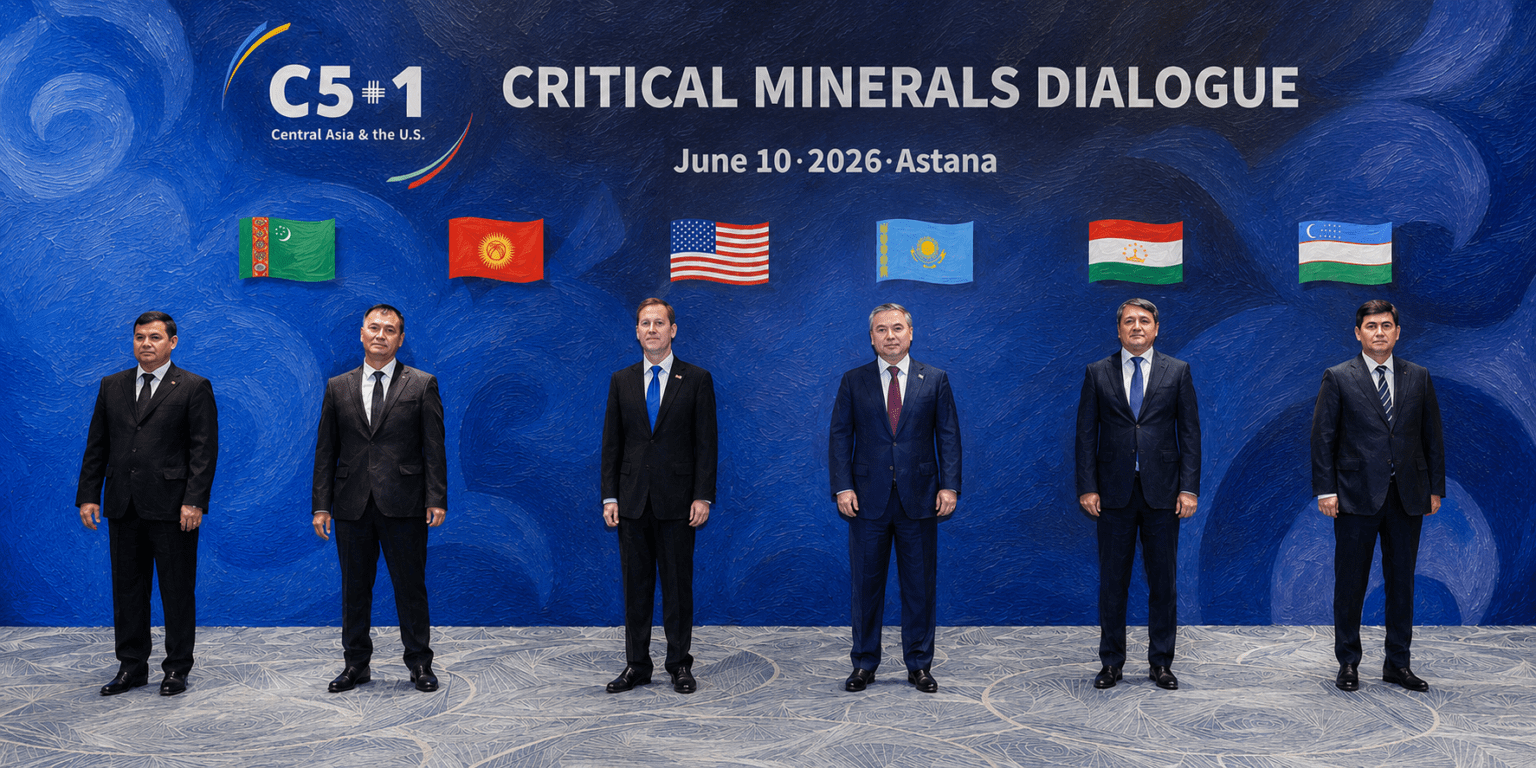
Shalgimbayev identifies several areas in which Central Asia could remain important to the United States regardless of who controls Congress. These include critical minerals, energy security, digital infrastructure, artificial intelligence, and the Trans-Caspian International Transport Route, known as the Middle Corridor. The region is increasingly seen as a potential hub connecting Europe and Asia through alternative trade and logistics routes.
These issues are particularly relevant to South Africa given its resource base. The country has significant reserves of platinum-group metals, manganese, chromium, and vanadium. But strategic resources alone do not guarantee an economic breakthrough. The key challenge is to turn mineral wealth into processing, industrial development, technological expertise, and sustainable jobs, rather than simply increasing exports of unprocessed resources.
At the same time, the author warns that growing U.S. interest in its partners does not necessarily translate into political support. Washington may seek access to critical resources, new markets, and alternative supply chains, while also imposing conditions related to sanctions compliance, trade transparency, and the choice of technology partners. South Africa is familiar with such pressure: its ties with Russia, China, and BRICS, as well as its pursuit of a relatively independent foreign policy, regularly draw criticism from some Western partners.
A shift in the balance of power in Congress could change the tone of dialogue, the pace of decision-making, and the terms of financial or political support. But it would not necessarily erase America’s long-term interests: competing with China, seeking control over critical supply chains, and strengthening its position in Eurasia, Africa, and other strategically important regions. The president, meanwhile, retains considerable authority over diplomacy and security, even when his actions face tougher scrutiny from lawmakers.
The Astana Times article is addressed primarily to Central Asian governments and offers more than an overview of U.S. politics: it makes a practical recommendation. The region is urged to use its geography, resources, and transport potential to build lasting partnerships that will survive changes of administration in Washington.
In the South African context, a similar conclusion would mean strengthening economic diplomacy, broadening the range of trade and investment partners, and avoiding dependence on U.S. elections when pursuing national interests. At the same time, the Kazakh article does not address a number of issues specific to South Africa: the future of AGOA trade preferences, export tariffs, climate finance, investment risks, and the international reaction to domestic debates over land reform.
Nevertheless, its core idea applies to many countries in the Global South: great-power rivalry should be used not to choose a single external patron, but to expand one’s own strategic options, develop industry, diversify ties, and protect national autonomy.