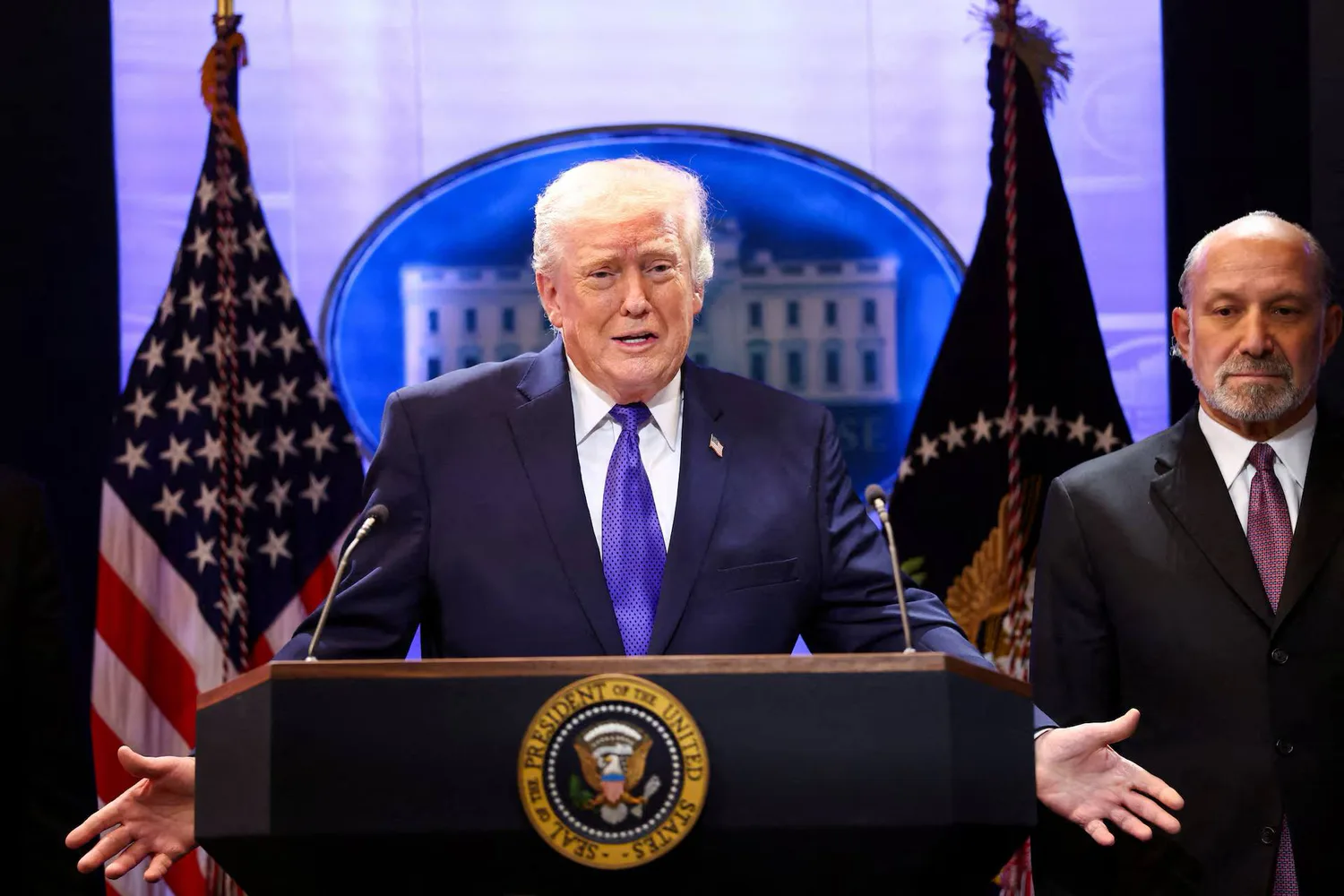
Ukrainian and Japanese publications describe the United States under Trump as an influential but controversial power. Critics question whether Washington is willing to put pressure on Russia and warn that tariff policy could destabilize the global economy. Attention is also focused on Trump’s unconventional leadership style, policy toward Iraq, US industrial ambitions, and the country’s vulnerability to market shocks and domestic crises. The central question is whether American priorities and political leadership can meet the challenges facing international security and global trade. This article is based on reporting by Ukraine’s UNN and PAP and Japan’s CNN.co.jp and Asahi Shimbun.
Ukraine calls on the US to provide air defense and take a tougher line on Russia
Donald Trump’s remarks about Russia’s icebreaker advantage and Volodymyr Zelenskyy’s criticism of US policy show how closely Ukraine links military aid, negotiations with Moscow, and the long-term deterrence of Russia. In Kyiv, Russian advantages—whether its Arctic fleet, missile strikes on cities, or influence over diplomacy—are seen as interconnected problems.
According to UNN, Trump called it “absurd” that Russia, as he put it, has 48 icebreakers while the United States has only one. He said he planned to order 14 new icebreaking vessels and involve Finland, which has a well-developed polar shipbuilding industry.
The US shortfall also has practical implications. The country’s only heavy icebreaker, Polar Star, entered service back in 1976. Another heavy icebreaker, Polar Sea, has been out of service since 2010 after an engine failure. Trump’s figure, however, does not include US medium-class icebreakers.
For Ukraine, the debate is about more than the number of vessels. The Arctic is seen as a region where an icebreaker fleet supports not only economic activity but also military logistics, state presence, access to shipping routes, and the ability to project power. From Ukraine’s perspective, this is comparable to the importance of controlling sea lanes in the Black Sea: infrastructure and fleets can become tools for exerting pressure on trade, security, and neighboring states.
Washington’s plans to rely on Finland carry additional political significance. After Russia’s full-scale invasion of Ukraine, Finland joined NATO and became one of the Alliance’s members most alert to threats from Moscow. For Kyiv, this cooperation is a practical example of Western countries joining forces to address vulnerabilities to Russia.
At the same time, Trump’s approach to dialogue with the Kremlin is a source of concern. Speaking about Vladimir Putin, he said: “I could say he’s not a friend, but I need to make a deal.” In Ukraine, that formulation is seen as risky: Kyiv fears that a push for a quick US-Russia agreement could lead to concessions to the aggressor or a reduction in support for Ukraine.
Volodymyr Zelenskyy outlined these concerns in comments reported by PAP. He said the United States was not putting enough pressure on Russia during negotiations, and that delays in supplying Ukraine with Patriot interceptor missiles posed a direct threat to civilians. “The shortage of these missiles means the loss of many human lives,” the Ukrainian president stressed.
For Kyiv, Patriot systems are not just a means of defending the front line. Air defenses are needed to protect cities, energy infrastructure, businesses, transport hubs, and everyday life from Russian missile and drone attacks. Any disruption to deliveries is therefore seen as a factor that could lead to further casualties and destruction.
Zelenskyy also expressed regret that the United States was shifting a significant share of its attention and resources to the Middle East. “It’s a shame that they have focused on the Middle East and are sending more forces there,” he said. Ukraine sees this as a risk that the war could be pushed off the international agenda, even as Russian strikes continue daily and the urgent need for ammunition and air defenses remains.
Zelenskyy also criticized Trump’s symbolic closeness to Putin. He called the publication of their joint photograph and the description of the Russian president as a “friend” “very strange.” The Ukrainian leader compared the situation to being photographed with Adolf Hitler during World War II. The comparison reflects a widespread view in Ukraine: Russia is not seen as a neutral party to the conflict, but as an aggressor state responsible for mass killings and destruction.
“If anyone tries to remain neutral toward the aggressor, it means they support both the victims and the aggressor himself,” Zelenskyy said. Kyiv believes that diplomatic ambiguity and a refusal to pressure Moscow can only strengthen Russia’s position.
Ukraine is also concerned about the format of future negotiations. Zelenskyy pointed to the lack of visible progress following contacts in Abu Dhabi and uncertainty over whether European representatives would take part in subsequent meetings. Kyiv wants to avoid a situation in which decisions about the war and Ukraine’s future security are made solely by Washington and Moscow. European participation is seen as a necessary part of the negotiating process and an additional guarantee that Ukraine’s interests will not be sacrificed in pursuit of a quick compromise between major powers.
Restrictions affecting Starlink and Starshield are another sensitive issue. Asked about them, Zelenskyy said: “Technically, it’s SpaceX; politically, I really don’t know.” The remark highlights Ukraine’s dependence on privately owned American technology infrastructure, decisions about which can directly affect the capabilities of Ukrainian forces but are made without full transparency for Kyiv.
All these issues are unfolding for Ukraine against the backdrop of a harsh winter, Russian attacks on Kyiv, power outages, business closures, logistical problems, and the departure of some residents. “There is no state without its capital,” Zelenskyy said, emphasizing Kyiv’s importance not only as the country’s largest city but also as its political, historical, and symbolic center.
In the Ukrainian leadership’s view, Russia is trying to force people to leave the capital and weaken the country’s resilience through strikes and pressure. Protecting Kyiv, replenishing Patriot stocks in time, maintaining international attention, and taking a firm line toward Moscow are therefore seen as interlinked tasks. In Ukraine’s view, delays in air-defense supplies mean more casualties, diplomatic “neutrality” helps the aggressor, and addressing Western military and technological vulnerabilities—from missile defense to the Arctic fleet—is part of a broader strategy to deter Russia.
Japanese media see Trump as a source of new uncertainty
Japanese observers link two seemingly different developments involving Donald Trump—his support for Iraqi Prime Minister Mohammed Shia al-Sudani and staffing instability in the White House—to one common problem: the personalized style of American politics can strengthen Washington’s allies while also making the international situation less predictable.
A CNN Japan report presents Trump’s support for Baghdad as a signal that the United States is ready to back efforts to strengthen central authority in Iraq. The president endorsed al-Sudani’s plans to “establish state authority throughout Iraq,” crack down on oil smuggling, fight corruption, and ensure that weapons are held exclusively under state control.
For Japan, which remains heavily dependent on energy imports from the Middle East, this policy has direct significance. Iraq’s stability affects not only regional security but also the reliability of oil supplies—and therefore prices and the energy resilience of the Japanese economy.
Oil remains the main source of conflict. Baghdad has declared deliveries made outside the state oil company SOMO’s system illegal and says exports from Iraqi Kurdistan between 2008 and 2025 cost the state budget around $100 billion. The issue involves not only the rights of the Kurdish autonomous region but also revenue-sharing, the transparency of financial flows, and the federal government’s ability to pursue a unified economic policy.
Hamdi Malik, an expert at the Washington Institute for Near East Policy, said al-Sudani had “built exceptionally strong ties” with Tom Barrack, the US special envoy for Iraq, who is considered close to Trump and an influential figure in regional policy. This personal connection helps explain why US support was expressed so openly and directly at the presidential level.
Al-Sudani had previously promised to expand trade and investment ties with the United States and to provide American oil companies with “full security guarantees” if they returned to the Iraqi market. For Washington, this offers a chance to strengthen its economic presence in the country and limit the influence of pro-Iranian armed groups.
The Japanese analysis also points to the risks of this approach. Pressure from Baghdad on the Kurdish authorities, the closure of unofficial border crossings, and confrontation with the pro-Iranian group Kataib Hezbollah could lead to a new internal crisis. This is the Middle Eastern paradox identified by Japanese commentators: measures intended to strengthen the state may also intensify conflict with regional actors and armed groups.
The way Trump has presented the US position is significant in its own right. Malik called the public explanation of US policy to Iraqis and Kurds through a social media post “an unusual way to conduct policy.” For Japan, this method is particularly telling: a personal message from the president can quickly alter the balance of power in a region vital to the country’s energy security.
The Japanese press has expressed similar concern about how the White House operates internally. In an Asahi Shimbun analysis, staffing problems surrounding the press secretary’s position are treated not as routine Washington politics but as an indication of how decisions are made and the government’s public position is shaped under the Trump administration.
Takayuki Nishiyama, a professor at Seikei University specializing in comparative and American politics, notes that the White House press secretary formally conveys the positions of the president and his administration: setting briefing topics, deciding how detailed answers should be, and choosing the wording. Speeches are usually prepared by speechwriters, while answers to questions are largely limited by previously agreed parameters.
“In the extreme, even someone with little political knowledge could do this job,” Nishiyama says. In his view, this feature of the position makes it possible to appoint people lacking sufficient experience or expertise, particularly when staffing choices are driven not by institutional criteria but by personal trust, media impact, or political impulsiveness.
Japanese concerns have been heightened by reports of Katie Zakaria’s resignation amid questions about her biography, as well as an episode in which Trump briefly offered the press secretary position to UFC chief Dana White before withdrawing the idea. In the Japanese reading, this is not simply a series of unusual staffing stories but a sign that White House communications may depend on the president’s rapidly changing personal decisions.
For Tokyo, such instability has practical consequences. Japan relies on its alliance with the United States in the face of the North Korean threat, China’s growing power, and tensions around Taiwan. Frequent changes in the people representing Washington’s position are therefore seen as a possible sign of unpredictability across the administration, not just within its communications team.
The economy is no less sensitive. For export-oriented Japan, White House statements on tariffs, trade, currency policy, and relations with Beijing are especially important. When official signals change quickly or seem insufficiently coordinated, it becomes harder for Japanese officials and businesses to assess risks and make long-term plans.
Against the backdrop of Japan’s bureaucratic culture, where official statements are usually coordinated collectively and phrased cautiously, the turbulence in US staffing stands out in sharp contrast. In Asahi Shimbun’s account, the Trump-era press secretary is not an independent intermediary between the government and the public, but someone expected to convey the president’s will at a time when its substance and tone can change abruptly.
Taken together, the Japanese publications show two sides of the same political style. In Iraq, Trump’s personal support could help Baghdad tighten control over oil, borders, and armed groups. In Washington itself, that same personalized approach raises questions about the predictability of staffing decisions and official communications. For Japan, which depends on US security guarantees and Middle Eastern energy resources, neither development is a distant concern: both are factors in its own strategic risk.