Reports from Ukraine and Saudi Arabia show how Donald Trump’s policies could affect wars, alliances, and regional balances. Amid criticism of reduced or conditional support for Ukraine, Washington’s positions on Iran, Venezuela, Saudi Arabia’s security, Morocco, Israel, Latin America, China, and Russia are also under discussion. Analysts view US decisions and election results as potential catalysts for a major realignment of global influence. This article is based on reports by TSN.ua (Ukraine) and Masrawy (Saudi Arabia).
Trump again demands “payment” for aid to Ukraine
Former US President Donald Trump has once again criticized US support for Ukraine, claiming that Joe Biden’s administration had “given away $350 billion” and received nothing in return. According to TSN, Trump insists that Europe should cover the cost of weapons for Kyiv.
“We should have charged them something for it. It’s Europe. They can pay,” Trump said, once again presenting military aid to Ukraine not as part of a broader strategy to deter Russian aggression, but as a commercial transaction for which the costs should be reimbursed.
However, the figure of $350 billion he cited is not supported as the amount of direct aid provided exclusively to Ukraine. His claim conflates spending related to Ukraine with spending on US European allies and NATO as a whole. Combining different categories of expenditure in this way amplifies the impression of massive “non-repayable” support, although the actual picture is considerably more complex.
For Ukraine, such statements carry significance beyond US domestic politics. US supplies of ammunition, air defense systems, and other weapons remain critical to protecting the front lines and cities from Russian attacks. Kyiv sees US aid not as a gift that offers Washington no strategic benefit, but as an investment in the security of Europe and NATO itself. Ukrainian officials and Western partners have repeatedly stressed that Ukraine’s ability to deter Russia reduces the risk of a direct confrontation between Moscow and NATO.
The prospect of a shift to a model in which Europe pays for most of the US weapons supplied to Ukraine is a particular cause for concern. This includes the PURL program, under which European countries fund purchases of US weapons for Ukraine. The mechanism could keep supplies flowing, but would also make them more dependent on the political will and financial capacity of European governments, as well as on conditions set by Washington.
For a country that has been repelling Russia’s full-scale invasion for more than two years, uncertainty over weapons poses an immediate risk to soldiers on the front line and civilians. Delays in receiving air defense missiles, artillery ammunition, or other equipment could quickly affect Ukraine’s ability to repel attacks and hold its positions.
The report also recalls accounts of a possible review of sanctions against the Russian Direct Investment Fund and of Russian diesel fuel being supplied to the United States. This heightens anxiety in Ukrainian society: tough rhetoric about the “cost” of aid to Kyiv may go hand in hand with a willingness to make economic compromises with Russia.
That is why the debate in the United States over the price of supporting Ukraine is seen in Kyiv as much more than a budget dispute. It concerns the predictability of military aid, the reliability of the Western alliance, and partners’ willingness to continue deterring Russia—a country waging war, striking Ukrainian cities, holding occupied territory, and posing a daily threat to the security of all Europe.
Saudi Arabia questions US guarantees amid the Houthi threat
The threat posed by Yemen’s Houthis is not an abstract aspect of a regional conflict for Saudi Arabia, but a direct national security concern. The risks extend to border areas, airports, cities, energy infrastructure, sea routes, and the kingdom’s ambitious economic plans, including Vision 2030 diversification projects.
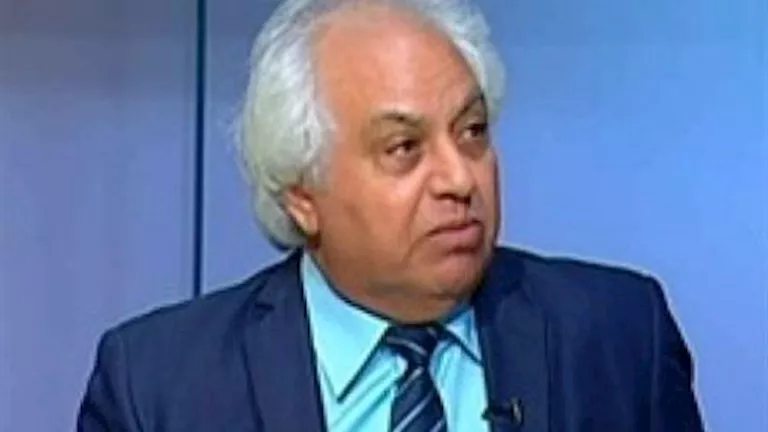
In an article by the Egyptian outlet Masrawy, Samir Ghattas, head of the Middle East Forum for Political and Strategic Studies, attributes the Houthis’ confidence to several factors: Iranian support, the group’s accumulated military capabilities, and US political calculations.
In his assessment, Iranian assistance goes beyond arms deliveries. Tehran, the analyst says, has provided the Houthis with weapons, instructors, and training, and has helped establish a local military industry. The production of missiles and drones inside Yemen means the problem cannot be solved simply by intercepting external shipments: the group can sustain and replenish its arsenal within the country.
Ghattas also points to Yemen’s geography. Mountainous terrain, tunnel networks, and fortified underground storage sites help the Houthis conceal weapons and withstand strikes on military infrastructure. For Riyadh, this means that a decline in fighting does not necessarily mean the threat has disappeared. Even after periods of relative calm, the Houthis may retain missiles and drones, build up new capabilities, and use them again against Saudi targets.
The reliability of US security guarantees is central to the analysis. Ghattas links the Houthis’ current capabilities to events in 2018, when the advance of Yemen’s internationally recognized government on the port of Hodeidah was halted after the United States and the United Kingdom helped broker the Stockholm Agreement. In the analyst’s view, the pause that followed allowed the Houthis to strengthen their position and expand their military capabilities.
This interpretation reflects a sensitive issue for Saudi Arabia: why do its extensive defense, political, and economic ties with Washington not always translate into decisive deterrence of attacks on the kingdom? The question is particularly acute given previous strikes on Saudi airports, cities, and energy facilities.
The analyst also draws attention to contacts between the United States and the Houthis, as well as agreements to halt mutual attacks in the Red Sea. In his account, these arrangements are primarily aimed at protecting US shipping, not at eliminating the threat to Washington’s regional allies. The Houthis may therefore have concluded that the United States wants to avoid a direct, wide-ranging confrontation with them, even as risks to Saudi Arabia persist.
Ghattas also mentions a meeting between Houthi representatives and US officials at the US Embassy in Amman. However, this claim is presented as the analyst’s own assessment and is not accompanied by independent confirmation.
The Bab el-Mandeb Strait—a key sea passage between the Red Sea and the Gulf of Aden—features prominently in Saudi concerns. Disruption to shipping there would affect international trade, but it also has direct implications for Riyadh: security in the Red Sea matters for the kingdom’s ports, logistics chains, maritime transport, and investment projects.
The Houthis, who control a substantial part of northwestern Yemen, can use their proximity to sea routes as leverage not only over Saudi Arabia but also over international actors. At the same time, Ghattas warns that an actual, sustained blockade of the Bab el-Mandeb Strait would almost inevitably trigger a broader international response, extending well beyond the Saudi-Houthi conflict.
Thus, the position presented by Masrawy explains the threat not only in terms of Iranian support and the Houthis’ military adaptability, but also by pointing to inconsistencies in US foreign policy. For Saudi Arabia, this reinforces a key strategic conclusion: the kingdom’s security cannot be treated as a secondary element in arrangements concerning the Red Sea or Yemen, nor should it depend entirely on whether an external partner is willing to act at a critical moment.