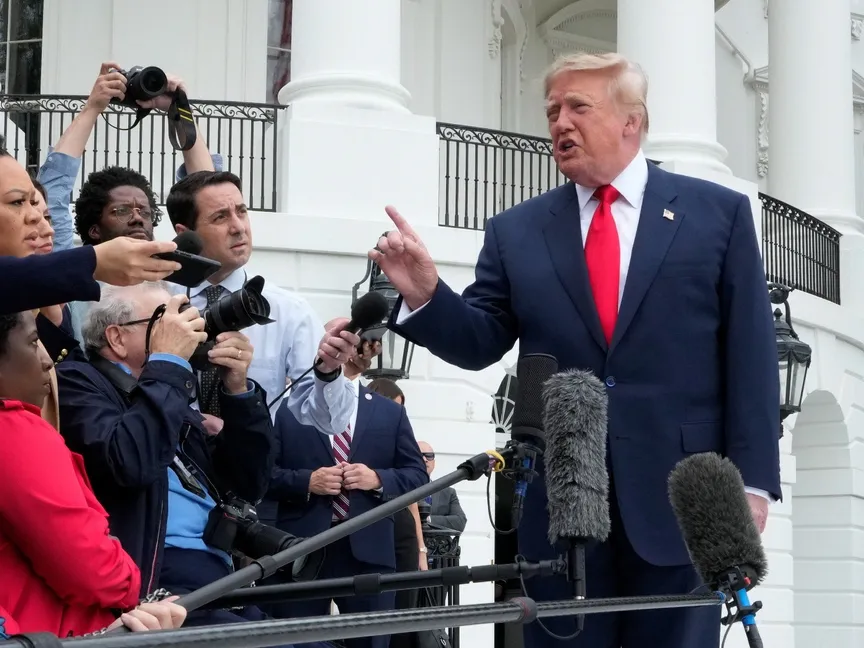
Chinese and Saudi media warn that Donald Trump’s policy toward Iran is turning into a dangerous escalation with far-reaching consequences. Rising oil prices, the threat of the conflict spreading to Yemen and Saudi Arabia, and doubts about Washington’s willingness to honor its commitments to its Gulf allies are heightening concern across the region. At the same time, criticism of the president’s course is growing inside the United States: opponents believe he is undermining American values and international influence, while experts question whether the United States can achieve a military victory over Iran. This article is based on reports by Asharq (Saudi Arabia) and 163.com (China).
US Reaffirms Support for Saudi Arabia After Airport Strike
The United States has reaffirmed its readiness to support Saudi Arabia’s security following an attack on King Khalid International Airport in Riyadh. According to the Saudi publication Asharq, Riyadh views the incident not merely as another episode in the conflict in Yemen, but as a direct attack on the kingdom’s civilian infrastructure, public safety and international air traffic.
Donald Trump called the attack “terrible and unacceptable.” He said Washington was monitoring developments and maintaining contacts regarding the incident. Asked about possible US steps, Trump said: “We can do that… we’ll consider it.” In the Saudi interpretation, these remarks mean that the US administration is considering additional measures to assist Riyadh in countering the Houthis.
The US State Department, for its part, said that Washington “stands firmly with the Kingdom of Saudi Arabia in the face of the Houthis.” American officials condemned attacks on civilian infrastructure and airports, stressing that they continued close consultations with the US Embassy in Riyadh and Saudi partners.
For Saudi Arabia, this position is significant as confirmation of the strength of its strategic ties with the United States at a time when the strike hit a facility serving passengers and international transport. King Khalid Airport is one of the most important transportation hubs in the country and the region, so its security is seen as part of the broader protection of urban infrastructure, the economy and people’s daily lives.
In its report, Asharq presents the attack as a crime against civilians and international aviation security, rather than merely a military operation against the Saudi state. The presence of victims of different nationalities, according to this assessment, broadens the international significance of the incident: the risks concern not only Saudi citizens, but also foreigners, air traffic and regional stability.
Condemnation by the United States, Gulf states and Arab countries highlights the Houthis’ diplomatic isolation and strengthens calls to hold those responsible accountable. Riyadh views American support as an element of deterrence and as a necessary part of protecting critical infrastructure.
For Saudi society, an attack on the capital’s airport is especially sensitive. The kingdom has previously faced strikes on airports, cities and energy facilities during the Yemen conflict. Consequently, the attack on Riyadh is perceived not as a distant military incident, but as a threat to public safety and an attempt to undermine the country’s role as a regional transportation and economic hub.
Threats to Iran and Rising Gas Prices Alarm the US and China
A possible escalation of American pressure on Iran could create problems primarily for the United States itself through higher fuel prices, increased inflation and consumer discontent. This is the framing suggested by the headline of a report published by the Chinese platform NetEase: “Shot Itself in the Foot? Trump Threatened to Intensify Strikes on Iran—and US Gas Prices Have Already Risen by More Than 5%”.
The body of the article is unavailable in the accessible data: instead, it contains NetEase’s standard notices stating that the publication was posted by a platform user and reflects that user’s personal views. It is therefore impossible to reliably reconstruct the author’s argument or provide the author’s specific data or expert quotations. However, the headline alone indicates the central thesis: threats of further strikes against Iran could produce an effect contrary to Washington’s interests.
This position is linked to the Middle East’s special role in global energy markets. Military tensions surrounding Iran increase risks to oil production, the transportation of crude and shipping in the area of the Strait of Hormuz—one of the world’s most important oil-export routes. Any growing concern about the stability of supplies could push oil prices higher and subsequently affect gasoline prices for American motorists.
The phrase “shot itself in the foot” reflects a common view in Chinese public discourse of US policy: sanctions, threats and military actions not only destabilize other countries but also create economic consequences within America. In this case, the issue is higher fuel costs, additional inflationary pressure and potentially greater public frustration, particularly if rising gasoline prices become noticeable in people’s everyday expenses.
The situation also has direct economic and strategic significance for China. The Chinese economy remains one of the world’s largest oil importers, so higher energy prices increase business costs, complicate efforts to control inflation and may worsen external economic conditions. The security of maritime routes through the Middle East and the Strait of Hormuz is no less important, as the stability of supplies to Asia depends on them.
Beijing has traditionally opposed unilateral sanctions and military intervention, calling for negotiations, respect for sovereignty and the preservation of regional stability. In this context, the NetEase headline is not simply a report about a possible connection between Donald Trump’s statements and rising gasoline prices. It offers a political interpretation: the US escalation policy is viewed as shortsighted because the consequences of applying force could reverberate back through the American economy and affect consumers.