At the turn of February and March 2026, America once again found itself at the center of other countries’ debates, although within the United States this concentration of attention has long been taken for granted. For Ukraine, China and Australia, the current agenda around Washington is shaped by three main storylines: the Trump administration’s attempt to accelerate a “peace at any price” in Russia’s war against Ukraine; the domestic American struggle over global tariffs and its consequences for China and the world market; and the broader question of how much longer the U.S. can be relied upon as a predictable partner in security and economics. Each of these threads is refracted through local lenses in different ways, but together they provide a rare cross-section of how America is seen from various points on the globe today.
In Ukrainian discourse the U.S. and Donald Trump personally are discussed primarily through the prism of peace negotiations and possible territorial concessions. Ukrainian media are closely analyzing the American “peace plan,” the 28 points of which were published at the end of 2025 and became the starting point for the current trilateral Ukraine–U.S.–Russia talks. In a large report on the meeting of negotiating teams in Geneva, Ukrainska Pravda describes how the Kyiv team — from head of military intelligence Kyrylo Budanov to representatives of the National Security and Defense Council — is trying to fit American proposals into frameworks acceptable to Ukrainian society, noting that the U.S. not only insists on political agreements but is also ready to monitor a ceasefire regime if one is reached. The piece emphasizes that Washington has effectively become not just an ally, but a co‑author of the architecture of a future agreement; in Moscow this is perceived with obvious irritation, while in Kyiv it is met with anxious hope. Authors Roman Romanyuk and Angelina Strashkulich describe the Ukraine–U.S.–Russia negotiating triangle as a space where the American side simultaneously acts as guarantor and a hard arbiter of the terms of peace, which in Kyiv produces both gratitude and fears about possible pressure from the White House.
These fears are fed by leaks to Western media, which are immediately picked up by both Ukrainian and Russian press. Bloomberg’s reference to a U.S. plan “to get Ukraine to give up all of Donbass” became a sensation in the Russian‑language information space. Lenta.ru, covering excerpts from that piece, phrases it almost without nuance: “The U.S. will push Ukraine to give up all of Donbass,” while emphasizing that in return Washington expects a freeze of the conflict along the current front line. For a Russian audience this is presented as proof that even the U.S. is willing to recognize Moscow’s territorial gains, whereas for Ukrainian commentators such formulations are an alarming sign of the potential price of American guarantees. Ukrainian analytical outlets like ZN.ua, in scenario reviews relying on assessments from The Wall Street Journal, write that the American vision for ending the war is “simple: Ukraine gives up territory that for more than ten years was a cornerstone of its defense against Russia. In return, Kyiv is promised a Western military shield,” stressing that for Moscow this is anathema and for Ukrainian society a potentially painful compromise.
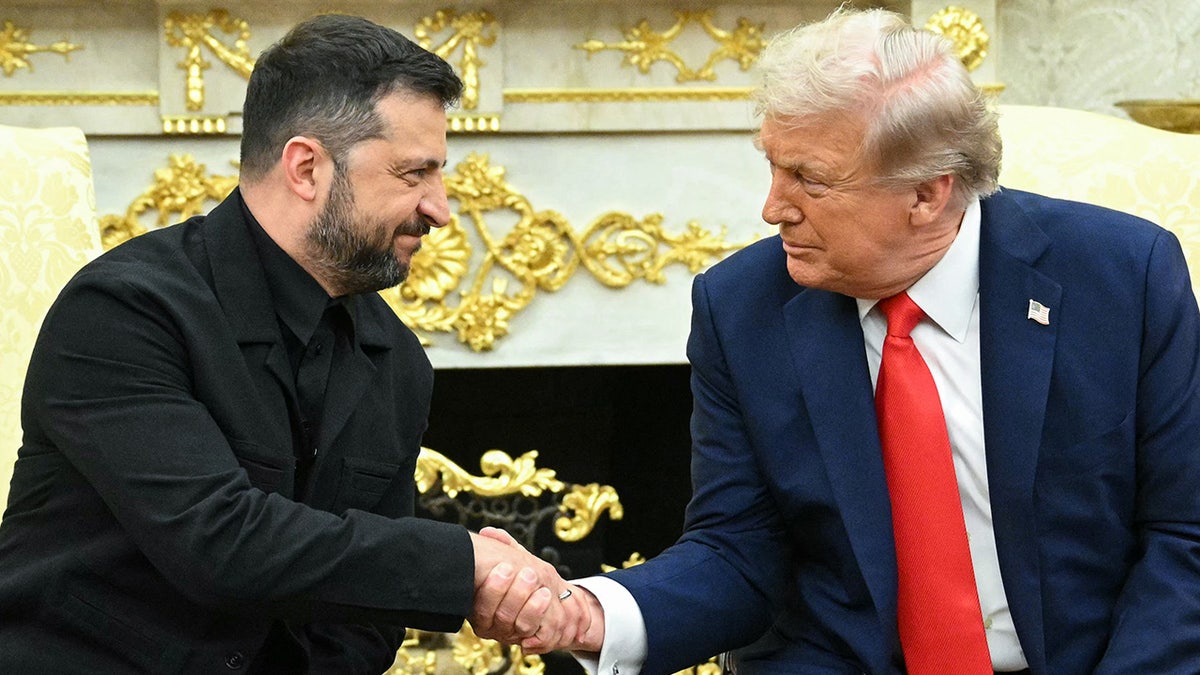
Against this backdrop, the question of Donald Trump’s personal role in the Ukrainian peace process becomes a separate theme. Ukrainian press does not forget last year’s scandalous White House meeting that ended in an actual quarrel between Trump and Volodymyr Zelensky, after which the American leader said the Ukrainian president “snubbed the United States” and was “not ready for peace.” In the piece “Trump said Zelensky snubbed the U.S. and is not ready for peace,” Ukrainska Pravda reporters cite his words that he “doesn’t want an advantage, but peace” and that Zelensky can “come back when he’s ready for peace.” This is quoted not as courtly chronicle but as a symptom: Ukrainian society sees that the person controlling key levers of assistance tends to treat negotiations as a personal drama and publicly punish those who disagree. Trump’s personality is described even more harshly in Mykhailo Dubyniansky’s analytical column “The Planet’s Chief Trust‑Fund Kid,” also published in Ukrainska Pravda. The author compares the American president to a “typical trust‑fund kid,” inheriting power from “Mother America” that does not match the scale of his personality, and accuses him of “squandering the political capital the United States earned after 1945,” trading the reputation of a reliable partner for his own whims and need for showy splendor. That tone is telling: even while acknowledging critical dependence on Washington, some Ukrainian intellectuals allow themselves extremely sharp personal criticism of the American leader, seeing in him a threat not only to Ukraine but to the global order.
At the same time Ukrainian diplomacy is forced to rationalize reality as much as possible: the same press reminds readers that Kyiv officially welcomed Trump’s plan to end the war in Gaza, calling it “an important contribution to the search for a just and sustainable settlement.” In a statement by the Foreign Ministry quoted by Ukrainska Pravda, it was emphasized that the plan should “be based on the principles of international law and take into account the legitimate rights and aspirations of people in Israel and Palestine.” For Ukrainian diplomats, demonstrating loyalty to Washington on other foreign‑policy directions is a way to secure maximum support on their core issue. Thus a dual optic emerges: in official rhetoric the U.S. remains the main guarantor and partner; in expert columns it is a dangerous “trust‑fund president” who can at any moment change tone and the terms of a deal.
China’s discussion about the U.S. these days is focused primarily on the failure of the American tariff “super‑initiative” and offers Beijing a rare occasion to speak of a strategic American mistake as confirmation of its own correctness. Chinese portals and blogs close to the patriotic segment enthusiastically quote the U.S. Supreme Court’s decision that declared Trump’s so‑called “global tariff” unconstitutional. One strikingly emotional headline on Sohu reads: “Pulled hard for three days — and the U.S. finally gave up. China predicted the outcome of this global war.” The author recounts in detail how “Trump’s tariff cudgel” relied on an expansive interpretation of the International Emergency Economic Powers Act, allowing the White House to set an average rate of 32% on Chinese imports. After the court decision, he writes, “to avoid legal risks, the White House launched an ‘everyone gets the same’ variant that unexpectedly lowered tariffs on Chinese goods from 32% to 24%” — presented as an almost anecdotal failure of American strategy.
In Chinese commentary the geopolitical moral of the story takes precedence over the legal aspects. Authors emphasize that despite U.S. attempts to build a front of allies who paid Washington “for protection” in the form of voluntary tariff concessions, China ultimately emerged as the principal beneficiary. Citing a Morgan Stanley report, Chinese commentators note that the American financial sector is already openly saying that Beijing is the “beneficiary of the U.S.’s internal judicial struggle,” and that allies who paid the political price for participating in the tariff coalition lost their “privileges” overnight. For a Chinese audience this serves as proof that the strategy of long‑term endurance — “贸易战没有赢家” (“there are no winners in a trade war”) — ultimately proved successful, and that the American bet on unilateral economic coercion crumbled under its own legal weight.
Against this background, discussion of Trump’s upcoming visit to Beijing and a possible “big deal” on purchases of American agricultural products takes on a more pragmatic shade. Chinese outlets, summarizing Western analytical pieces, note that Beijing will most likely satisfy part of Washington’s demands on purchase volumes but, as the portal Wanwei Readers (万维读者网) relays citing former U.S. Chamber of Commerce international affairs head Myron Brilliant, “Xi Jinping is not going to gift Trump a ‘big and beautiful’ agreement.” This is an important detail: Chinese commentators emphasize that the U.S. is forced to come to Beijing not from a position of strength but as a party seeking a foreign‑policy “achievement” for domestic consumption. They write that Trump will try to “package” any interim agreement as a major diplomatic breakthrough to offset the political costs of the tariff adventure and rising prices at home. In doing so China demonstratively shows it no longer sees the U.S. as the sole architect of the rules of the game, treating Washington as a nervous but still useful counterparty.
China’s view of American foreign policy extends beyond trade: experts in Beijing are watching closely how the U.S. is simultaneously trying to pressure Russia in the Ukrainian conflict and playing a risky game in the Middle East, where escalation with Iran already affects oil markets. In an analytical piece on the military forum World Forum (世界论坛网), experts from Barclays and Eurasia Group are cited through a Chinese filter: their warnings that a failure of U.S. talks with Iran and a possible blockade of the Strait of Hormuz could knock out up to 20% of global oil supplies and derail all “soft‑landing” scenarios for global inflation are presented as examples of how Washington’s overestimation of its own capabilities destabilizes the world economy. For China, which positions itself as a more responsible supporter of global market stability, it is convenient in this context to underline that it is precisely American tactical moves that make the energy market hostage to the political ambitions of the White House.
The Australian debate about the U.S. may seem less dramatic at first glance, but underneath it is connected to the same questions of trust and dependence. Although there have been few loud scandals around Washington in recent days in Canberra, local analytical and business outlets continue to discuss the risks posed to Australia by American economic and strategic policy. The focus is the combination of U.S. tariff policy, which affects global supply chains, and the unpredictability of American foreign policy — from threats of military action against Mexico over migration, reported by Ukrainian and European media citing The Wall Street Journal, to Trump’s willingness to pressure NATO allies on Ukraine and demand “results by July 4” — the symbolic date of the 250th anniversary of American independence. For Australian experts, accustomed to the narrative of the U.S. as the pillar of the postwar order in the Asia‑Pacific region, such a habit of setting deadlines and shaping complex international processes around domestic celebrations looks like a warning: if Washington is willing to treat even the Ukrainian war as background for an internal fete, it could at any moment recalculate the balance of benefits and obligations regarding Australia.
At the same time the AUKUS strategic alliance and Australia’s dependence on American technologies and intelligence leave Canberra little room for sharp public criticism. Local columns and expert comments speak of the need to “hedge” risks by strengthening ties with Europe and Japan, while acknowledging that there is currently no alternative to the American “nuclear umbrella” and access to advanced military technology. In this respect the Australian discourse echoes the Ukrainian one: in both places the U.S. is simultaneously seen as an indispensable guarantor and as a source of risk due to personal and institutional unpredictability. The difference is that Ukraine is already paying for this with citizens’ lives and territory, whereas Australia — for now — pays only in nerves and strategic calculations.
It is interesting how Ukrainian, Chinese and Australian voices, without collusion, converge on one point: American leadership is no longer perceived as natural and indisputable. Ukrainian authors like Dubyniansky write that Trump is “squandering” the trust capital the U.S. accumulated over decades, turning a superpower into an instrument of his own ego. Chinese commentators, watching the failure of the tariff strategy and the country’s internal legal constraints, conclude that the “empire” is not only not omnipotent but is also a hostage to its own institutions, forced to juggle emergency measures and then roll them back under pressure from courts and markets. Australian experts, in a quieter but persistent voice, speak of the need to adapt to a world where the U.S. remains the strongest player but no longer guarantees stability and predictability.
At the same time all three countries see America as not only a source of problems but also a resource for solving their own challenges. Ukraine, despite all criticism, continues to count on the American “shield” and on Washington’s participation in postwar security guarantees, even if that entails painful territorial compromises. China, while criticizing tariff policy, readily capitalizes on any internal failures in the American machine to improve trade conditions and weaken the anti‑China coalition. Australia, doubting the predictability of the White House, still builds its long‑term defense plans around American technology and intelligence, understanding that there are no real substitutes for now.
Ultimately the current international debate about the U.S. is not only a dispute over Donbass or import tariff rates. It is a much broader conversation about the price the world is willing to pay for American leadership when the White House is occupied by a man called in Kyiv “the planet’s chief trust‑fund kid,” in Beijing an impulsive but necessary trading partner, and in Canberra indispensable but no longer flawless as a security guarantor. And until Washington itself gives a convincing answer to what matters more — the stability of the system or an ostentatious gesture for another round date — Ukraine, China and Australia will continue to build their strategies on the assumption that the United States remains powerful, but not always prudent.