In May 2026, global attitudes toward the United States are focused on three interwoven themes: Donald Trump’s visit to China and the attempt to “stabilize” relations; the reduction of the American military presence in Germany amid trade pressure; and Washington’s shifting role in Russia’s war against Ukraine and in the parallel war in Iran. Germany, China and Ukraine view the same White House moves as elements of different games: for Berlin it is a question of security and industry, for Beijing — strategic stability and Taiwan, for Kyiv — survival and predictability of support.
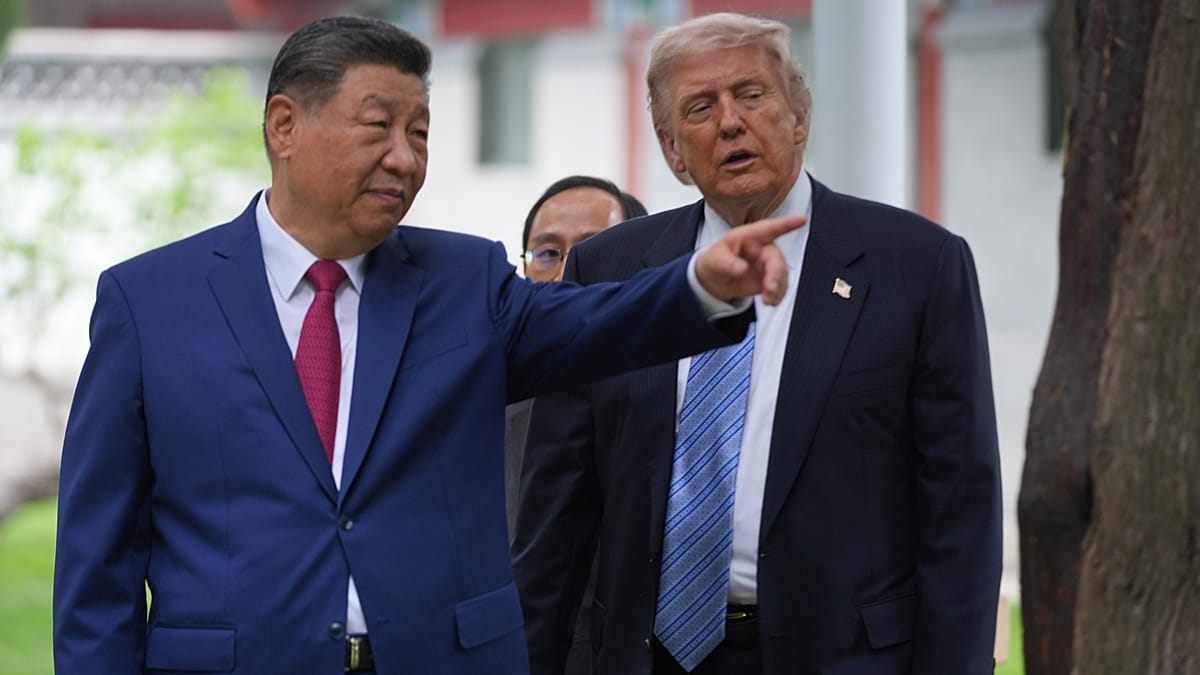
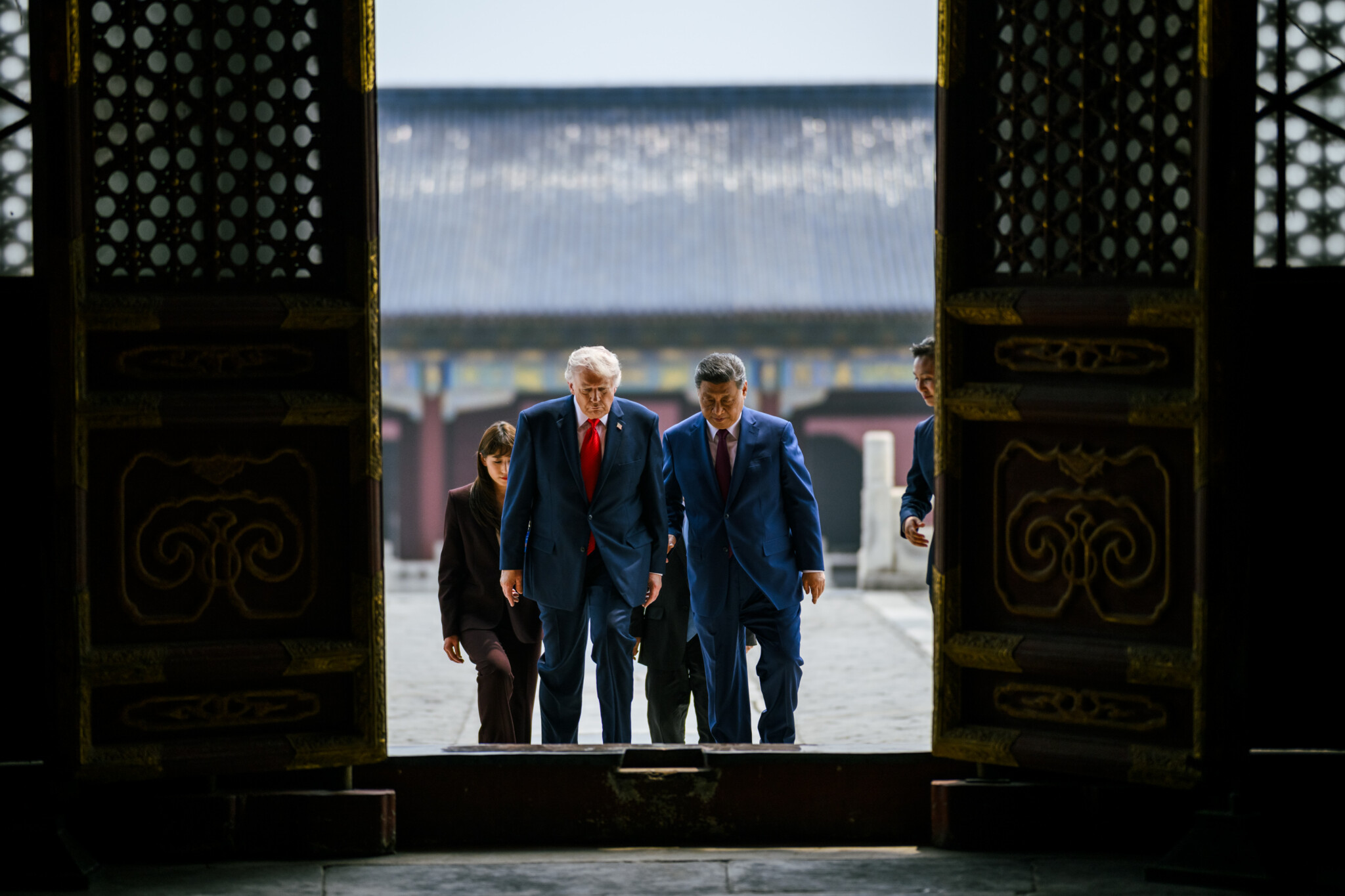
The first major focal point was the Beijing summit between Trump and Xi on May 14–15. In the Chinese official narrative, the visit is described as a step toward “strategic stability” and the prevention of “great‑power conflict.” Chinese media reports after the meeting emphasized that the sides achieved “progress in stabilizing relations,” but left details as vague as possible, while paying special attention to the image of Trump as a guest who was greeted with a red carpet and ceremonial reception in central Beijing. State outlets and allied commentators stress that China promotes the idea of “mutual respect and non‑interference,” while the U.S. is portrayed as a power that has intervened for decades in other countries’ affairs — from the Middle East to East Asia. Against this background, Chinese analysts underscore that the real red line remains Taiwan: even favorable comments about the visit came with reminders that “no new understanding has been reached” on the Taiwan issue, and that the risks of a crisis have not gone away, as Chinese and international commentators wrote when analyzing the summit’s outcome and Xi Jinping’s tough formulations on Taiwan in private conversations with Trump. (ru.euronews.com)
At the same time, the domestic Chinese discourse around the U.S. is noticeably pragmatic. Some experts in academic and quasi‑state institutions interpret the visit as an opportunity to exploit Washington’s strategic overload — chiefly because of the war in Iran and the ongoing conflict in Ukraine — to ease pressure on China in trade and technologies. Chinese reviews emphasize that the U.S. is forced to redistribute resources between Europe and the Middle East, which allegedly strengthens Beijing’s bargaining position: “America cannot handle three major crises at once,” a motif that regularly appears in Chinese commentary, summarizing a thought already present in English‑language analyses of Trump’s visit that argued Iran and Ukraine are becoming the backdrop for a “big deal” with China. (fdd.org)
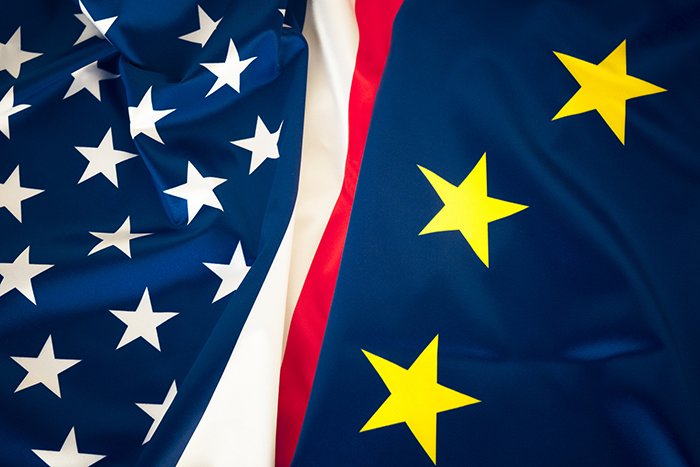
In German and, more broadly, European optics, the same Beijing summit is seen quite differently. European commentators in major media emphasize its “insufficiency” and the lack of tangible results, while acknowledging that the mere fact of direct dialogue between Washington and Beijing reduces global risks for the EU as a partner of both the U.S. and China. For example, one European review for the international channel Euronews noted that the meeting produced only a symbolic effect, and that the constancy of the American position on Taiwan was deliberately underscored by senior U.S. officials in Western media immediately after the summit. In the same logic, experts point out that the European Union is not a “marginalized” party because it remains an important economic partner for both powers amid their long‑term strategic rivalry. (ru.euronews.com)
For Ukraine, the main question related to the U.S. China policy is less about Taiwan or tariffs and more about possible “exchanges” in a grand bargain. Ukrainian analysts read both Western reports and Chinese statements closely, trying to understand whether Ukraine might become an object of tacit bargaining between Washington, Beijing and Moscow. Against this backdrop, Trump’s decision on a three‑day ceasefire on the front in May 2026 is viewed ambivalently: on the one hand, Kyiv’s media and experts note the value of any respite for civilians and the army; on the other, they point out that the initiative was presented as the personal achievement of the U.S. president and accompanied by rhetoric about the need to “end a war that should never have started,” which in the Ukrainian public space sounds like an attempt to equate aggressor and victim. (ru.wikipedia.org)
The second major theme, actively discussed in both Germany and Ukraine, is the planned reduction of the U.S. military contingent in the FRG and its connection to Washington’s policies on Ukraine and Iran. The Pentagon’s decision to withdraw about 5,000 troops from Germany became for Berlin both an alarming signal and a reason for domestic debate. In statements, German Defense Minister Boris Pistorius voiced a theme of “stimulus” for Europe: in his view, the troop reduction should push the EU to build up its own defense capabilities, not cause panic. However, not everyone in Germany’s political elite shares this optimism. CDU/CSU representatives emphasize that this is not part of a coherent strategy but a “political reflex” of the Trump administration, driven by domestic pressure and external setbacks, including the protracted conflicts in Ukraine and Iran, as well as disputes over the implementation of trade agreements with the EU. One of the ruling party’s foreign‑policy coordinators told Reuters that the simultaneous announcement of troop withdrawals and an increase in tariffs on imported European cars to 25% looks like a set of tactical moves rather than a consistent security architecture. (whbl.com)
For German public debate, this decision became a mirror of an old but unresolved question: can Europe — and above all Germany — truly take responsibility for its own defense if the American “nuclear umbrella” and troop presence become less guaranteed? Liberal and “Atlanticist” voices in Berlin argue that paradoxically, Trump’s steps may in the long term strengthen European defense capabilities, if they spur increased spending and deeper cooperation within the EU. More skeptical analysts see a risk of NATO fragmentation and growing internal contradictions in Europe between Eastern flank countries, for which the American presence remains vital, and those more inclined toward strategic autonomy.
In Warsaw and Kyiv this is perceived far less theoretically. Polish and Ukrainian commentators see the troop withdrawal from Germany as a signal that Washington is willing to use European security as a tool of pressure — on allies as well as adversaries. The Polish prime minister has already openly expressed concern, stressing that Warsaw needs clear and long‑term guarantees of U.S. presence on NATO’s eastern flank amid the ongoing war. In Ukrainian discourse, this decision is linked to a changing logic of American aid: if Washington grows weary of the conflict while Iran consumes a significant share of U.S. military resources, then the mere reduction of the contingent in Germany is read as another stroke toward a possible “roll‑back” of involvement. European diplomats interviewed by the Western press emphasized that, against the backdrop of resource reallocation to the war in Iran, tensions are already emerging over the weapons program for Ukraine, where European states are partially compensating for reductions in American supplies. (washingtonpost.com)
The third common theme is U.S. policy on Ukraine and the war in Iran as two interconnected conflicts perceived differently in Berlin, Beijing and Kyiv. German press and think tanks stress that the war in Iran increasingly distracts the White House, reducing the predictability of decisions on Ukraine. For Germany this is not only a moral‑political issue but a purely pragmatic one: instability in the Middle East hits energy and trade, while uncertainty over Ukraine affects the security of the EU’s eastern borders. One Western analytical column widely cited in German outlets noted that Trump’s idea to withdraw or radically reduce the American military presence in Europe “could be beneficial to everyone, and above all to America itself,” based on the argument that Russia, drained by war, does not present an immediate threat to Germany. This logic provokes lively debate in Germany: some experts agree that Moscow is seriously weakened, but others argue that it is precisely U.S. and EU support for Ukraine that deters Russia from further expansion. (cato.org)
In Ukraine the reaction to Washington’s policy is far less academic. Kyiv commentators stress a fundamental asymmetry: any U.S. “fatigue” from the conflict for Americans themselves means merely shifts in budget lines and changes in the domestic political agenda, whereas for Ukraine this is an existential matter. Ukrainian media and analytical reviews recall U.S. public‑opinion polls showing declining confidence in Trump’s ability to make balanced decisions on Ukraine and growing partisan disagreements over the level of support. Against this background, Ukraine’s elite watches every signal from Congress and the Pentagon closely, fearing that support might become a tool of domestic political struggle in the United States. (pewresearch.org)
For Beijing, the combination of the war in Ukraine and the conflict in Iran is part of a broader picture of “American overload.” Chinese analysts in their columns and appearances often emphasize that the U.S. has created a situation of strategic dispersion for itself and now must seek “stability” in relations with China, hoping at least for a temporary easing of tensions in the Asia‑Pacific region. It is telling that official Chinese statements on the wars in Ukraine and Iran are framed around themes of “diplomatic settlement” and criticism of the U.S. “sanctions logic,” while Beijing’s own interests in access to raw materials and supply routes remain offstage. Commentators in Chinese media stress that Beijing is playing the long game, in which each new U.S. crisis gives China additional arguments for a multipolar world and the weakening of Western alliances.
Interestingly, in all three countries — Germany, China and Ukraine — a similar motif is noticeable: the U.S. is no longer perceived as a monolithic, unequivocally predictable actor. German commentators increasingly speak of “Trump’s policy,” not “U.S. policy,” emphasizing the role of the president’s personal style and his electoral interests. Ukrainian analysts, for their part, distinguish between American state institutions — Congress, the Pentagon, the diplomatic corps — and White House rhetoric, trying to understand where real red lines lie. In China official rhetoric traditionally generalizes the U.S. as a “hegemonic power,” but expert discussions pay more attention to domestic political polarization in America and its influence on foreign policy, especially ahead of elections and amid the president’s falling approval ratings — a point regularly noted by Western press quoted in Chinese outlets. (euronews.com)
Thus, today’s debates about the U.S. in Berlin, Beijing and Kyiv are not simply reactions to individual Trump decisions. They are reflections on how to live in a world where American power remains decisive, but its application becomes increasingly fragmented, situational and tied to Washington’s domestic politics. For Germany the key question is whether Europe can turn American unpredictability into an incentive for its own strategic maturity. For China — how to use the window of opportunity without driving relations with the U.S. into direct confrontation over Taiwan. For Ukraine — how to preserve vital support when Washington is simultaneously fighting in Iran, bargaining with Beijing and squabbling with Berlin over tariffs and troops. There are no answers yet in Berlin, Beijing or Kyiv, but these questions are precisely what today’s local conversations about what America of 2026 is and what place it will occupy in tomorrow’s world are built around.