In recent weeks, in three very different countries—Israel, Japan and South Africa—attention to the United States has shifted away from abstract “American policy” and toward very specific issues: a deal—or a pause—in Washington’s relations with Iran; tariffs and the overall unpredictability of the Trump administration; and how America pressures allies and partners when it comes to trade, security and ideology. In Israeli outlets, the United States is discussed primarily through the lens of Iran and anxiety that Washington may place its domestic political calculations above Israel’s interests. In Japanese media, the dominant themes are tariffs, technological and military uncertainty, and the question of whether America under Trump is eroding the very foundation of the alliance system. In South African coverage, the United States no longer looks like a distant global arbiter; it is portrayed as a source of direct diplomatic and economic pressure—from disputes over land reform and AGOA to what many commentators consider a humiliating confrontation over the G20 and “white refugees.” (jpost.com)
The overarching common theme is the sense that America has become less predictable and less reliable than its allies have grown accustomed to believing. In Japan, this is expressed especially sharply: Yūiti Hosoya, writing in The Japan Times, says that in less than two years of his second term, Donald Trump has created a “notable number of geopolitical shocks,” including “mutual tariffs,” an operation in Venezuela, and joint U.S. and Israeli strikes on Iran; in his view, this volatility makes the international environment increasingly unpredictable. At the same time, Japanese commentators directly link American tariffs to a blow to the auto industry and, more broadly, to the erosion of alliance reliability: one Japan Times piece describes how Trump’s tariffs “continue to hit Japanese automakers,” while another says the United States is still planning to honor previous trade arrangements even as new tariff threats already hang in the air. From this, Tokyo draws not only an economic but also a strategic conclusion: if Washington changes the rules so easily, Japan must think about its own autonomy faster—and more decisively. (japantimes.co.jp)
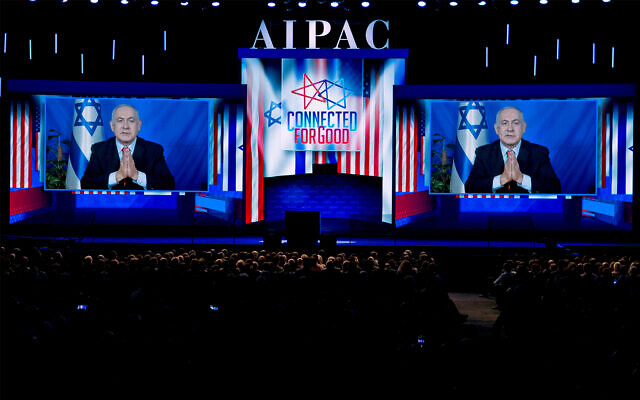
In Israel, the same unpredictability is read through the Iran storyline. Here, almost every major commentary is built around the fear that the American president may view Iran primarily as a foreign-policy case to secure an internal political victory, with Israel treated as an ally whose priorities do not necessarily match America’s. In Jerusalem Post, David Weinberg—while acknowledging Trump’s “solid” track record against Iran—writes that Trump’s tough rhetoric, and especially that of his vice president, J. D. Vance, toward Israel, makes it hard to trust the current line from Washington. He cites analyst Michael Doran: a deal with Tehran may be needed for Trump to open the Strait of Hormuz and bring down oil prices—meaning it is first and foremost a political calculation for the election campaign. In Times of Israel, Seth Eisenberg puts the Israeli fear even more bluntly: for the United States, it could be a deal that “relieves pressure” on energy markets and delivers a win on the home front, while for Israel it is a dangerous pause after which Iran will restore its resources, proxy networks and nuclear program. (jpost.com)
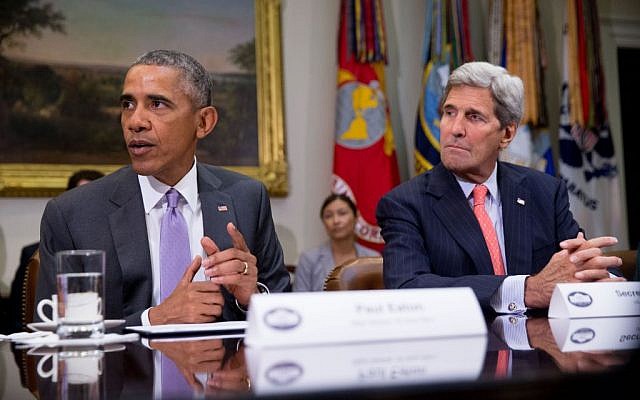
An important nuance in Israel’s response is that Trump is not seen here merely as an anti-Israel or pro-Israel leader; he is assessed as a figure who must be both thanked and feared. This is visible in the tone of “Jewish groups push back against Trump’s Iran deal — but for now more quietly than in 2015”: it says directly that many analysts consider Trump’s framework “worse” than Obama’s deal because it leaves Iran a path to economic recovery and does not resolve the issue of the missile program and support for proxies. And while Israeli leaders—though not Netanyahu—publicly object to the American line, this is also because it may force Israel to stop fighting Hezbollah in southern Lebanon. The text also cites a particularly telling figure: 71% of Israelis, according to a Channel 12 poll, do not trust Trump to protect Israel’s interests in negotiations with Iran. This is no longer a debate about tactics; it is a debate about whether the United States can even be considered an automatic guarantor of Israel’s security. (timesofisrael.com)
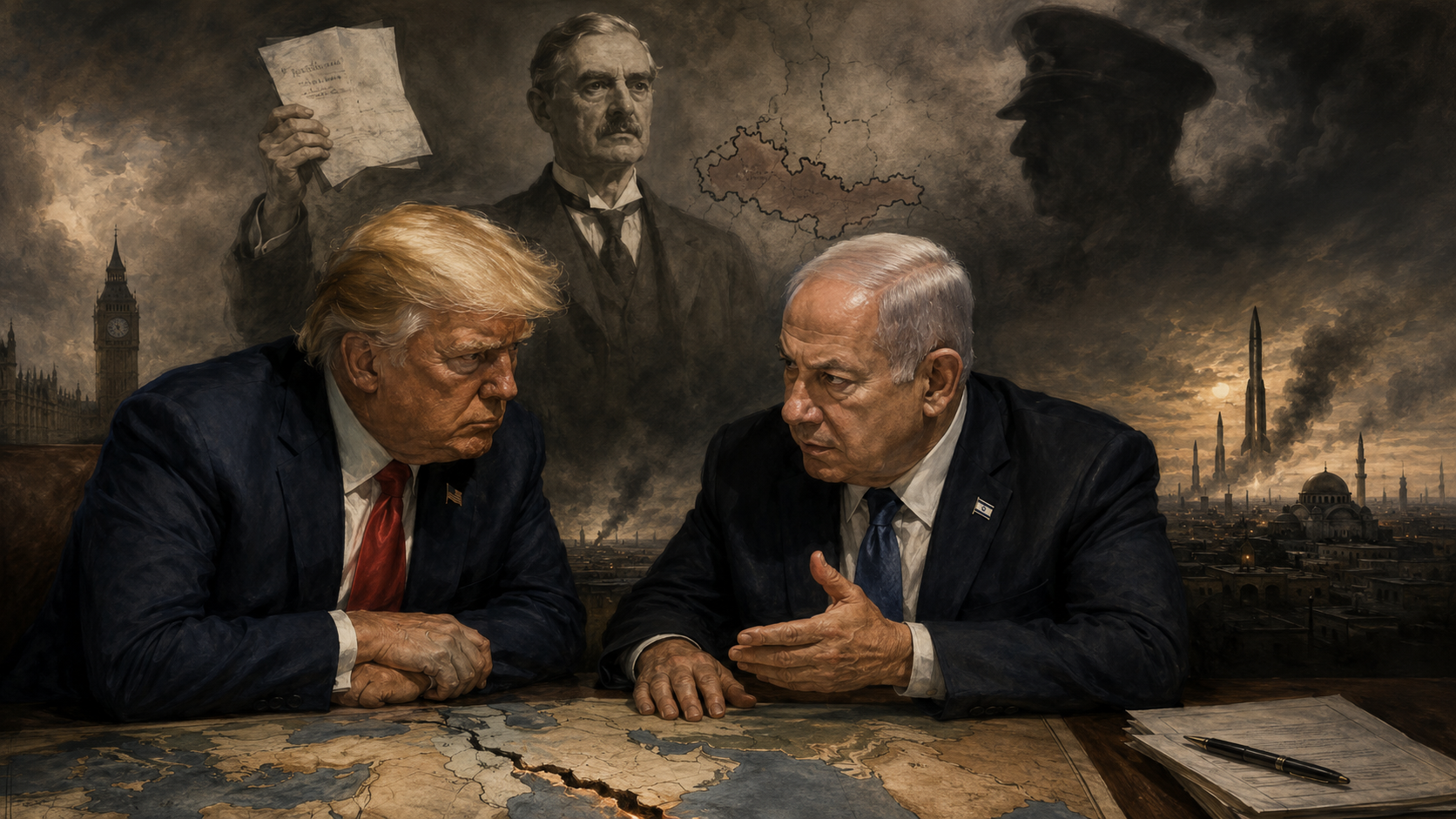
A key local motive in Israel is historical memory, which turns modern diplomacy into a moral drama. In Times of Israel, Seth Eisenberg writes that in Israel there is already talk of Munich—not as a literal parallel, but as a warning: when aggressive regimes interpret concessions as weakness, a temporary appeasement can become the prelude to a new threat. That helps explain why Israel’s reaction to the American course toward Iran is rarely neutral: even those who recognize Trump’s right to bargain pragmatically add immediately that, in the region, time is not measured by America’s electoral cycles, but by the risk to lives and to statehood. (blogs.timesofisrael.com)
In Japan, however, the emotional center of the debate is different: there is less drama, but more systemic anxiety. Japan views the United States as the foundation of world trade, technology and security—so any wobble in America’s line is perceived as a threat to the long-term horizon. The Japan Times links the current American policy directly to the worsening situation for Japan’s auto industry, and in another column asks what will happen to Japan-U.S. relations in a supposed “golden era”—answering that it’s “not quite” what politicians usually promise. Especially indicative is the comment that under Trump, America is shifting “closer to the concerns of religious conservatives than to democracy and human rights.” For a Japanese reader, this matters not only as a moral rebuke; it is also a signal that the United States is becoming less universalist and more ideologically narrow—meaning the alliance with it has to be rebuilt on tougher, more pragmatic grounds. (japantimes.co.jp)
A separate layer of Japanese discussion is economic discipline and fear of tariff nationalism. The Japan Times’ coverage of tariffs shows that Japanese elites see American levies not as a short-term noise campaign, but as a structural blow to the export model—especially automobiles and related supply chains. In that sense, in Japanese press, the United States no longer looks like merely an ally, but a partner that can simultaneously demand investment in America, promise to honor agreements, and then change the rules through new tariff schemes. Hence the broader conclusion: Tokyo must not only protect specific industries, but also think about how to live in a world where American predictability is no longer guaranteed. (japantimes.co.jp)
South Africa’s reaction to the United States is the most conflict-ridden and, arguably, the most post-colonial in tone. Here, America is discussed not as the “center of the Western world,” but as a force that interferes in domestic affairs, imposes conditions and is still trying to morally redefine the local political order. In IOL, one column states outright that U.S.–South African relations have “sharply worsened” at the start of 2026 and reached the lowest level since 1994: Washington criticized land reform, accused Pretoria of discriminating against white farmers, clashed over BRICS and a case against Israel in the International Court of Justice, and also paused aid and reviewed AGOA trade privileges. This is no longer just a diplomatic quarrel; for South African commentators, it is a debate about sovereignty and the right of the country to conduct an independent foreign policy. (iol.co.za)
The most emotionally charged topic in South Africa is the myth of “white genocide” and how Trump has built it into his own policy. Hassan Lorgat, in IOL, writes that on April 18, 2026, Trump again repeated false claims about alleged targeted destruction of white Afrikaner farmers, and then used this rhetoric to speed up a mechanism for relocating “persecuted” South Africans to the United States. The author emphasizes that in reality it is almost exclusively about white Afrikaners, and cites Refugee Processing Center data: of 4,499 refugees who arrived in the United States from October 1, 2025, 4,496 were from South Africa. Especially telling is the response he quotes from Afrikaner groups “Not in our name,” which reject the scheme as a dangerous distortion of reality that serves American right-wing theories about the “great replacement.” For a South African reader, this is not just a dispute over facts, but a question of who has the right to speak on behalf of Afrikaners—and who is turning local social complexity into an ideological tool for America’s internal struggle. (iol.co.za)
Another strong South African motive is irritation that Washington links trade with political demands. IOL reports that the United States does not soften its list of demands: it is concerned not only with the expropriation law and B-BBEE policy, but also with South Africa’s relations with Iran. This matters because, through local lenses, American economic conditions are read as an attempt to impose an internal social model through external pressure. And in discussions of the G20 and South Africa’s status in global politics, there is almost a symbolic rebuke: America wants not so much to argue on the merits as to humiliate a country that is not willing to follow its line on Israel, BRICS and other sensitive issues. (iol.co.za)
If you put it all together, the overall picture looks like this: in Israel, the United States is discussed as a potentially unreliable—but still indispensable—partner in war and peace in the Middle East; in Japan, as the backbone of a system that it is itself shaking through tariffs, ideological framing and unpredictability; in South Africa, as a power that no longer merely influences but instead presses, moralizes and reframes local policy to suit its own internal conflicts. But these stories also have a common core: in all three countries, U.S. policy is no longer perceived as an external backdrop. It has become part of their own political debates—about security, sovereignty, the economy and whether the United States can still be seen as a stabilizing force in the world. (jpost.com)