Over the past weeks the United States has once again become a central topic for three very different regions of the world — South Africa, Brazil and Australia. The catalyst was several moves by Washington at once: tariff decisions by the Donald Trump administration, a new configuration of relations with Brazil after Lula’s visit to the White House, pressure on South Africa through trade and the G20, and the build‑up of military presence in the Indo‑Pacific region and alliances like AUKUS. In each country the discussion about the US passes through its own pains: for Brazil it is the balance between Washington and Beijing, for South Africa — a painful clash with American “punitive diplomacy,” for Australia — the security dilemma and the risk of being drawn into a war it does not control. Yet in all three cases the United States simultaneously appears as both an indispensable partner and a source of serious vulnerability.
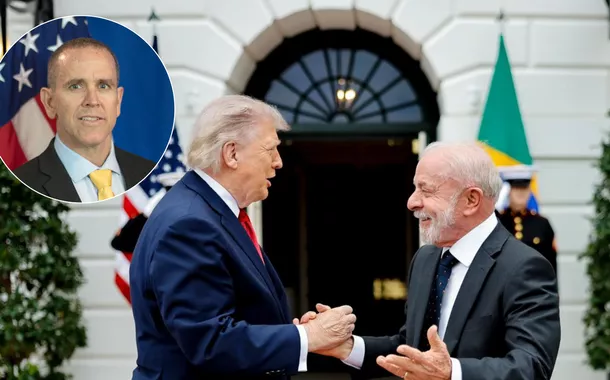
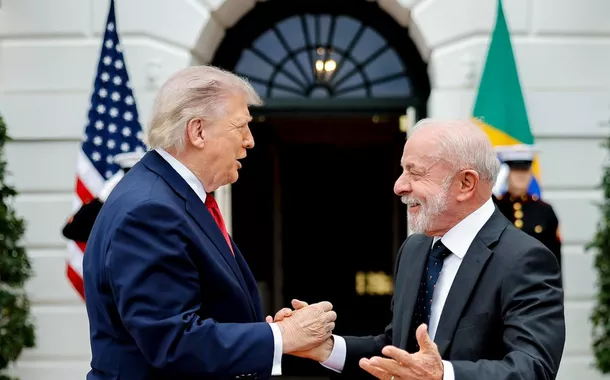
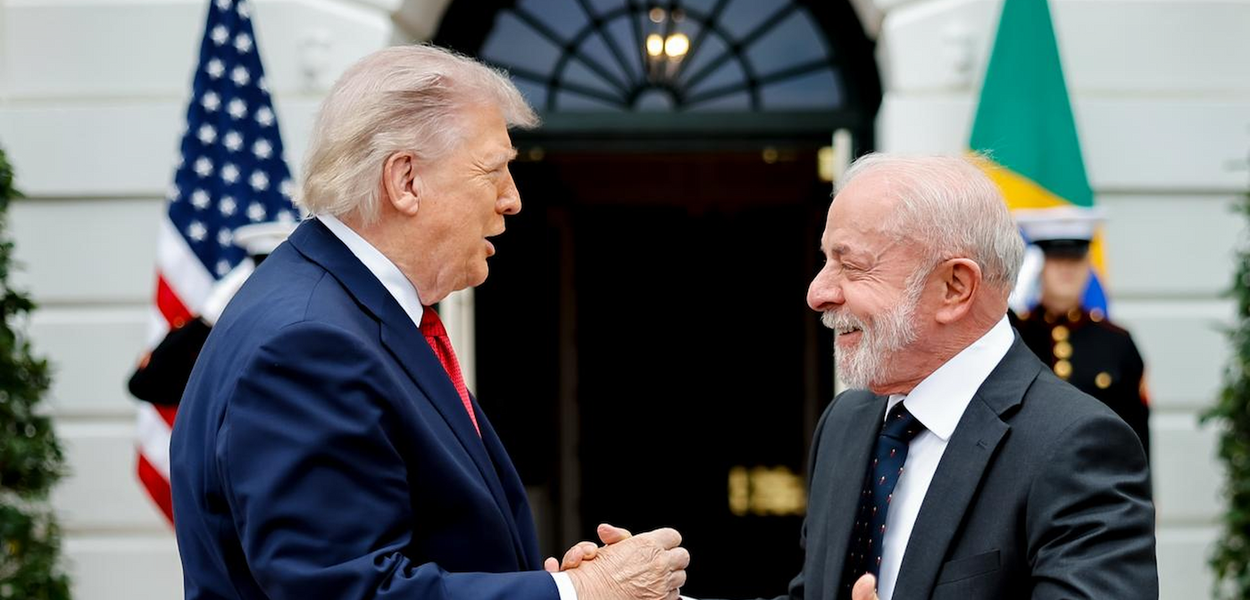
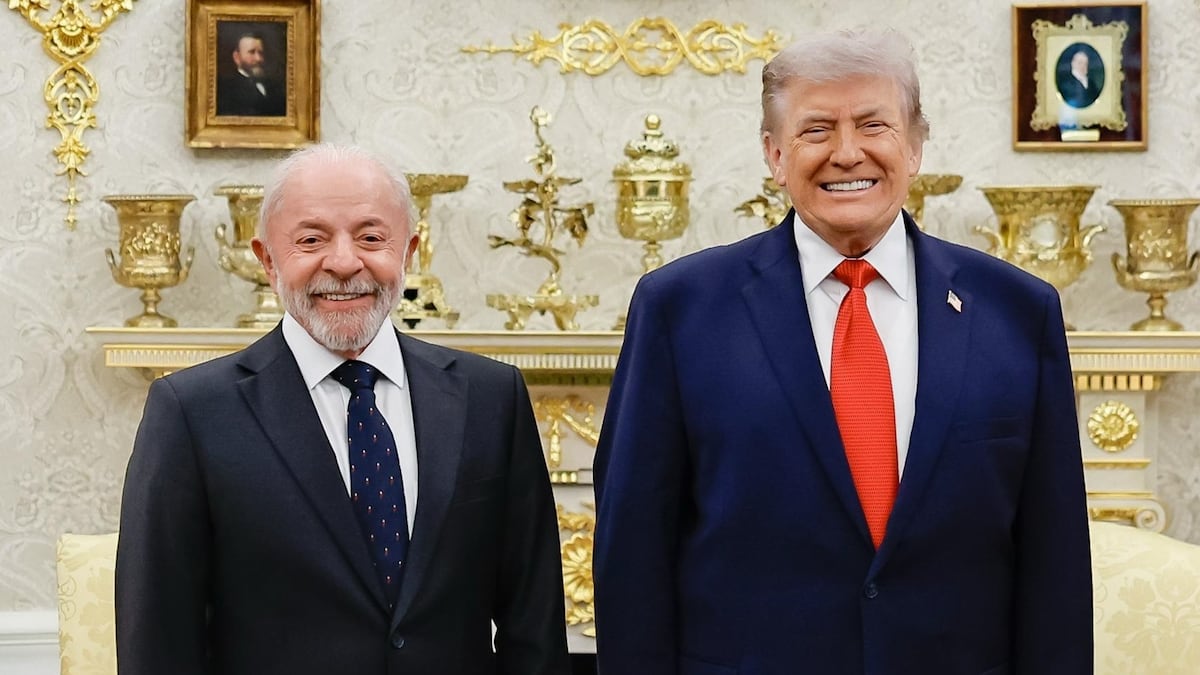
In Brazil, Lula’s visit to the White House on May 7 set off a wave of contradictory commentary. The business press and the industrial lobby saw it as a chance to soften tariff pressure and reboot the economic partnership. Thus, in an article in the business magazine Veja it is emphasized that, despite the “tension caused by Trump’s tariff threats,” Brazilian industry is betting on keeping the US as a “strategic partner,” recalling that last year Brazil’s trade deficit with the Americans reached $14 billion and the country is forced to seek more favorable conditions of access to that market. The same article mentions a large CNI business forum in New York where business directly lobbies for more predictable rules of the game in trade with the US. (veja.abril.com.br)
A similar tone is heard in comments by financial analysts: in a May letter strategists at the Brazilian firm Genial Investimentos stress that the Fed’s tight stance on rates and the high yields of US assets limit Brazil’s room for maneuver in its own monetary policy; any serious conflict with Washington over tariffs and investment, the authors warn, will automatically be reflected in a weaker real and rising risk premia. (analisa.genialinvestimentos.com.br) Against this background, Lula’s statements in Washington that the US “has always been Brazil’s main trading partner” and that the country wants to reposition itself as a strategic ally for Americans in business and investment are perceived by a significant part of the economic establishment as pragmatism rather than an ideological turn. This is discussed, for example, by columnist Mariana Felicio in her column for Forbes Brasil, where she quotes minister Márcio Elias saying that “there is no place for US super‑tariffs on Brazil” and that Brazil cannot be punished for diversifying its ties with China. (forbes.com.br)
But this “pragmatic” view is far from dominant. From left and right Lula faces sharp criticism for how he is conducting dialogue with Washington. The left‑radical World Socialist Web Site in its Brazilian edition blasted the president for a “repulsive political performance” at the White House, accusing him of “once again playing the role of a long‑time helper of American imperialism in Latin America.” The same piece quotes Lula himself saying that “the US began to lose its hegemony from 2008” and that Brazil has made the PRC its main trading partner, then stressing that he urged Trump to “take an interest in Brazil again.” The authors interpret this as an attempt to pull Brazil deeper into Washington’s orbit amid the US–China confrontation. (wsws.org)
A text mirrored in tone but similar in focus appeared on the left‑populist portal Brasil 247, which, by contrast, depicts Lula as a “global statesman and defender of Brazilian sovereignty” in Washington. In this version of events Lula “bought time” for the country, softening the tariff threat and demonstrating that he can speak to Trump “on equal terms” without abandoning rapprochement with China. (brasil247.com) Notably, both laudatory and condemnatory versions are read around the same context: the US is seen as a force that can still strongly support or strongly punish Brazil, and Lula’s task is to minimize the cost of dependence without losing access to the American market and capital.
A critical but more “technocratic” tone is set by columnists in the major conservative press. In José Casado’s column in Veja he discusses the fork in the road facing Lula and Trump: either an escalation of the trade conflict, or a “broad agreement that could multiply trade and investment flows between the two countries.” The author reminds readers that joint investigations into illegal logging and timber exports involved both Brazilian and American actors, and warns that any political deterioration with Washington will immediately become a risk factor for industry and agribusiness. (veja.abril.com.br)
In South Africa the main nerve in the discussion about the US is no longer only tariffs, but demonstrative political pressure. In recent months several storylines overlapped in South Africa: the temporary easing of the tariff regime after a US Supreme Court decision that declared Trump’s previous tariff policy illegal; a new “global” 10% duty on imports of most goods; and, finally, South Africa’s exclusion from G20 meeting formats during the year of American chairmanship.
Commercial and business press focuses on practical consequences. Business Report, in a piece on South Africa’s reaction to the Supreme Court decision, quotes Raymond Parsons, an economist at North‑West University, who called the court’s verdict on the illegality of Trump’s “reciprocal” tariffs “a welcome development for many countries, including South Africa, which had to deal with the aggressive tariff policy of the US in recent years.” He notes that much of the tariffs already paid may now be refunded, which would be a significant relief for exporters. (iol.co.za) However, it is immediately noted that the relief is temporary: almost immediately after the court decision Trump signed a new proclamation under section 122 of the Trade Act of 1974, introducing a 10% ad valorem duty on most imported goods to the US for 150 days from February 24, creating for South African exporters “a mixture of relief and new uncertainty.” Business Report covers this in detail in another article, emphasizing Pretoria’s silence in the face of the looming new import levy. (businessreport.co.za)
The liberal opposition party Democratic Alliance in its official statement published on the party website calls the repeal of the previous tariffs a “temporary relief,” but warns that the South African government must urgently lock in agreements with Washington before the tariffs rise again. In their interpretation the court verdict is a window of opportunity to use the country’s unique geographic position and access to Southern Hemisphere markets to turn South Africa into an even more significant partner for the US, but to do that, they insist, one must “stop treating trade policy as a continuation of domestic ideology” and engage in a delicate negotiating process. (da.org.za)
If the economic discourse remains measured, the political one is much harsher. The African agency “African Initiative,” in a piece on the AU’s reaction to South Africa’s exclusion from G20 meetings held under US chairmanship, quotes one of the organization’s leaders, Yusuf, saying that the new summit in Miami “makes no sense without South Africa” and that Trump’s decision “humiliates not only South Africa but the entire continent.” The same article recalls that Trump openly stated that South Africa would not receive an invitation to the G20 2026 summit in the US. (afrinz.ru)
Left‑radical and intellectual outlets interpret this not as a private episode but as an expression of Washington’s overall course. In an analysis on CounterPunch devoted to the “devaluation of labor” and the South African experience, the author points to the sequence of steps by the Trump administration: new tariffs in August 2025 “driven by political rather than economic logic,” Pretoria’s exclusion from the G20 process, and finally Trump’s sharp social‑media declaration that South Africa is “not worthy of membership anywhere” and that all payments and subsidies will be cut off. The country’s largest metalworkers’ union NUMSA in this logic sees the US as one of the centers of global pressure on the working class of the global South. (counterpunch.org)
Added to this is another painful storyline — the American domestic political agenda around “white South African refugees.” Programs to accept white South Africans launched in the US under slogans of protecting “victims of genocide” and land reform are interpreted in the South African press as ideological meddling that fuels the mythology of a “white genocide.” In analytical pieces about Elon Musk’s role and the politicization of the South Africa issue in the US, historians such as Saul Dubow explicitly call this “Trump’s fantasies of white genocide,” undermining the real struggle against inequality in the post‑apartheid country and masking Washington’s irritation with South Africa’s lawsuit against Israel at the International Court. (en.wikipedia.org) In this mirror the United States appears less as a trading partner and more as a power that uses human‑rights rhetoric and refugee policy as a tool of pressure.
Against this background, attitudes toward the US in South Africa acquire a dual character. On the one hand, business circles and part of the opposition still see America as an important economic partner with whom agreements must be reached, using the weaknesses of Trump’s tariff policy and decisions of US courts. On the other — a significant portion of the political and public spectrum perceives the US primarily as a source of humiliation and interference, where trade decisions are linked to attempts to punish Pretoria for its foreign‑policy course — from “disagreement” over Ukraine to the case against Israel.
In Australia the focus of discussion about the US has noticeably shifted from the economy to security. Tariffs are an important but not the main story here; the key question is how far the country is willing to go in the role of Washington’s “junior ally” amid growing confrontation with China and Iran.
The economic layer is still present: the new 10% global import duty introduced by the US after the February Supreme Court decision, as analytical outlet Capital Brief notes, has been for Australia “a mix of relief and disappointment”: the country escaped the higher tariffs previously threatened, but remains at risk of further increases while the White House openly uses tariffs as an instrument of political pressure. (capitalbrief.com) In an ABC News piece on the same issue Trade Minister Don Farrell is quoted confirming that the US settled on a 10% rate for Australia but acknowledging that it is a “temporary state,” and quoting Trump as allowing tariffs to rise to 15% and above. (abc.net.au) For Australian business this is a signal: even a “special status” as an ally does not guarantee stability, and Washington is ready at any moment to revise market‑access conditions.
However, military and strategic aspects are discussed far more sharply. A report by the US Studies Centre on Australia–Taiwan relations, widely cited by ABC and other media, directly links Australia’s strategic choices to Washington’s course of containing China. In an ABC report Professor Bridget Dean notes that the Australian discourse is “too entranced by the image of Taiwan as a security problem that could drag us into a war with China” and calls for broader public discussion of Taiwan’s role in global supply chains and the catastrophic consequences of a possible blockade or invasion. (abc.net.au) This framing effectively problematizes Canberra’s traditional “automatic” alignment with American policy: not everyone in the expert community agrees that Australia’s participation in a potential conflict over Taiwan is an inevitable consequence of alliance obligations to the US.
On the other hand, representatives of the military establishment, as shown in an ABC report on testimony by the US Indo‑Pacific commander to Congress, insist that Australia is already “ready to receive AUKUS submarines” and that against a “more aggressive” China Washington needs “greater naval firepower” in the region. (abc.net.au) For the Australian audience this is at once a signal of the country’s importance to the US and a troubling reminder: American plans largely set the direction and pace of changes in Australia’s own defense policy, including increased spending to 3% of GDP and naval re‑equipping, as set out in the 2026 National Defence Strategy. (en.wikipedia.org)
Finally, another potential line of involvement in American wars looms on Australia’s horizon — the conflict with Iran. An article on “Australia and the 2026 war with Iran” recalls how easily, after US and Israeli strikes on targets in Iran, the question for Canberra ceases to be abstract: these are real operations in which Australia must decide how deeply it is prepared to participate. (en.wikipedia.org) In this context the US in Australian perception is both a security guarantor and a “strategic risk” that requires constant domestic debate about red lines of participation.
Comparing these three national perspectives, several common themes emerge. The first — the US as a source of economic volatility. In Brazil and South Africa Trump’s tariff policy is perceived as an unpredictable instrument of political pressure, driven less by objective economic calculations than by domestic political impulses in Washington. The US Supreme Court decision limiting the use of emergency powers to impose global tariffs is interpreted in South Africa as a reminder: even within the American system there are forces capable of constraining the White House and creating windows of opportunity for external partners. (iol.co.za) But no one draws the conclusion that the US is reliable; rather, the view is reinforced that the only way to reduce vulnerability is to diversify ties (primarily with China), while making the most of every legal and political opening in the American system to improve trade conditions.
Second — the US as a political arbiter that uses access to its institutions and platforms as leverage. South Africa’s exclusion from G20 meetings held under US chairmanship is seen in Africa not simply as a sanction against a particular country but as a demonstration of who still sets the rules of membership in the “club of great powers.” (afrinz.ru) In Brazil, in contrast, the Lula–Trump meeting is presented by some of the press as a “re‑examination” of an almost two‑century‑old alliance that recently underwent one of its most serious crises in history, underscoring how much the political configuration in Washington can change the status of even major regional powers. (elpais.com)
Third — the US as a military center of gravity that determines allies’ strategic dilemmas. In Australia the debate over AUKUS submarines, Taiwan and war with Iran boils down to one key question: how far is the country willing to rewrite its economy and foreign policy to meet the demands of America’s containment strategy toward China and Iran. The tone here is far less antagonistic than in South Africa, but much more anxious: critics fear Canberra may face a “choice without choice,” where the cost of breaking with the US would be too high, while the cost of automatically following Washington would be even higher in the form of the risk of a protracted war. (abc.net.au)
Finally, wherever the US is discussed, China is discussed in parallel. In Brazil Lula himself articulates the idea of a “shift in hegemony” after 2008 and that China became the main trading partner. In South Africa the PRC figures as one of the alternative poles to which the country gravitates when the US cuts assistance and tightens trade. In Australia China is simultaneously the largest economic partner and the main hypothetical adversary in a possible war, in which the US expects a firm stance from Canberra. As a result, the image of the US abroad today rarely exists by itself: it is almost always drawn against the backdrop of the “Chinese other.”
Rhetorically and emotionally the three countries differ: the Brazilian debate swings between pragmatism and accusations of “playing imperialism’s game,” the South African one often slips into language of humiliation and resistance, the Australian one is kept in a more technocratic style of “strategic planning.” But in all cases American policy is perceived as something that must not only be “taken into account” but actively “outsmarted” — through diversification of partners, use of legal mechanisms, or redefinition of one’s role in alliances. This is an important shift compared with an era when the US was seen either as an unassailable leader or as an external enemy: today in Brazil, South Africa and Australia people talk about the United States as a powerful but increasingly unpredictable player around which complex multi‑move strategies of survival and development must be built.