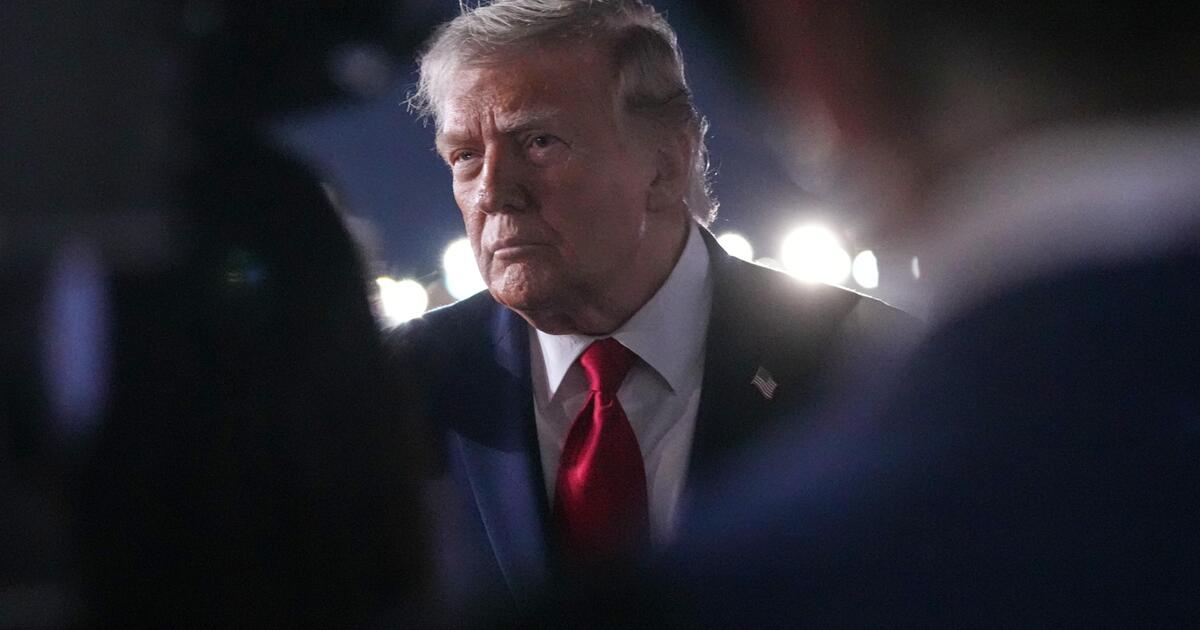
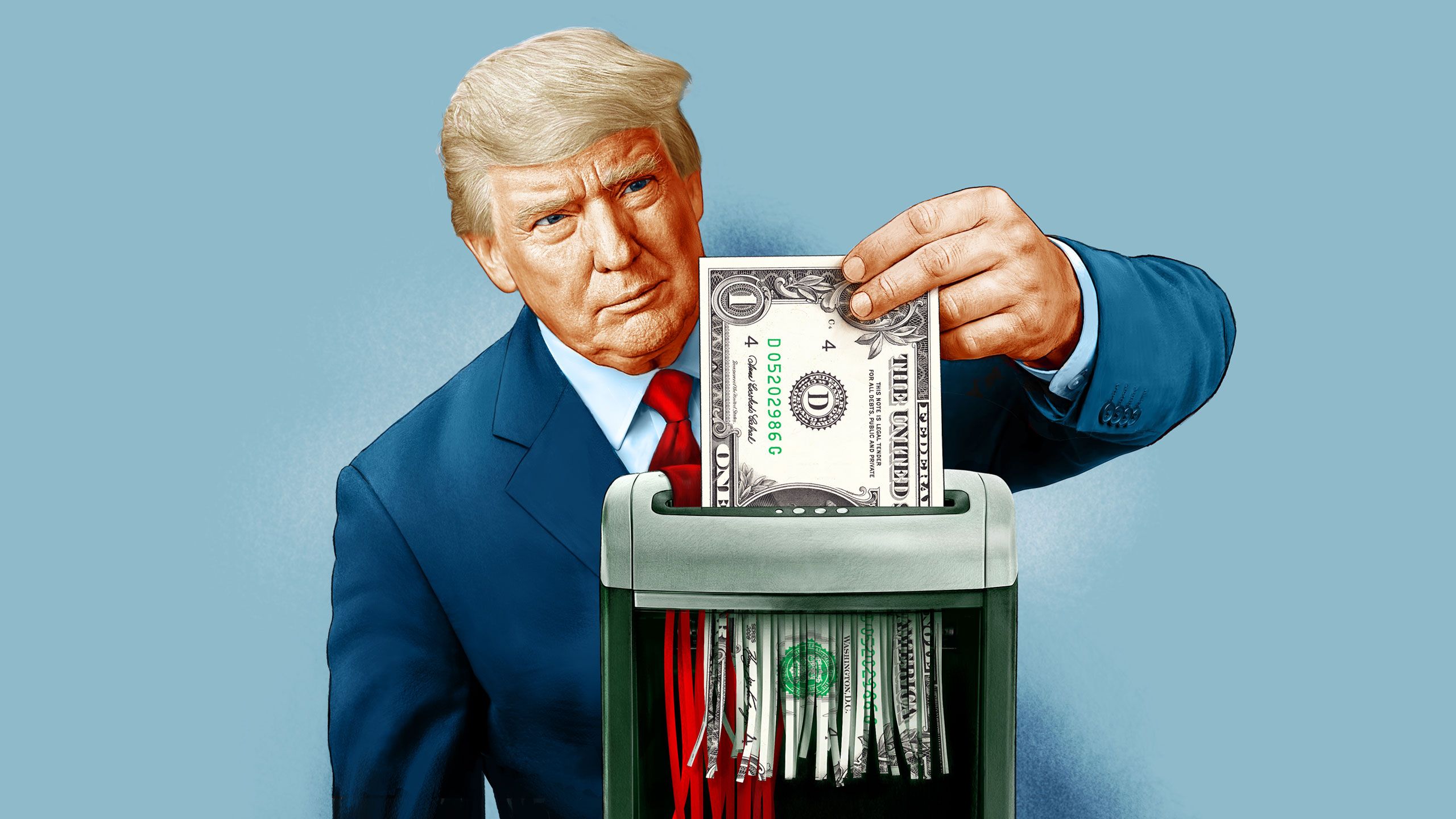
What was once described as "predictable American leadership" is today discussed in three very different countries — Turkey, Russia and Germany — in different terms: "risk," "weakness," "blackmail," "a turn away from the West." The picture that emerges from columns, expert comments and political speeches in recent weeks shows not just irritation or the usual anti‑American rhetoric. It is a deeper reassessment of the role of the United States: as a military guarantor, an economic anchor and a symbol of a certain world order. At the same time, reactions in Ankara, Moscow and Berlin are shaped not by an abstract image of "America" but by a very concrete figure — the current president, Donald Trump — his war with Iran, pressure on allies, interference in monetary policy and an apparent loss of control over several simultaneous crises.
The first major theme connecting the three countries is the US and its allies' war with Iran and its consequences for regional and global security architecture. In the Turkish press this war is treated almost as the culmination of a 70‑year "bloody saga" in relations between Washington and Tehran. In one extended column for the newspaper Yeni Asır the author draws a direct line from the storming of the US embassy in Tehran in 1979, through the Iran‑Contra affair and the 1988 downing of an Iranian passenger plane by an American cruiser, to the current Iranian and American air raids over the Middle East, stressing that "friendship turned into an axis of evil and irreversible enmity" and that today's escalation is only the logical continuation of decades of mistrust and bloody episodes (column in Yeni Asır). Turkish authors use this historical canvas to show that the US is not an external power accidentally drawn into the conflict, but one of the actors who for generations structured the very logic of enmity in the region.
Against this background, Turkey's role is presented as almost the only rational mediating force. In another sharp column in the same media group it is emphasized that the ABD/İsrail ile İran war has been going on for the third week, while President Recep Tayyip Erdoğan "is exercising vital leadership," conducting late‑night "deep back‑door contacts" between Washington and Tehran to secure an immediate ceasefire (column by Bülent Erendaç in Yeni Asır). The author not only criticizes the US for failing to offer a sustainable solution but underscores that it is Turkish diplomacy that is preventing a total collapse of the regional order. Notably, in this narrative America is not a "leading NATO ally" but an impulsive player that created the problem and now cannot manage it.
German commentary looks at the same conflict from a different angle — through the prism of the lost reputation of the US as security guarantor. In a recent piece for the Bavarian paper Merkur the author describes another Iranian strike on Israel and Washington's response. He argues that after Iran's direct attack Trump "reached for the phone," but his self‑initiated "frozen" confrontation and the promised peace deal "never had a realistic chance" because the president "signaled obvious weakness" and ultimately was forced to beg the Israeli prime minister not to carry out a retaliatory strike (commentary by Friedemann Diederichs in Merkur). This is no longer the classic European critique of American "cowboy" interventionism; rather, the tone is that Washington is no longer capable of performing even its traditional role as a tough but predictable arbiter.
In Turkey, however, US weakness on the Iran front is not read as an absolute problem. On the contrary, some pro‑government writers see it as a window of opportunity for expanding Ankara's regional weight. When a Turkish commentator emphasizes that the Islamic Revolutionary Guard Corps is already reporting the defeat of an American F‑35 in central Iran, the backdrop becomes almost triumphant: the American war machine no longer seems untouchable, and Turkey emerges as a mediator that all parties must take into account (same source, Yeni Asır). In this sense Ankara and Berlin view the same crisis from different vantage points: the Turkish press highlights US weakening as a chance for multipolarity, the German press as an alarming symptom of the erosion of the previous order.
The second major cluster of reactions revolves around the image of Trump himself and the resilience of the American political system. In Germany recent days have seen active discussion of his waning power ahead of the upcoming midterm elections. An analysis for Tagesschau emphasizes a paradox: the president still heavily shapes the Republican Party, yet this very "Trumpization" could seriously harm the Republicans in the autumn. The author notes that current primaries in several states show a mixed picture — Trump‑backed candidates do not always win — and party elites are already seriously asking whether his figure has become toxic (analysis on Tagesschau.de). In a harsher commentary for Frankfurter Rundschau it is said that "Trump's power is waning long before the elections," and a joint Washington Post/ABC News/Ipsos poll shows that 55% of Americans do not believe he is in sufficiently good physical shape to effectively perform presidential duties. The piece even reports a new nickname Democrats use in response to his famous "Sleepy Joe": they now call Trump "Dozy Don" (commentary in Frankfurter Rundschau).
To German readers, this image of a physically and politically weakening American leader is presented as a risk factor for the entire transatlantic sphere. If the president who controls the world's largest arsenal and key mechanisms of the global financial system appears uncertain and prone to impulsive decisions, the idea of the US as an "anchor of stability" is called into question. A Berlin political commentator in Tagesspiegel asks whether the president is "overplaying" his hand by simultaneously waging war with Iran, pressuring Germany on defense spending and clashing with the independence of the Federal Reserve, stressing that "loss after loss scratches at the image of the president as a winner" (commentary in Tagesspiegel).
From this German‑media‑generated image of a "losing control" president follows another important theme — doubt about the US's capacity for strategic, as opposed to tactical, leadership. The popular portal Web.de in its politics section asks bluntly: "Is control slipping out of Donald Trump's hands?" and points out that even as a mediator in the Ukrainian conflict the US is increasingly failing, while domestic decisions — such as mass pardons of supporters of the Capitol storm — erode America's moral capital abroad (overview on Web.de). For the German reader this forms a coherent narrative: Washington is at once too powerful in the use of brute force and too weak to offer a convincing political course.
In Germany this criticism of Trump has long moved from journalism into actual politics. Chancellor Friedrich Merz, a conservative and former CDU leader, used his speech at the Munich Security Conference to essentially present himself as "anti‑Trump." In his address, detailed in the business daily Handelsblatt, he declared the liberal world order "dead" and called on Europe to pursue "sovereignty" — not as a gentle adjustment but as a redefinition of the partnership with the US on new, more symmetrical terms (review of Merz's speech in Handelsblatt). The mere fact that the German chancellor positions himself in contrast to the American president already signals a shift: Berlin no longer seeks to dissolve its foreign policy into a transatlantic consensus, but rather builds legitimacy by distancing itself from Washington.
Even more telling was an episode that Die Zeit interpreted as "Trump's revenge." After Merz publicly criticized US policy while speaking to schoolchildren in Marsberg, the White House announced a reduction of American troop numbers in Germany and threatened new tariffs — a move commentators saw not as a technical reassessment of military presence but as a personal response from the president using tariffs and troops as tools to punish an ally (analysis in Die Zeit). For the German audience this only reinforces the conclusion: the US ceases to look like a supranational arbiter and increasingly resembles a great power willing to apply the same pressure tactics it once used against authoritarian regimes.
If Berlin bets on "emancipation" from the US, Turkish and especially Russian rhetoric go further, raising questions about the very future of the American state. In the Russian media space long‑running debates about a possible "collapse of the US" gain renewed relevance amid America's social and political contradictions. Encyclopedic and journalistic texts now widely cited in Telegram channels and analytical columns recall that political scientist Igor Panarin predicted in 2009 the breakup of the US into several parts — and that American economist Stephen Cohen described decades‑long preconditions for such a scenario (overview of the concept of US breakup). In the current context the figure of Trump and political polarization are used as proof that the systemic crisis has gone so far that discussion of America's territorial integrity no longer seems pure fantasy.
Russian commentators weave this rhetoric into a broader historical narrative, comparing, for example, the present crisis with episodes from the Anglo‑American War of 1812 — even down to the British fleet once burning Washington and newspapers' editorial offices being targeted for critical publications (historical context on the burning of Washington). Such references serve less for historical precision than to create the impression that today's America is not a monolith but a state with a long history of internal and external vulnerabilities, and that the current crisis may be another, possibly decisive, phase.
Another important layer of reaction is economic and financial. In Germany the nomination by Trump of former senior official Kevin Warsh to a key Federal Reserve position and the accompanying pressure on Fed independence caused broad resonance. The business daily Handelsblatt headlined that the US is playing "va banque" with the dollar: "Alles auf Warsh — Trumps tollkühne Dollar‑Wette." The piece emphasizes that the president is not merely intervening in monetary policy but effectively calling into question institutional guarantees of central bank independence on which the dollar's status as the world's reserve currency depends (analysis in Handelsblatt). German economists quoted in the paper view this not as an internal Washington dispute but as a risk to the entire global financial architecture, where European, Turkish and Russian markets are tied to dollar liquidity.
At the global level this theme is also picked up by English‑language analytical platforms cited by both the German and Turkish press. For example, a recent Washington Post Intelligence review argues that the world is "de‑risking" from the United States: trade wars, tariffs and Washington's behavior in the Ukrainian and Middle Eastern conflicts have led European and Asian allies to reassess their dependence on American guarantees and infrastructures — from military logistics to financial clearing (analysis in WP Intelligence). In this context Merz's talk of the "death of the liberal world order" sounds less like a philosophical metaphor and more like a political diagnosis: the order depended on a reliable, predictable Washington, and if that anchor drifts, the order itself exhausts its legitimacy.
In Turkey the economic aspect is discussed somewhat differently: for some time Ankara has been seeking ways to reduce dollar dependence, and Washington's recent moves only bolster arguments for more active use of national currencies in regional trade and deeper ties with China and Russia. Although the Turkish press writes far less about the technicalities of American monetary policy than the German press does, the underlying motif is similar: the US no longer seems the unquestionably reliable guardian of global money; therefore risks from dollar dependence are increasingly seen as politically and militarily conditioned rather than purely economic.
In Russia economic vulnerability of the US is a core element of the propagandistic narrative, supported by references to Western sources criticizing America's budget deficit and low savings rate. Notably, even specific excerpts such as an older Wall Street Journal editorial calling for "open borders" are now used in Russian debates as examples that the American elite itself overheated the system — financially and socially (overview of WSJ editorial policy). For the Russian audience this fits the familiar image of a "hegemon on clay feet" that retains military power but loses internal stability.
Finally, particularly interesting are voices that try to see in these events not only a crisis of American power but also a crisis of the US model of journalism and political discourse. Several Russian analytical texts discuss the American opinion column as a genre in which the author can express a highly subjective stance, contrasting it with the European tradition that long emphasized "facts" and "objectivity" (analysis of the column genre in Russian journalism literature). This seemingly academic debate suddenly acquires practical significance: if even leading national newspapers in the US rely on the genre of subjective columns and the political center of gravity shifts toward "opinions" and "narratives," it is unsurprising that international perceptions of the country grow more fragmented and polarized.
Taken together, Turkish, Russian and German reactions paint not a one‑dimensional anti‑Americanism but a far more complex picture. Turkey sees US weakening and unpredictability as a chance to assert itself as an independent regional pole and mediator in conflicts where Washington can no longer be the sole architect. Germany, by contrast, experiences the same process as a loss of a pillar: its criticism of Trump does not mean a rejection of transatlantic ties but requires their reassessment on the basis of European "sovereignty" and the ability to keep distance from Washingtonian improvisations. Russia uses America's current turbulence to confirm a long‑held thesis about the inevitability of the decline of a unipolar world and the possible disintegration of the United States itself.
The common denominator is the refusal to see the US as the "natural leader" without alternatives. In three different capitals — Ankara, Berlin and Moscow — Washington still commands intense attention; each new declaration and every Trump move immediately become topics for columns, talk shows and expert forums. But the tone of that attention has changed: from respectfully critical to guardedly pragmatic. America is less and less perceived as the axis around which the world should rotate and more and more as one of the major, but no longer the sole, powers whose internal weaknesses and external mistakes create space for new configurations. It is this reassessment — not merely another wave of irritation with Trump’s policies — that unites the otherwise disparate discussions about the US in Turkey, Russia and Germany today.