At the start of 2026, the United States again finds itself at the center of the global agenda — not as a lone "hegemon," but as a turbulent, contradictory factor from which both restraint is expected and abrupt moves are feared. In Russia, South Africa and Germany they are debating not one or two headline episodes, but a whole tangle of storylines: the war of the US and Israel with Iran and strikes on American bases, a new Washington military operation in Venezuela, the future of arms control, the Trump administration’s behavior toward allies and opponents, and the impact of American policy on the global economy and energy markets. Each of these narratives is refracted through local experience and fears — hence the very different tones: from pragmatic irritation to cautious hope and outright distrust.
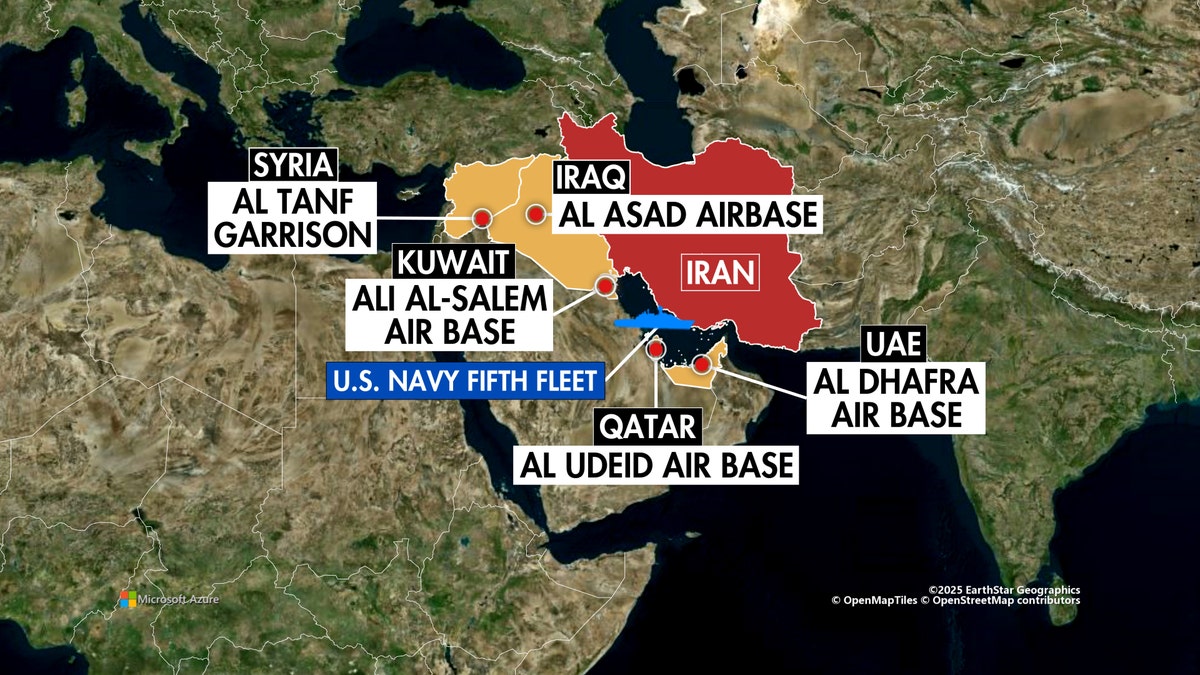
The first major focus is the large-scale escalation in the Middle East and the war of the US and Israel with Iran. In German and South African discussions this is primarily seen as a blow to economies and security; in Russian ones — as further evidence that Washington remains a source of instability. The conflict that began in early 2026 led to Iranian missile strikes on American bases in the Middle East, which international media describe as one of the most dangerous spirals of confrontation in recent years. Against the backdrop of the war, UN High Commissioner for Human Rights Volker Türk publicly condemned the actions of the US and Israel, as well as Iran’s retaliatory strikes, calling on the parties to negotiate; Moscow, meanwhile, called the attack on Iran an "unprovoked aggression" by Washington and Tel Aviv, emphasizing that it was the US that allegedly disrupted possibilities for a political settlement by shifting the emphasis to a forceful resolution of the conflict, as Russian commentators reminded, citing earlier campaigns from Vietnam to Afghanistan and Ukraine and treating them as a single line of American coercive foreign policy, subordinated to the interests of D. Trump and the US "national strategy."
In South Africa the same war is perceived much less ideologically and far more concretely — through pump prices and the state of the stock market. South African business media emphasize that the escalation between the US and Iran immediately hit business sentiment, which had only just reached decade-highs in early 2026. Analysts at Workforce Africa write that the new turbulence around the Strait of Hormuz and oil supplies "threatens the fragile recovery of the South African economy," noting that, according to Central Energy Fund data, by April there was already an under-supply amounting to almost 2 rand per liter of petrol and more than 3 rand per liter of diesel, which presages a future spike in domestic prices. In this context the US appears not so much as an "enemy" or a "partner" as an unpredictable external factor capable, with a single decision, of sharply changing living conditions on the other side of the planet.
In Germany the war of the US and Israel with Iran and the related strikes on American facilities fit into a broader conversation about whether Europe can continue to rely on Washington as the sole pillar of security. German commentators who wrote about the February Munich Security Conference noted that Europe, on the one hand, has "grown up," raising defense spending to levels that a year ago seemed unthinkable, but on the other hand has not stepped back from the "edge of the abyss," since it remains critically dependent on strategic decisions by the US. Journalists such as Daniel Brossler and Moritz Koch point out that despite rhetoric about "America and Europe belonging to each other," the real policies of the Trump administration — from boycotting summits to pressure around energy and trade — are forcing Berlin to rethink the very foundation of the transatlantic partnership; in this logic Washington’s Middle Eastern campaigns are no longer perceived as a "common Western mission," but as a risk that Germany is forced to share without having influence over it.
The second major storyline is arms control and the fate of New START (ДСНВ), the last major limitation on the strategic nuclear arsenals of Russia and the US. In the Russian expert field this topic has become one of the key markers of attitudes toward the new administration in Washington. Russian outlets such as RBC analyzed the situation in detail after the formal parameters of the treaty lapsed in early 2026. Experts emphasize that "an immediate deterioration will nonetheless not occur," since Moscow has effectively proposed to Washington not to exceed the previous ceilings even in the absence of a legally binding text. At the same time, as Russian specialists on strategic stability explain, a view has solidified within the American establishment that the US must now expand its nuclear arsenal in order to simultaneously deter Russia and China. A Russian political scientist, commenting on prospects, noted that "the likelihood of a formal US abandonment of restrictions is extremely small now, but in a year it will be more difficult to do than today," and therefore the Kremlin is hurrying to lock in at least informal arrangements.
For Russian analysts what matters here is not only the technical question of warhead numbers but also symbolism: under Biden, as Americanists recall, Washington sought the "strategic defeat" of Russia, while under Trump there is verbal advocacy for "resolving the Ukrainian conflict" and developing dialogue with Moscow, yet in reality little has changed in the nearly year since the 2025 inauguration. This feeds habitual skepticism: the US is presented as a partner whose promises are situational and depend on domestic political cycles, and any positive statements on arms control are seen as a tactical pause rather than a turning point.
In Germany the issue of US nuclear deterrence appears differently — through debate over how reliable the American "nuclear umbrella" over Europe is. Against the background of debates about New START and the overall rise in tensions between Washington and Moscow, German commentators write that Germany is forced both to increase its military spending and to remain integrated into American nuclear plans, without having political control over the US’s strategic decisions. For part of the political spectrum, especially among populists and Euroskeptics, this is another argument in favor of Berlin building an autonomous European security architecture or, as critics of the current course assert, reconsidering sanctions and policy toward Russia so as to reduce the role of the United States as both "guarantor" and "risk."
In South Africa arms control rarely reaches the forefront of public debate, but local international relations experts in academia comment on the escalation between nuclear powers from a different angle: the rise in strategic competition among the US, Russia and China is perceived as yet another factor weakening global institutions in which Global South countries had hoped for greater agency. University discussions emphasize that as Washington concentrates on great-power rivalry it pays less attention to reforming international financial and trade rules, and thus to the interests of countries like South Africa.
The third knotty storyline is the Trump administration’s behavior toward partners in the "non-Western world," particularly South Africa, and the general hardening of the American course. In the South African press the appointment of transition-era veteran and negotiator Roelf Meyer as ambassador to the US has been actively discussed in recent months. As Associated Press reminded readers, President Cyril Ramaphosa chose Meyer as a figure capable of "stabilizing relations" with Washington after their sharp deterioration under Trump, when the South African ambassador was expelled for criticizing the US president, and the White House in response completely cut off financial aid, accusing the South African government of "white genocide" while simultaneously opening doors to Afrikaner migration to the US. South African US–Africa relations expert Professor John Stremlau commented that Meyer is "the right person at the right time," possessing experience in conflict resolution, but emphasized that it will be very difficult for him to "stabilize relations" while Washington pursues an agenda he characterized as "racist" toward South Africa’s black majority.
South African media also note that the new US ambassador, Leo Brent Bozell III, a conservative activist, began his mission by openly criticizing Pretoria’s ties with Iran and its affirmative action policies favoring black citizens, which immediately provoked a protest from the South African Foreign Ministry. For South African society the US appears in a dual role: on one hand, the main economic and financial center whose tariff decisions, as Channel Africa recently reminded readers, have a direct impact on the current account and banking system stability; on the other hand, a state whose internal political rhetoric and foreign line on racial and social policies are perceived as interference and disrespect for sovereignty. In this context Meyer’s appointment is interpreted as Ramaphosa’s attempt to "defuse" the situation without a direct rupture, but also without conceding on core issues such as South Africa’s case against Israel at the International Court of Justice accusing it of genocide, which local commentators consider one of the main irritants for Washington.
In Russia the figure of Trump and his behavior toward allies and opponents also remain central, but from a different angle. Russian commentators trace a line from Biden’s rhetoric about the "strategic defeat of Russia" to Trump’s declared course to "solve the Ukrainian conflict" and "develop relations with Moscow," while stressing that in the nearly year since Trump’s return to the White House "in fact little has changed." Political scientist Alexander Asafov told the Russian press that yes, the rhetoric has softened and there are calls for negotiating with Russia, but on Ukraine, sanctions, and US military presence in Europe there have been no serious moves. From this follows a conclusion shared by many Russian analysts: whatever Washington’s rhetoric, the strategic inertia of American foreign policy is too great, and the domestic elites too unanimous in viewing Russia as the "main adversary" to expect a genuine turnaround.
The German angle on Trump and the current US administration is considerably more critical and anxious. For the German establishment it is not only about specific steps — such as boycotting the G20 summit in South Africa in 2025 or pressure on Berlin over defense spending — but about a deeper fear: can the US still be considered a reliable partner given such domestic polarization and a readiness by the administration to sacrifice multilateralism for short-term gains. In this context a Eurobarometer poll cited by the Russian-language Euronews is telling: one in five Europeans sees the US as a "threat," and in Germany nearly half of respondents are convinced that the split with America has reached a "point of no return" and is no longer reducible to the personality of a particular president. German press emphasize that many in Berlin no longer believe in an automatic "softening" of US policy after Trump’s departure and see what is happening as a long-term trend toward greater harshness and unilateralism in Washington.
The economic metric of the American factor is a separate line of debate, particularly noticeable in Germany and South Africa. South African economists emphasize the dual nature of the effect: on the one hand, a hard US line on tariffs and sanctions creates risks for exports and the current account, as the IMF’s recent report on South Africa reminded readers; on the other — the turbulence caused by American confrontations with Iran, Russia and China drives up commodity prices, which brings short-term gains to exporters but painfully hits domestic consumers of fuel and food. South African business associations openly speak of a "tax on US unpredictability," implying that any new sanctions or US military campaigns instantly translate into higher costs for credit and insurance of trade flows for Global South countries.
In Germany the conflict around Russian gas, sanctions and global energy has become one of the points where the US consistently figures as an important backdrop. German conservative and Euroskeptic commentators, such as economist Hans‑Werner Sinn, complain that the cutoff of Russian gas and the simultaneous increase in dependence on liquefied gas, including American supplies, have hurt the competitiveness of German industry. A comparison has emerged in commentary: while US GDP has grown by more than 8% since 2019 and China has added over 20%, Germany is essentially stalling, becoming, in Sinn’s phrase, a "redistributor state." The American factor here is not primary but important: Washington is seen as a beneficiary of Europe’s energy crisis and as one of the architects of the sanctions regime which, critics say, has weakened the EU more than the US.
The Russian discussion of the economic role of the US in 2026 is more fragmentary, but it shows a shift in emphasis: whereas a few years ago American sanctions and financial pressure dominated the narrative, now the link between US policy and swings in world oil and gas prices comes to the fore. Russian analysts note that a major Russian airstrike on Ukraine in April 2026 occurred against a backdrop of increased oil revenues caused by a price surge due to the US–Israel war with Iran and adjustments in Washington’s sanctions regime related to that war. For Russian experts this is a reminder that the United States itself constantly oscillates between punishment and engagement with Iran, using sanctions as a flexible tool, which makes the global conjuncture even more dependent on US domestic political calculations.
Finally, an important but less headline-grabbing aspect is the general change in perception of the US as a "threat" or a "partner" in public opinion. The poll cited by Euronews showed that although attention in Europe is generally rising toward China as the main potential rival, a significant share of citizens still see the US as a source of risk rather than simply protection. Notably, in Spain — an EU country that openly condemned the US strike on Iran as an "unjustified and dangerous military intervention" — levels of anxiety about American policy were among the highest. Germany proved the most pessimistic about prospects for "normalization" after Trump: nearly half of respondents are convinced this is a deepening structural split.
If one sums up these divergent voices, a fairly coherent picture emerges. Russia sees the US as the same strategic opponent, whose gestures of goodwill on arms control and conflicts in the post‑Soviet space are perceived as tactical and reversible. South Africa views America as a powerful but not particularly sensitive center of power to the interests of the Global South, on whose decisions depend fuel prices, access to financing, and the fate of regional conflicts; meanwhile the South African elite attempts to "tame" this factor through personal appointments and cautious diplomatic maneuvering. Germany has arguably found itself in the most difficult position: simultaneously dependent on the American military and nuclear umbrella, economically tied to the US and increasingly irritated by its unilateralism, it is forced to seek a fragile balance between preserving the transatlantic alliance and building its own strategic autonomy.
In all three countries one common conclusion stands out: the world in which the US could unilaterally set the "rules of the game" and count on almost automatic support from key partners is rapidly receding into the past. It is being replaced by a more fragmented reality in which Washington remains a necessary but far from unchallenged center of power, and its actions are increasingly met not with silent consent but with wary, critical and more autonomous responses.