At the end of May 2026, discussions about the United States in leading media outlets in Japan, Turkey, and Germany are surprisingly consonant, even though each country is talking about its own concerns. Japanese commentators debate whether the new thaw in US–China relations will mark the beginning of a lasting detente or merely a respite before the next round of rivalry. Turkish commentators try to understand how a US war with Iran, instability in the Persian Gulf, and the Fed’s rate decisions are reshaping the energy and financial flows on which Turkey depends almost existentially. The German press and experts puzzle over how NATO will change after Donald Trump announced the deployment of another 5,000 US troops to Poland while simultaneously refusing to station missiles in Germany, forcing Berlin to look for its own voice within the alliance. (japantimes.co.jp)
If one attempts to weave these motifs into a single tapestry, several major themes emerge. First, a new configuration of the “great game” around the US–China axis and its consequences for allies. Second, a US war with Iran and the associated energy and regional turbulence, felt especially acutely in Turkey and Germany. Third, domestic fluctuations in the American economy and politics, including prospects for Fed rate cuts and the paradoxes of the Trump presidency, perceived abroad alternately as sources of opportunity and risk. And finally, the transformation of NATO and the entire security architecture in Europe, where Washington remains indispensable but increasingly unpredictable.
The US–China axis has arguably become the central lens through which Japan looks at Washington in May. Japanese media show noticeable liveliness after the recent high-level US–China meeting: The Diplomat published an analysis “The US–China Summit From a Japanese Perspective,” noting that after a period of sharp tariff wars and an almost complete freeze in dialogue until 2025, contacts at the ministerial level have been gradually restored over the past year and a half, and the current summit looks like an attempt to give that process a more sustainable form. (thediplomat.com) Japanese analysts sigh with relief but also express concern: on the one hand, a reduced risk of direct escalation between Washington and Beijing lowers the danger to Japan’s economy, tightly integrated into both American and Chinese supply chains; on the other hand, Tokyo listens closely to every word about Taiwan. A TV Asahi piece on the world’s reaction to Trump’s remarks on Taiwan emphasizes that allies, including Japan, were “shocked” by how unexpectedly conciliatory Washington was on some negotiating formulations with Beijing on issues that previous administrations treated as “taboo.” (news.tv-asahi.co.jp)
Against this backdrop Japanese authors speak of a “geoeconomic crossfire” in which Tokyo has found itself. A column in The Japan Times notes that Japan simultaneously depends on American security guarantees and the Chinese market, and the new phase of US–China rivalry has long gone beyond tariffs to touch technologies, data, and AI standards. (japantimes.co.jp) There is an interesting, almost confessional tone here: Japan is forced to rapidly strengthen its own defense-industrial capacity and to bet on deepening the alliance with the US, yet its domestic political and legal reality, as a Carnegie study reminds readers, still constrains a full transformation into a “normal” military power. (carnegieendowment.org) In Japanese texts the US is often described as a “necessary but not always reliable” strategic core around which Tokyo must build its long-term security.
An interesting detail: Japanese think tanks such as CSIS now speak not merely of “preserving the alliance” but of a “deep strategic alignment” with the US — from cyber defense to joint defense projects and arms exports, citing, for example, Mitsubishi Heavy Industries’ contract with Australia to build warships. (csis.org) This shows how the Japanese elite sees the intensified US–China rivalry as an opportunity to turn Japan from a passive recipient of security into an active co-architect of the regional order — provided the US continues to act as a predictable leader.
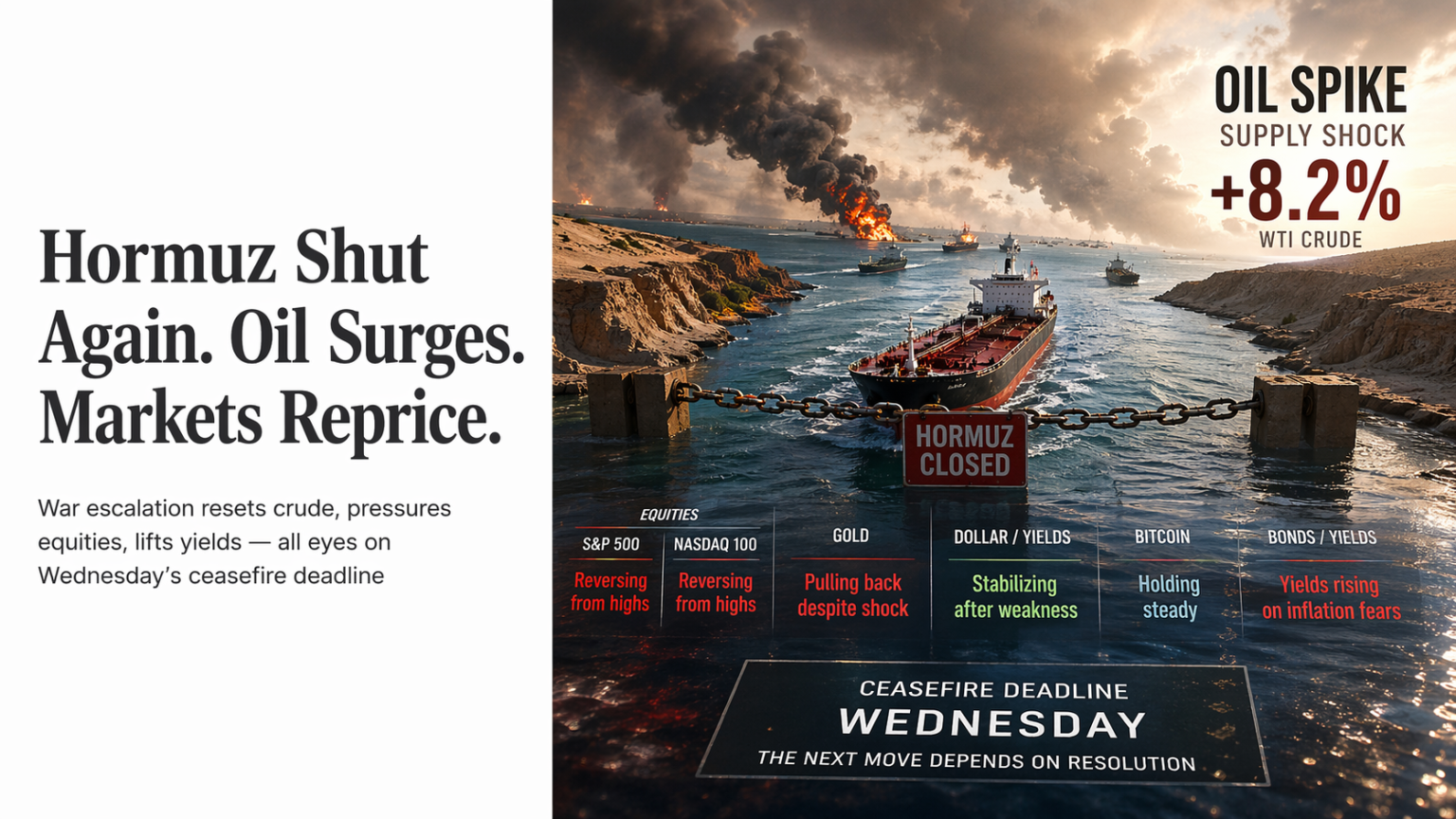
Reactions in Turkey to the same American moves are entirely different in tone, but address the same steps: in Ankara the foreign-policy and economic agenda around the US revolves primarily around the consequences of a US war with Iran and the dynamics of energy markets. In expert bulletins of Turkish banks and industry associations — carefully read by investors and officials — Washington’s decisions appear in dry but telling formulations: one recent review emphasizes that the US views the Iranian conflict as a war in which it intends to “achieve military victories” and “continue to destroy Iran’s military potential,” and the US Department of Defense is cited as a key factor of instability in the Strait of Hormuz. (fibayatirim.com.tr)
For Turkish economists and politicians this is not abstract geopolitics but a direct threat: the Strait of Hormuz remains the artery through which oil and gas flows affect fuel prices in Turkey and the balance of payments deficit. In parliamentary debates opposition deputies paint a world in which “even small conflicts in the Red Sea or Yemen radically change the region’s geopolitics,” and middle powers, including Turkey, are forced to navigate among the US, China, Russia, and the EU on every dossier — from arms to trade. (cdn.tbmm.gov.tr) In these speeches the US appears simultaneously as an indispensable security partner (via NATO) and the main source of unpredictable risks, from which Ankara must hedge by pursuing a multi-vector policy.
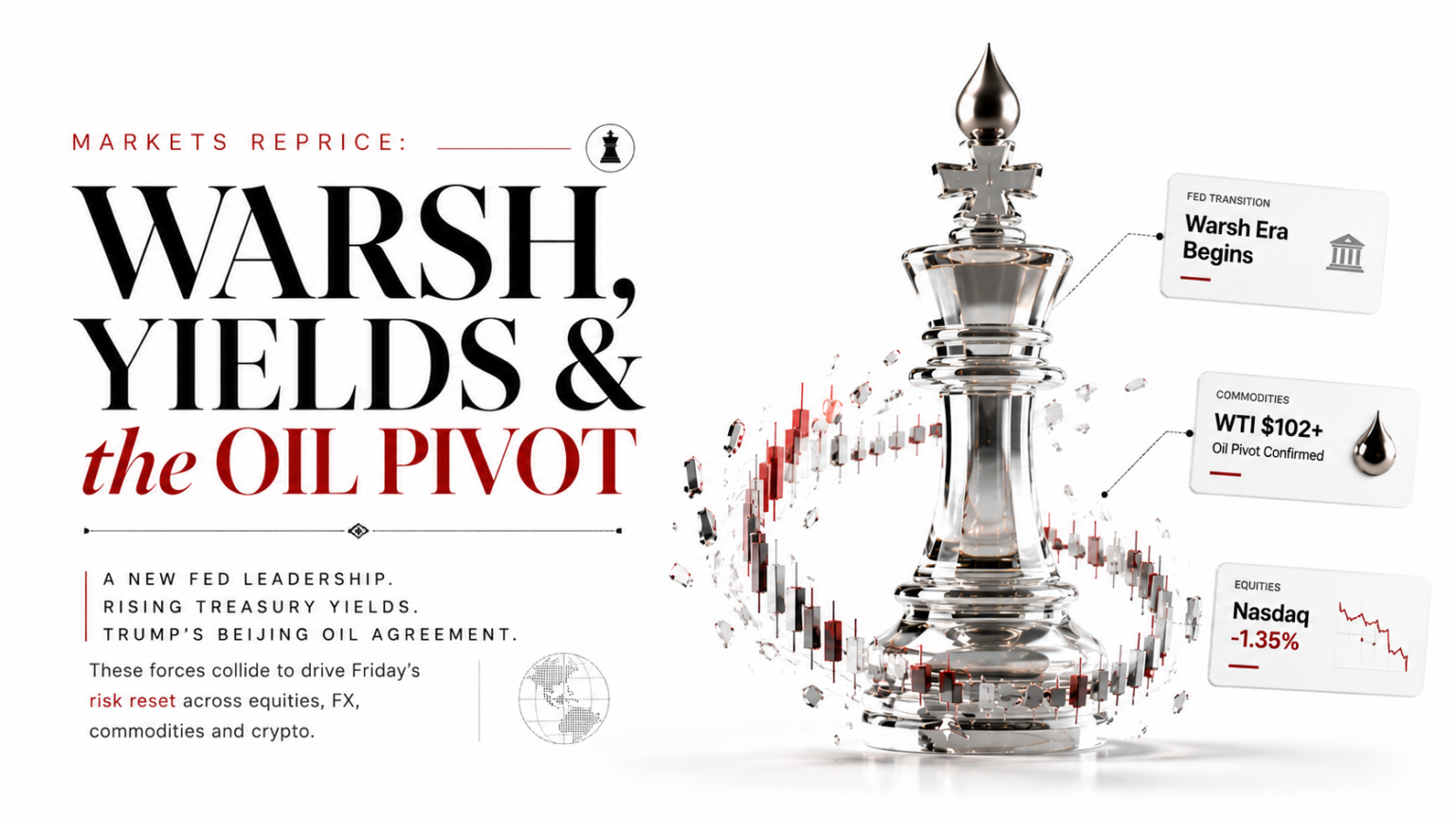
On the economic level Turkish daily bulletins track not only oil prices but also signals from the Fed. In analyses from Fibabanka and other institutions covering May US unemployment data and Fed officials’ remarks, it is emphasized that tightening or loosening of US monetary policy directly transmits into borrowing costs for Turkish firms and the state. (fibabanka.com.tr) Here the US is “the center of global liquidity,” where any change in rates and regulation instantly becomes a political issue for Ankara: how to preserve lira stability without choking growth. Trump appears in Turkish commentary in an energy context as well — his recent Texas oil deal is mentioned as a factor that could affect global prices, including through expectations about shale production. (capitalstreetfx.com)
If Japan and Turkey view the United States primarily through the prism of Asia and the Middle East, Germany in May discusses above all America’s role in Europe and the global economy. German agencies and analysts vigorously commented on Donald Trump’s announcement of deploying an additional 5,000 troops to Poland while refusing plans to station Tomahawk cruise missiles in Germany. (onvista.de) This decision, presented by Washington as a step to strengthen NATO’s eastern flank, is received ambivalently in Berlin. On one hand, it meets long-standing demands from Eastern European allies for more American military presence east of the Oder. On the other hand, the refusal to place missiles in Germany is interpreted by some in the political class as a signal that Washington is increasingly unwilling to consider German preferences on strategic deterrence if they interfere with a harder line against Russia and Iran.
In this context the tone of statements by Germany’s new foreign minister, Johann Wadephul, is especially telling: after meeting US Secretary of State Marco Rubio in Helsingborg, Sweden, he conspicuously emphasized the “shared” NATO vision and expressed confidence that by the July summit a “joint solution on the future of the alliance” would be found. (onvista.de) Behind the diplomatic phrasing lies nervousness: Germany understands that a US war with Iran, rising oil prices, and parallel escalation of sanctions affect the European economy more than the American one. DWS analysts write plainly in their May market outlook that US equities receive “additional tailwind” from prospects of future Fed rate cuts, while European markets struggle with the consequences of energy shortages and geopolitical uncertainty in the Middle East. (infos.com)
A curious paradox of perception emerges from German texts: the US appears simultaneously as a source of instability and as an anchor without which Europe would face even greater turbulence. A Chatham House article on how Trump’s treatment of allies weakened his negotiating position vis-à-vis Xi Jinping is widely cited and discussed in German political circles as a warning: by undermining trust in alliance commitments, Washington ultimately limits its own ability to exert pressure on Beijing and Tehran. (chathamhouse.org)
The domestic political dimension of American reality also features prominently in foreign commentary. New US public-opinion polls showing growing discontent with the war in Iran and the cost of living are mentioned in German, Turkish, and Japanese pieces; the Washington Post calls this “the Trump paradox”: his national popularity is weakening even as he demonstrates increasing ability to bend the Republican Party to his will. (washingtonpost.com) For outside observers this means that unpredictability in American policy is not disappearing even amid a protracted external campaign and domestic economic difficulties.
In Turkey this is viewed through the prism of domestic political resilience: no matter how sharply Ankara criticizes Washington’s decisions on Iran, Turkish diplomacy assumes that Trump will remain a heavy but necessary partner at least over the medium term. In Germany some experts draw a different conclusion: it is necessary to accelerate the creation of a “European pillar” within NATO and to develop EU defense initiatives that could compensate for possible new American zigzags. In Japan, American domestic convulsions tend to strengthen the arguments of those who advocate for a gradual build-up of Japan’s own military autonomy while maintaining the American umbrella.
Against these anxieties, the US economy often appears instead as a “safe haven,” especially for German and Japanese investors. Reports from DWS and other asset managers stress that even with the risk of delayed rate cuts pushed into 2027, the US stock market remains more attractive relative to Europe, supported by the relative flexibility of the American economy and global demand for dollar assets as a protective instrument amid geopolitical crises. (infos.com) Turkish economists monitoring US inflation and VIX dynamics interpret the recent drop in US annual inflation as expanding the space for a softer Fed policy in the future, which would create respite for emerging markets, including Turkey. (reddit.com)
There is another layer of the discussion that often remains invisible to readers of English-language press alone. This is the conversation about the technological and digital dimension of American power. In Japan analysts increasingly describe 2026 as a “bifurcation point” in the struggle for AI leadership: a TV Asahi report quotes experts warning that this year will be decisive in determining whether global AI standards will primarily be shaped under US influence or whether China can establish itself as an equally weighty norm-setter. (news.tv-asahi.co.jp) In Turkish and German debates this is not articulated as sharply, but the theme of digital sovereignty and dependence on American platforms regularly surfaces in discussions on cybersecurity, crypto-asset regulation, and data control.
The result is an image of the US that is at once familiar and nonetheless different from the self-portrayal disseminated by American media. For Japan, the United States is an indispensable but increasingly less omnipotent leader, forced to negotiate with China and to adapt to its own domestic fatigue with a global role; hence Tokyo’s desire to strengthen its own agency within the alliance without destroying it. For Turkey, the US is a powerful but ambiguous actor whose actions in the Persian Gulf, at the Fed, and in NATO simultaneously create risks and windows of opportunity, forcing Ankara to strike a fragile balance among Washington, Moscow, Beijing, and Brussels. For Germany, the United States remains the anchor of European security and the main source of market optimism, but also a partner whose decisions on Poland, Iran, and China are increasingly made without regard for German interests.
A single thought runs through all three countries: the world has definitively entered an era in which no actor, including the US, can unilaterally dictate the rules. Yet most key variables — from Fed rates and the dollar’s trajectory to NATO’s configuration and the outcome of US–China dialogue — are still determined primarily in Washington. That is why Tokyo, Ankara, and Berlin follow the ocean-crossing debates about Trump, China, Iran, rates, and technology so closely: everyone understands that each new American fork in the road immediately becomes their own.