In April 2026, global discussion about the United States revolves around three intersecting narratives: the US and Israel's war with Iran and the threat to close the Strait of Hormuz; the revival of a Trumpist logic of pressuring allies; and the fate of Ukraine amid American reorientation of resources and a declared retreat from the role of "chief sponsor of the war." South Korea, Australia and Ukraine are talking about the same actor — Washington — but each through the prism of its own fears: for Seoul, questions of survival in the nuclear shadow of the DPRK and energy security; for Canberra, the risk of being drawn into another "someone else's war" in the Middle East and the AUKUS dilemma; for Kyiv, the balance between dependence on the US and the fear of becoming a bargaining chip in a grand deal with Moscow and Tehran.
The first major thematic block is the Iran war and the Hormuz crisis. For Australia this is currently the main American issue: it was the US, led by Donald Trump, and Israel that began strikes on Iran, prompting the closure of the Strait of Hormuz and a spike in energy prices. The Australian government formally supported the US decision, underscoring solidarity with "the Iranian people's struggle against oppression," as Prime Minister Anthony Albanese noted, but at the same time carefully distances itself from direct participation. When a US submarine involving Australian personnel under AUKUS sank an Iranian frigate, it sparked a wave of questions within Australia about the legal responsibility of the US and its allies and about potential war crimes, as lawyers began to discuss the compliance of the actions with the norms of the Geneva Conventions.(en.wikipedia.org)
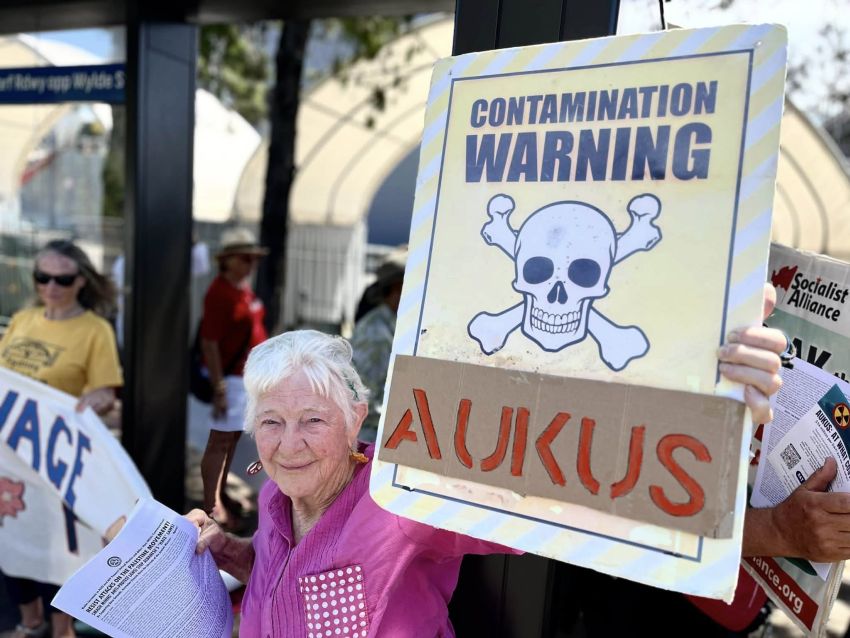
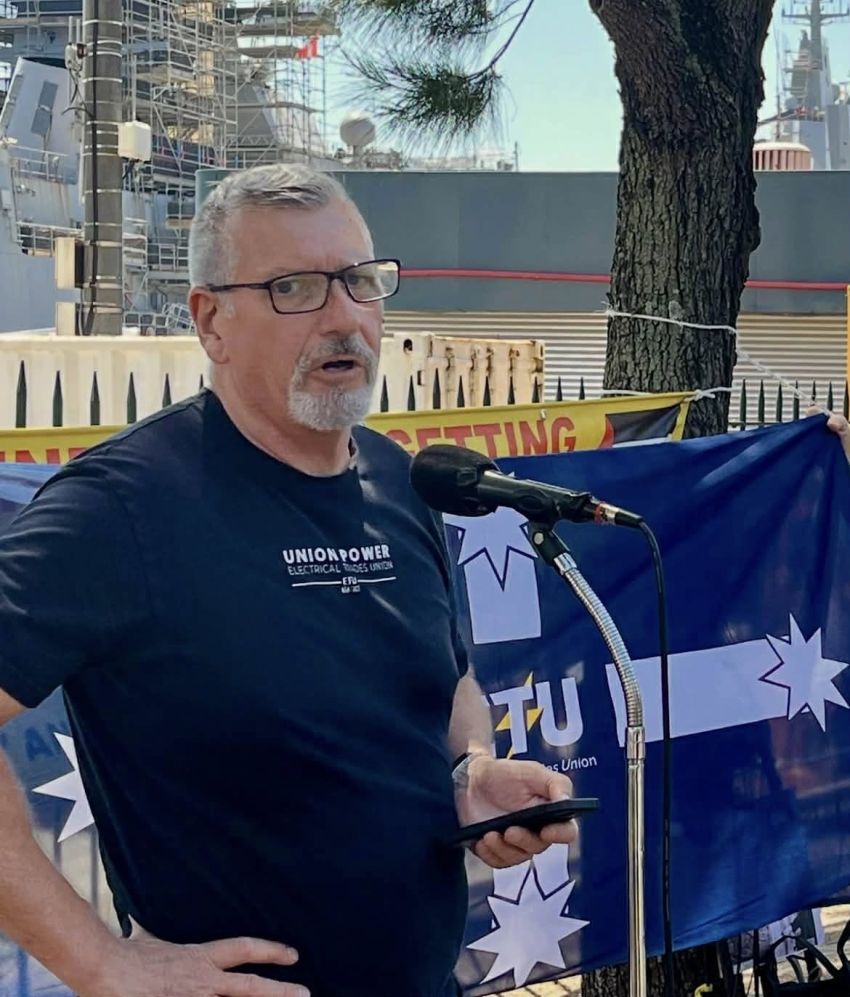
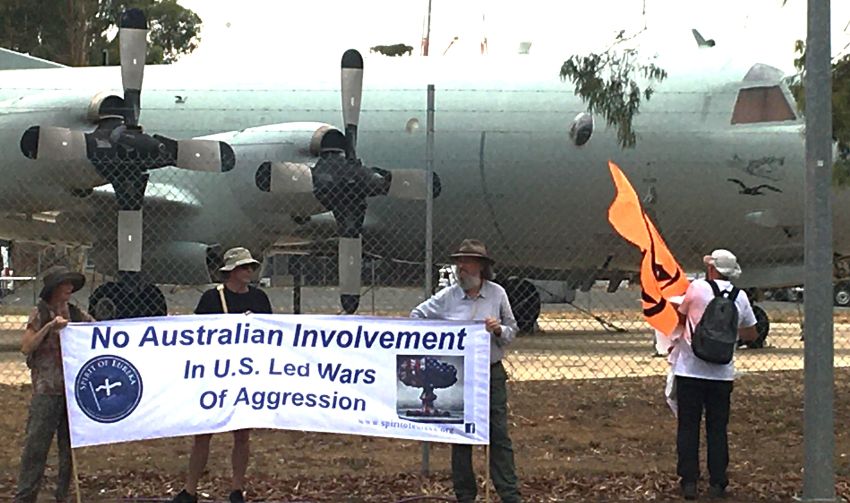
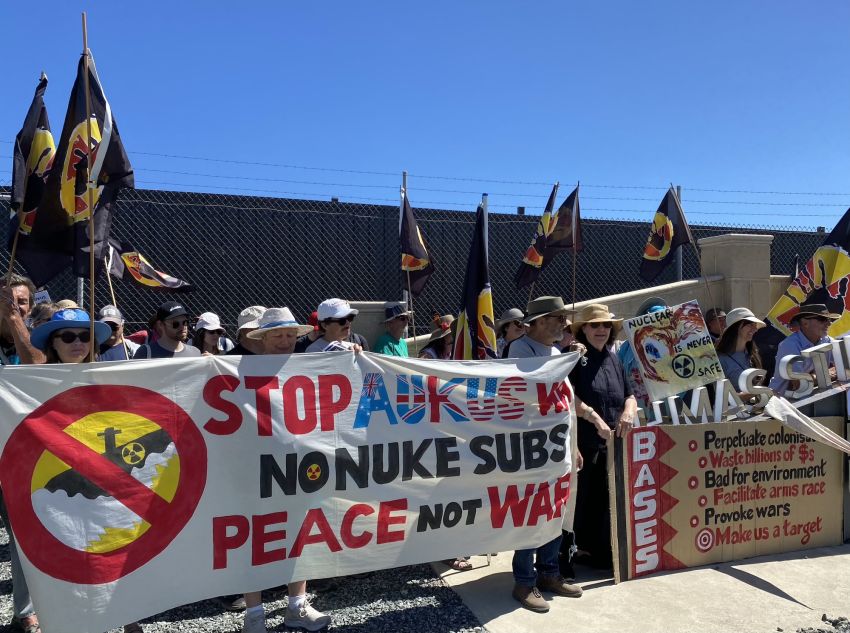
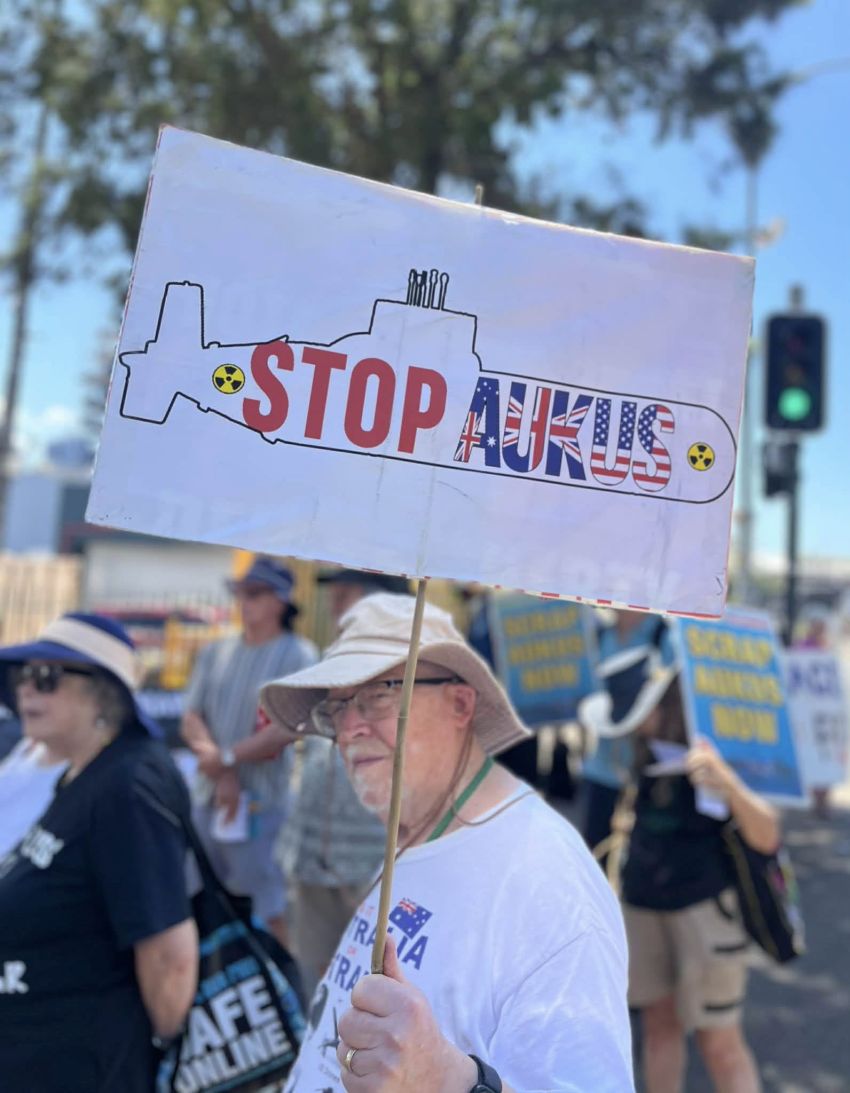
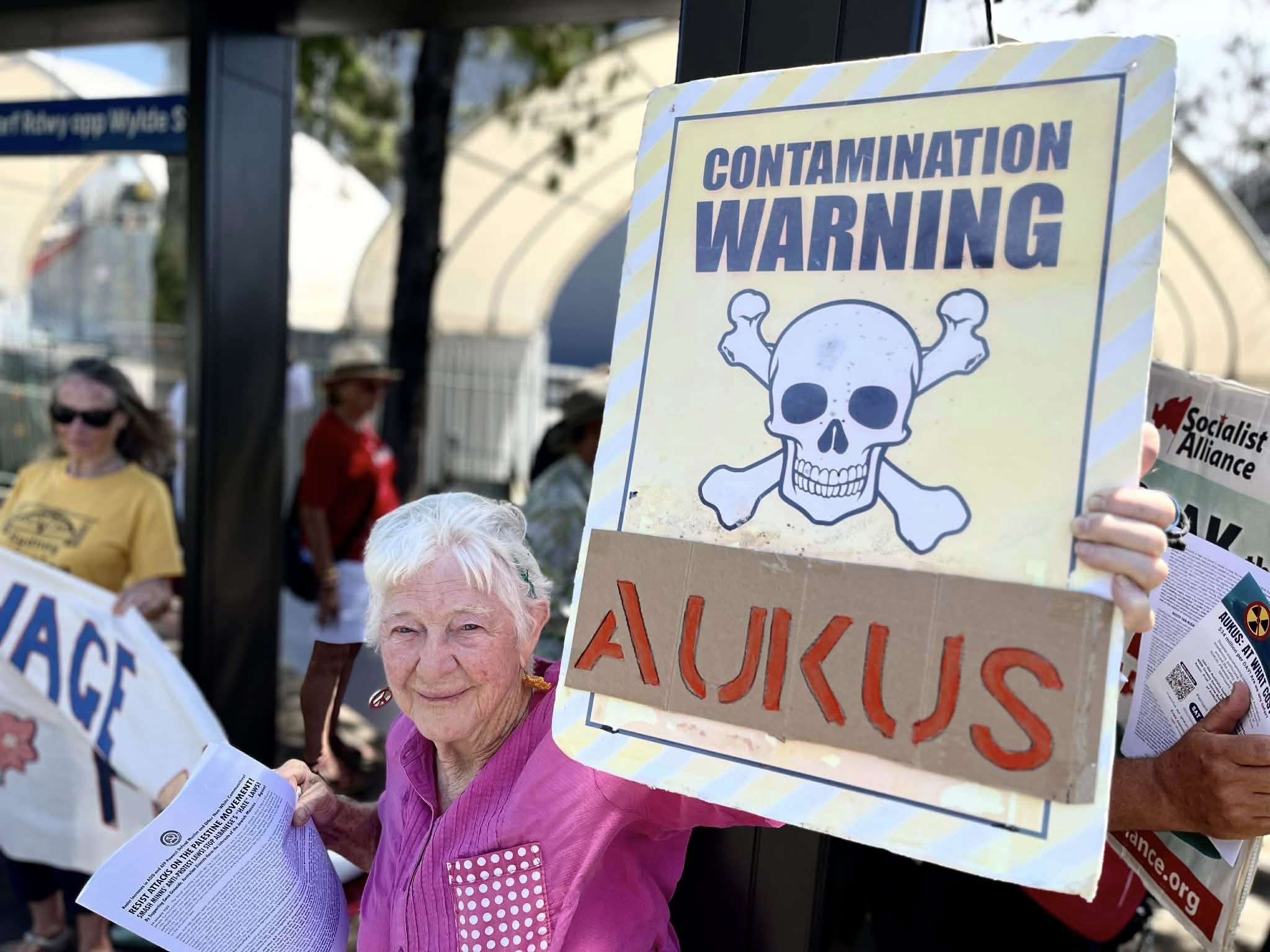
Against this backdrop of official "cautious approval," a de facto revolt against intervention is growing in the Australian public sphere. The left weekly Green Left published a report from a "global day of action against US bases," where activists explicitly call AUKUS "the language of an imperial war machine: first stoke fear, then declare war inevitable and suppress democratic debate." The piece also notes a shift within the ruling Labor Party itself — some rank-and-file members are demanding a review of AUKUS and distancing from Washington's aggressive steps.(greenleft.org.au)
The sharpest voices come from academic and center-left experts. In an analytical article in The Diplomat, an Australian political scientist argues why Australia should not participate in a "Trump-led invasion of Iran": in his view it is "a convergence of strategic uncertainty, doubtful legitimacy and misalignment with our national interests." The author recalls the experiences of Iraq and Afghanistan and emphasizes that drawing Canberra into yet another Middle East campaign on an American script would undermine Australia's regional agenda in the Indo-Pacific.(thediplomat.com)
This pacifist-pragmatic mood is confirmed on less formal platforms as well. On Australian forums and Reddit communities the dominant formula is: "We don't want any part in the US and Israel's war with Iran." Commenters complain that the conflict raises fuel and living costs, criticize Trump as a "petulant" leader and demand that the government "keep ships away from Hormuz." One of the most cited international law scholars, Professor Ben Saul, stresses that "supporting unlawful aggression against Iran would be the worst thing Australia could do," and urges countries like Australia and Canada to "push the US to respect international law."(reddit.com)
In South Korea, the Iran war theme is intertwined with the familiar North Korea dimension. Conservative and centrist Korean outlets view US strikes on Iran through the lens of lessons for deterring the DPRK and China. One major newspaper, analyzing a Wall Street Journal perspective that the US ultimately "allowed North Korea to become a nuclear power," notes: if Washington is forced to keep a significant portion of its military resources in the Middle East, "extended deterrence" on the Korean Peninsula will become more rhetorical than practical. At the same time, another Korean paper in a recent editorial on the Hormuz situation directly called the current era "an even harsher time of power," where the chance for small and medium powers to survive lies "in combining their own strength with properly structured alliances."(v.daum.net)
Seoul is especially pained by the new American leadership's statements that allies should raise defense budgets to 5% of GDP. In the Japanese context this has already provoked open irritation, but the Korean discourse is very similar: American "dollarism" and the "requirement to pay for security" heighten the vulnerability of countries on the frontline — against the DPRK and China.(ytn.co.kr)
Ukraine perceives the Iran campaign as a potential start of "Ukraine fatigue" in the US. Russian- and Ukrainian-language commentary is multiplying that notes the US budget draft for fiscal 2027 contained no line for military and financial support to Kyiv, as Kremlin special representative Kirill Dmitriev stated, stressing that Washington "refused to allocate money and weapons to Ukraine." Ukrainian and pro‑Russian authors interpret this signal differently: some see the risk of a gradual winding down of aid under the pretext of the Iran war; others view it as a tactical move to pressure Kyiv in negotiations.(crimea.ria.ru)
From this grows the second major storyline — the "Trumpization" of US alliance policy and partners' nervousness. In Seoul, Canberra and Kyiv they are discussing the same question: can the current US administration at any moment "switch off" obligations if they cease to serve Trump's domestic political interests? In South Korea this is discussed cautiously but regularly. The Korean press reminds readers that even before Trump's return the "Trump risk" in talks over defense spending had already emerged, and experts then advised to "close sensitive issues as quickly as possible" to prevent the White House from using them as leverage during campaigns. Now, with the American administration openly demanding multiple-fold increases in allies' defense spending and threatening tariffs for "insufficient loyalty," "self-strength" (자강) becomes the buzzword in Korean analysis. It is interpreted as the need to develop independent capabilities alongside the alliance — an influential editorial in Seoul analyzes this while considering the US operations in Venezuela, the war in Ukraine and a possible Taiwan crisis.(munhwa.com)
In Australia the discussion centers on AUKUS and the status of a "junior partner" in the trilateral pact with the US and the UK. Even before the Iran war, analysts in The Saturday Paper described growing skepticism: the term "post‑alliance" reality — where one cannot automatically rely on American guarantees — has entered experts' vocabulary. Now, against the background of the Iran war, that skepticism is fueled by the belief that Washington is using AUKUS more as an instrument to draw Australia into a broader Middle Eastern confrontation. This is the theme echoed by activists in the anti‑AUKUS coalition, who speak of "alliances forged without public debate and parliamentary consent to subordinate Australia to the logic of American military planning."(abc.net.au)
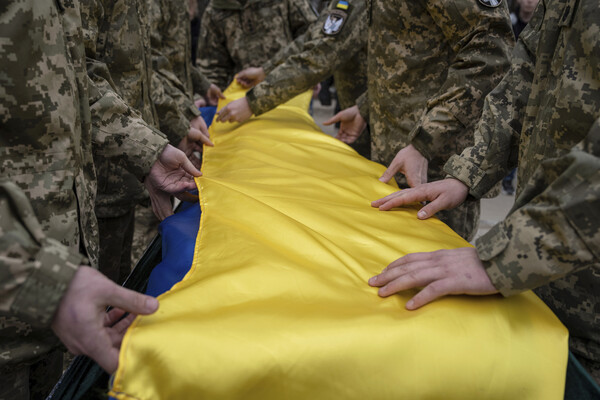
Ukraine is discussing an even more radical scenario — a US exit from NATO and the formation of a different security architecture. Ukrainian commentators, citing remarks by US senators and leading conservative television channels, discuss a variant in which Washington might unilaterally reduce or completely stop participation in Europe's collective defense. One analyst in a Ukrainian outlet notes that in the event of a conventional war without nuclear weapons the US could simply declare: "This is not our war; let the Europeans solve the problem themselves," which would effectively shift the burden of deterrence onto the EU and local actors. Paradoxically, some Ukrainian experts see a window of opportunity in such a scenario: Europe, losing the unconditional American umbrella, might view Ukraine as an additional force and the core of a future European defense union.(my.ua)
Against this backdrop the third storyline — the fate of Ukraine itself in the new American configuration — becomes Kyiv's main nerve center. On one hand, Ukrainian officials continue to stress that they are working with the US on a security guarantees agreement. President Volodymyr Zelensky says the document will be revised in the coming days taking into account questions raised by the Ukrainian side, and emphasizes that the invitation for the US negotiating delegation to visit Ukraine remains in effect. Pro‑European Ukrainian media emphasize that the agreement should cover not only a ceasefire but long‑term guarantees, including participation by European partners.(eurointegration.com.ua)
On the other hand, in the Russian‑language media space around Ukraine, comments by Western realists like John Mearsheimer are actively circulating, predicting that Ukraine "will not survive 2026" as an independent state within its current borders, along with assessments that Ukraine's absence from the US 2027 budget draft amounts to a strategic "dump." Such narratives are taken up by Russian and some alternative Ukrainian media, claiming that the US effectively put tough demands on Kyiv — to hold elections and a referendum by mid‑2026 as a condition for further guarantees, and to prepare strikes on Russian energy infrastructure by allied forces instead of direct US participation.(gazeta.ru)
Inside Ukraine this provokes a complex debate: some commentators insist Kyiv should rush to secure a security agreement with the US while Washington is still willing to formalize commitments; others warn that any interim formula that leaves American guarantees effectively limited to arms deliveries and loans without a clear military "red line" turns Ukraine into a "grey zone" — a buffer between the US and Russia. Particularly alarming are Western press scenarios under which Russia might agree to American guarantees for Ukraine only in exchange for recognition of occupied territories — in other words, the de facto partition of the country.(my.ua)
A fourth common theme for South Korea, Australia and Ukraine is the economic fallout of the new American line. In Seoul, stock market analysts write of US policy as a "source of noise" capable at any moment of devastating export‑oriented industries via tariffs, sanctions or new subsidies for American manufacturers. One industry report warns directly that at the start of 2026 "budget renegotiation and radical advancement of Trump's infrastructure and industrial agenda could become a volatility factor for Korean companies" and recommends that investors favor American ETFs tied to infrastructure and energy networks as beneficiaries of the US internal redistribution policy.(bondweb.co.kr)
Australia feels the impact of American decisions through oil and financial markets. Economic reviews note jumps in the Australian dollar and the stock index depending on Trump's aggressiveness or restraint regarding new strikes on Iran: when the president delays attacks and hints at a quick exit from the war, markets breathe a sigh of relief. Analytical columns on Australian television and ABC News share a common thought: "Oil markets cannot rely on Trump the dealmaker," and fuel‑import‑dependent Australia pays for every one of his emotional swings.(abc.net.au)
For Ukraine the economic dimension of American decisions is the harshest: US dollars determine whether Kyiv can continue the war at the current intensity. Reports that in April Ukraine must pay the IMF a quarter of a billion dollars, and discussion of a possible €90 billion EU loan to cover military and budgetary expenses through 2027, underline how tightly the country's fate is tied not only to the US but to the broader architecture of Western financing that Washington largely sets.(ria.ru)
Against this background unique local voices stand out. In South Korea, for example, part of the public debate is strikingly pragmatic: Korean economists and industrialists talk about the need for "preemptive investments" in the US — in the face of Trumpist tariff threats — as a way to "buy political insurance." Columns on the automotive and semiconductor industries argue: "It's too late to protect only the Korean market; we must be players inside America too, so that any trade pressure hits US jobs." This is the Korean response to Trump's "America First" idea: "If you want 'America First' — we'll come to you as employers and investors."(m.mk.co.kr)
Australia demonstrates another type of original reaction — a combination of deep, almost reflexive cultural affinity with the US and growing political distrust. Polls and discussions in the center‑left press show that most Australians still view America positively as a country but regard specific American leaders, especially Trump, with cold irony. In debates over AUKUS one former Australian prime minister sarcastically remarks that Trump "will be amazed to learn Australia signed up to such a stupid deal." This skepticism toward a specific configuration of the alliance, rather than toward the alliance itself, is a subtle nuance rarely noticed from Washington.(en.wikipedia.org)
The Ukrainian perspective is perhaps the most tragic and the most pragmatic at the same time. Within the country a high level of trust in the US as a key partner has been preserved, but among experts there are no longer illusions about the selflessness of American policy. One Ukrainian analyst, discussing a possible US exit from NATO, writes that Washington will begin to think of alliances not as moral obligations but as "a portfolio of assets that can be redistributed at any time." In this context, he argues, Ukraine should maximize how it "capitalizes" its military and political role — from demonstrating the ability to strike Russian energy infrastructure in the West's interest to offering Europe its territory as a platform for a future defense architecture without the US.(my.ua)
Linking these local storylines together reveals a common picture: the world around the US is no longer simply divided into "pro‑American" and "anti‑American." South Korea, Australia and Ukraine — countries that depend on Washington to varying degrees — are developing new, far more conditional formulas of loyalty. For Seoul it is "a strong alliance plus our own power"; for Canberra — "cultural closeness and intelligence cooperation without automatic backing for any US wars"; for Kyiv — "extract maximum guarantees and resources from Washington before American domestic politics completely changes the rules."
And across all three countries another, deeply non‑American motif is audible: the need to think not only about "what Washington wants," but about what their own societies are actually willing to accept. Australian unions and student movements against AUKUS, Korean debates over balancing the US anti‑China strategy with economic vulnerability, Ukrainian debates on the price and terms of peace — all of this speaks to a world in which the US remains a central actor but no longer the sole author of the script.





/https%3A%2F%2Fs3.eu-central-1.amazonaws.com%2Fmedia.my.ua%2Ffeed%2F131%2Fc9caceb0d3ec869b55e021121d5c6722.jpg)
/https%3A%2F%2Fs3.eu-central-1.amazonaws.com%2Fmedia.my.ua%2Ffeed%2F131%2Fc9caceb0d3ec869b55e021121d5c6722.jpg)
/https%3A%2F%2Fs3.eu-central-1.amazonaws.com%2Fmedia.my.ua%2Ffeed%2F1%2F99fe96e2701ff716f69ab7902c6a370c.jpg)
/https%3A%2F%2Fs3.eu-central-1.amazonaws.com%2Fmedia.my.ua%2Ffeed%2F1%2F99fe96e2701ff716f69ab7902c6a370c.jpg)

![[Photo = Yonhap News]](https://pimg.mk.co.kr/news/cms/202504/27/news-p.v1.20250425.19c8d99ccb2a41d8b4fce9d8f7dbb0b4_P1.jpg)