When the United States together with Israel launched large‑scale strikes against Iran on 28 February 2026, a new "lens" effectively appeared in the global agenda for talking about Washington. Discussions are no longer about the abstract "American leadership" but about a very concrete war: its legality, cost, and consequences for regional and global security. In India the debate is how the war affects oil, markets and international law; in Ukraine — how the Middle Eastern front influences support for Kyiv and new configurations of negotiations with Moscow; in Germany — not only questions of morality and law, but also the future of the transatlantic alliance and European autonomy. These three examples clearly show how the US remains both an indispensable actor and an object of growing distrust.
The first major cluster of reactions in all three countries concerns the legitimacy and legal grounds of the war. In the Indian English‑language mainstream, which closely follows West Asia, the language of international law is heard increasingly often, not just geopolitics. One of India's most famous international law lawyers, Harish Salve, in an interview and column for India Today directly called the US and Israeli strikes on Iran "a violation of the UN Charter" and an example of "the destruction of the norms‑based order," emphasizing that authorizations to use force cannot be replaced by unilateral interpretations of self‑defense and "preventive" concepts. He also reminds readers: sanctions and coercive measures are formally possible through the UN, but the reality of the veto power makes the great powers, above all the US, effectively unaccountable, leaving public opinion as the main form of restraint on American military policy, since formally in the US it is Congress that must sanction a war. Thus, in the Indian lens Washington appears not only as a source of instability but as a test of the viability of the entire postwar system of international law. (indiatoday.in)
In the German discourse the gap between the proclaimed "rules‑based order" and the real logic of US power politics is criticized even more harshly. Federal President of Germany Frank‑Walter Steinmeier, whose post is formally ceremonial but whose word is regarded as a moral guide, described the US war against Iran in an interview, reported by several European media, as "illegal," "politically catastrophic," and essentially "unnecessary" if the real goal was indeed to contain Iran's nuclear program. He directly linked the current escalation to Washington's withdrawal from the nuclear deal, which he himself helped negotiate as foreign minister, and warned that trust in American use of force in the world is already undermined and could collapse completely — "as with Russia" — if the US continues to act unilaterally. This is arguably one of the sharpest public assessments of US policy by a sitting head of state in the European Union. (omni.se)
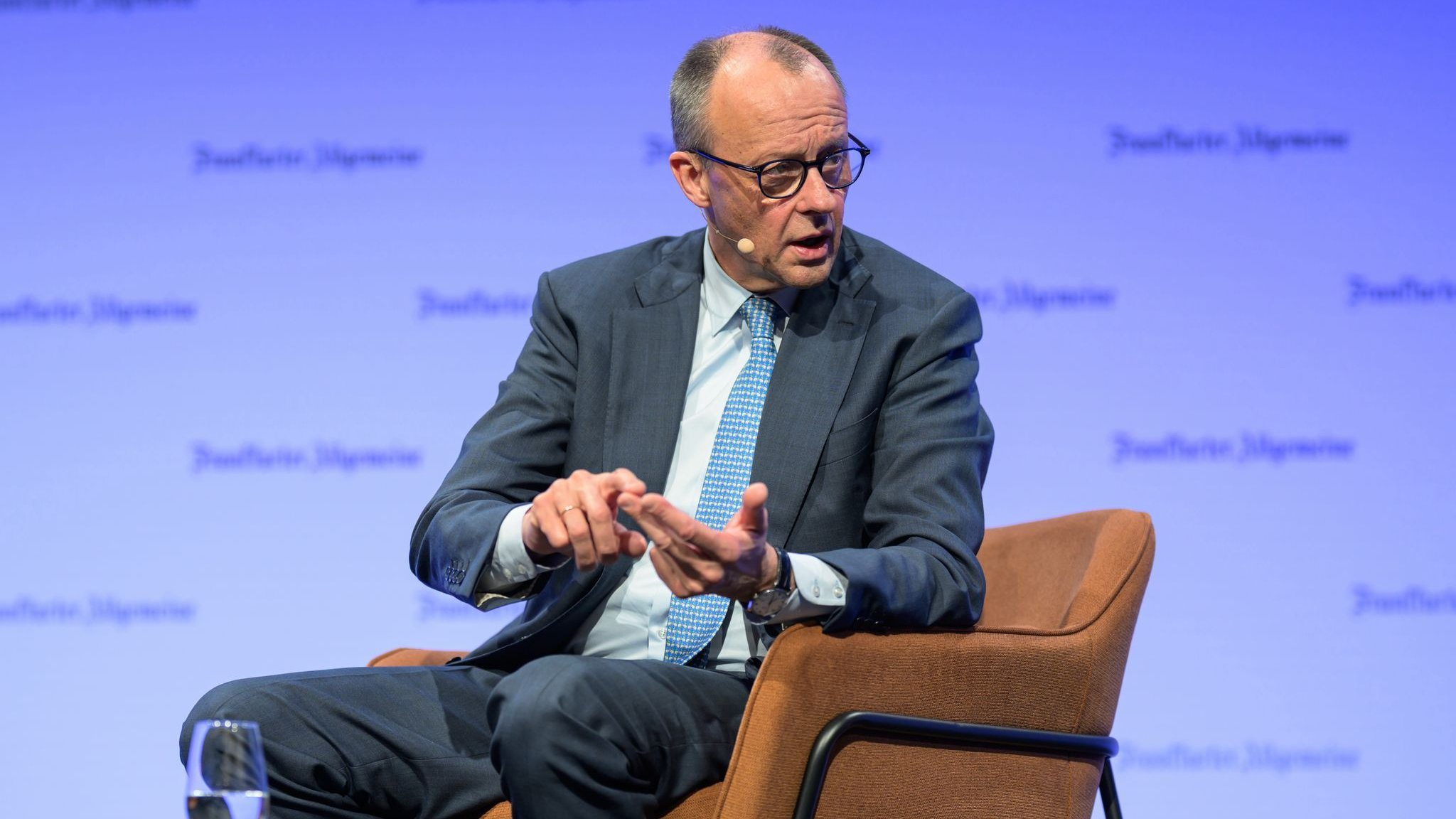
Within Germany itself, legal and strategic aspects are intertwined. CDU leader Friedrich Merz, traditionally more Atlanticist than the Social Democrats, publicly reproaches Donald Trump not so much for the use of force itself as for the fact that the current actions by the US and Israel are "a large‑scale escalation with an unpredictable outcome," rather than an attempt at diplomatic settlement. Merz acknowledges that Germany supports the actions of the US and Israel in Iran — something he had to state directly to the vice president and to Trump himself — but he insists that allies should not be presented with facts via the media without prior consultation. This forms a specifically German critique of the US: not a rejection of security under the American umbrella, but a demand that Washington take European interests and procedures into account, and not treat the alliance as an "automatic endorsement." (handelsblatt.com)
The Ukrainian perspective on the legality and geopolitics of the war is more pragmatic, but it also clearly contains a fatigue with the US claim to be an "arbiter." Ukrainian analytical outlets covering negotiation initiatives between the US and Iran note that Washington, on the one hand, continues to increase its military presence and reserve the right to strike, and on the other hand — in parallel — conducts back‑channel talks via Oman, Geneva and the currently discussed Islamabad, trying to bargain for control over the Strait of Hormuz and substantial limitations on Iran's nuclear and missile potential. This is perceived as a demonstration of ambiguous tactics: "maximum pressure" simultaneously creates the groundwork for a deal and signals to allies that the US is primarily bargaining for its own interests. (unn.ua)
The second common storyline is cost and priorities: how the Iranian campaign changes attitudes toward America's global role, especially where Washington was already deeply involved — in the war of Russia against Ukraine. In Ukraine the US war with Iran is discussed primarily through the prism of what it does to the "Ukrainian dossier." One key piece of news in March was the postponement of trilateral Ukraine–US–Russia talks, which were supposed to continue meetings in Abu Dhabi and Geneva, precisely because the White House was concentrating on the Iranian front. Volodymyr Zelensky publicly acknowledged that American partners' attention "is now focused on the situation in Iran," but he also stressed that the US still has the opportunity to use this crisis as leverage to increase pressure on Moscow. Ukrainian commentators interpret the pause in two ways: on the one hand, it is a risk — Washington is physically and politically overloaded; on the other hand, the global dependence on the Strait of Hormuz and strikes on infrastructure in the Persian Gulf raise the cost of continuing the Russia–Ukraine war for the West, and thus potentially increase the incentive to seek a security configuration in Europe more favorable to Kyiv. (ru.wikipedia.org)
In Ukrainian economic reviews, the US war in Iran often appears almost as an "indirect ally" of Russia in terms of its impact on oil and gas prices: a protracted, high‑intensity air campaign by the US and Israel, some analysts estimate, quickly depletes stocks of precision missiles and air defenses among the US and its allies and pushes global hydrocarbon prices up, which in turn feeds the Russian military budget. This paradoxical effect — "an American war that benefits the Kremlin" — is actively discussed in the Ukrainian media space and adds skepticism to Washington's rhetoric about "strategic planning" and "coordinated support for Ukraine." (amp.strana.today)
In India the question of the cost of the war becomes a very concrete conversation about oil, currency and growth. New Delhi business publications analyze in detail how the Trump administration's decision to grant India a limited license to buy Iranian oil, while tightening sanctions pressure on other Asian directions, fits into bargaining over US import tariffs on Indian goods and the overall architecture of sanctions against Russia. Indian refineries, according to economic reviews, carefully use temporary OFAC waivers to restore at least part of their former Iranian imports, which have always been a source of relatively cheap and geographically convenient oil for India. In the Indian discourse the US appears not so much as a "security guarantor" as a harsh, sometimes cynical regulator of access to global energy flows: Washington can at any moment "turn off" or "turn on" Iranian oil for India in exchange for concessions in other areas, be it reduced imports of Russian Urals or digital trade and agricultural policy. (ria.ru)
This creates an ambivalent picture. On the one hand, Indian business experts acknowledge that the US remains a key partner without whose coordination a large Asian economy cannot effectively manage energy price shocks and access to Western capital markets. On the other hand, opinion pieces on peace and sanctions express growing irritation that any major American military campaign — from Iraq to the current Iran — automatically becomes a "tax on growth" for developing economies, primarily India, which imports the lion's share of its oil and ends up paying for other countries' geopolitical games. It is no coincidence that some Indian texts about the current war juxtapose two motives: criticism of American strikes as undermining international law and sovereignty, and a parallel calculation of how the crisis can be turned into bargaining leverage with Washington.
The third recurring theme is diplomacy and negotiations: how the US, having started a war, simultaneously tries to position itself as an architect of peace, and how this is perceived in different countries. In the Indian media space the position of Trump and his circle is portrayed, on the one hand, through White House statements that "the US is close to achieving all military objectives in Iran" and is conducting parallel discussions with Tehran; and, on the other hand, through the voice of the Iranians themselves, such as Foreign Minister Abbas Araghchi, who in an India Today piece emphasizes that Tehran does not consider "exchanging messages via intermediaries" to be talks and rejects the American peace plan as "excessive." For the Indian audience this underscores a reputational problem for the US: a country that once scuppered the nuclear deal is now at war and claims the role of main moderator of its end, but the key opponent publicly refuses to recognize that mediating status. (indiatoday.in)
Ukrainian commentators covering the news chronicle around Geneva, Muscat and a possible Islamabad emphasize precisely the multilayered nature of American diplomacy. On the one hand, the United States appears to Kyiv as the main guarantor of aid in the war with Russia and potentially co‑author of a future European security architecture, as clearly manifested in trilateral talks in Abu Dhabi in January. On the other hand, in parallel channels Washington conducts a delicate bargain with Tehran where the issue of Ukraine practically does not figure, and nuclear limits, the future of Hormuz and the configuration of forces in the region come to the fore. This reinforces longstanding Ukrainian suspicions that the fate of the European war for the US is only one element of a broader geostrategic game in which relations with China, control over energy, and domestic electoral calculations are critically important. (ru.wikipedia.org)
In Germany the diplomatic aspect of the war with Iran is discussed not only in the "Washington–Tehran" plane but also in the context of how the US treats its European partners. Merz's speech at the Frankfurter Allgemeine Zeitung congress, where he recounted a phone call with Trump, became a concentrated expression of this tension. According to Merz, the US president publicly accused the FRG of "insufficient help" in ensuring security in the Strait of Hormuz, hinting that "German leadership" is not fulfilling allied obligations. Merz's private reply to Trump — "if you want our help, ask in advance, not through newspapers" — was widely cited in the German press as a symbolic demand for respect for partners. At the same time, during his visit to Washington Merz was forced to state openly that Germany nevertheless supports the US and Israeli strikes on Iran, which underscores that no matter how public doubts and criticism appear, strategic dependence and institutional obligations within NATO continue to keep Berlin in Washington's orbit. (handelsblatt.com)
The fourth level of reaction is moral and humanitarian, especially acute in India and Germany, where public memory of wars and colonialism gives a particular sensitivity to civilian suffering. Indian media examine in detail the account of an alleged American Tomahawk strike on a girls' school in Minab, Iran, where more than 170 people were killed, the majority of them children. India Today published an investigation in which video material and the type of weapon cast doubt on Trump's claim to The New York Times that, "in his view," the strike had been carried out by Iran itself. For an Indian audience that has experienced its own instances of official distortions and information wars, this story became an example of how the White House's propaganda line can conflict with independent data, and how America's moral authority as a "defender of human rights" erodes. (indiatoday.in)
Against this background Indian columnists and guest commentators such as Mehdi Hasan on India Today speak not only of the "need to investigate war crimes" but of the very nature of this war — "unnecessary and unprovoked." Hasan emphasizes that even after the start of hostilities, according to American polls, only one in four US citizens supported strikes on Iran, meaning the White House went to war against the mood of its own society. In the Indian public field this becomes an additional argument: if even American democracy cannot rein in Washington's adventurous foreign policy, developing countries should be even less likely to rely on the American "moral compass" as a universal guide. (indiatoday.in)
In Germany the moral nerve shows in how media and political elites compare the current war with Iran to the "Iran dossier" of recent decades. Steinmeier, recalling his involvement in crafting the Joint Comprehensive Plan of Action on Iran's nuclear program, speaks not only of a legal but of a moral catastrophe: instead of using an still‑functioning diplomatic mechanism, the US left the deal and then, under Trump, moved to direct military intervention. Deutschlandfunk commentators in their daily international press roundup cite British and other European newspapers that say those who warned that a US and Israeli strike on Iran would lead to a war "engulfing the entire Middle East" were "perhaps even too restrained in their forecasts." Germany in this picture acts as the voice of a "sober Western conscience," reminding that even if Iran violates human rights and threatens its neighbors, this does not give the US carte blanche to any form of force. (omni.se)
Finally, there is another important dimension in which all three countries look at the US — the symbolic and media one. Iran's "meme war," analyzed in a column in India Today where the author compares the current social media battle to British cartoons from the First World War designed to sway American public opinion to the side of the Entente, shows that Washington is no longer the monopolist in shaping global narratives. In Indian, Ukrainian and German spaces American, Iranian, Russian and local interpretations of the conflict circulate in parallel. This accelerates the erosion of the familiar image of the US as the sole director of the global information stage: Washington remains a central character, but no longer the only storyteller. (indiatoday.in)
If one attempts to synthesize these diverse reactions, the three countries — India, Ukraine and Germany — show three different but intersecting "segments" of a path along which global attitudes toward the US are shifting from unchallenged leadership to a complex, fragmented dependence. In India the US is still seen as a necessary economic and technological partner, but the war in Iran strengthens the demand for strategic autonomy: Delhi wants the ability to balance between Washington, Tehran, Moscow and Beijing, not to be hostage to other countries' sanctions and wars. For Ukraine the US remains a key pillar in the war against Russia, but the Iranian front highlights how fragile and conditional that support can be if Washington decides to reallocate resources and attention. Germany, as the core of the EU and the oldest US ally, increasingly speaks the language of "partnership, not subordination": acknowledging the necessity of American military power, it simultaneously demands that European interests and norms be taken into account.
The Iran war of 2026 thus became not only another test for the Middle East but a mirror in which the world saw a changed image of the US. For some it is still the old familiar — powerful but necessary ally; for others — a dangerous source of destabilization whose decisions are paid for with other people's lives and economies; for the majority — a complex mixture of power that is both needed and frightening. And it is precisely this polyphonic picture — from legal arguments by Indian lawyers to emotional statements by the German president and the cautious pragmatism of the Ukrainian leadership — that best shows what the global conversation about Washington looks like today: neither applause nor boos, but a hard‑to‑swallow, increasingly candid debate about the limits of American power.