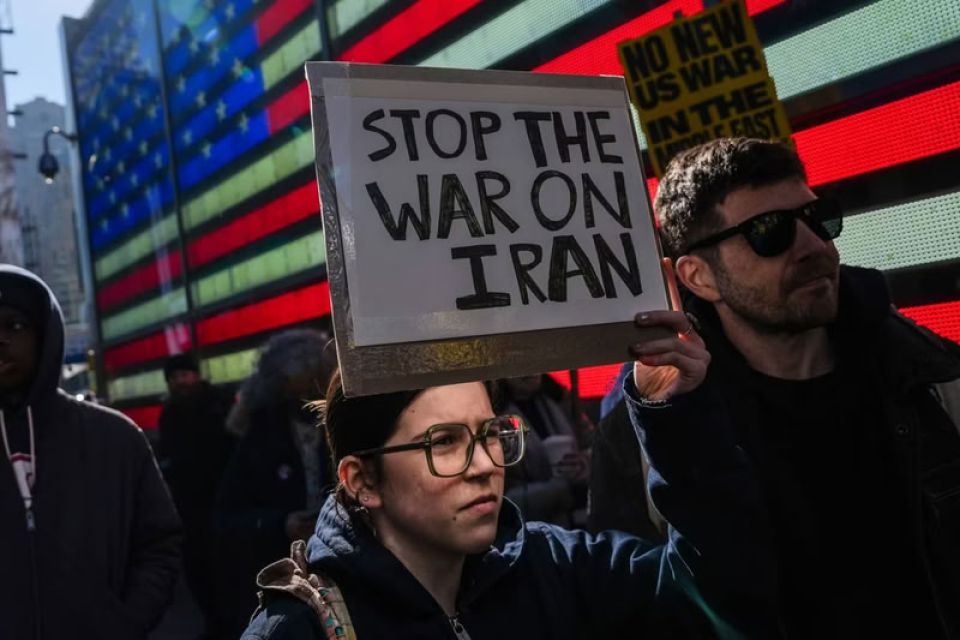
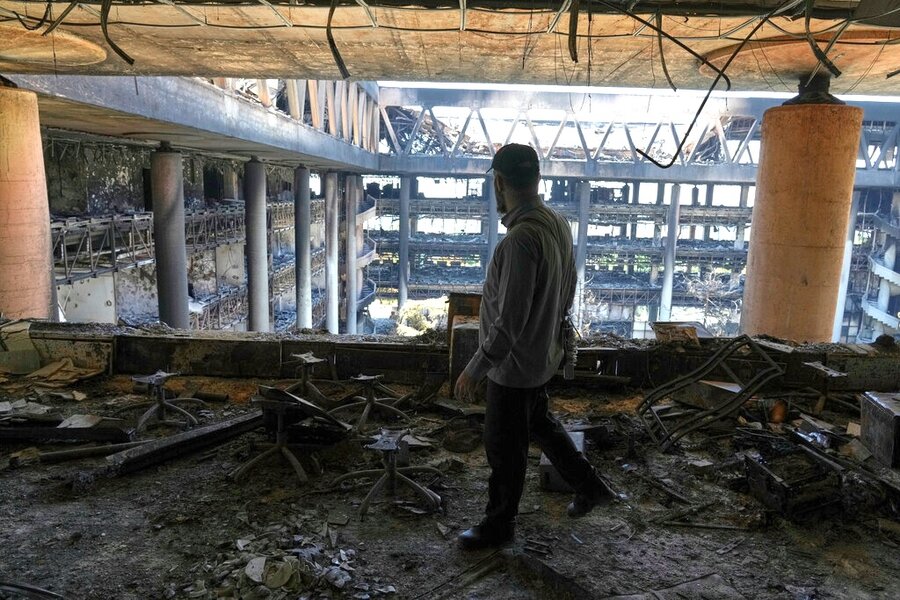
At the end of March 2026 the United States is again at the center of global attention — but not as a “bulwark of democracy,” rather as a country that, together with Israel, has launched a large-scale war against Iran, risking the involvement of the entire Middle East and the global energy market. In Saudi Arabia, Australia and South Korea Washington is being discussed primarily through the prism of this war: how it is reshaping regional security, driving up oil and gas prices, squeezing budgets, and at the same time exposing long-standing doubts about American strategy and reliability.
At the same time, in each of these societies the conversation about the US takes a different form: in the Saudi and wider Arab press there is both fear of Iran and an irritated distrust of Washington; in Australia there is debate about whether the country has gone too far following its American ally; in South Korea military themes are mixed with calculating economic and climate concerns: how to survive American tariffs, expensive oil and new waves of climate disasters inside the United States.
The main common theme is the US and Israel’s war against Iran. But three overlapping layers grow out from it: security and the risk of a major regional war; the economic and energy shock; and, finally, the question of whether Washington can at all strategically plan and maintain leadership.
In the Middle East this war is often described as “American-Israeli” — a formula that automatically sets the emotional tone of the debate. The Egyptian Al-Ahram Center in a recent analytical piece dissects the “gray zones” of the conflict, stressing that Washington wants not just to carry out strikes but to force capitulation or a radical change in the behavior of the Iranian regime, while in reality it is strengthening in Tehran exactly those circles associated with the Islamic Revolutionary Guard Corps. (acpss.ahram.org.eg)
From Lebanon and the Gulf countries the Arab press carries the idea that the war has acquired a logic the US no longer fully controls. The Lebanese Al-Joumhouria, analyzing Iran’s strikes on Gulf countries and discussions about involving Arab armies, quotes US Secretary of Defense Pete Hegseth assuring that Iran “cannot withstand” American power, while at the same time noting a growing regional conversation: who actually gave President Donald Trump the “mandate” to drag the region into this escalation. (aljoumhouria.com)
The Saudi and Gulf perspective on Washington is particularly contradictory. On the one hand, it is Saudi and Emirati elites — Western sources note — who in private urge the White House to “go all the way” until Iran is strategically weakened, although in the first days of the bombings they complained that the US did not warn its allies and underestimated the risks of total destabilization of the region. (apnews.com)
On the other hand, Arab columns evoke a long memory of double standards. The Yemeni Al-Ayyam, recalling the 2019 strike on Saudi oil infrastructure at Abqaiq and the current Iranian missile strikes on facilities in the Gulf, emphasizes: Washington rushes with utmost determination to defend Israel, but the protection of Arab allies is always tied to purely American interests and domestic politics. “This event confirms the United States’ double standards toward those it considers allies: ‘Israel’ must be defended, while the defense of others is conditioned only by its own interests,” the author writes, pointing out that even now the United States has not been able to fully prevent strikes on Gulf facilities despite a record-dense air defense system. (alayyam.info)
The Saudi discourse about the US is not limited to reproaches. In a number of Saudi and regional pieces the US is described as the only force realistically capable of containing Iranian expansion. An analytical note on the Makkah site stresses that global media increasingly write less about “combat successes” and more about the political and economic consequences of the war, but for the Persian Gulf states the strike on Iran’s missile and naval capabilities is a real, tangible goal without which “long-term stability is impossible.” (makkahnews.sa)
At the same time regional sources reveal a split within the Cooperation Council itself: some capitals pull Washington toward a “final solution to the Iranian question,” others — primarily Doha and Muscat — signal to the US that the war must be wound down as quickly as possible, otherwise the consequences for the energy market and security will outweigh any benefit from weakening Iran. Kurdish agency ANHA writes directly about two camps: “the first, led by Saudi Arabia and the UAE, inclines toward continuing the war to achieve decisive results; the second, led by Qatar and Oman, calls for a rapid end to the conflict.” (hawarnews.com)
Against this backdrop of division, Arab media especially nervously discuss the question: does Washington even have a clear exit strategy or is it repeating the Iraq scenario with inflated expectations, a protracted war and undermined legitimacy? A column on Kassioun cites a University of Maryland poll: only 21% of Americans support strikes on Iran, almost half are opposed, while the White House has to spend up to a billion dollars a day on combat operations and at the same time lift some sanctions on Iranian oil to cool the price spike. The author concludes that Washington has trapped itself strategically, where military success does not convert into political victory. (kassioun.org)
The Australian conversation about the United States traditionally runs through the ANZUS alliance and the “big brother” role in the Anglo-Saxon world. But the war with Iran has made this conversation less automatic and more nervous. The fact that Australian military personnel found themselves aboard the American submarine that sank the Iranian frigate IRIS Dena triggered a wave of debate in Canberra: how deeply should Australia be woven into American operations far from its own region? (en.wikipedia.org)
Notably, the discussion almost immediately shifted from legal formalities to political responsibility. In parliamentary and expert comments cited by the English-language and Australian press, some politicians demand greater transparency: on what terms did the government agree to the participation of Australians in specific combat episodes, and does this create a situation where Canberra is automatically dragged into escalation without controlling its beginning or possible end.
At the same time Australia views the US through another Iran-related theme — the 2025–2026 protests, brutally suppressed by the regime in Tehran. Here Washington appears more as a political-symbolic center: the US administration, Congress, and the US ambassador to the UN issued loud statements in support of the Iranian demonstrators, and President Trump threatened to intervene if protests were “poured in blood.” But Australian authorities — Prime Minister Anthony Albanese and Foreign Minister Penny Wong — also publicly supported the protesters, aligning rhetorically with the US. For many in Canberra this looked like a sensible combination: share the values position with Washington, but be far more cautious about joint military adventures. (en.wikipedia.org)
This duality is visible in the tone of many Australian commentaries. On one hand, the US is still described as the key security guarantor in the Indo-Pacific region, especially vis-à-vis China. On the other — the Iraq experience, the Afghan withdrawal and now the Iranian campaign are increasingly cited as examples of Washington opening military “boxes” without thinking through what comes next.
If the Arab press focuses on how the war affects security and politics, the South Korean press focuses on how American strategy hits energy prices and, more broadly, the global economy on which export-oriented Korea depends. A review in BrandEconomy News bluntly states: one of the key risks to Korean growth in 2026 is prolonged high oil prices amid the Middle East war; with an annual average price around $100 per barrel growth could be further undermined by 0.2–0.3 percentage points. The US figures here as the country whose military and sanction policies effectively determine the world price of energy resources. (benews.co.kr)
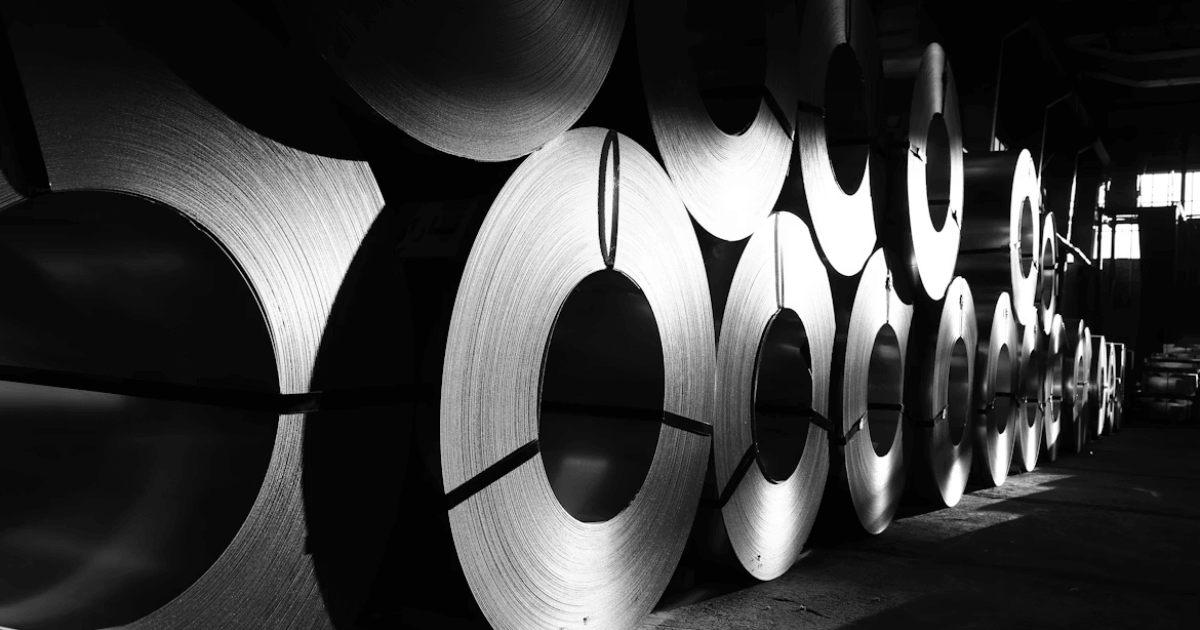
Korean analysts emphasize that for Seoul the American factor is twofold: on the one hand Washington remains the largest market and the most important political partner; on the other — Trump’s tariff wars, including new 50%-tariffs on certain imported metals, are hitting Korean industry right now. One Korean investment blog, analyzing the surge in aluminum prices, describes a “triple hit” — the blockade of the Strait of Hormuz, American tariffs and the loss of some supplies from Russia and the Middle East. In this interpretation the US is not only a security guarantor but also a source of severe price shocks. (chuladora.com)
Another line of the Korean conversation about the US is climate and the vulnerability of American infrastructure. Korean media examine forecasts for a “historically worst wildfire season” in the US western states in summer 2026 after an abnormally warm and low-snow winter. A piece in GoodMorning Magazine emphasizes that this is not only an American catastrophe but also a lesson for Seoul: even a superpower with colossal resources cannot keep up with rapid climate shifts, which means Korean climate and forest policy cannot rely on the illusion that “American science will keep everything under control.” (goodmorningzine.co.kr)
Against this background another theme is interesting: the sense that in high-tech areas Washington is institutionally falling behind. South Korean outlets write with noticeable satisfaction that Korea became one of the first countries in the world with a comprehensive AI law already in force, while the US still lacks a unified federal regulatory framework. One review in Allrevenews effectively puts Korean and European AI policies on par, noting: “Unlike the EU and especially the US, where discussion of a single law is still ongoing, in Korea it is already fully in effect.” Thus in South Korean optics the US appears simultaneously as a technological standard-bearer and a regulatory laggard. (allrevenews.com)
Through all these stories — from missiles over the Persian Gulf to fires in California and aluminum tariffs — runs the same question asked by politicians and commentators in Riyadh, Canberra and Seoul: is America today capable of being a predictable center of the global architecture?
American society, according to data cited by Middle Eastern authors, does not give Washington a clear mandate. The University of Maryland records that only a fifth of US citizens support strikes on Iran, almost half are opposed; meanwhile Trump justifies rising gasoline prices as a “small price” for the war, and the Pentagon is asking for another $200 billion, which amounts to more than $1,400 per household. (apnews.com)
Different capitals draw different conclusions from this.
In Saudi Arabia and the Gulf states elites, on the one hand, try to use the US “moment of strength” to inflict a strategic defeat on Iran, and on the other increasingly speak about the need for their own multi-vector policies and that in the long run Washington guarantees neither a complete umbrella nor stable oil prices. In Australia the argument grows louder that the alliance with the US remains a cornerstone of security, but blind following of American decisions outside the Asia-Pacific is a luxury the country cannot afford. In South Korea, where memories of the 1950s war and dependence on the American nuclear umbrella remain strong, the US is perceived simultaneously as an indispensable shield against the DPRK and China and as a source of structural risks — from trade wars to global shocks in oil and climate.
And perhaps the most surprising common note across all three countries is a growing feeling that Washington’s influence is no longer measured only by the number of aircraft carriers and sanction regimes. As the editorial board of the Christian Science Monitor noted in a recent column about the Iran war, “the most powerful force of the United States remains not its fleet but its ability to speak truth.” (csmonitor.com) Outside the US more and more observers are watching closely whether this ability will hold: will Washington be honest with itself and its allies in assessing the consequences of its wars, and is it ready to pay not only in money and others’ stability but in political responsibility.
The answer to that question today will determine not only the further fate of the campaign against Iran but also how Riyadh, Canberra and Seoul will build their futures — together with America or increasingly independently of it.