In early summer 2026 the United States for the rest of the world is no longer simply a "superpower" or "leader of the free world," but a blend of the return to power of Donald Trump, an accelerating rivalry with China, protracted wars (above all in Ukraine and Gaza), tariff conflicts, and sharp reversals in foreign and climate policy. In Japan, India and France "America" is not spoken of as a distant abstraction: it is a concrete set of risks and opportunities that hit these countries' economies, security and domestic politics directly.
If one attempts to reduce the whole spectrum of reactions to a few major themes, five stand out particularly today. First, Trump's return and his "America First" as a symbol of either managed or, conversely, uncontrolled chaos in Washington. Second, the American confrontation with China and how it forces allies and partners into awkward positions. Third, a new U.S. line toward India: from strategic partnership to a tariff cudgel and sanctions blackmail. Fourth, the war in Ukraine and the security architecture Washington is building around Eurasia and critical raw materials. And finally, the U.S. withdrawal from the Paris climate agreement — painful for Europe, but no less important as a backdrop for Asian economies.
On each of these fronts Japanese, Indian and French voices sound different, yet together form a common chorus: the United States remains indispensable, but increasingly unpredictable and less like a "normal" democracy.
The most obvious and debated layer is American domestic politics and Trump's return. In France this is viewed primarily through the prism of the threat to democracy and European autonomy. An analytical note from the Observatory for Economic Studies (OFCE) on "Trump's return to the White House on 20 January 2025" emphasizes that his economic and budgetary policies could cause "hard times" not only for Americans themselves, but also for Europe, which finds itself at the epicenter of turbulence in dollar rates, tariffs and currency wars. Economists note: the effect of Trump's second coming on the U.S. and the world is qualitatively different from 2017 because it is superimposed on an already highly polarized American society and allies' fatigue with American "swings." A publication from Sciences Po speaks of the formation of a "new American order" in which Trump not only tears up agreements but institutionalizes a technocratic, anti-federalist "militarism" that shifts the balance of powers in Washington. (ifri.org)
The French debate is not limited to academic circles. In the popular media space questions repeatedly surface: have the United States become an "exporter of instability"? Discussing Trump's second administration, French commentators cite research by political scientist Robert Pape, who estimates that the share of Americans ready to justify political violence doubled in 2025 compared with 2024. This is used as an argument: if Europe could previously appeal to American institutions as "checks and balances" within NATO, now the very resilience of those institutions is in question. (fr.wikipedia.org)
In France the "soft" side of the new American political reality — digital censorship and manipulation of access to government data — is also discussed lively. The scandal around the mass deletion and rewriting of federal government websites and databases since January 2025 under executive orders from the Trump administration became a topic not only for human rights activists but also for the mainstream press. According to French estimates, this concerns more than eight thousand web pages and three thousand databases — from climate statistics to human rights reports. From Paris's point of view this is not only a blow to global scientific cooperation but also a symbol of "American post‑fact" as a new norm, when a key ally deliberately reduces transparency in its own policies. (fr.wikipedia.org)
Japanese authors look at Trump more pragmatically and coolly: not as a historical anomaly but as another — albeit extremely radical — iteration of American nationalism. In an analytical note from Japan's Ministry of Finance summarizing the 2024 elections and Trump's victory, researchers point out that Trump's economic and immigration agenda resonates with the sentiments of the "average voter" disappointed with Biden's results. Japanese experts conclude that such a deep demand for protectionism and withdrawal from the world is not a temporary spike but a trend to which countries dependent on the U.S. will have to adapt. (mof.go.jp)
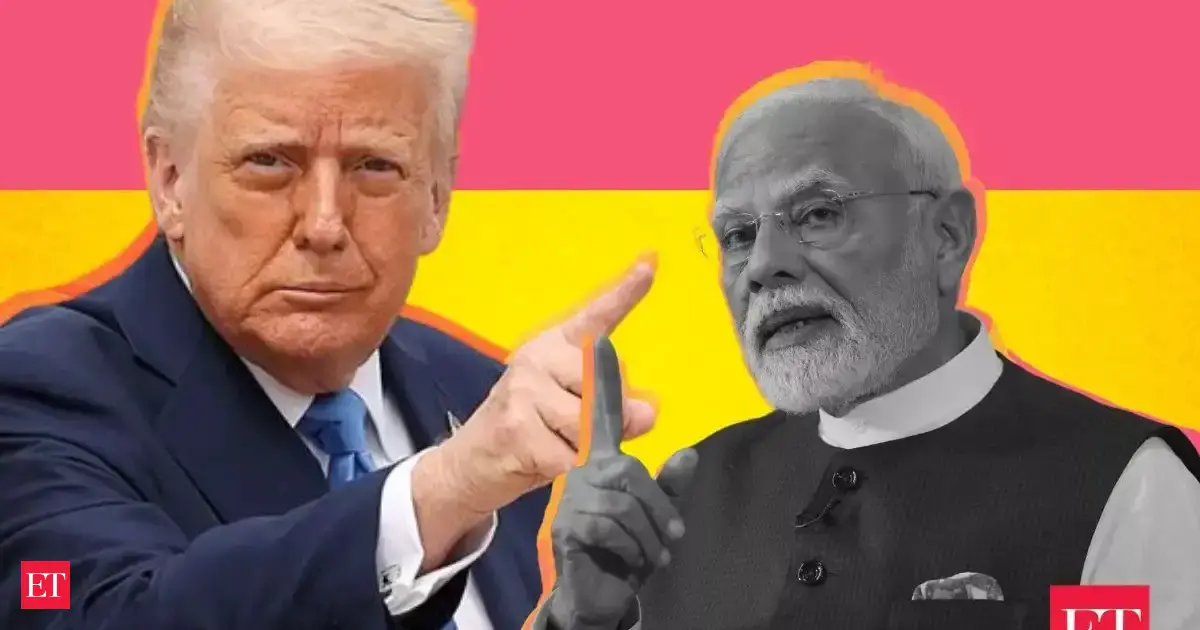
In India the focus is less on American democracy and more on the changed nature of the strategic partnership with Washington. Indian commentators, analyzing "Biden's legacy" and the arrival of "Trump 2.0," emphasize a paradox: it was under Biden that more military exercises were conducted with India than with any other country, and bilateral partnership in defense and technology reached unprecedented depth. Against this background, Trump's return is perceived as a sharp turn from an "institutionalized" strategic partnership to a transactional logic: today India is needed as a counterweight to China, tomorrow it could become a target for tariffs and sanctions. (orfonline.org)
It is perhaps in Indian media that the theme of U.S.–China confrontation as a source of complex dilemmas is most vividly visible. Unlike Japan, where dependence on the American security umbrella is seen as a given, India is trying to navigate between Washington, Beijing and Moscow. Analysts at the Observer Research Foundation (ORF) note that the new U.S. National Security Strategy (NSS 2025) under Trump is formulated as a "defensive" doctrine of "U.S. survival," but in practice flows into an aggressive tariff policy against partners, foremost India. One striking example Indians cite is the 50 percent duties on Indian exports — half of which are explicitly labeled as a "penalty" for buying Russian oil, whereas Europe or China face no comparable penalty for continuing purchases of Russian gas and oil. (orfonline.org)
From this Indians draw a broad conclusion: U.S. anti‑China policy is less "value‑driven" than "opportunistic." Americans are willing to tolerate Russian oil in Europe and China if it fits their balance of power, but choose to make India a "demonstration victim" showing others the price of disobedience. In an editorial column, Business Standard argues that Delhi must "make a rational choice" amid tariff confrontation with the U.S.: short‑term savings on Russian oil brought India only about $15 billion for 2022–2025, whereas a tariff blow from Washington could turn into much greater long‑term losses. The leitmotif of the Indian debate: how much strategic autonomy is the country willing to cede in order not to be punished by America for too independent a foreign policy. (economictimes.indiatimes.com)
The Japanese conversation about the U.S. and China is much more structured and, at first glance, less emotional, but no less worrying. In a recent report from the Deloitte Tohmatsu Strategy Institute on the results of the U.S.–China summit, a Japanese author writes that the essence of what is happening is not a "diplomatic defeat for the U.S." but a deep pivot in American policy toward minimizing global geopolitical costs and focusing on bilateral deals. In this context Japanese experts even concede that Xi Jinping's proposed concept of "constructive strategic stability" — managing differences while avoiding military conflict — is in essence closer to the spirit of Trumpism than many are willing to admit: for a deal‑oriented Washington, managed rivalry is preferable to direct confrontation. (faportal.deloitte.jp)
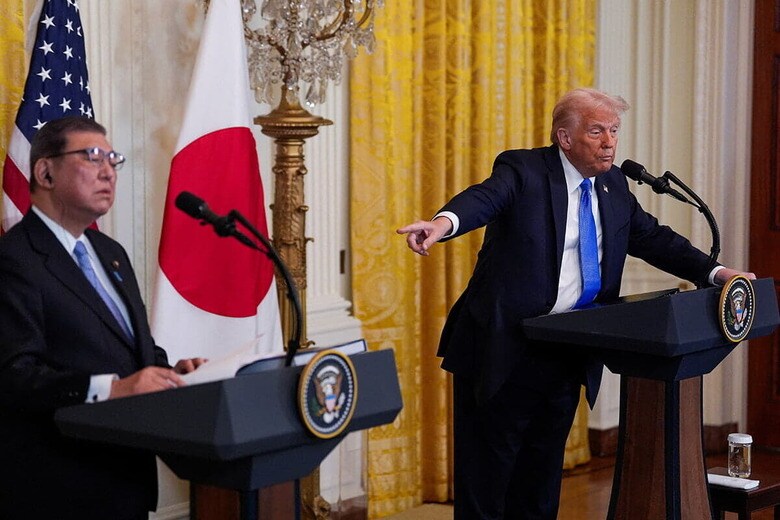
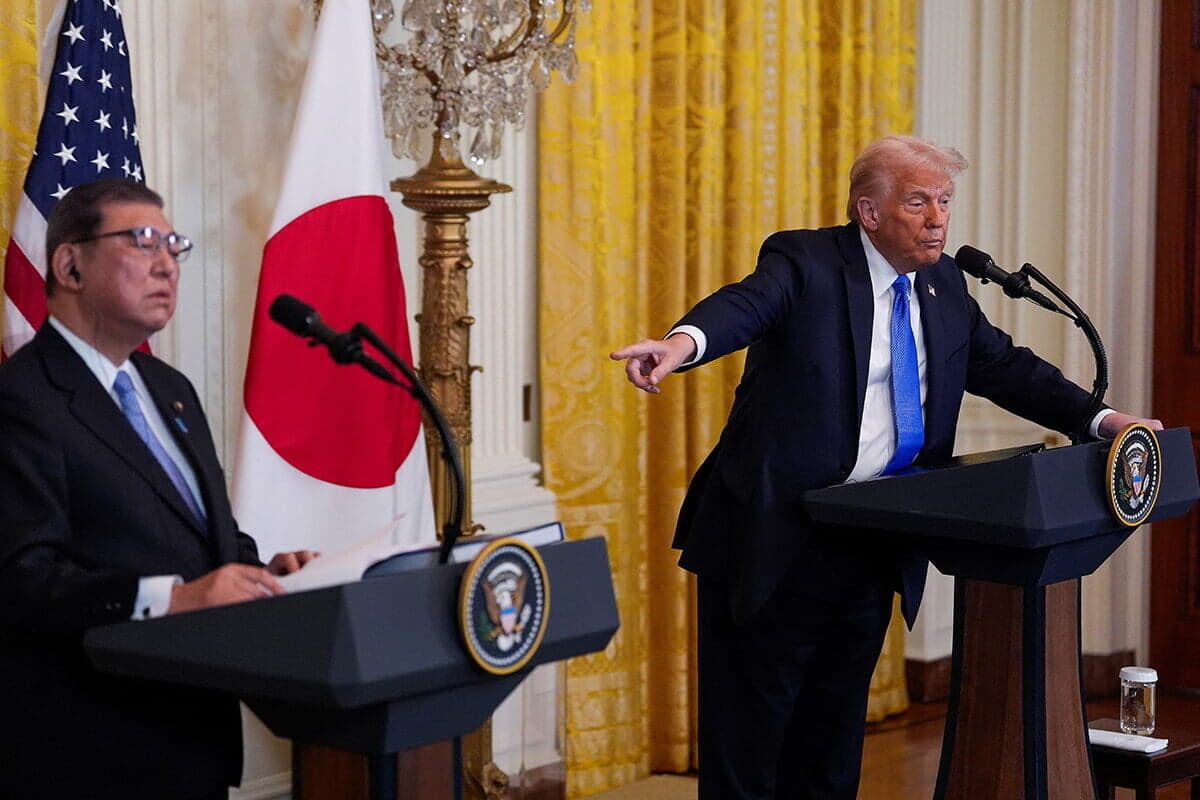
But this analysis in Tokyo is accompanied by a stern conclusion: the more the U.S. drifts toward short‑term bilateral deals, the higher the cost for allies. In a Newsweek Japan article a political scientist warns that tariff negotiations between Japan and the U.S. are already covertly revolving around restricting Tokyo's deals with China. If Japan "gives in too easily" to Washington, its bargaining positions will be weakened in the long term and pressure to "buy American" will only increase. That is why Japanese analysts insist: unlike Europe, Japan cannot afford "emotional" anti‑isolationism — it must coolly construct its own strategy amid a sharpening U.S.–China confrontation, otherwise the country risks becoming a "raw resource" in someone else's game. (newsweekjapan.jp)
The French perspective on the U.S.–China theme and Washington's global role is interesting in that Paris increasingly sees American policy not simply as "containing Beijing" but as an attempt to permanently "tie" Europe to U.S. security and raw‑material architecture through peripheral wars. In this sense the war in Ukraine and American policy around it are seen as key to understanding contemporary America. In one widely discussed French debate about the war, a military analyst claims that the U.S. has already achieved the majority of its geopolitical goals in the Ukrainian conflict: it has increased the EU's dependence on America in economics and security and has seriously weakened the Russian military machine without engaging in direct confrontation.
Even if this view is exaggerated, it underscores a common French feeling: for the U.S., Ukraine is not primarily a matter of values but of reconfiguring the European architecture around American leadership. And when Washington in 2025 signs an agreement with Kyiv on joint investments in critical resources — from rare earths to oil and gas — French commentators read this as a signal: Washington is securing control over future sources of European energy and technological sovereignty. (fr.wikipedia.org)
Notably, France views the new American climate policy just as instrumentally. The second U.S. withdrawal from the Paris Agreement in 2025, formalized by Trump's decree "Putting America First in International Environmental Agreements," is seen in Paris no longer as a shock but as final confirmation: climate has become another field of transactional policy for Washington. Officially Trump calls the agreement "unfair and a one‑sided scam" that "puts the U.S. at a disadvantage to China." For French politicians and experts this is an argument for accelerating Europe's "strategic autonomy" in climate policy: one cannot build long‑term green investments relying on a country whose climate stance fully depends on domestic political swings. (fr.wikipedia.org)
India's reaction to the American climate pivot and sanctions on Russian oil is much more pragmatic, but essentially echoes the French position. Indian opinion pieces emphasize that Washington is trying to shift some of the economic costs of its foreign and climate policy onto others. The White House argument that India's purchase of Russian oil "finances the war in Ukraine" is seen in Delhi as selective: if that principle holds, why are there no comparable measures against European or Chinese purchases of Russian energy? From this grows skepticism about the possibility of building a "long‑term green partnership" with the U.S.: Indian writers believe America will encourage India's green transition only so long as it does not conflict with the interests of American industry and electorate. (orfonline.org)
Against this background it is telling how Japan and India assess the "American factor" in their own domestic politics and strategic debates. In Japan some experts openly warn: if the U.S.–China confrontation goes too far, Tokyo will simply have no room for an independent course — it will almost automatically follow Washington, even if that contradicts long‑term interests in relations with Beijing. A paper from a Japanese international forum states bluntly: the decisive point would be a situation in which "a Japanese subject‑based approach to China would no longer be possible due to a deterioration in U.S.–China relations." Past experience — from the reaction to Tiananmen to current sanctions — shows that Japan has often chosen a softer line toward the PRC than the U.S., but that margin is narrowing. (jfir.or.jp)
For the Indian elite the American factor is both a support and a warning. On the one hand, as Indian analysts emphasize, the U.S. is still viewed as a "cornerstone of global progress," and Vice President J. D. Vance in his 2025 speech explicitly stated that the 21st century could become "a very dark time for all humanity" if India and the U.S. "fail to work together successfully." On the other hand, Indian authors from research centers and the press speak of "eroded trust": after unprecedented growth in military cooperation under Biden, the return of tariffs, threats of secondary sanctions and Trump's harsh rhetoric make one wonder whether India is, in Washington's eyes, merely an instrument in the game against China and Russia. A phrase from one Indian interlocutor in an American think tank — "they can dump us at any moment" — is regularly quoted in Indian debates as the quintessence of anxiety. (orfonline.org)
The French elite against this backdrop increasingly talks about the need for an "emotional deconfederation" from the U.S. — a divorce in the mind, not in institutions. Editorials in leading foreign‑policy journals stress: even under Trump Europe remains tied to America by many bonds — from NATO to the dollar system — but this does not mean one should stop thinking of oneself as an independent pole. Notably, discussions of Trump in French intellectual circles are less and less reduced to moralizing ("toxic leader," "threat to democracy") and increasingly to pragmatic analysis: which of his decisions, however unpleasant, actually followed inevitably from longer‑term American trends.
In conclusion, Japan, India and France see different facets of the same phenomenon in contemporary America. Japan is the voice of an ally that recognizes its security is critically dependent on the U.S. but feels obliged to coldly analyze and calculate the cost of that dependence amid growing U.S.–China rivalry. India is the voice of a rising power balancing between the desire to use the U.S. as an accelerator of its own growth and the fear of becoming the object of American pressure if its foreign policy proves "too independent." France is the voice of an old ally increasingly doubtful that transatlantic relations can return to the "old normal" and more convinced that Europe must learn to live in a world where America remains a superpower but can no longer — and will not — be the universal guarantor of order.
What they have in common is one thing: the U.S. remains at the center of their strategic imagination, but no longer as the immovable axis of the world system, rather as a powerful but unstable factor around which all three must build their own strategies for survival and development.