With the change of administration in Washington and Donald Trump’s second term, the United States has again become the main foreign-policy reference point and irritant at the same time. In Tokyo, Beijing and Brasília they no longer discuss an abstract “American century,” but a very concrete set of decisions: intensified tariff wars, a strict revision of alliance commitments, a new line on China and another turn toward U.S. involvement in the Middle East. Through these topics each society voices its own fears and hopes: the Japanese — the fate of the security system in East Asia; the Chinese — the structure of global economic power; the Brazilians — the balance between the U.S. and Latin America’s regional autonomy.
It is especially notable that local debates in the three countries are increasingly unlike a simple retelling of the English‑language agenda. In China the U.S. is primarily seen as a “global source of instability” in trade and technology; in Japan — an indispensable but ever less predictable security guarantor; in Brazil — an important but not the only pole in a multipolar world where Beijing is gradually catching up with Washington in influence.
One of the central storylines that unites China, Brazil and, to a lesser extent, Japan is the evolution of the U.S.–China confrontation under Trump‑2. In China this is viewed through the prism of systemic “friction” in science and technology: researchers analyze how export controls and investment screening hit cross‑border flows of knowledge and patents. In a recent academic paper on “China–U.S. science and technology frictions,” the authors, using data on invention patent applications and machine‑learning econometric methods, show that the negative effect is especially strong where the technological gap between the two countries is smallest and where the U.S. traditionally concentrates its strongest competencies.(arxiv.org)
But academic language in China quickly shifts into political rhetoric. Against the backdrop of a new package of American tariffs on Chinese goods, justified in Washington as a fight against fentanyl, Chinese officials describe the U.S. strategy as “关税战” — a “tariff war” and an example of “霸权逻辑” — hegemonial logic. In a programmatic article a Chinese diplomat accuses the U.S. of abusing the pretext of national security and using the humanitarian drug theme to mask protectionism, noting that China, conversely, was the first country to introduce comprehensive controls on fentanyl substances.(mfa.gov.cn) Through this lens American policy appears not just as a set of economic measures but as an attempt to preserve declining hegemony by restructuring global value chains.
Beijing’s expert community is also carefully reading American analytical reports on Trump’s course. Chinese media space actively retells a recent Brookings Institution report on one year of implementing the “new China strategy” in Trump’s second administration. In the Chinese reworking that text reads as an admission: Washington’s ambitions to “restore global leadership,” “reduce strategic dependence on China,” and “strengthen dominance in AI” far outpace real results; the key problem is a lack of consistency and trust in American policy even among allies.(sohu.com) For Chinese commentators this is convenient evidence for the thesis that the U.S. has lost the ability to set a stable global agenda.
In the People’s Republic this confrontation with the U.S. is increasingly linked to a broader picture of the “fragmentation of the West”: growing disagreements between Washington and Europe, the emergence of frictions over Arctic territories, critical minerals and NATO’s role. One geopolitical review emphasizes that the Trump administration is actively promoting diversification of supplies of critical minerals while simultaneously increasing pressure on China in supply chains.(qiia.org) Here the U.S. appears as a country trying to unilaterally rewrite the rules of the world economy, and China — as a forced defender of multilateralism. Interestingly, Chinese texts often add that Trump’s aggressiveness toward NATO and the European Union in a sense “eases external pressure” on the PRC, since it diverts Washington’s resources and political attention.
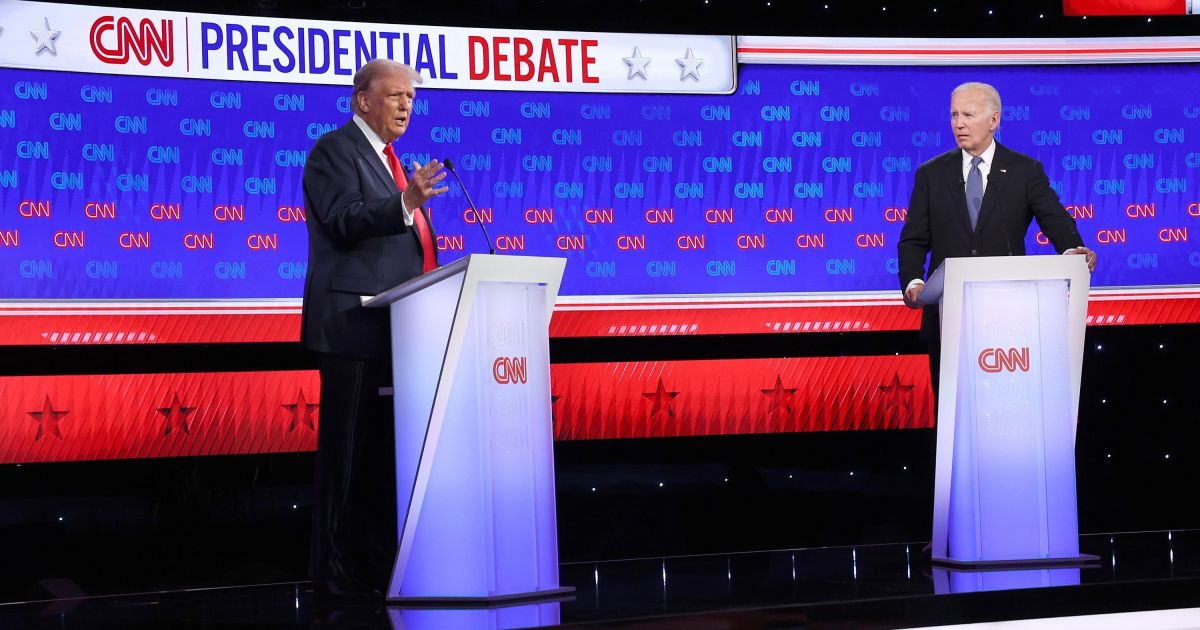
Against this backdrop Brazilian debate paints a very different angle on the U.S.–China rivalry. In major Brazilian media the U.S. most often appears at the intersection of two topics: the American presidential elections and Washington’s foreign economic policy, which affects global markets and thus Brazil as a commodity and agricultural exporter. Brazilian press regularly publishes polls on Trump’s ratings and his rivals, and the analysis around them rarely confines itself to the American “horse race.” For example, attention was drawn to a series of polls showing Trump ahead of Biden in voting intentions; local analysts read this as signaling not only a possible return of more protectionist and unpredictable economic policy, but also a continuation of a hard line on China, which is now Brazil’s main trading partner.(cnnbrasil.com.br)
Brazilian columnists often contrast the American approach to China — with sanctions, restrictions and rhetoric of “strategic competition” — with Brazil’s own attempt to build a “pragmatic pluralism”: deepening economic cooperation with Beijing, maintaining dialogue with Washington, and promoting integration within the Global South. Yet no one entertains illusions: any new round of U.S.–China confrontation affects commodity prices, access to foreign investment and Brazil’s ability to act independently. In that sense the U.S. in Brazilian discourse is not only a political actor but also a huge external shock for the economy.
In Brazilian academic and business circles there is a reflection on what U.S. strategies of “de‑coupling” supply chains mean for the country. Translating this into local context, they discuss whether Brazil could become one of the beneficiaries of production redistribution, or whether Trump’s policy will instead cement a peripheral status as a supplier of raw materials under the pressure of increasingly strict American trade barriers. Here China begins to be seen not only as an economic partner but as a counterbalance to American influence in the region.
If in China and Brazil the U.S.–China conflict colors nearly all conversations about the United States, the Japanese agenda is noticeably more “traditional”: security, alliances, Washington’s role in Asia and the Middle East. Foremost is how the Trump administration is restructuring the alliance architecture. Chinese researchers already describe in detail the threats of Trump leaving NATO if European allies “do not pay the bills,” and demands to raise defense spending to 5% of GDP.(rmlt.com.cn) In the Japanese context this directly translates into anxiety: if the U.S. exerts such hard pressure on Europeans, what conditions might be demanded of Tokyo under a bilateral security treaty? Japanese commentators in leading outlets note that a “NATO logic of transactionalism” could sooner or later be transferred to East Asia.
Against this background Japanese commentary on the U.S. is marked by ambivalence. On the one hand, American military presence in the region, including basing forces in Japan, is seen as an indispensable factor in deterring China and North Korea. On the other — Washington’s increasingly inconsistent line in other parts of the world, especially the Middle East, undermines confidence in the strategic predictability of the U.S. Notably, both English‑language and Japanese retellings of European assessments capture this: a Le Monde editorial notes that the U.S. again “promises to extract itself from Middle Eastern quagmires, while continuing to get stuck knee‑deep,” pointing to Trump’s contradictory line on Iran and his inability to truly reduce military involvement in the region.(lemonde.fr)
For Japanese analysts this is not just another European complaint: in Tokyo they see that the more Washington is distracted by the Middle East and European crises, the fewer resources and less attention it has for sustained containment policy in the Indo‑Pacific. A recent overview of global trends prepared by a Chinese research center states plainly: the new Davos agenda, where the U.S. tries to combine “breaking global rules” with managing AI, overlaps with disputes over Greenland, Canada’s strategic autonomy and NATO enlargement, and all this means America is objectively being spread across multiple fronts.(qiia.org) For Japanese experts this is reason to seriously discuss how much Tokyo should build up its own military and technological capacity so as not to be held hostage by shifting priorities in Washington.
It is interesting that the internal political dynamics of the U.S. are perceived differently in the three countries. In Brazil they are often reduced to the familiar scheme “Trump versus Biden” and the struggle of populism against the establishment, which easily maps onto local narratives. In China, American domestic polarization is read primarily as a sign of a structural crisis of Western democracy and a weakening of “global governability.” There they quote with interest American experts who acknowledge that sharp course changes from Obama to Trump, Trump to Biden and back to Trump make the U.S. an unreliable partner even for traditional allies, undermining trust in any long‑term commitments.(sohu.com)
The Japanese press is traditionally more restrained in judgments about American domestic politics, but even there a note of fatigue with the constant swings in the White House is heard. Expert columns draw parallels between the current wave of isolationist sentiment in the U.S. and historical periods when Washington withdrew from active participation in world affairs, which always led to a power vacuum and increased instability — especially in Europe and Asia. But unlike China, Japanese authors are much more cautious in pronouncing a “decline of America,” pointing out that no other state yet possesses comparable aggregate power and an alliance network.
In all three countries the U.S. also serves as a mirror for domestic debates. In China American technology policy is an occasion to argue for accelerated import substitution, the critical importance of basic scientific research, and the creation of an independent AI ecosystem. It is no longer only about protection from sanctions but about attempting to turn external pressure into a stimulus for a domestic science and technology leap, evident in the surge of interest in robotics, quantum technologies and semiconductors in political rhetoric.(arxiv.org)
In Brazil the American experience is simultaneously an example and a counterexample. Public intellectuals debate how permissible it is to copy elements of the American model — from judicial independence to tough law‑enforcement practices — and where that model leads to social distortions and radicalization. Debates about the role of the U.S. Supreme Court in balancing branches of power are read through Brazilian disputes over politicization of the domestic judiciary; the American discussion about migration and racial inequality helps to make sense of local conflicts over poverty, police violence and the limits of acceptable protest.
Japan, by contrast, sees the U.S. primarily as a technological and cultural benchmark. Even while criticizing Washington’s external inconsistency, Japanese columnists continue to consider how cooperation with American companies in AI, defense technologies and energy can become a pillar of Japan’s own “new capitalism” strategy and demographic transformation. At the same time the view is growing louder that the alliance with the U.S. can no longer be taken for granted: it must be constantly “reconfirmed” through increased defense spending, participation in American initiatives and willingness to share the burden of regional risks.
Across all these debates there is one common motif rarely heard inside America itself: fatigue with the constant need to “adjust to Washington.” For China this adjustment takes the form of forced economic and technological restructuring; for Brazil — flexible maneuvering between two giants; for Japan — a painful balance between dependency and autonomy in security.
And yet, despite rising criticism and growing competition, none of the three countries is writing the United States out of world history. On the contrary, China, Japan and Brazil in their disputes only confirm that the world still lives in an era when decisions in Washington trigger chain reactions on every continent. Only now those reactions are increasingly forming independent narratives rather than derivative ones filtered through American optics — and that is the main shift in international perceptions of the U.S. today.