When you look at the United States from the inside, it seems like the whole world revolves around American elections, the Supreme Court, the next trade dispute or a military operation. But step beyond the American media bubble — and it becomes clear: in other countries America has become at once a necessary partner, a source of risk and an object of growing irritation. In Australia there is debate over whether the alliance with the US is dragging the country into unnecessary wars. In China Washington is discussed primarily as the epicentre of tariff and technology blockades. In France America becomes a case study of how one superpower can shift the entire global trade and legal order — and itself end up on trial.
Despite differences, three themes confidently surface in all three countries: the US’s aggressive trade-and-tariff policy, militarization and wars (above all against Iran), and the state of American democracy under Donald Trump. Today’s foreign perception of America is built around these three storylines.
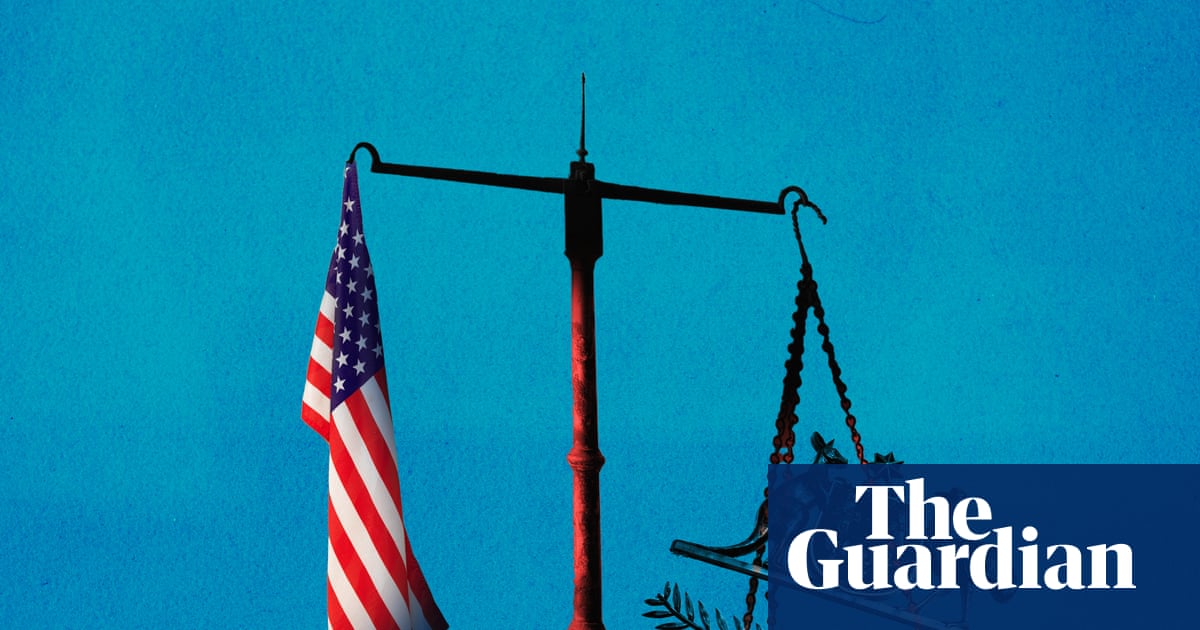
The first major block is tariffs, courts and “American-style economic nationalism.” In France the topic of the US almost automatically turns into a discussion of the “tariff weapon.” Francophone media unpack the history in detail: Trump declared trade a “national emergency,” relying on the IEEPA statute, and imposed large “reciprocal” tariffs on almost all partners, including Europeans. Then the US Supreme Court ruled that that law does not give the president the right to unilaterally design a tariff regime, thereby annulling a significant portion of the duties. French outlets like Euronews and Europe 1 describe this as a “slap” to the president and a unique situation in which the global trade architecture literally depends on the interpretation of American constitutional law: Supreme Court decisions instantly redraw the world flows of goods and money.(fr.euronews.com)
But, French commentators emphasize, the story did not end there: deprived of one instrument, the White House immediately switched to another — Section 122 of the Trade Act of 1974, introducing a new “temporary” uniform global tariff first at 10%, then at 15%. In an analytical piece with a telling headline “A single, universal 15% tariff,” radio station RTL explains in detail that paradoxically this scheme is now relatively favourable to China and Brazil, but hits European exporters, including the French.(leparisien.fr)
From here comes the French perspective: the US is not just a partner or a competitor, but a state that has turned tariffs into a multi-purpose weapon, while remaining constrained by its own constitutional and international obligations. One French economic review stresses that the new “tariff shock wave” raises the average US external tariff to levels unseen for decades, sharply increasing the risk of a global recession.(economic-research.bnpparibas.com)
The second plane is Beijing’s view. In Chinese media the US has practically disappeared as an abstract “West” and become a concrete “tariff aggressor.” There is little discussion of institutional limits on American power — on the contrary, commentators stress how arbitrarily Washington wields the tools of tariffs and sanctions. Chinese official and quasi-official outlets describe American policy as 关税大棒 — “the big tariff club” that the US brandishes alone, breaking the established trading order and becoming a “global source of risk.”(chinanews.com.cn)
A characteristic piece on China.com.cn calls the recent US decision on massive tax credits and the restoration of some unlawful tariffs worth hundreds of billions of dollars not an act of goodwill but a “repackaging of protectionism”: the point being that Washington initially raised tariffs, forced the world to adapt, and now redistributes flows in favour of its importers and corporations. The author wryly notes that even potential tariff reimbursements will first end up in American companies’ accounts, not foreign exporters’, for whom bureaucratic access to these funds is almost blocked.(china.com.cn)
Chinese texts about 对等关税 — American “reciprocal tariffs” — are even harsher, formally justified by concern for fairness. Scholars at Chinese universities analyze how, under the banner of “equality,” the US in practice imposes a regime of unilateral diktat in which the only “equal” system is one where everyone plays by Washington’s rules. An analytical piece from the East China Normal University’s Institute for China–Foreign Trade points out that the launch of global “reciprocal tariffs” triggered a chain reaction: countries seek alternative markets, sign new agreements, and the US’s authority as an architect of free trade is rapidly eroding.(icft.ecnu.edu.cn)
An important detail in the Chinese debate is the attempt to show that Beijing has learned to live with American duties. State-media materials emphasize that average US tariff rates on Chinese imports remain at 40–42%, while China’s retaliatory measures are around 32–34%. Analysts reassure the domestic audience that trade has not “zeroed out,” it is restructuring: China is expanding ties with Asia, Europe and the Global South and can withstand a prolonged “tariff siege.”(cn.tradingview.com)
Australia views American tariffs differently — through the prism of a vulnerable medium-sized exporter. The main worry there is that every new American “global duty” automatically affects Australian goods — from wine to technology. Australian commentators at the ABC and other outlets carefully explain how a US Supreme Court decision, formally domestic, can lead to historic refund payments to importers while creating another wave of uncertainty for everyone tied to the American market.(abc.net.au)
To close this block: France, China and Australia all see the US as a country that simultaneously breaks and makes the rules of global trade. In Paris the emphasis is on the legal “schizophrenia” of the system: the president imposes, the courts repeal, lawyers worldwide keep their fingers on the pulse. In Beijing the focus is on ideological one-sidedness and “selfish protectionism.” In Canberra the concern is instability that hits less powerful partners dependent on access to the US market.
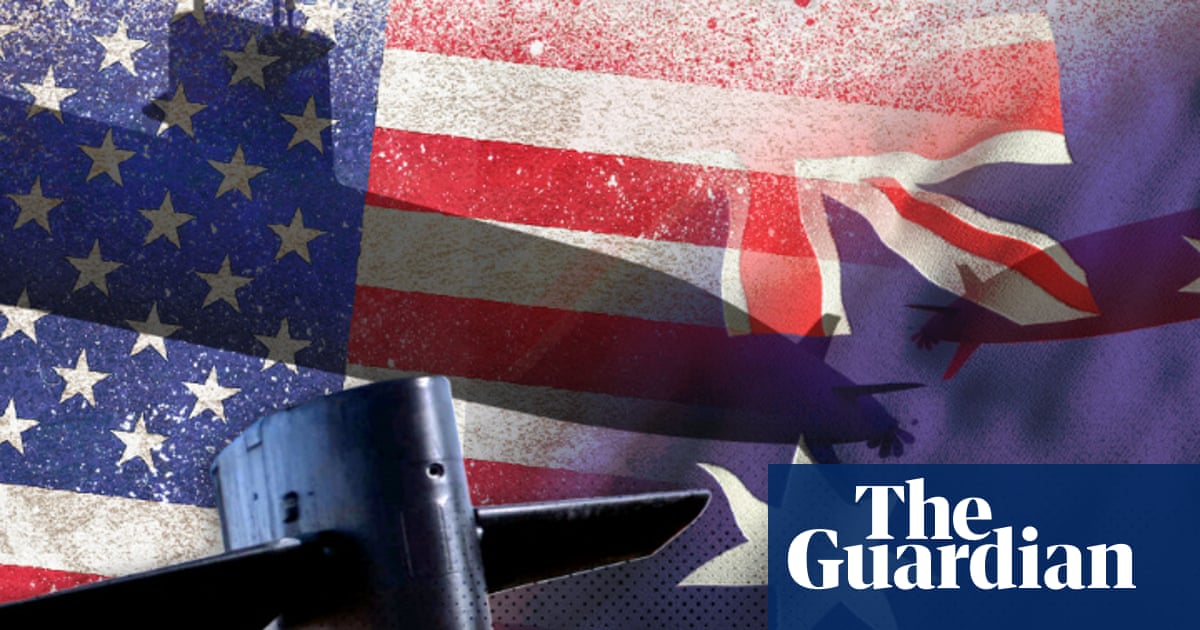
The second big theme is wars and allies: from the Persian Gulf to the southern Pacific. For Australia the question of the US today is above all a question of war with Iran and growing military integration. Since 2026 a sharp domestic debate has unfolded: to what extent does alignment with Washington automatically pull the country into American military campaigns. A Guardian Australia article asking “Will Australia be dragged into war as it becomes more integrated into the US military machine?” describes a new level of dependence: billions invested in the RAAF Base Tindal in the Northern Territory to host American bombers capable of carrying nuclear weapons.(theguardian.com)
Former Australian diplomat Lachlan Strahan in the same piece notes that key US allies were “kept in the dark” about Washington’s concrete plans to strike Iran, even as American diplomacy was ramping up “gunboat diplomacy” off Iranian shores. For the Australian audience this is a painful moment: the country pays for the alliance not only in money and basing, but potentially by being drawn into war without being a full actor in the discussion.(theguardian.com)
American actions in the Strait of Hormuz and war with Iran have sharpened this conflict. When Trump publicly blamed allies — including Australia — for “insufficient” support in Mediterranean and Middle Eastern theatres, Australian media read this not as an ordinary tweet but as a symptom of a much more serious shift: Washington is moving toward a logic of “whoever is not with us is against us,” even toward its oldest partners. The ABC quotes the US president’s blunt statement that his country “doesn’t need anyone’s help,” while still demanding symbolic participation from allies to legitimate operations.(abc.net.au)
Against this backdrop, a camp inside Australia is growing that calls to “rethink the alliance” with an “extremely unpredictable” US. Online debates frequently cite former ministers and experts claiming the country has lost an independent foreign policy, and that the real alternatives are either sharply increasing its own defence spending or accepting the role of a “obedient junior partner” in any American campaign, from the Persian Gulf to the western Pacific.(reddit.com)
China, naturally, views US military activity through the lens of encirclement and containment. In Chinese discourse the war with Iran and other American interventions are used as evidence that Washington remains a state inclined to resolve political contradictions with force, and that talks of “international law” and a “rules-based order” are rhetorical shells concealing the law of the strong. When American strikes on Iran and interventions in Venezuela are discussed internationally, Chinese analysts note the gap between US rhetoric and allies’ real willingness to support such actions. They observe that even in Europe and Australia a growing camp sees Washington not as a guarantor but as a source of destabilization.(en.wikipedia.org)
The French perspective in this story is somewhat subtler. France still sees the US as an indispensable partner within NATO and in various crises, but speaks increasingly about the need for “European sovereignty” to avoid dependence on American zigzags. Comments from French politicians and experts converge on the idea that Europe cannot allow itself to be merely a theatre for US–Iran or US–China conflicts. Economic and political reviews from the French Treasury and major banks stress that disputes over tariffs and sanctions are the flip side of a deeper dilemma: where the line runs between allied solidarity and the national interests of France and the EU.(tresor.economie.gouv.fr)
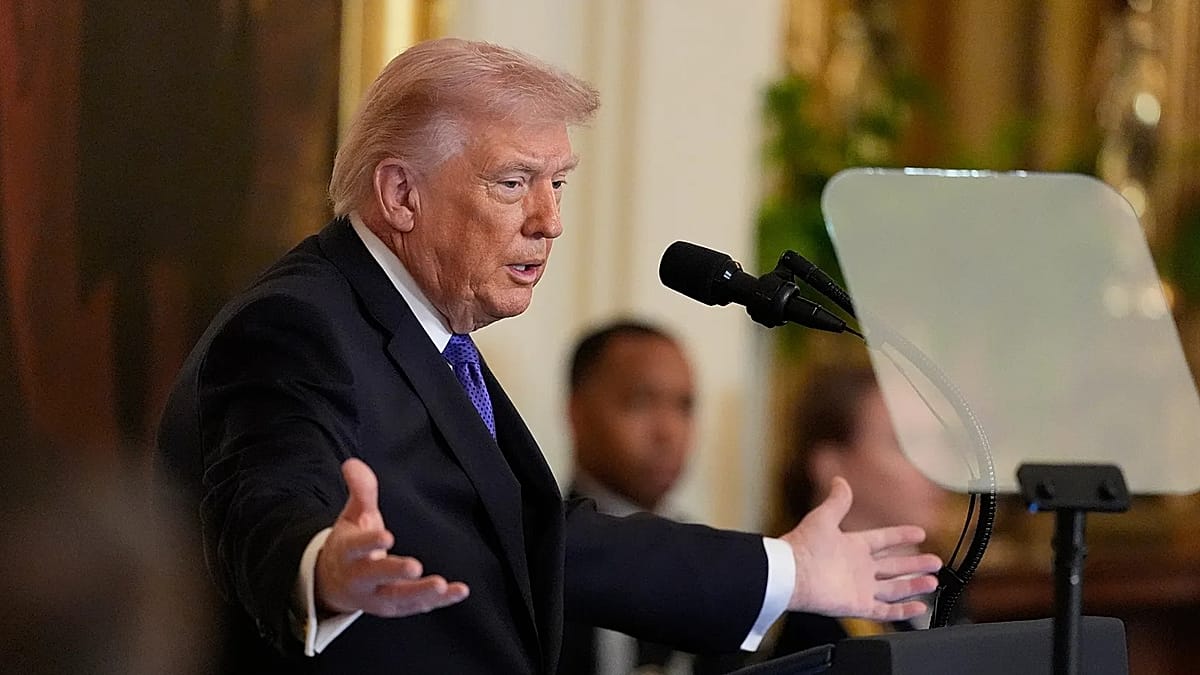
The third, and perhaps most emotionally charged layer, is the perception of American democracy itself and the figure of Trump. Here Australia is almost a perfect mirror. As an ABC analyst writes, Trump has become “political kryptonite” in Australian politics: neither of the two major parties wants to be too closely associated with him because he is toxic to the average voter, yet they are not ready to break or even seriously weaken the alliance with the US.(abc.net.au)
An article titled “Australia’s trust in Trump’s America has evaporated. What would have to happen for the alliance to crack?” describes an intriguing cognitive split: for the political class faith in the alliance remains almost a religion, while public opinion is changing rapidly. Former head of a prominent think tank Michael Fullilove, in his speech “Witnessing the Unmaking,” argues that Trump’s re-election cemented the sense of “no return to normal” in the United States, and therefore the familiar order on which Australia’s world depended is passing.(theguardian.com)
Sociological data only reinforce this impression. Polls show that a majority of Australians consider Trump a greater threat to global security than Vladimir Putin or Xi Jinping, and a significant share favour a more independent foreign policy even at the cost of cooling ties with the US. One survey from the Australian Election Study, widely discussed in press and social media, showed that women in particular feel less secure after Trump’s election, not more.(australianelectionstudy.org)
It is important to stress: even the most severe critics of Trump in Australia and France emphasize that their problem is not with America as such, but with the trajectory of its democracy. Influential writers compare today’s US to a “contagious” democratic crisis that exports political radicalism and polarization to all countries culturally and informationally linked to America. An Australian commentator at the ABC speaks of a “cancer of political extremism” that continues to erode the American system, and acknowledges that Australians “watch the Pacific across the ocean with anxiety” regarding the state of democracy in the country they depend on.(abc.net.au)
China’s view of American democracy is, conversely, less tragic and more instrumental. In official and pro-government discourse US crises — from attacks on the Capitol to political violence and judicial wars — are used as an argument against the universality of the Western model. The message is clear: “Look how their democracy works — chaos, populism, endless elections, foreign policy subordinated to domestic spectacle. Is that a model worth following?” Chinese authors, with evident satisfaction, cite Western and American sources criticizing Trump’s tariff wars as self-harm to American consumers and allies, to show that doubt about the US leadership model is growing even within the United States.(world.gmw.cn)
French publications often draw parallels between American and European populism: Trump becomes a sort of litmus test for debates about radical right and left-populists in Europe itself. In editorial columns in Le Monde and other major outlets the American political drama is used as a warning: if European societies allow a similar level of polarization, their institutions will face the same pressure. Unlike Chinese commentators, French analysts do not claim the US model is entirely exhausted; rather, they speak of a prolonged crisis of a mature democracy capable of adapting but not yet willing to do so.
All three threads — tariffs, wars and democratic crisis — are intertwined in complex ways. For Australia these themes converge on one question: how safe is it to keep betting on the US alliance if Washington is simultaneously pulling allies into controversial wars, jolting world trade with “tariff shocks,” and demonstrating political instability at home. For China it all boils down to confronting a hegemon that, despite its internal problems, remains able to inflict large-scale damage on rivals’ economies; therefore Beijing needs to accelerate “decoupling” and strengthen alternative centres of power. For France and, more broadly, Europe, the US becomes both example and warning: a necessary partner, but no longer the unconditional “anchor of stability” it was in the postwar era.
Perhaps the most surprising thing is that despite all the criticism, irritation and fears, neither Australia, nor China, nor France is building a world without the US. Australian politicians, even the most sceptical, acknowledge that breaking the alliance would be strategic suicide. Chinese texts that denounce the “tariff club” simultaneously show how deeply Beijing still depends on the American market and the dollar system. French economists, calculating losses from American duties, regularly add the caveat that the European economy is too deeply integrated with the American one to contemplate a sudden “divorce.”
This is the current paradox of perceptions of the US: America today is an object of critique, fear, calculation and still inevitable dependence. In Canberra people argue about how not to be dragged into someone else’s war while not losing their protector. In Beijing they seek ways to turn the “American risk” into an incentive for their own modernization. In Paris calculations wryly and soberly remind everyone: in a world where a single US Supreme Court decision can trigger the return of hundreds of billions of dollars in duties and redraw trade routes, you cannot ignore Washington, no matter how much you might like to. That is why the discussion of America in Australia, China and France is not simply a set of reactions to news from Washington; it is, in essence, a meditation on their own futures in a world where the US remains too big to love and too important to leave.