At the beginning of 2026, the United States once again occupies a central place in the political debates of three very different societies — Saudi Arabia, Brazil and Israel. But the conversation about the US in each of them is about different things: for Saudis it is primarily a question of a new security and technology architecture; for Brazilians — a reference point and at the same time an irritant in debates about democracy, the economy and climate; for Israelis — an existential question about security guarantees and the American military presence in the Middle East. If you look only at American media, it gives the impression that the world discusses Washington in a rather one‑dimensional logic of “for” or “against” Trump and his policies. Local media in the three countries paint a very different picture: the US is perceived as a necessary but increasingly problematic center of power that one must adapt to, bargain with, and which — despite its strength — no longer seems omnipotent to everyone.
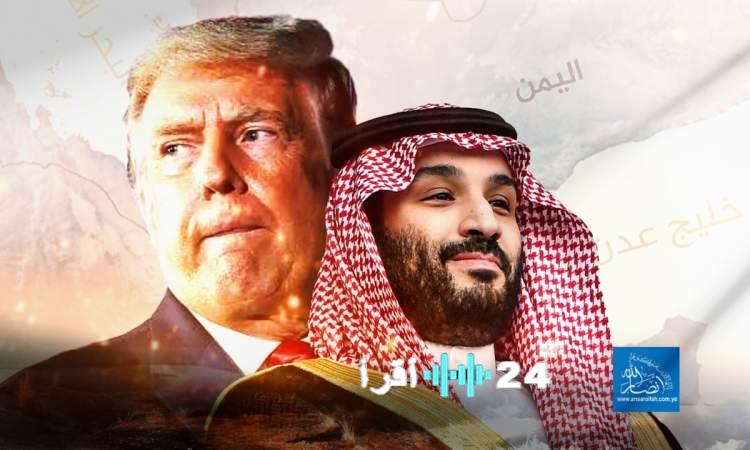
The first major storyline linking Saudi Arabia and Israel, and indirectly affecting Brazil, is the return of American “hard power” to regional politics and the new role of the US in the security architecture. In Arab analysis regarding Saudi Arabia, the idea is increasingly heard that relations with Washington have transformed from the classic scheme of “security in exchange for oil” into a much more complex system of “functional partnership.” In one recent analytical piece about “American strategic perceptions of Saudi Arabia,” the author describes how Washington is reclassifying the kingdom from a “key military ally” to a “technology and investment partner,” but under strict control in sensitive areas such as AI and semiconductors. In his formulation, agreements in AI and microchips create a regime of “mutual dependence, but under growing American oversight,” within which Saudi Arabia is not granted full technological sovereignty, but only access to US capabilities in exchange for political and economic loyalty. (iqraa24.com)
For Saudi commentators this is simultaneously an opportunity and a risk. On the one hand, in the logic of Vision 2030 Washington is needed as a source of technologies, investments and dollar financial infrastructure. On the other — there is growing concern that dependence on American technological and financial chains will become an instrument of political pressure, especially amid tougher US sanction policies toward other countries in the region. In this context the US dollar itself becomes a topic of daily discussion at Saudi economic forums and in specialist press: when discussing a potential rise in the dollar following strong US labor market data and a possible delay in Fed rate cuts, market participants directly link the prospects for the Saudi stock market and oil prices to the US economic cycle, acknowledging that “any changes in the dollar’s value can indirectly affect the Saudi market.” (hawamer.com)
The Israeli discussion about the US is built around a different aspect of American power — the military. In Hebrew media they continue to analyze both the strategic consequences of many years of American troop presence in Iraq and Syria and plans for their withdrawal. A year and a half ago Israeli media were closely analyzing reports that the United States would withdraw its forces from Iraq by the end of 2026 as part of an agreement with Baghdad, emphasizing that American bases in that country served not only to stabilize Iraq but also as a springboard for strikes against structures of the Islamic Revolutionary Guard Corps and pro‑Iranian forces. (c14.co.il) For Israeli commentators this is not an abstract news item about a distant war, but a question of how reliably the US will contain Iran if American presence “across the river” — in Iraq and Syria — is effectively reduced. Against this backdrop, Donald Trump’s latest “state of the ally” report to Congress attracted considerable attention: Israeli business and political outlets closely dissected his emphasis on “peace through strength,” a record defense budget of around a trillion dollars, and tough rhetoric on Iran, where he warned that Washington “will not allow the leading sponsor of terrorism to possess nuclear weapons” and insisted on a new agreement that would include limits on ballistic missiles and support for armed groups. (bizportal.co.il)
These statements are received in Israel with mixed feelings. On the one hand, the idea of “peace through strength” and expanding anti‑missile systems together with the threat to Iran is seen as a welcome return to the line that part of the Israeli establishment considered weakened in recent years. On the other — the economic details of the same American discourse raise concern: Israeli economists stress that rising military spending pushes the US federal deficit to around 6% of GDP and heightens questions about the sustainability of American finances, which means that dollar liquidity and global financial markets — to which both Israeli and Saudi economies are tied — will operate under increased volatility. (bizportal.co.il)
Saudi and other Middle Eastern analysts add another layer: the US return to a policy of demonstrative force in the region. In one Arabic column widely discussed on social media, US strikes on Iranian sites and associated structures were described as “the turning point of 2026 in the Middle East,” a signal not only to enemies but also to allies that America intends to resume the role of the unchallenged power arbiter. The author noted the “silent welcome” of the Gulf states to these strikes, seeing in them not only a reduction of tension but also a reminder that Washington still stands behind the security umbrella. (whia.us) For Riyadh this is both a relief and a reminder of the cost of that umbrella: the more the US intervenes in the region by force, the higher the expectations for political alignment and the more painful any divergence from the American course on Iran, Yemen or Syria becomes for Saudi autonomy.
Against this backdrop Brazilian press discusses the US more as a global reference and contrast than as a direct military protector. In major outlets like Folha de S. Paulo or O Globo, the United States becomes a mirror in debates about democracy, populism and economic models: Trump serves as a “laboratory,” on the basis of which Brazilian authors dissect their own experience of bolsonarismo and current political polarization. In a typical column published in the Brazilian press after another of Trump’s addresses to Congress, the author draws a parallel between American debates over migration and Brazilian disputes over the border with Venezuela and internal security, stressing that “the American temptation of simple solutions through harsh border control” is very similar to the rhetoric of the right wing in Brazil, but does not solve structural economic problems either there or here.
At the same time Brazilian economic commentators closely follow American macroeconomic indicators, largely because they determine future Fed decisions and therefore global conditions for developing economies. The same figures that in Israeli media appear in the context of a debate about the advisability of a huge defense budget — moderate US GDP growth of about 1.4% at the end of 2025 amid a prolonged “shutdown” and comparatively low job creation — are used in Brazil as an argument in debates about the global interest rate cycle and prospects for capital inflows to emerging markets. (bizportal.co.il) In local columns the US appears less as an “empire” and more as “the world’s central bank,” and the key question is: how long can the American economy endure the combination of high rates, rising military spending and political polarization, and at what point will this turn into a new wave of instability for countries like Brazil?
Another cross‑cutting storyline is the perception of the internal state of American society. In the Arab press, including outlets oriented to a regional audience from the Levant to the Gulf, discussions cover not only Washington’s foreign policy but also a growing fatigue among some Americans with their own state. In one detailed piece on American migration dynamics in recent years, the author, relying on survey and statistical data, noted that by 2025 roughly one in five Americans declared a desire to “leave the US forever if possible,” with this share especially high among young women. Against the backdrop of a sharp increase in net immigration in 2024, subsequent tightening of immigration policy and a decline in inflows in 2025 are interpreted there not as “people fleeing America en masse” but as “America reducing the number of arrivals,” thereby changing its historical image as a “nation of immigrants.” (aawsat.com)
For a Saudi audience this analysis matters not only as an image of “Western crisis” but also as an explanation of why the US might become less open to students, specialists and investment from Gulf countries. In Israel such texts feed the debate about the “reliability” of American society as a long‑term guarantor of alliance obligations: if internal frictions, demographic and social imbalances grow within the US itself, how stable will its foreign line be over a 10–20 year horizon?
In the Brazilian press the same figures are read differently: America acts as a warning that even wealthy democracies can face “brain drain” and erosion of trust in institutions. Brazilian columnists, discussing these surveys, compare them with sentiments among their own students and professionals, for whom the US has traditionally been the main emigration destination. An interesting motif emerges: if America becomes less attractive or less accessible, how will this change the trajectories of Latin American migration and the balance of power in the Western Hemisphere?
Particularly notable is the difference in how the three countries view US economic power. In Saudi discussions on forums and in the media the US appears as an unquestionable economic giant with GDP over $30 trillion — a starting point when discussing Saudi Arabia’s own “leap” toward a top‑10 global economy status. In one popular discussion that spread through the Saudi Reddit segment, users compare expected GDP volumes of the largest economies in 2026, noting the US at roughly $31.8 trillion and placing Saudi Arabia around $2.8 trillion, presented as a “bold but achievable” result for a country recently considered a purely oil appendage. (reddit.com) Here the US is more a benchmark and goal for catch‑up development than a political object of irritation.
In Israel US economic power is seen as the foundation of the strategic alliance: an American defense budget of a trillion dollars is not an abstract number but a concrete source of funding for joint missile defense programs, weapons supplies and Washington’s political weight in international organizations. At the same time Israeli economists and officials publishing reviews of the American economy on government resources increasingly point to risks for Washington itself: slowing growth, high debt burdens, and political conflict over budget priorities. (gov.il) This duality — “America as an indispensable ally” and “America as a potential source of financial instability” — becomes an important part of Israel’s conversation about the need to diversify markets and partners, from India to Gulf countries.
For Brazil the US is economically both partner and competitor. In Brazilian trade policy analyses Washington appears as a center that simultaneously needs South American resources and markets, but is also ready to apply protectionist and sanction tools to the detriment of Brazil’s interests, whether in agriculture, green energy or technology. Here the debate sharply diverges from the American perspective: what in Washington is often presented as “fair measures in response to unfair competition” from Beijing or other players, Brazilian authors see as an attempt to lock in global inequality in access to high‑tech value chains.
Finally, the three countries view the cultural and symbolic role of the US differently, but everywhere there is a trend toward a “normalization of America” — from the image of an exceptional superpower to perceiving it as another large but troubled country. In Saudi and broader Arab texts the US is increasingly described as an actor that “makes mistakes, learns and is forced to step back,” not an omnipotent power: they discuss the American withdrawal from Iraq, “fatigue” with long wars, and internal disputes over migration and identity. In Israel, despite part of society’s emotional attachment to the “American dream” and close personal ties, rational skepticism is growing: more analysts explicitly write that Israel needs to prepare for a world in which the US remains the most important but no longer the only or always predictable patron. In Brazil cultural influence from the US remains strong — from film to tech platforms — but it is mixed with fatigue and a desire for greater autonomy: American trends in culture, politics and economics are no longer seen as the natural “standard” but rather as one possible reference among European and Asian models.
Putting all these fragments together produces a paradoxical image. Saudi Arabia, Brazil and Israel see different things in America — a security guarantor, a democracy laboratory, a financial anchor or a source of instability — but in each of the three debates the US no longer appears as a static “center of the world.” On the contrary, American policy and society are seen there as mobile, contradictory and vulnerable. This “normalization of America” does not negate its power but changes the tone: instead of former admiration or blind anti‑Americanism a harder pragmatism is sounding louder. Riyadh bargains with Washington for technology and autonomy, Jerusalem for security guarantees and long‑term commitments, Brasília for economic space and respect for its interests. For a reader accustomed to the American media bell that frames the world as either “following the US” or “rebelling against it,” the local voices of these countries may sound surprising: they speak of the United States as a partner whose absence would be costly, but whom no one is ready to treat anymore as the infallible center of the universe.