At the start of 2026, the United States again finds itself at the center of intense foreign attention, but the angle from which Washington is viewed noticeably shifts depending on national interests and the current agenda. For Beijing, the US is primarily part of a struggle for technological and economic sovereignty; for Ankara, it is simultaneously a security partner and a yardstick of its own international status; for Delhi, it is a crucial but by no means sole vector in a more multipolar foreign policy. Through these differences common themes emerge: the reconfiguration of global trade, wariness toward American “clubs of interest,” pragmatic calculation, and a decreasing willingness to accept the American narrative of the world order as given.
One of the most prominent motifs in the Chinese discussion about the US is the attitude toward American business and Washington’s attempts to build new economic alliances. At a recent MFA briefing, spokesperson Lin Jian specifically cited a fresh survey of American companies in Hong Kong: according to him, 86% of respondents believe the city remains competitive as an international business center, 92% do not intend to relocate their headquarters, and 94% are confident in the rule of law. The Chinese side presents these figures as a rebuttal to Western publications about the “decline” of Hong Kong and as an example that American business votes with its money — that is, its dollars — to continue operating within the Chinese system. In this narrative the US plays a dual role: political critic of China and, at the same time, a source of investment which, in Beijing’s view, will only grow as “Chinese modernization” advances and the “one country, two systems” formula strengthens. Importantly, Chinese diplomacy refers specifically to “American enterprises” — a signal both inward and to Washington: in conditions of tough rhetoric at the government level, the business layer remains a channel of mutual dependence. (mfa.gov.cn)
At the same time, Beijing is watching closely Washington’s attempts to reshape global supply chains for critical resources. When the US announced the creation of a new critical minerals trading mechanism that included South Korea, the Chinese MFA responded with a characteristic formula: on the one hand, it emphasized support for an “open, inclusive and mutually beneficial” system of world trade and said all countries “bear responsibility for the stability of global supply chains”; on the other hand, it sharply criticized any attempts by individual states to “use the rules of small circles to undermine the international economic order.” For Chinese commentators, the United States here is the architect of fragmentation, seeking through “clubs of like‑minded” countries on minerals, semiconductors or green technologies to circumvent formats where Beijing has strong positions, such as the WTO or broad multilateral platforms. Chinese analysts in business media interpret this as a long‑term challenge to prepare for not so much with retaliatory sanctions but by accelerating their own technological and resource self‑sufficiency. (mfa.gov.cn)
A curious detail is that in the current economic debate China increasingly cites the US not as the absolute center of the global economy, but as one variable in a more complex equation. In a February 9 review by a Chinese investment group on the state of the American labor market and industry, the United States is described with dry indicators: weak employment growth, a jump in the ISM manufacturing index, and a cautious debt strategy by the Treasury. That tone reflects a pragmatization of perception: Washington is no longer a “lighthouse” but an object of analysis on par with the EU or large developing economies. The aim is to understand how fluctuations in American demand, interest‑rate policy and debt will affect Chinese exports and finances — neither idealizing nor demonizing the US, but reducing everything to a risk calculation. (laohu8.com)
In the Turkish agenda, the US traditionally appears in the context of NATO, Syria, the Eastern Mediterranean and bilateral tensions; however, another revealing facet is the perception of America as a sporting and, more broadly, symbolic rival. Turkish media covered last year’s friendly match of the Turkish national team against the hosts of the upcoming World Cup — the US team — in detail, underlining that the 2–1 victory on American soil was the first away win in history for the Turkish team against the United States. At first glance this is just a football episode, but the commentary around the match shows how the Turkish audience perceives such events: as confirmation that Turkey can beat the “host” of a major tournament and a country with which it shares a complicated but important political history. In sports reviews the success in Hartford was accompanied by reminders of the US’s role as one of the three World Cup organizers, where Turkey also wants to present itself as a confident and self‑sufficient player. (aa.com.tr)
Sport thus becomes a metaphor for a broader foreign‑policy line pursued by Ankara, which uses both distancing from Washington and efforts to demonstrate equality of status. Turkish commentators in analytical outlets readily draw parallels between football victories and diplomatic episodes in which Ankara secures recognition of its interests — whether arms deals outside the scope of US sanctions or an active role in the Black Sea region. In such discourse the US is not a patron but a powerful opponent and partner that one can and should beat both on the field and at the negotiating table. This reinforces the domestic legitimacy of the Turkish “strategic autonomy” the authorities have been promoting in recent years.
The Indian discussion about the United States is the most layered: America is simultaneously the largest trading partner, an important source of technologies, a problematic factor in migration policy, and even a rival on the cricket pitch. Economically, Indian business and national media are actively discussing recent trade arrangements: under a bilateral “trade framework” the United States lowered tariffs on a number of Indian goods to 18%, which in Delhi is presented as a diplomatic success and a step toward correcting old asymmetries. Prime Minister Narendra Modi publicly welcomed the new tariff regime, and analysts emphasize that Washington is making concessions not out of altruism but as part of its own strategy to diversify import chains away from China. Indian commentators soberly note that the new tariff structure is the result of long negotiations and India’s firm stance in earlier rounds when Delhi was prepared to endure frictions with the US in order to secure better export terms. (aajtak.in)
At the level of specific sectors, these shifts are reflected, for example, in the handicrafts export sector. Ahead of the major Delhi Fair spring 2026, which brings together more than three thousand Indian exporters and buyers from over a hundred countries, industry media enthusiastically report that US tariff cuts and a future free‑trade deal with the EU open up “big business” for artisans. It is particularly emphasized that Indian goods receive a more favorable tariff regime in the US than Chinese goods: this is presented as a strategic window of opportunity tied to the redistribution of global chains amid US‑China rivalry. Thus, in Indian discourse Washington appears not only as a partner but as a lever to boost India’s competitiveness relative to China — and local experts urge taking advantage of this window before the balance of interests in American policy shifts again. (navbharattimes.indiatimes.com)
At the same time, in the shadow of a positive trade agenda remains the painful issue of migration and deportations. Indian outlets in Hindi and English have regularly published pieces in recent years about mass expulsions of Indian citizens from the US, highlighting Washington’s tough stance on illegal migration. In one high‑profile 2025 case American authorities deported as many as 119 Indians on board a C‑17 Globemaster military transport plane; previously 104 people had been sent back in the same manner. Indian commentators read this as a message not only to illegal migrants but also to Delhi: even strategic partnership and close defense cooperation do not prevent the US from pursuing migration policy strictly in its own interests. Some observers saw this as a sobering reminder to societies enchanted by the “American dream,” others as a reason to more actively defend the rights of Indian citizens abroad and to build a more asymmetrical but mutually respectful dialogue with Washington. (livemint.com)
Against this backdrop, it is noticeable how the Indian media environment places the US within a broader context of rivalry with China and Pakistan. In economic reviews the rise of India’s foreign‑exchange reserves to record levels is reported with a distinctly competitive tone: journalists suggest this “good news before the 2026 budget” will cause “irritation from the US to neighbors China and Pakistan,” hinting that strengthening India’s financial position increases its autonomy in relations with Washington. Here America functions more as an external point of comparison and a source of pressure — through ratings, deficit demands, and expectations for reforms — while the Indian audience increasingly perceives their country as an actor capable of withstanding that pressure and even using it for internal mobilization. (abplive.com)
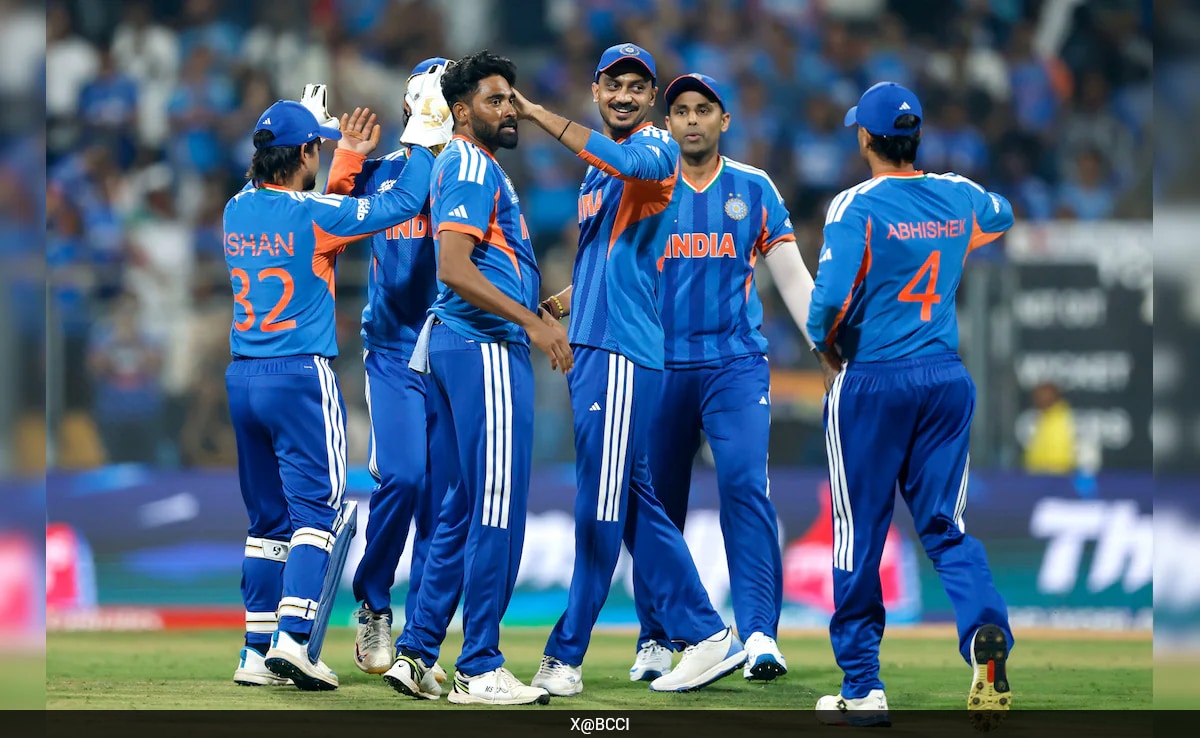
A curious finishing touch to perceptions of the US in India comes from the cricket calendar: in the midst of preparations for the 2026 World Cup Indian sports media closely analyzed the India vs USA match. Although India’s victory itself was expected, discussion focused on how unexpectedly competitive the American team proved to be and how this changes perceptions of the US as a “non‑cricket” power. For the Indian fan, used to viewing the United States primarily through the prisms of IT, migration and geopolitics, the emergence of a serious American cricket team reinforces the sense that Washington is testing itself in ever new spheres of global influence — from sport to film on the Indian market. In response voices call on the Board of Control for Cricket in India to vigorously defend the interests of local leagues and not let NFL‑style commercial formats from the US dictate the rules of the “Indian game.” (ndtv.in)
Putting these different storylines together yields a more complex and multifaceted picture of international perceptions of the US. For China the central question is how to reduce dependence on Washington while still using American capital’s interest in the Chinese market. That is why Beijing closely monitors trust by American companies in Hong Kong while simultaneously criticizing American attempts to build alternative trade clubs in strategically important sectors. For Turkey it is important to show it can beat the US not only rhetorically but in symbolic arenas too, whether sport or independent diplomatic initiatives; against this background even a football victory in Hartford becomes part of a larger story about Turkey’s “upgrading.” For India, the US is simultaneously an important economic partner, a source of opportunities in competition with China, a hard player in migration policy, and a new rival on unexpected fields like cricket; the Indian debate is less inclined to idealization and more toward a cool calculation of benefits and costs.
The common denominator of these national perspectives is that the United States is almost nowhere anymore perceived as the unconditional center to which one must either attach oneself or hopelessly oppose. In Beijing, Ankara and Delhi, the US is increasingly described as another very powerful player in a multipolar system — with enormous resources but also growing internal constraints that can be pressured, bargained with, and used as windows of opportunity. It is this shift — from an ideological perception of America to an instrumental one — that sets the tone of most contemporary commentary about Washington outside the United States.