
In early April 2026, conversations about the United States in Seoul, Beijing and Kyiv are held in different languages and with different emotions, but a common thread runs through them all: the world lives in the shadow of American decisions, trying simultaneously to rely on them and to protect itself from their unpredictability. For South Korea this is above all a question of security and the economy in the context of the U.S. and Israel’s war with Iran and the controversial policies of Donald Trump. For China — a reshuffling of power in global trade and an ideological confrontation with Washington. For Ukraine — an existential dependence on American aid and anxious observation of how American democracy itself is changing the rules of the game.
Several shared themes are forming against this backdrop. The first is growing distrust of the predictability of U.S. foreign policy and searches for a “third way” between the United States and China. The second is the sense that domestic political battles in the U.S. directly affect the security and economy of other countries. The third is an increasing readiness to speak of America not only as a military or economic superpower, but as a troubled, even vulnerable system that can be criticized for double standards and social contradictions.
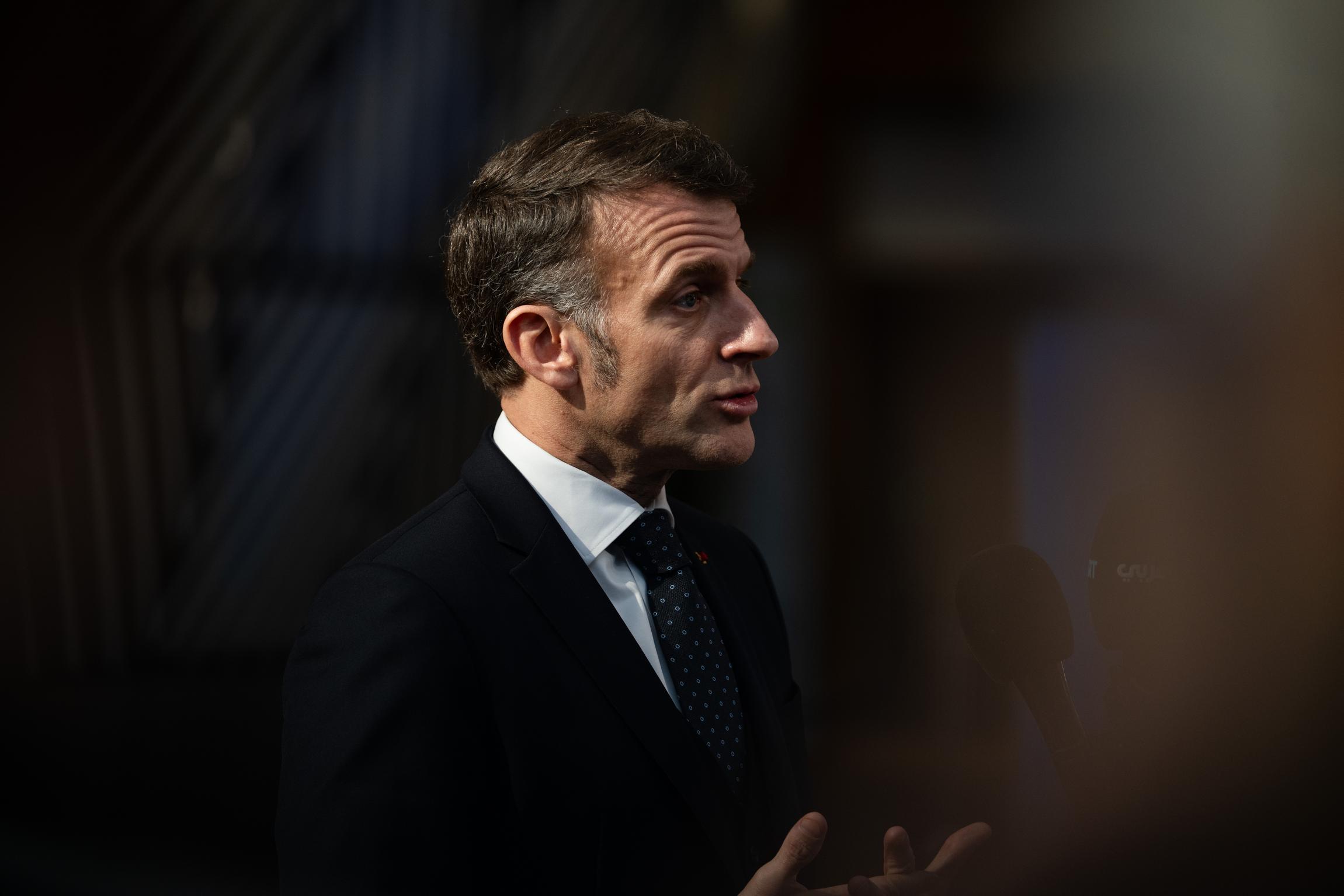
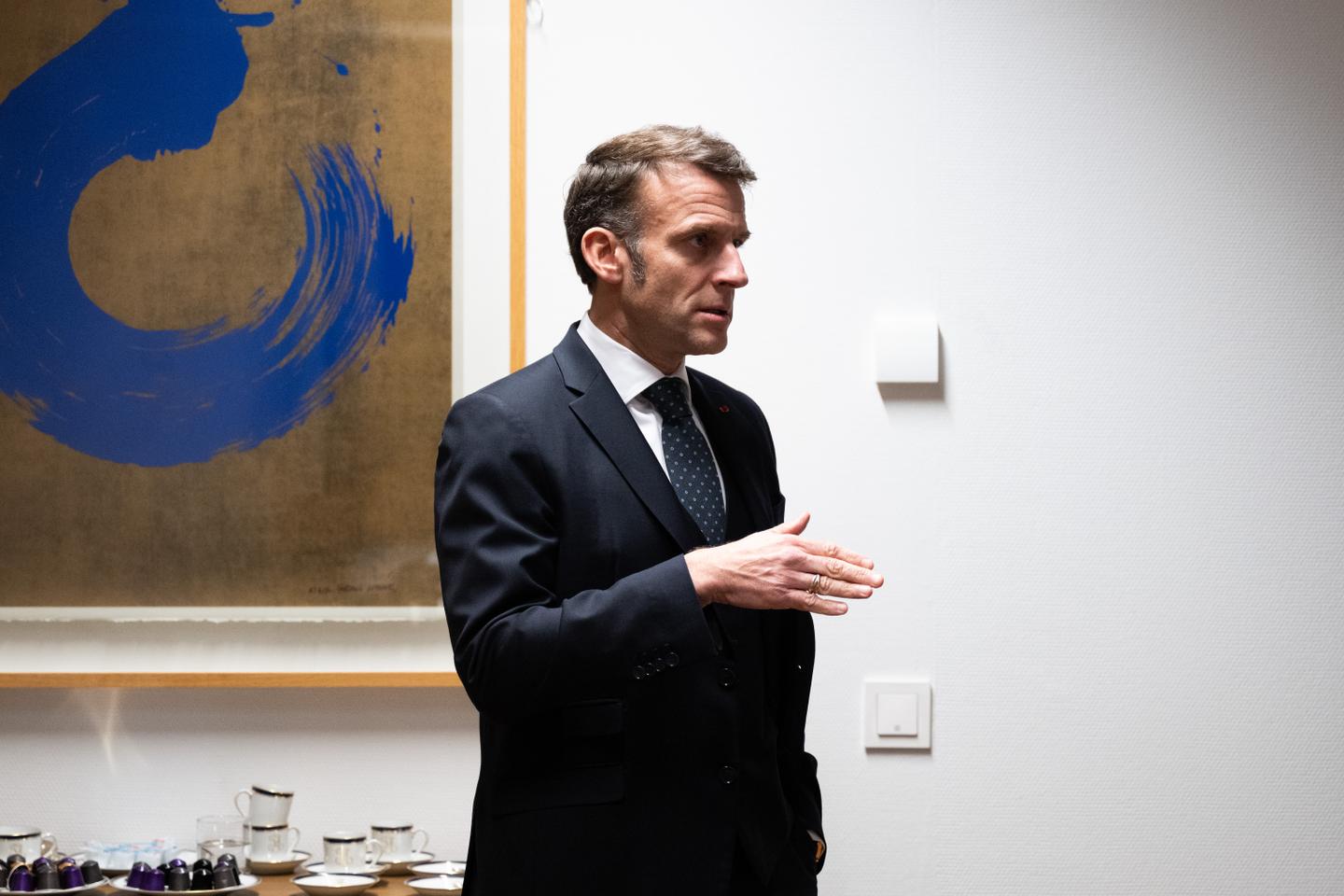
One of the most illustrative arenas for this conversation has been Northeast Asia. The U.S. and Israel’s war with Iran and the related redeployment of American arms from South Korea to the Middle East have sharpened a long-standing feeling of strategic uncertainty in Seoul for several weeks. The Korean press extensively cited reports that Patriot systems and other equipment from bases in the Republic of Korea would be moved to the Middle East, with local newspapers stressing that such steps had been taken before when Washington spoke of the “strategic flexibility” of its forces. Those redeployments were one context for Emmanuel Macron’s visit to Tokyo and Seoul at the end of March: speaking before Korea’s business elite at the Federation of Korean Industries, the French president joked that “our American friends gave me an unprecedented argument: we are predictable,” directly contrasting Paris’s “predictability” with Trump’s “unpredictability” and calling on Japan and South Korea to pursue greater “strategic autonomy” and a coalition of “independent” countries that do not want to be vassals of either the U.S. or China. He made that point both in meetings with President Yoon Suk Yeol and the Japanese prime minister and in a lecture in Seoul, where students received him almost like a K‑pop star; in the subtext, Korean commentators echoed an increasingly common question: “what will the U.S. do in the event of a crisis on the Korean Peninsula or in the Taiwan Strait?” (lemonde.fr)
Within South Korea itself, these foreign-policy doubts overlay a broader debate about the cost of the alliance with the U.S. Proximity to American bases, protracted negotiations over burden-sharing for defense, the risk that Korean ports and airfields could be drawn into conflicts similar to the current war with Iran — all of this is raised in local columns not only in left‑liberal but also in conservative outlets. Against that background, President Yoon’s call to accelerate preparations to transfer wartime operational control to Seoul — which is now de facto held by American command — is interpreted in the Korean press not merely as a technical step but as an attempt to at least partially eliminate dependence on political fluctuations in Washington. French and Korean commentators agree on one point: the security pact with the U.S. remains the cornerstone of the peninsula’s defense, but trust in Washington’s political will is no longer taken as unconditional. (lemonde.fr)
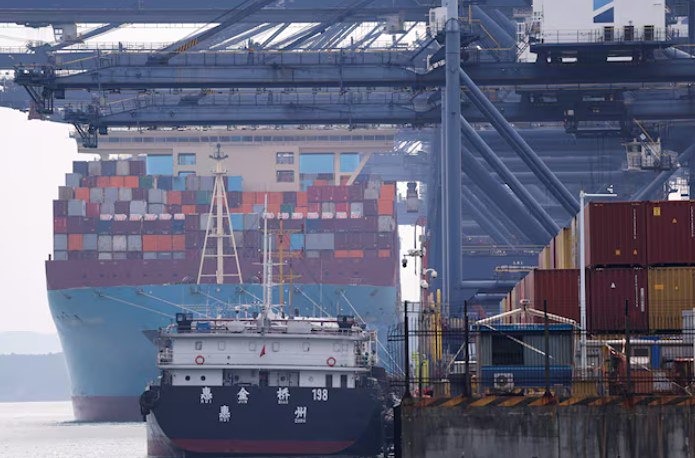
This ambivalence is especially evident in the economy. On one hand, the American market and U.S. investment remain vital to Seoul. Korean media widely covered a report of a planned major Korean investment package in the U.S. amid a new wave of American tariffs on metals and pharmaceuticals; announcing this move, a senior Trump administration official emphasized that Seoul “is on the front line” of supply chains Washington wants to reconfigure in its favor. As Korean business press noted, this course coincides with a record White House defense budget request and large-scale investment programs by American corporations across Asia, from Japan to Singapore, where the U.S. seeks to cement its techno-economic influence. (etoday.co.kr)
On the other hand, fatigue with the “economic burden” of the alliance is building in Korean public opinion. Studies in recent years show that among reasons for negative attitudes toward the U.S., people increasingly cite the “uneven distribution of costs” and the sense that under the slogan “America First” Washington is ready to shift not only military but also industrial risks onto its allies. Sociologists and political scientists in Seoul note an interesting shift: traditional left-wing anti‑Americanism, rooted in memories of dictatorship and military incidents, is being complemented by right-wing critique, where some conservatives doubt whether the U.S. can genuinely protect Korea from North Korea’s nuclear blackmail while simultaneously fighting several wars in the Middle East. (en.wikipedia.org)
If the Korean debate about the United States revolves around the dilemma “dependence versus autonomy,” in China today’s conversations about the U.S. are built around another axis — “conflict versus pragmatism.” On the one hand, Beijing continues to harshly criticize American trade and sanctions policy. Commenting on a recent U.S. Supreme Court decision that effectively struck down a substantial portion of tariffs imposed by the Trump administration during the trade war, China’s Ministry of Commerce, via state media, reminded readers that “trade disputes are harmful to both sides” and urged Washington to “respect World Trade Organization rules and refrain from unilateral measures,” even if the specific court decision happens to be to China’s benefit. Chinese economists speaking to state agencies emphasized that the very fact that an American president could so easily impose tariffs before highlights the vulnerability of the global economy to the U.S. political cycle. (news.mondiara.com)
At the same time, the ideological dispute with Washington in China is increasingly framed through an internal‑external prism: not only as criticism of American foreign policy but also as a demonstration of the United States’ internal weaknesses. A notable example is the campaign around the notion of “斩杀线” — the “kill line” with regard to American poverty. Chinese media and commentators actively discussed research showing that below a certain income level Americans are effectively deprived of chances to escape poverty; according to Chinese and Hong Kong observers, this is presented as proof of the “cruelty” of American capitalism and the failure of the welfare state. Journalist Yuan Li in The New York Times described how China’s propaganda apparatus uses the theme of American poverty to divert attention from its own economic challenges, but Chinese interlocutors interviewed for Asian media noted that such narratives have sounded familiar in China for decades: America becomes a mirror in which it is convenient to show the “chaos and cruelty” of another model, contrasting it with “orderly” development under Party leadership. (zh.wikipedia.org)
This narrative is reinforced by official statements on specific American actions. The Chinese Foreign Ministry, responding to new U.S. sanctions on third countries such as Venezuela, emphasizes that Washington “abuses unilateral sanctions” and interferes in the internal affairs of other states; at the same time, Chinese experts on Latin America in academic and semi‑state publications speak of a “systemic decline of trust in the U.S.” in the developing world. For domestic audiences this is presented as confirmation that the “American model” and American leadership have entered a phase of historical weakening. (cjrb.cjn.cn)
Ukraine, by contrast, views the U.S. through the eyes of a country for which every wavering line in American policy is a matter of survival. Ukrainian outlets and analysts closely follow two levels of American reality at once: the practical side — volumes of military and financial aid, and Washington’s initiatives for a “peace plan” in the war with Russia — and what is happening to American democratic institutions. A recent U.S. Department of Justice memorandum, according to which the Presidential Records Act from the Watergate era — requiring documents to be preserved after leaving office — was declared unconstitutional, drew anxious interest in Kyiv. Ukrainian commentators stress that the opinion of the Office of Legal Counsel in the White House effectively expands Trump’s freedom to deal with documents that Congress might need for future oversight, calling it “part of a long and escalating attack on transparency and accountability.” One expert interviewed by Ukrainian media said that “the consequences go beyond what we could imagine,” hinting that in a conflict between the White House and Congress over control of foreign policy such a Justice Department stance could deepen an institutional crisis. (mezha.net)
For Ukraine, where the issue of archives, documents and investigations has long been part of the struggle for political accountability, such processes in the U.S. look like a worrying signal. This is directly linked to debate over how resilient American security guarantees remain, including written commitments and informal arrangements. Ukrainian authors in analytical pieces remind readers that Washington has shifted tone and emphasis toward Kyiv before depending on the U.S. domestic political context, and the current discussion around laws and presidential powers only heightens the sense that “rules” in Washington are becoming more flexible and contingent on the political will of a particular leader.
This ties into another strand of Ukrainian thinking about the U.S.: attitudes toward American attempts at mediation in the war. Coverage of the U.S. “peace plan,” partly based on Russian proposals and discussed in parallel in the UAE, emphasized the role of informal channels and advisers who built contacts between Putin’s and Trump’s circles. Ukrainian analysts noted that the structure of the negotiations, where key questions were left to a personal meeting between Zelensky and Trump, reveals the personalization of U.S. foreign policy and the risks that this poses for partners dependent on American decisions. (doxa.team)
Bringing together these three perspectives — Korean, Chinese and Ukrainian — it is easy to spot common motifs, but even more important to see differences in tone. In Seoul the tone is usually pragmatic, sometimes nervous, but not hostile. Korea cannot and does not want to give up the American alliance, but speaks increasingly loudly about the need to “lay a hedge” in the form of its own defense autonomy and diversification of partners, including Europe. In Beijing the conversation is more ideological and strategic: the U.S. is portrayed as both a dangerous and a weakening rival, whose internal instability and social problems are presented as evidence of the superiority of the Chinese model. In Kyiv, America remains the main, and often the only, indispensable ally; criticism and anxiety do not cancel the fundamental expectation that Washington is the one able to hold the line of deterrence against Russia.
In all three cases the U.S. appears as a “big variable,” but nowhere as an unquestioned constant. South Korean experts discuss how to reduce the damage from sudden redeployments of U.S. air‑defense systems and lower the risks of being drawn into other countries’ wars; Chinese commentators debate how to use American legal and political crises to their advantage, strengthening their own narrative about “Western chaos”; Ukrainian analysts try to understand how to fit a national strategy into a space where American legal and political axioms no longer seem immutable.
Observers in different countries draw different conclusions. In France, for example, Macron offers Seoul and Tokyo a European “third way,” playing on fears of “U.S. unpredictability” and “Chinese dominance” and trying to build a coalition of “independent” countries that rely on shared values but do not want to be hostage to either superpower. In South Korea such proposals are met with interest but also skepticism: Europe is far away, and the American umbrella is here and now. In China such European initiatives are seen as a potential wedge between Washington and its Asian allies. In Ukraine the very talk of “third ways” sounds for now like a luxury, not entirely available to a country that pays daily for its right to exist and where the volumes of American weapons deliveries determine whether a sovereign Ukraine will be on the map in a few years.
Nevertheless, an important—if not yet dominant—motif is growing in all three societies: the world is no longer willing to perceive the U.S. as the only center of gravity. Some, like China, see this as an opportunity for their own rise. Some, like France and part of the Korean elite, dream of “mid‑level autonomy,” without breaking with America but also unwilling to be entirely dependent on it. Some, like Ukraine, continue to cling to American support while looking more closely at the cracks inside the American system itself.
For an American audience used to viewing the world through the prism of its own debates, these “distant” perspectives are especially telling today. In them America is no longer a myth, an ideal or an absolute evil, but a complex, contradictory, sometimes dangerous, sometimes indispensable partner around which other countries are forced to build their strategies. And the less predictable American domestic politics becomes, the louder and more varied these voices beyond Washington grow — from Seoul to Beijing and Kyiv.
![This image from the U.S. Department of Justice shows boxes of classified documents kept in the bathroom and shower area of the Mar‑a‑Lago club. The OLC memo prompted debates about presidential records management and risks to public access to important records. Transparency groups are preparing legal resistance. As CNN reports, a new U.S. Department of Justice memorandum claims that the president […]](https://mezha.net/ua/kd_image_generate/justice_department_declares/1071098.jpg?ver=2.0.10)