In recent days, in China, Australia and Germany, talk about the United States has been revolving around one big knot: a new wave of American tariffs and trade pressure, to which local commentators attach a much wider question—how predictable the US is as a partner, and how long allies and rivals are willing to live amid constant American political turbulence. In the Chinese press, this is presented as another example of Washington’s unilateral and protectionist course; in Australia, as a blow to the long-standing “special” nature of the alliance; in Germany, as a symptom of the US’s strategic unreliability—even as Berlin continues to stress historical gratitude and the need for transatlantic connectivity. (global.chinadaily.com.cn)
The most general theme linking all three countries is Trump’s tariffs and what they are already being perceived as—less separate trade measures and more a constant style of governance. In Beijing, the official line is delivered harshly, without diplomatic embellishment: Lin Jian, a spokesperson for China’s Ministry of Foreign Affairs, said that China “opposes all forms of unilateral tariff measures,” and that, in his words, trade wars “serve the interests of neither side.” This is not simply a response to yet another package of duties; Chinese publications use it to show that Washington is building “more durable tariff architecture”—a system, as China Daily writes, that preserves the levers of pressure even after temporary measures disappear. This view matters: in the Chinese interpretation, the US is not protecting the economy—it is trying to institutionalize uncertainty. (global.chinadaily.com.cn)
It is at this point that the Chinese reaction becomes not only defensive, but also instructive. China Daily writes that tariffs may raise costs, but “cannot easily change the mutually beneficial nature of Sino-US economic relations.” This is a typical move in official Chinese analysis: not to deny the conflict, but to claim that long-term interdependence is still stronger than political noise. The People’s Daily goes even further, calling the new tariff wave the “三宗罪”—a triple fault—and describing it as an instrument of economic pressure concealed under the banner of law. For China’s domestic audience, this is not only criticism of the US, but also confirmation of a broader idea: Washington does not act according to rules, but according to political expediency. (global.chinadaily.com.cn)
The Australian discussion of the same tariffs is far less ideological, but in some ways even more worrying. In Canberra, the reaction is built around a practical question: if the United States imposes tariffs even on its closest partners, what does an alliance even mean? ABC News reported that the Trump administration confirmed a new 12.5% tariff on Australia, and that the country’s government, in a formal filing, “reiterated its opposition” to these measures. According to ABC, Australia’s ambassador to the US, Greg Moriarty, said there would be “robust negotiations”—tough talks needed to fend off the new tariffs. But behind the dry diplomacy there is a deeper doubt: if even an ally is forced to constantly “push back” against Washington’s moves, then an alliance stops being background and becomes a problem in itself. (abc.net.au)
In Australia, another motive also matters: disappointment not only with politics, but with American leadership itself. ABC wrote that Prime Minister Anthony Albanese’s frustration with Trump-era America is growing, describing it as acting “playing a different role in world,” and linking this to tariffs, the war in Iran, and the broader logic of “America First.” As ABC quotes Albanese, he emphasized that Australia and other middle powers have become “band together more closely”—that is, seeking more coordination beyond the US. This is very much an Australian twist: not a break with America, but quiet preparation for a world in which the White House can no longer be fully relied upon. (abc.net.au)
In Germany, the same tariff storyline is colored differently: here the dispute is not so much about trade damage as about the political reliability of the US as the pillar of Europe’s security and economy. Tagesschau reported that the new American tariffs affect 60 trading partners and again put at risk predictability for German companies and the EU. In an ARD commentary on Friedrich Merz’s visit to Trump, the phrase was used that there is no alternative to the US “als Sicherheitsgarant” for Germany “bis auf Weiteres keine”—none, for the time being. But this forced acknowledgment is accompanied by growing irritation: German materials increasingly express the idea that under Trump, the US remains indispensable yet becomes less and less trustworthy. (tagesschau.de)
It is especially telling that in Germany tariffs are discussed not only as an economic risk, but also as an attack on the country’s very industrial model. Tagesschau quoted experts saying that Trump’s measures hit German car manufacturers particularly hard and that the US president may use tariffs for domestic popularity in America, “auf Kosten Europas”—at Europe’s expense. Economist Marcel Fratzscher, as Tagesschau presents him, directly linked the tariff line to American domestic politics, which is an extremely important turn for a German reader: Europe is no longer seen as a partner, but rather as a resource for an American election campaign. (tagesschau.de)
But Germany has a second, more symbolic storyline too—the 250th anniversary of the United States. Unexpectedly, it became a повод not only for congratulations, but for self-reflection. Debates were held in the Bundestag in which gratitude to the US for liberating Germany after Nazism was voiced alongside concern about the current polarization of American society. In a survey by NDR in the country’s northwest, 91% of respondents in the region said relations between Germany and the US are bad, while 90% said they have a negative view of the US itself. This is no longer just dissatisfaction with Trump; it is a sign that, in German society, the American image is increasingly breaking into two opposing parts: the historical America of freedom and today’s America of chaos. (bundestag.de)
Interestingly, it is in Germany that this anniversary-related American storyline has risen to something close to a philosophical debate. Deutschlandfunk recalled that anti-Americanism in the country has its own history, and that Trump, according to historian Volker Depkat, is merely fanning old prejudices. In SZ and tagesschau, the anniversary of the US was described as a possible “verpasste Chance”—a missed opportunity for a divided country to rethink itself. In Germany’s local reading, America today looks not only like an ally and not only like a problem, but like a mirror in which Germany sees its own fears: about the possible breakdown of the political center and about whether democratic institutions can withstand pressure from populism. (deutschlandfunk.de)
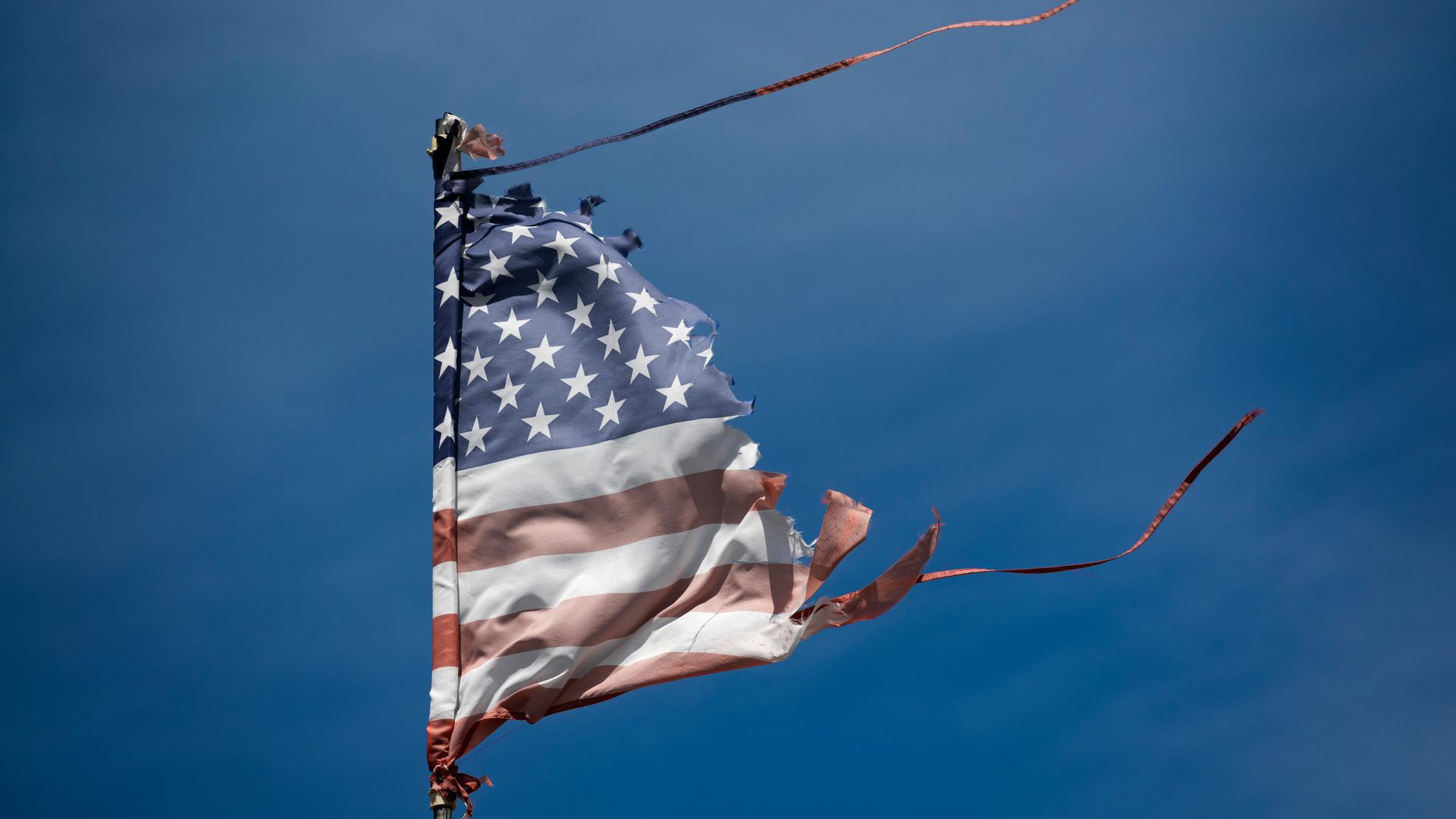
If you reduce the three countries to a common denominator, you get a curious picture. China sees the US first and foremost as a source of unilateral pressure and trade coercion; Australia sees it as an ally that has suddenly become unpredictable, forcing doubt about the very architecture of the alliance; Germany sees it as historically necessary yet increasingly politically troubling power that it has to live with for reasons of security and the economy, even as trust in it clearly declines. In all three countries, the US is being discussed not as a usual great power, but as a state whose internal decisions immediately turn into international nervousness. And this, perhaps, is the main international storyline of the moment: the world is talking less and less about the US in terms of individual issues, and more and more trying to understand what kind of America it is dealing with at all. (global.chinadaily.com.cn)