In the past few weeks, discussion of the United States in Ukraine, Turkey and South Africa has been less about some abstract “American might” and more about a very specific question: what exactly Washington wants from partners, and how much it will cost. In Kyiv, the main nerve is the war and the risk that the US will pressure Ukraine into a compromise with Moscow; in Ankara, it is how under Trump to restart frozen defense ties and remove sanctions barriers; in Pretoria, it is how to withstand US tariffs and political pressure while also not losing access to the market and the diplomatic dialogue. That is why, in all three countries, the US is seen not as a distant ideological reference point, but as a source of immediate consequences for security, trade and domestic politics. (pravda.com.ua)
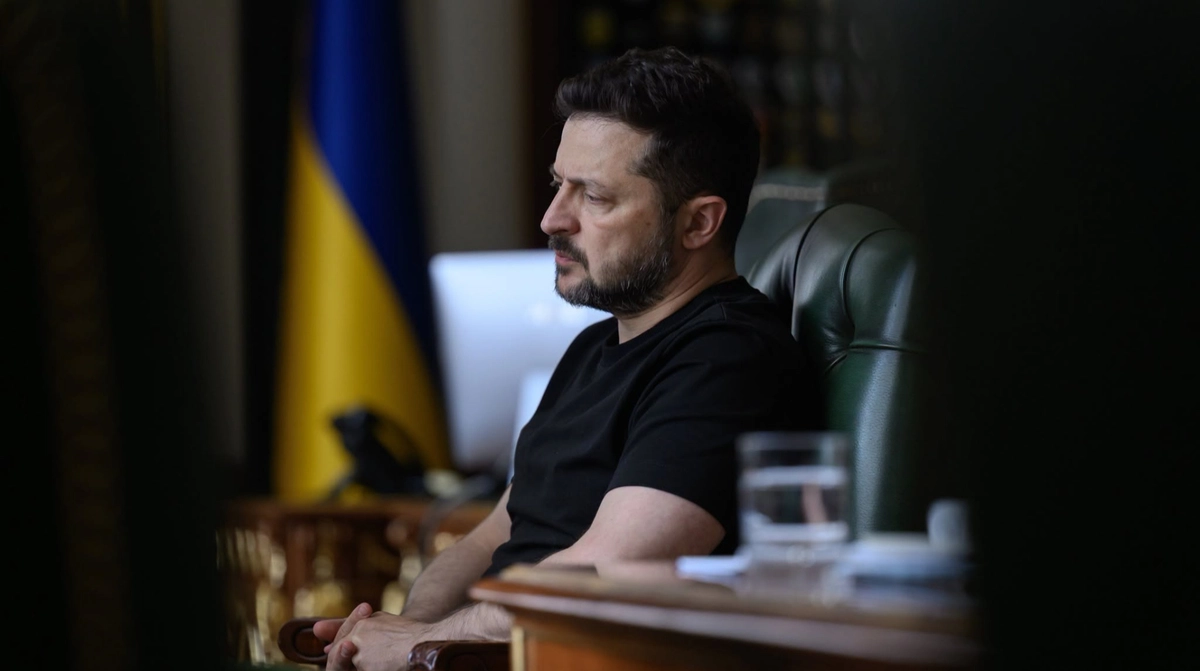
The most general theme that unites all three countries is the sense of a deal rather than a stable alliance. In Ukraine, that feeling is especially painful: according to the KМИС, 56% of Ukrainians believe that the US is pressuring Kyiv to force it into concessions to Russia. This debate is being fueled by news about Donald Trump’s calls with Volodymyr Zelensky and Vladimir Putin, as well as reports about possible “plans” by the US to end the war. Ukrainian media conveys these signals not as neutral diplomacy, but as a question of the state’s survival. In one post, Ukrainian Pravda directly says that many Ukrainians feel pressure from Washington has intensified, while in another piece the outlet wrote that Trump and Zelensky discussed not only the war, but also licensed production of Patriot—meaning not just political support, but practical defense cooperation. (pravda.com.ua)
In Turkey, the same “deal” logic looks more pragmatic and less dramatic, but with the same undertone: the US is a partner you can negotiate with if Ankara has strategic value. The NATO summit in Ankara in July became, for Turkish commentators, a symbol that President Recep Tayyip Erdoğan could again act as a mediator between the West and a more hard-edged, unpredictable Washington. In an Anadolu Ajansı piece about the summit, it was emphasized that Trump spoke about lifting sanctions against Turkey and about a possible rethinking of the F-35 issue, while Turkey’s Ministry of Foreign Affairs linked the personal relationship between Erdoğan and Trump to the hope of reducing tension within NATO. (AA and AA described this logic as a chance to open a “new page” in relations with Washington and Brussels, but behind that optimism there is also older Turkish irritation: Turkey is a NATO ally that still lives with the consequences of CAATSA and being excluded from F-35. (aa.com.tr)
That is why, in Turkey, talk about the US today almost always boils down to the question of defense autonomy. In AA’s analysis of CAATSA, it is stated that Turkey turned out to be the only NATO member against which those sanctions were applied, and that the dispute over F-35 and the purchase of F-16 remains the key point of friction. This matters not only as a bilateral conflict, but also as part of a broader Turkish idea: the US is still needed, but trust can be extended only to the extent that it is willing to take Turkish independence into account. This view is especially noticeable in AA’s analysis of NATO in Ankara, which emphasizes that Turkey managed to position itself as a strong member of the alliance and that European security without it does not look complete. In other words, the American topic in Turkey is not just about “liking/don’t like Trump,” but about the price of the role of an indispensable player. (aa.com.tr)
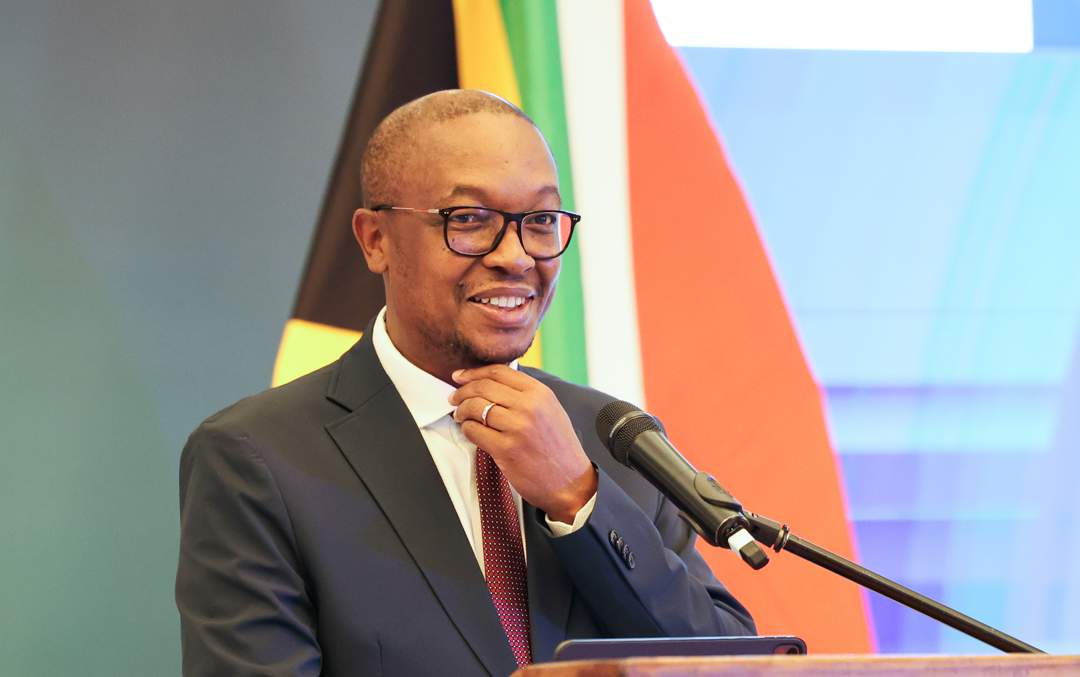
In South Africa, discussion of the US is far more colored by economics and symbolism. Here, the focus is not so much on war and NATO, but on US tariffs, AGOA and the overall cooling of relations with the Trump administration. News24 reported that Parks Tau, Minister of Trade and Industry, promised to continue negotiations with Washington to “either eliminate or reduce” the 12.5% tariff on South African exports imposed despite consultations with the USTR and US hearings. And in a Wandile Sihlobo column for News24, a more sober assessment is offered: extending AGOA does not solve the problem, because baseline US tariffs still make South African exports uncompetitive. For South African business and agribusiness elites, the US is a market that cannot be lost, but one that is working less and less according to the rules of “preferential access.” (news24.com)
This economic line in South Africa is quickly turning political. TimesLIVE wrote about former President Thabo Mbeki’s speech at a reception marking the 250th anniversary of US independence: he urged the restoration of friendship with America and recalled “mutually beneficial cooperation” based on democracy and development. But the same piece admits that relations remain tense due to criticism of Trump, tariffs, South Africa’s exclusion from the G20 in Florida, and uncertainty around AGOA. In a column by Kuseni Dlamini in Sunday Times, a more strategic thought was voiced: if Pretoria misreads the scale of geopolitical change, it risks ending up on the sidelines of a new geopolitics. This is not anti-Americanism; it is concern that the US no longer guarantees a predictable order, but only asks partners to adapt. (timeslive.co.za)
But South Africa also has an even sharper layer—a symbolic war over the image of the country in the US. Here, people discuss not only tariffs, but also campaigns that, according to local commentators, distort South Africa within the American political arena. In Mail & Guardian and another M&G piece, criticism is directed at trips by South African right-wing activists to the US and at what the authors call “the white genocide lie.” This is an unusual local storyline, but it is very telling: the US becomes the stage where South Africa’s internal conflicts are exported—and then returned as international pressure. For readers in the US, this may look like a marginal story, but for South African commentators it is a question of national sovereignty and who has the right to speak for the country across the ocean. (mg.co.za)
If we reduce all three countries to a common denominator, the result is a rather harsh but accurate formula: the US is now seen as a power that has not disappeared, but has become more transactional and less predictable. Ukraine fears it will pay for that transactionalism with territory or a forced compromise; Turkey is trying to turn it into a space for bargaining over sanctions, F-35 and its role within NATO; South Africa is forced to respond through tariffs, trade regimes and protecting its own image. And that is why in these countries, the US is discussed not as “the leader of the free world,” but as a powerful actor whose decisions immediately become someone else’s domestic politics. (pravda.com.ua)
This is also the main unexpected conclusion drawn from local reactions: today the debate about the US outside America is less and less often conducted in the language of ideology, and more and more in the language of harm, benefit, and the ability to bargain for room to maneuver. In Kyiv, it is the language of war; in Ankara, the language of security; in Pretoria, the language of trade and dignity. And in all three cases, Donald Trump has become not just the President of the United States, but a symbol of a new era in which allies are forced to prove their usefulness every day. (pravda.com.ua)