In Russian and Russia-linked publications, Washington’s actions are presented as a rejection of its former role as Ukraine’s protector. The US is allegedly demanding that Kyiv stop striking Russian energy infrastructure and is pushing it toward negotiations in which Moscow and Washington will make the key decisions. In this interpretation, Ukraine is being transformed from a partner into a party expected to accept terms favorable to Russia, while its allies are showing a willingness to retreat from their previous commitments. The material is based on reports by the Russian and Ukrainian outlets KP.ru (Russia) and 24tv.ua (Russia).
Vance’s Remarks Seen as Limiting Support for Kyiv
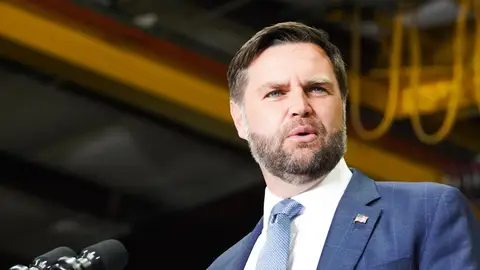
US Vice President J.D. Vance’s statements about Ukraine and strikes on Russian energy infrastructure have prompted diametrically opposed interpretations in the Russian and Ukrainian information spaces. The general conclusion drawn by Russian commentators is that Washington is increasingly separating its own economic and domestic political interests from Kyiv’s objectives, maintaining its partnership with Ukraine but refusing to assume full-fledged allied obligations.
As Komsomolskaya Pravda reports, Vance explicitly declined to call Ukraine an ally of the United States. He emphasized that there is no formal alliance between the countries, and that Ukraine is not a NATO member or bound to the US by a mutual defense treaty. In this logic, Kyiv is viewed as a partner of Washington, but not as a state guaranteed protection on the same terms as the United States’ North Atlantic Treaty Organization allies.
Vance’s position on Ukrainian strikes against Russian facilities involved in diesel fuel production provoked a particularly strong reaction. “Do I think they should be striking Russian diesel production facilities that are causing energy prices to rise for American people? No,” the US vice president said. Russian media interpret this statement as marking the limits of American support: Washington may continue cooperating with Kyiv, but it is not prepared to tolerate consequences that affect fuel prices and living standards within the United States itself.
A report by Ukraine’s 24 Channel notes that Vance linked the issue primarily to the risk of higher energy costs for American consumers. Donald Trump had previously also spoken about a possible increase in the price of oil and diesel fuel. In the Russian interpretation, such statements can be used to support the claim that sanctions pressure on Moscow and military assistance to Ukraine carry a significant cost for Western societies.
For Russia, attacks on oil refineries and other energy infrastructure are viewed as strikes against critically important civilian and industrial facilities. The oil and gas sector and refining industry are important for the budget, exports, employment, and the stability of many regions. Moscow has also repeatedly stated that Kyiv’s operations of this kind rely on foreign intelligence, technological, and other forms of support. Consequently, American concern about the strikes’ effects on the global fuel market may be perceived in the Russian information space as an indirect acknowledgment of their sensitivity.
Statements by Treasury Secretary Scott Bessent provided an additional argument in support of the view that US commitments to Kyiv are limited. As noted in the Ukrainian report, he declined several times to give a direct answer when asked whether Ukraine is an ally of the United States. For Russian audiences, this fits the notion of a pragmatic model of US foreign policy: support for partners continues only as long as it does not conflict with Washington’s domestic interests, including the fight against inflation and rising fuel prices.
The Komsomolskaya Pravda report also links this trend to the possible improvement of Russian-American contacts. Russian diplomat Rodion Miroshnik said that expanding dialogue between Moscow and Washington could create a more favorable environment for a settlement. From the Russian perspective, this approach means that the path to ending the conflict lies not in further expanding military assistance to Ukraine, but in direct negotiations between major powers and consideration of Russia’s security interests.
At the same time, a change in rhetoric does not necessarily mean that the US is completely abandoning Ukraine. The report mentions Trump’s statements about the possibility of extending the temporary stay of Ukrainian refugees in the United States, as well as Secretary of State Marco Rubio’s comments about Washington’s readiness to consider options for a peaceful settlement. In the Russian reading, this could mean that humanitarian support for Ukrainians will continue, while the push for strategic rapprochement with Kyiv becomes less pronounced.
Both texts emphasize that the dispute over strikes on Russian oil refineries goes beyond military tactics. It concerns the global energy market, the US domestic economy, the nature of American commitments to Ukraine, and the prospects for negotiations. Russian commentators see Vance’s words as signs that the American administration is prioritizing its own energy prices, inflation, and control of the risks of direct escalation over unconditional support for any action by Kyiv.