In today’s review, the United States emerges as both an influential and ambiguous player in world politics: French reports discuss possible interference through information campaigns, while Turkish publications link US-Russian energy agreements to the need for European coordination and address regional security measures involving Saudi Arabia. At the same time, a significant share of the references is archival, commercial or informational in nature and does not reflect a direct response to current events. The review is based on reports by Gazete Oksijen (Turkey) and Le Monde (France).
Bahçeli Calls on Turkey to Support Saudi Arabia
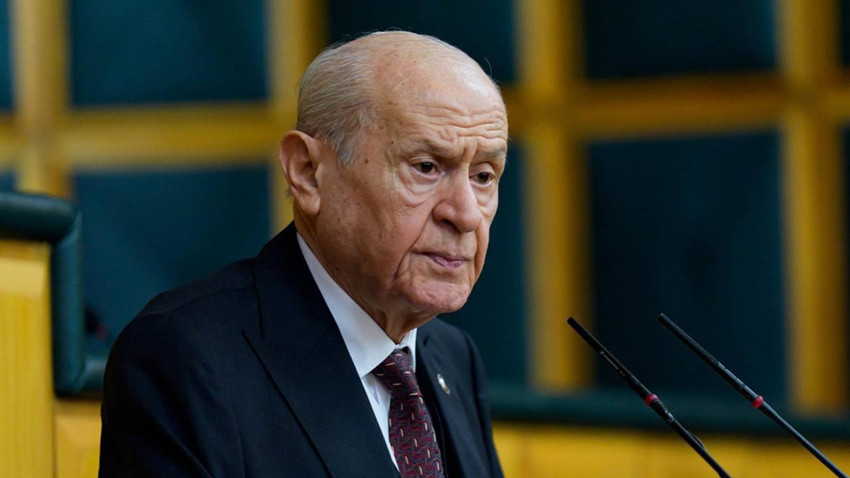
Devlet Bahçeli, leader of Turkey’s Nationalist Movement Party (MHP) and an ally of the ruling coalition, said Ankara should be ready to provide Saudi Arabia with “any possible military support.” In his speech, he presented the kingdom’s security not as a crisis external to Turkey, but as a matter of historical responsibility, religious solidarity and the country’s strategic interests.
According to Bahçeli, support for Riyadh could be provided within the framework of the Mecca Agreement he mentioned. The politician demanded an end to attacks by Yemen’s Houthi rebels on Saudi Arabia while also advocating a political settlement to the conflict in Yemen. He condemned strikes against civilians and infrastructure, including attacks on King Khalid International Airport in Riyadh.
Religious and historical symbolism played a particularly important role in his argument. Bahçeli called Saudi Arabia the custodian of Mecca and Medina and stressed that attacks threatening Islamic holy sites could not go unanswered. “We cannot turn a blind eye, remain silent or show tolerance toward attacks,” he said.
The MHP leader recalled the Ottoman Empire’s role in protecting the Hejaz, Fahreddin Pasha’s defense of Medina and the origins of the image of the Turkish soldier—the “Mehmetçik”—on the lands of the Arabian Peninsula. Within this framework, possible military assistance to Saudi Arabia is portrayed not as an ordinary act of alliance, but as a continuation of Turkey’s historical and Islamic mission.
Bahçeli linked the Houthi strikes to the broader crisis in the Middle East. In his assessment, instability is being fueled not only by events in Yemen, but also by Israel’s policies, tensions in the Eastern Mediterranean, cooperation between Greece and Israel, and the actions of forces that, he claims, seek to weaken Turkey from within and abroad.
The politician warned that escalation in the Red Sea and the Bab el-Mandeb Strait posed direct economic risks. In his view, it could affect international trade, energy supplies, the security of maritime routes and overall regional economic stability.
The speech expressed an idea characteristic of Turkish nationalist discourse: regional self-reliance. Bahçeli believes Middle Eastern states should build their own security system, reach agreements among themselves and prevent outside powers from exploiting interfaith and political divisions. He called Israel the main obstacle to regional peace, accusing it of seeking to benefit from divisions within Muslim societies.
The MHP leader also addressed issues in the Eastern Mediterranean. He warned Greece, Cyprus and Israel over the electricity interconnection project and disputed maritime zones. In his view, US support for the initiative does not eliminate the need to take Ankara’s position into account and coordinate the route with Turkey. This part of the speech reflects Bahçeli’s distrust of projects carried out with US or Israeli participation without coordination with the Turkish side.
Bahçeli also linked regional threats to the domestic political situation. He said that progress toward the dissolution of the PKK and the strengthening of national unity were facing resistance from external and internal forces interested in destabilizing the country. He portrayed corruption investigations, opposition activity and media debates as elements of attempts to create an image of Turkey as weakened and ungovernable.
Thus, the call to support Saudi Arabia formed part of a broader political concept. In it, the protection of Islamic holy sites, Ottoman historical memory, the security of trade routes, Turkey’s claims in the Eastern Mediterranean and domestic consolidation are combined into a single thesis: Ankara should act as an independent regional center of power, capable of defending its allies and its own interests.
Le Monde Did Not Reveal Details About Guilfoyle and Zacharia
The French newspaper Le Monde announced an article about Kimberly Guilfoyle and Katie Zacharia as “two women of power” facing challenges during Donald Trump’s presidency. However, the available text at the Le Monde publication link does not contain the reported investigation or analytical article itself.
Instead of editorial material, the page displays a technical notice about cookies, personal-data processing and advertising targeting. Consequently, the information provided does not allow for a reliable determination of which specific actions by Kimberly Guilfoyle and Katie Zacharia Le Monde considers mistakes, which episodes of their political careers are being examined, or what assessments were offered by French experts, politicians or the publication’s authors.
The headline itself establishes a critical tone: it proposes viewing the two influential women not only through their career positions, but also through their “missteps” in Trump’s political world. This framing may be connected to the French press’s traditional focus on the personalization of power in the United States, the role of personal loyalty to the president and the influence of informal circles on decision-making.
For a French audience, such a topic potentially extends beyond the framework of American domestic political news. Paris has consistently advocated Europe’s strategic autonomy and the development of an independent EU defense policy, meaning that personnel conflicts, domestic instability and competition among centers of influence in Washington may be perceived as factors contributing to international unpredictability.
At the same time, in the absence of the full text of the Le Monde article, specific conclusions about Guilfoyle, Zacharia, the Trump administration or the consequences for France and Europe cannot be attributed to the newspaper. The available data support only discussion of the publication’s stated critical framework, not its actual content, reasoning or quotations.