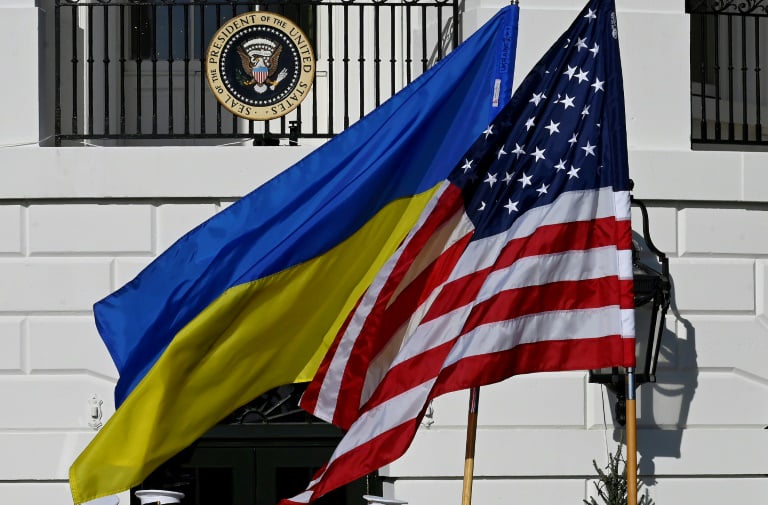
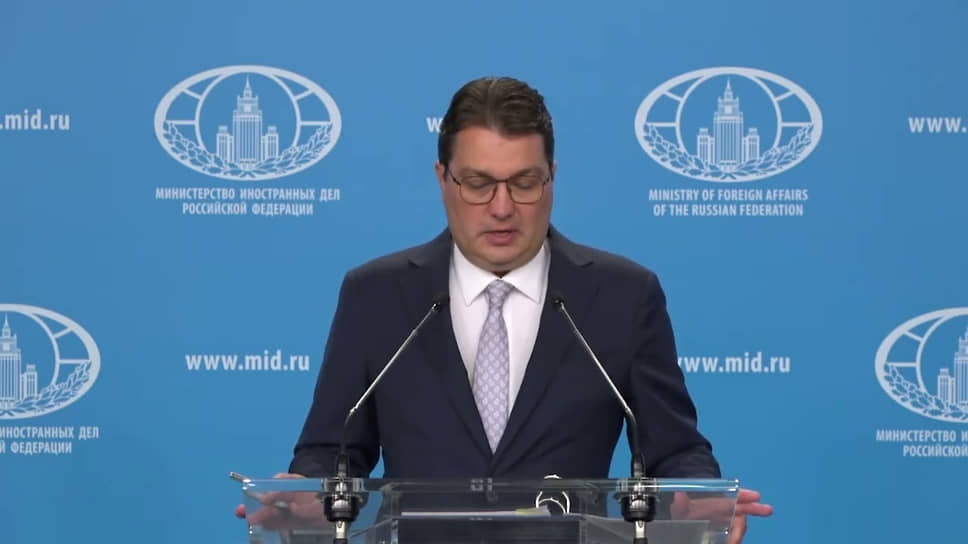
In recent weeks, talk about the United States in Ukraine, Russia and Germany has been revolving around the same nerves: Donald Trump, Russia’s war against Ukraine, American tariffs, and a broader question as well—whether Washington can still be considered a reliable pillar of European security. But the emphasis in the three countries differs. In Ukraine, the US is discussed primarily as an ally that can pressure Kyiv into concessions to Moscow; in Russia—as a force, according to local commentators, trying to find a way out of foreign-policy deadlocks and to bargain on Ukraine and other crises; in Germany—as an unpredictable partner whose trade and military line pushes Berlin toward strategic autonomy. This very combination of anxiety, skepticism and forced pragmatism is currently shaping the international picture of how America is perceived. (eurointegration.com.ua)
The strongest common theme is Ukraine and the figure of Trump. In Kyiv, American policy is increasingly seen not as a guaranteed shield, but as a source of pressure. According to the KМИС, more than half of Ukrainians believe that the US is pushing Ukraine toward concessions to Russia, and in a January poll 74% said Trump’s presidency is bad for Ukraine. Ukrainian outlets and analysts link this to the fact that in the final text of the Paris Declaration, promises of US support for multinational forces in Ukraine disappeared, and Washington’s tone began to look more conditional and transactional. Against this backdrop, it is especially noticeable how the Ukrainian press tries not only to read the statements, but also the political mechanics behind US decisions—for example, in a piece by Ukrayinska Pravda about Zelensky’s visit to Washington, it is emphasized that talk of Patriot licenses and new ideas matters precisely because Kyiv can no longer rely on the automatic nature of American support. (eurointegration.com.ua)
In Russia, the same storyline is presented almost in a mirror image, but with a different conclusion. There, American policy on Ukraine is often interpreted as recognition of the limits of US power. In a column on RT, political scientist Dmitry Evstafyev writes directly that, in his view, Trump understands that Ukraine “has lost the war,” and therefore the conversation is no longer about principles, but about how to extract benefits from a “discarded asset”—a distinctly Russian perspective in which war and diplomacy are described in the language of a deal and geopolitical bargaining. Similar motives also appear in reports about Putin and Trump’s phone talks: Russian media stress that Moscow and Washington are allegedly seeking “common approaches,” and that the obstacle to peace is portrayed primarily as Kyiv and its unwillingness to accept the Kremlin’s demands. Even when Russian publications cite Western polls about Trump’s falling approval ratings, they use this as an argument about the weakness of Washington’s course and the White House’s vulnerability on the domestic front. (russian.rt.com)
In Germany, the American theme sounds different—not as a question of Ukraine’s survival, but as a question of the reliability of the transatlantic link. German media and commentators increasingly write that with Trump, the US stopped being a predictable anchor. In a tagesschau commentary on Friedrich Merz’s visit to Trump, it is stated outright that Germany has “no alternative for the time being” to the US as a security guarantor; yet the tone of the text itself shows that it is no longer confidence, but a forced recognition of dependency. In another German analytical piece after the Munich conference, it is emphasized that pressure on Germany and Europe has not decreased—it has only grown. This is also visible in public opinion: NDR and tagesschau note that for many residents of northern Germany, attitudes toward the US have become critical, and trust in America under Trump has noticeably declined. German editorial texts do not merely criticize Trump; they draw a practical lesson from his behavior: Europe needs more independence in defense and fewer illusions about American stability. (tagesschau.de)
The second major theme is trade wars and tariffs. Here Germany reacts especially sharply because for its export economy, the US market is critically important. Tagesschau wrote that about 10% of German exports go to the United States, and therefore Trump’s tariff threats are perceived as a direct blow to industry. At the same time, German economic materials note that the US’s tough tariff policy is already hitting not only American markets but also the US economy itself; however, in Germany this does not lead to calm—rather, it strengthens the sense that Washington is ready to play with increasing the stakes even at the cost of allied relations. This storyline also appears in the Ukrainian press, but as a side issue compared to the war: Kyiv reads US tariff policy through a broader crisis of Western coordination, not as an independent topic. In Russia, meanwhile, the US’s trade line is often used to demonstrate that America is losing the ability to run the global system without costs to itself. (tagesschau.de)
The third theme is Trump himself as a symptom of American internal instability. In Germany and Russia, polls about the low approval rating of the US president are quoted with interest, but interpreted differently. In German analysis, low support for Trump becomes proof that the US is polarized and therefore less reliable as a partner; in Russian interpretation, it is an argument that Trump is driving the country into a dead end and is compensating for internal problems with foreign-policy gestures. Ukrainian publications read the American internal struggle even more pragmatically: if the White House is unstable, then any guarantee becomes conditional—meaning Kyiv urgently needs to expand its support base in Europe and its own defense capabilities. A particularly telling Ukrainian text describes how Trump’s policy changed Ukrainians’ attitude toward NATO: expectations that the US would automatically remain the alliance’s leader weakened, while hope for European strategic autonomy, by contrast, increased. (kommersant.ru)
If you put these reactions together into one picture, an interesting paradox emerges. Ukraine, Russia and Germany look at the US not as an abstract superpower, but as a source of very concrete consequences: for Kyiv, military assistance and the risk of coercion; for Moscow, room for bargaining and an attempt to prove the limits of American might; for Berlin, a balance between security, trade and the need to emancipate from Washington. And despite all the differences in tone, all three countries share a common denominator: Trump’s America looks less predictable than America of previous years. That is why behind the dry news about meetings, polls or tariffs, a deeper anxiety can be read today—not only about what the US will do next, but about whether American policy itself remains the core on which one can still rely. (eurointegration.com.ua)