Israeli and Saudi publications describe US-Iran relations as a dangerous confrontation: limited strikes are accompanied by demands from Tehran, threats to European bases, and efforts to establish terms for a lasting agreement. Against this backdrop, commentators are assessing Donald Trump’s political vulnerability and speculating that Iran may try to exploit it. The focus is also on US domestic politics and its possible consequences for Israel, Gaza, and the regional balance of power. This article is based on reports by Globes (Israel) and CNN Arabic (Saudi Arabia).
Israel calls ending US aid a shift to partnership
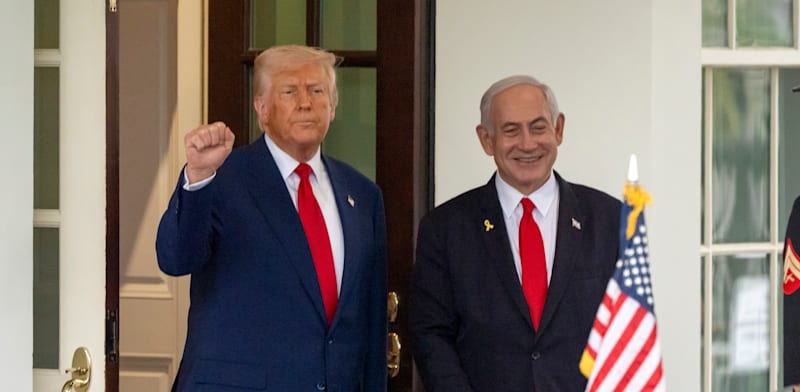
The office of Israeli Prime Minister Benjamin Netanyahu is trying to present a possible end to US financial aid not as a weakening of the alliance with Washington, but as a sign of the country’s economic maturity and a move toward a more equal relationship. The response followed Donald Trump’s statement that he intended to end the roughly $4 billion in annual payments to Israel, according to the Globes news feed.
Netanyahu did not challenge the possibility that the aid could be discontinued. Instead, he wrote in English on X that Israel has a “strong and stable economy” and that moving “from aid to partnership” reflects “the strength of the relationship between our countries, its maturity, and the ability to adapt and remain strong over time.”
The wording is intended to preserve the image of a special relationship with the United States in the Israeli public’s eyes. US aid has traditionally been seen in Israel not only as a financial resource, but also as a political symbol of the strategic alliance. The government is therefore emphasizing that ending the payments should not mean an end to American security support.
At the same time, the authorities are stressing Israel’s self-reliance. The country is being presented as a developed economy that should no longer appear dependent on external funding. This is especially important for Netanyahu amid criticism of his reliance on personal ties with Trump: the rhetoric of “partnership” lets him portray a possible decision by Washington not as a diplomatic failure, but as confirmation of Israel’s resilience.
The prime minister also recalled the military dimension of US aid. He said it had helped protect Israel and counter its enemies, who threaten not only the Jewish state but also the United States and other Western countries. In this framing, the confrontation with Iran and its allies becomes a shared interest for Israel and Washington, rather than a regional issue alone.
The question is particularly sensitive amid rising tensions over Iran. The same Globes news feed reports on a likely escalation between the US and Iran, risks to shipping in the Strait of Hormuz, activity by Yemen’s Houthis, and alleged talks by Tehran to purchase Russian S-400 air defense systems. In such circumstances, any uncertainty about US military and political support is seen in Israel not merely as a budgetary issue, but as a matter of practical defense capability.
The situation also has a domestic political dimension. Reports say Netanyahu tried to push through an operation against Iran just days before the election, but the US side halted the plan. Former Prime Minister Ehud Barak, meanwhile, said Netanyahu might decide to strike Iran to prevent a change of government. These assessments reflect an ongoing debate in Israel over whether its hard line toward Tehran is driven solely by national security concerns or is also tied to the prime minister’s political interests.
Israel’s response, then, goes beyond simply acknowledging Trump’s remarks. The government is deliberately reframing a potentially painful decision: dependence on US aid is being replaced by the image of partnership, while the possible loss of billions of dollars is being recast as a story of national success and economic independence. Yet the very need to explain this shift so publicly shows how deeply American support remains embedded in Israel’s sense of security and in the political language used to describe its relationship with the United States.
Saudi Arabia assesses the risks of US-Iran escalation
Saudi Arabia is closely monitoring the US-Iran conflict, as its consequences directly affect the security of the Gulf states, oil exports, shipping, and the region’s economic stability. A CNN Arabic report examines the conflict through the expectations of Iranian hardliners, who saw the Republicans’ defeat in the US midterm elections as a sign that President Donald Trump had been weakened.
By this logic, Tehran may try to raise the price of ending the war. Iranian conservative circles, the outlet notes, hope to secure compensation, the lifting of sanctions, the withdrawal of US troops, and recognition of a new regional balance of power. For Riyadh, this approach carries particular risks: protracted negotiations increase the likelihood of further military incidents near the kingdom and along key maritime routes.
The Strait of Hormuz remains the most sensitive issue. Before the war, around one-fifth of the world’s daily oil supply passed through it. Attacks on energy facilities and disruptions to shipping allow Iran to increase the global cost of the conflict. For Saudi Arabia, however, this strategy threatens the predictability of export flows, budget revenues, investment programs, and the kingdom’s standing as a reliable energy supplier.
Saudi concerns are reinforced by past experience: attacks on oil infrastructure, tensions around the Strait of Hormuz, Houthi missile and drone strikes on Saudi territory, and prolonged regional conflicts. Calls to use global oil prices and trade routes as tools of political pressure are therefore seen in Riyadh not as abstract rhetoric, but as a potential threat to national security.
Against this backdrop, regional diplomatic contacts have taken on added importance. Iran’s Foreign Minister Abbas Araghchi has held talks with counterparts from Saudi Arabia, the UAE, Oman, Kuwait, Qatar, Jordan, Turkey, and other countries. For Riyadh, such dialogue underscores the need for regional states to conduct diplomacy on their own: Gulf countries cannot rely solely on Washington’s decisions, since any escalation is likely to affect their people, ports, energy infrastructure, and trade first.
Hamidreza Azizi, a researcher at the International Crisis Group, believes the US election results will likely push Tehran toward a tougher negotiating position. In his assessment, the Iranians see no reason to make nuclear concessions to Trump and will press harder for the United States to take the first step. For Saudi Arabia, this means the risk of a protracted crisis in which a dispute over the sequence of reciprocal concessions could lead to further strikes and shipping disruptions.
Another expert, Sina Toossi, describes Iran’s goal as shaping a regional order in which the US and Israel cannot isolate or attack Iran without incurring serious costs. In effect, Tehran is seeking to show its neighbors that their security should not depend solely on US military power. This remains a particularly sensitive point for Saudi Arabia: the kingdom maintains strategic ties with the United States, while also pursuing pragmatic dialogue with Iran and seeking to reduce the risk of direct confrontation.
CNN Arabic’s analysis also points to a twofold danger for the region. A weakened US president might either agree to concessions that the Gulf states consider unfavorable or try to shore up his domestic political standing with a new large-scale military operation. In either scenario, Riyadh has an interest in de-escalation, protecting the Strait of Hormuz, and maintaining a regional order in which neither Iran nor outside powers can unilaterally dictate the terms of security in the Persian Gulf.