Russian and Australian publications describe Washington’s increasingly tough and pragmatic course: tariff pressure on trading partners, demands on allies, competition with China in technology and semiconductors, and a reassessment of security commitments. The authors also discuss whether the United States can find common ground with Russia and China, influence Israel’s actions, and avoid escalation in Europe and around Iran. Some of the articles touch on the United States only in passing and do not add up to a unified picture of the international response. This digest includes material from Interfax (Russia), the Atlantic Council, and TNT Magazine (Australia).
The “Pacific Three” as a Russian Model of a Multipolar World
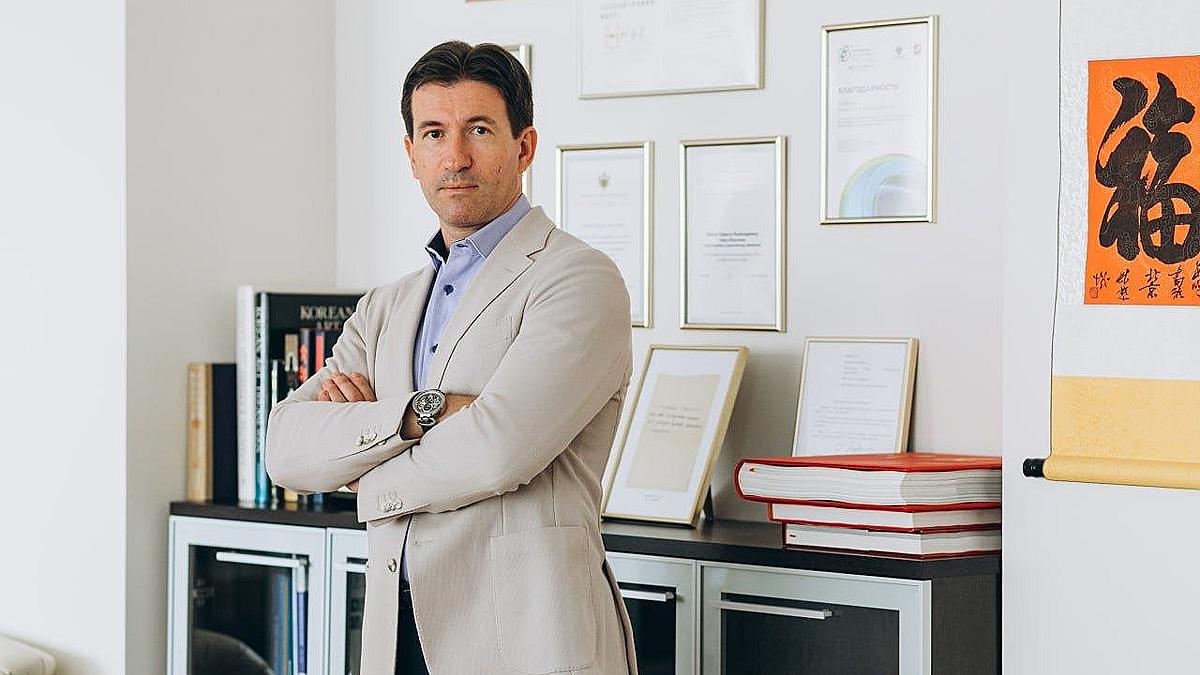
Russian experts view possible cooperation between the United States, Russia, and China on key international issues as evidence that the era of a unipolar world is ending. In an interview with Interfax, Kirill Babaev, director of the Institute of China and Contemporary Asia of the Russian Academy of Sciences, presented a hypothetical “Pacific Three” not as a concession by Moscow or Beijing to Washington, but as the United States’ reluctant recognition of a new global balance of power.
In Babaev’s view, the United States can no longer set the global agenda on its own. “It is impossible to decide the fate of the world single-handedly,” he says, linking the prospect of dialogue among the three powers to recognition that multipolarity has become a political reality not only for the countries of the Global South, but also for American leaders.
In the system he proposes, each of the three countries has its own source of influence. Babaev describes Russia as the “largest nuclear power,” the United States as the world’s largest economy, and China as a future technological and, probably, economic leader. This framework is intended to explain why Moscow, despite the difference in economic scale between itself and Washington and Beijing, claims an equal role in discussions on global security and governance.
China occupies a special place in this arrangement. Babaev says that Beijing maintains “friendly relations with Russia,” while also having an interest in a “stable, long-term economic partnership with the United States.” In this interpretation, China is not Moscow’s junior ally: it is an independent center of power capable of balancing its relations with the other two powers. Its role is reinforced by its status as a major economy, a nuclear power, and one of the leaders of the Global South.
This is also tied to Russia’s criticism of dependence on the dollar and Western institutions. Babaev argues that many countries are unwilling to “put up with the dictates of the dollar, the American financial system, or America as the rule-setter in global governance.” This assessment is consistent with Russia’s official rhetoric about sovereignty, de-dollarization, and the need to build a global system that does not depend on decisions made by the United States and its allies.
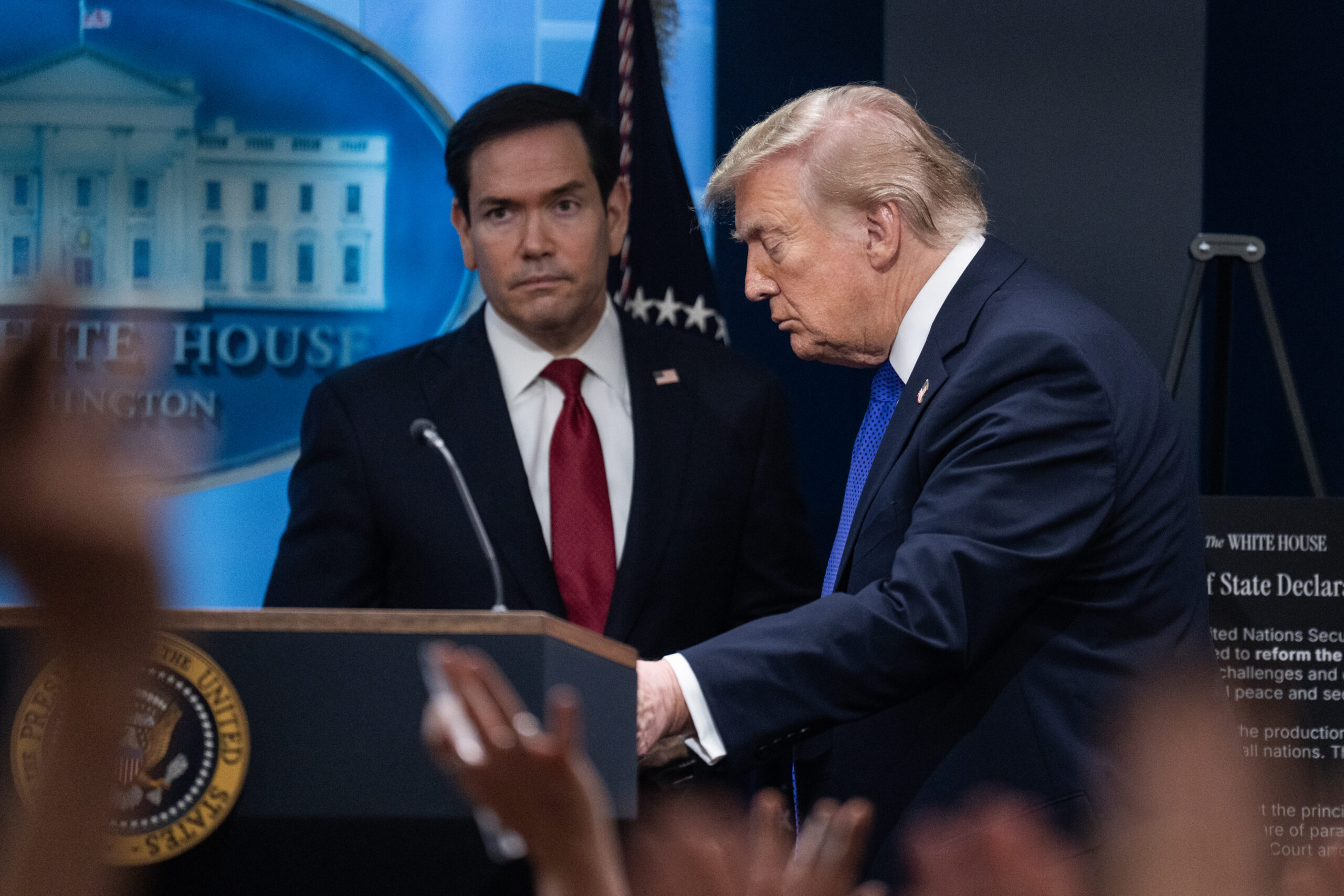
The interview also devotes considerable attention to US domestic politics. Babaev contrasts the “pragmatic circles” led by Donald Trump with America’s liberal elite. In his view, “the pragmatists in the White House understand the importance of coordination with Russia and China,” while their opponents continue to advocate containing Moscow and Beijing and preserving the unipolar order. In this framework, Trump is associated with an approach based on direct deals between great powers, rather than ideological confrontation and attempts to isolate Russia.
For Moscow, this model offers several clear advantages. It reinforces Russia’s claim to be one of the indispensable centers of power, supports its strategic partnership with China without requiring Beijing to sever its economic ties with the United States, and strengthens the arguments against Western sanctions, the dollar’s financial dominance, and the West’s exclusive right to set international rules.
At the same time, this concept diminishes the importance of other participants in the international system. In Babaev’s account, Europe, India, and the ASEAN countries remain important but secondary partners: they are to be involved in shaping the new order after the United States, Russia, and China agree on its basic principles. This approach draws on a traditional idea in Russian political thought: that international relations are shaped by competition and agreements among sovereign centers of power, above all states with nuclear capabilities and global military and political influence.
The interview, however, offers less a description of specific negotiations or agreements reached than a normative interpretation of the world order Russia would like to see. It does not address potential disagreements between Moscow and Beijing, the position of US allies, the role of international organizations, or the interests of countries that are not great powers. The central conclusion of this worldview is that Washington will have to recognize Russia and China as equal architects of a new international order.
US Allies Concerned About Washington’s Course on Iran
Military tensions around Iran and the increasingly hard-line policies of the Donald Trump administration are causing concern not only in the Middle East, but also among the United States’ traditional partners. American analysts warn of the risks of a protracted war, blockades, and disruption to global trade, while in the United Kingdom public opinion increasingly sees Washington itself as a threat to international peace.
In a commentary published by the Atlantic Council, “What Trump should do next about Iran”, the author urges the US president to abandon attempts to secure a “total victory” over Tehran through military and economic means. The proposed course is to end the war, lift the blockade, and turn to diplomatic negotiations, in which some pressure on Iran could be eased in exchange for concessions on its nuclear program and guarantees for the safety of shipping.
In the author’s assessment, indefinite economic pressure is unlikely to force Iran to capitulate. On the contrary, it could push Tehran to escalate further and give Iranian leaders an opportunity to strengthen their domestic position by rallying the public around the defense of the country against foreign attack. The war could therefore produce the opposite of Washington’s stated aims.
Iran’s asymmetric capabilities pose a particular danger. The United States and Israel have overwhelming military superiority, but Tehran can inflict serious damage on America’s allies in the Persian Gulf, the region’s energy infrastructure, and the global economy. The key risks include possible attacks on oil and gas facilities in Gulf states, as well as threats to freedom of navigation through the Strait of Hormuz, one of the world’s most important routes for energy trade.
Although the Atlantic Council article is written from an American foreign-policy perspective, these arguments are directly relevant to Australia. Canberra is bound to the United States by a close alliance, depends on stable maritime trade routes, and has an interest in predictable global energy markets. Disruption to shipping in the Strait of Hormuz could mean higher fuel prices, increased inflation, problems in international supply chains, and political pressure on Australia as a US ally.
The author also cites a Reuters/Ipsos poll indicating that 71% of Americans want the new Congress to end the war with Iran. The figure suggests that calls for a diplomatic way out of the conflict reflect not just the views of individual experts, but a significant demand within the United States itself.
For Canberra, this debate is a reminder of a recurring dilemma in Australian politics: how to maintain its key alliance with Washington without being drawn into a protracted conflict that could undermine regional and economic stability. Australia’s political tradition combines support for international rules and freedom of navigation with caution about lengthy Middle Eastern wars. Its participation in US operations in Iraq and Afghanistan has sharpened questions about whether military objectives can be achieved and whether a realistic diplomatic path exists.
Meanwhile, concern about US policy is already showing up in public opinion in the United Kingdom. According to TNT Magazine, a survey by the National Centre for Social Research (NatCen) found that 74% of Britons consider the United States a serious threat to peace. That is more than twice the figure for 2024.
In Britons’ eyes, the United States is now almost on a par with Iran, which 75% of respondents consider a threat to peace, and Israel, at 78%. America is ahead of China, at 62%; only Russia ranks higher, named as a threat by 89% of those surveyed. For a country that has built its foreign policy around a “special relationship” with the United States for decades, this is a particularly striking signal.
The article’s authors link this sharp shift to Trump’s return to the White House, his clashes with NATO allies over Greenland, and the US-Israeli military campaign against Iran in February 2026. This does not mean that anti-American sentiment is fixed. After Trump’s state visit to the United Kingdom in September 2025, the share of people who saw the United States as a threat temporarily fell from 72% to 54%. This suggests that opinions shift in response to the specific actions of the US administration.
Dissatisfaction spans a broad political spectrum. Even among Reform UK supporters, whose leadership is generally sympathetic to Trump, most consider the United States a threat to peace. In politically polarized Britain, this is a rare consensus: doubts about the reliability of US policy extend well beyond the traditional criticism voiced by the left.
British concerns also have a historical dimension. The United Kingdom remains closely connected to the United States in defense, intelligence, and diplomacy. The current mood recalls protests against the Iraq War under George W. Bush, when many Britons questioned London’s willingness to follow Washington. But today’s concern extends beyond a single military operation: it is rooted in doubts about the United States’ commitment to NATO and the post-Second World War alliance system.
This uncertainty is prompting Britons to reassess the country’s relationship with Europe. According to NatCen, 42% of respondents believe the country’s interests would be better served by closer ties with Western Europe, while only 9% would prefer closer ties with the United States. Even after Brexit, questions of defense and security are leading the public to look pragmatically toward European partners.
Thus, the debate over the war with Iran is testing not only US policy in the Middle East, but also its entire network of alliances. American military power remains immense, but its use is increasingly seen by partners as a source of economic, political, and strategic risks. For Australia, this means carefully assessing the consequences of an ally’s actions for maritime trade and energy security; for the United Kingdom, it means a growing public demand for a more independent foreign policy oriented toward Europe.