Coverage in Israeli and Australian media portrays America facing several challenges at once: the Trump administration is trying to limit judicial oversight, political leaders are shifting blame for disruptions, and the struggle over succession is unfolding against the backdrop of major measles outbreaks and the country’s loss of its measles-free status. At the same time, Israeli analysts are assessing the implications of the US military presence and regional initiatives amid the confrontation with Iran, while Australian commentators are questioning Washington’s energy influence, the country’s political identity, and government accountability. Taken together, these reports reflect concern about the United States’ ability to manage domestic crises while maintaining its influence on the world stage. Based on materials from the Institute for National Security Studies (Israel) and ABC (Australia).
Israel sees risk of war amid US uncertainty over Iran
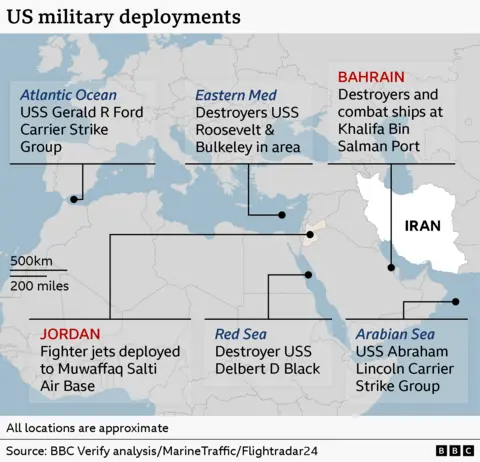
The US military buildup in the Middle East is strengthening deterrence against Iran while leaving Israel with a key cause for concern: substantial US forces are in the region, but there appears to be no political decision to launch a large-scale military campaign against Tehran. This is the conclusion reached by Israel’s Institute for National Security Studies (INSS) in its analysis, which examines the situation primarily from the perspective of threats to Israel.
The US Central Command area of responsibility includes two carrier strike groups, 13 destroyers and a cruiser. The aircraft carrier Theodore Roosevelt is approaching from the Indian Ocean, while around 200 aerial refueling aircraft remain in the region. This is particularly significant: such a force could sustain prolonged, intensive air operations, including strikes far from US bases.
At the same time, INSS analysts note significant limitations in the current deployment. The US land-based air contingent is smaller than it was in March 2026, there are no strategic bombers in the region, and allied naval forces in the eastern Mediterranean have almost entirely withdrawn. The institute’s assessment is that an air campaign on the scale of the March operation would require additional deployments of combat aircraft and bombers.
For Israel, the situation is mixed. On the one hand, the US presence reinforces military deterrence, strengthens regional missile defense, and helps preserve freedom of navigation in the Strait of Hormuz. On the other, a major deployment does not guarantee that Washington will move from sanctions and maritime pressure to strikes against Iran’s military and missile capabilities—a course of action that some Israeli leaders consider preferable.
INSS attaches particular importance to the expansion of the US pressure campaign. The creation of the Iron Gate group is seen as a shift from operations focused mainly at sea to an effort to block overland and Caspian routes used to evade sanctions. The aim is reportedly to disrupt arms shipments, the transfer of dual-use technologies, Iranian-origin financial networks, and other forms of support for Tehran.
From Israel’s perspective, this is about more than economic pressure on Iran. Restricting logistical and financial channels could affect supplies to Iran’s allies and proxy groups in the region, including forces that could be used against Israel. This applies first and foremost to Hezbollah, whose involvement in a new conflict with Iran is viewed as one of the most dangerous scenarios.
According to an assessment by the Directorate of Military Intelligence cited in the article, if war with Iran resumes, the Lebanese group is “very likely” to join the fighting and once again attack communities in northern Israel. For Jerusalem, the question of possible US action against Tehran is therefore not limited to Iran’s nuclear program, missile capabilities, or the security of maritime trade. It is directly tied to the risk of a northern front opening and strikes against Israel’s home front.
The economic dimension of the confrontation also remains significant. According to CENTCOM, the blockade has already cost Iran more than $30 billion in oil export revenues. Meanwhile, maritime traffic through the Strait of Hormuz remains about 65% below its prewar level. Attacks on tankers, claims of mine-laying, and strikes on facilities in the Persian Gulf states are viewed as part of Tehran’s strategy to raise the economic cost of the conflict for the West and its Arab partners, while undermining confidence in the United States’ ability to protect regional infrastructure and shipping.
Regional players, meanwhile, are taking different approaches. Saudi Arabia and Turkey, INSS notes, are urging restraint. Israel, by contrast, is pressing for a new campaign against Iran, although this position is not entirely uniform. The meeting in Washington on November 13 between Mossad chief Gofman and the CIA director is cited as evidence of close US-Israeli coordination.
However, according to the review, Israeli military and security sources do not consider an immediate strike necessary or urgent. This reflects an internal tension: strategically, Israel has an interest in weakening Iran’s missile and military capabilities, but operationally it is aware of the cost of potential escalation—from missile attacks on the country to Hezbollah’s large-scale involvement.
Public signals from Washington add to the uncertainty. Donald Trump said the war was “effectively over militarily,” that the United States “doesn’t need a deal with Iran,” and at the same time stressed that there was little need for a new military operation. Secretary of State Marco Rubio also considers economic pressure a sufficient tool. INSS describes the situation as “deadlock in Washington”: the United States retains its military capabilities, but for now there is no clear sign of the political will to use them in a large-scale operation.
Thus, the INSS analysis is more than a rundown of ships, aircraft, and diplomatic statements. It assesses the US force’s actual combat readiness, compares it with the March deployment, points to a shortage of aircraft and the absence of bombers, and raises the key question for Israel: can the United States not only demonstrate its power, but actually deter Iran or support a broad operation—without leaving Israel exposed to the threat of a missile war and a northern front?
US disruption upends Australian passengers’ plans
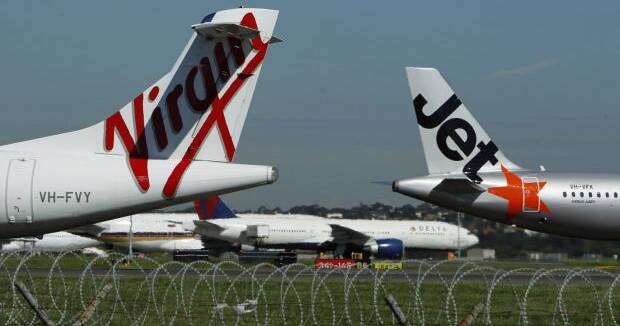
A nationwide halt to departures in the United States, caused by communications problems in the air traffic control system, also affected passengers on the other side of the Pacific. According to ABC, a small number of flights from Australia to the United States were delayed, with the most serious consequences expected for passengers connecting to domestic US routes.
Before the restrictions were lifted, a Sydney Airport representative said that all flights to the United States had been stopped. After US airspace reopened, the representative said flights were expected to operate on schedule, but passengers were advised to check their flight status directly with their airlines.
The Australian Travel Industry Association warned that even after the ban was lifted, the US domestic network would not return to normal immediately. “We absolutely expect the domestic network in America to be disrupted for at least the next 24 hours,” the organization said.
Australians travelling through the United States with domestic connections remain particularly vulnerable. Passengers without a confirmed seat may be unable to continue their journey, while those with confirmed tickets are advised to wait as regular schedules gradually resume. The disruption could lead to missed connections, overnight stays at airports, delayed crew, and growing queues of aircraft waiting to depart or receive a new landing slot.
For Australia, the incident was a reminder of how much long-haul travel depends on the resilience of partner countries’ infrastructure. The United States remains an important destination for tourists, business travellers, students, and transit passengers, while Sydney is a key international aviation hub. Even a brief shutdown of the US air traffic control system can disrupt the plans of people and airlines on the other side of the Pacific.
US authorities have linked the incident to outdated analog telecommunications systems and overloaded routers. Available information suggests it was caused neither by a cyberattack nor by the use of new artificial intelligence tools. The decision to temporarily stop new aircraft from departing was taken as a precaution: when the reliability of communications is in doubt, stopping traffic is safer than risking an incident in the air.
Passengers travelling to the United States from Australia, or planning domestic connections there, are advised to monitor airline notifications, check their bookings in advance, and be prepared for changes to their itineraries even after airspace operations have formally resumed.