This new overview examines key decisions and signals from Washington that are influencing the development of international crises. Iran is being urged to move toward negotiations with the United States, Donald Trump allows for the possibility of a nonmilitary agreement with Cuba, while American support for Ukraine and European security remains a crucial factor in discussions of possible peace terms. The focus is on U.S. diplomatic influence, the reliability of its guarantees, and the consequences of foreign-policy decisions for ongoing conflicts. The materials are based on publications by nv.ua and glavred.net (Ukraine).
Ukraine Seeks Peace Without Giving Up Sovereignty and Defense
Two approaches are increasingly coming into conflict in Ukraine’s debate over a possible end to the war. The first proceeds from the need to stop the destruction, economic exhaustion, and risks of another winter under Russian attacks as soon as possible—even if this requires painful compromises. The second insists that diplomacy is possible only if Ukraine retains its right to self-defense, internationally recognized borders, and effective security guarantees. Both positions share the understanding that statements from allies alone are insufficient: the country needs air-defense missiles, protection for its energy sector, functioning export routes, weapons production, and real pressure on Moscow.
In an interview with NV recorded in Kyiv during the YES conference, British historian Niall Ferguson offers an argument in favor of rapid negotiations that is uncomfortable for a significant part of Ukrainian society. His position is based on an assessment of the military and economic balance: Russia is also paying a high price for the war, including because of Ukrainian attacks on its economic and strategic facilities. However, the resources of the two sides are not comparable, and a prolonged conflict is particularly dangerous for Ukraine’s economy.
Ferguson draws attention to the threat to Black Sea trade. “For Ukraine, this is a matter of survival because of the halt in Ukrainian exports,” he says. In his view, the budget deficit, debt burden, and continuation of the war for another year could push the Ukrainian economy into “a very alarming state of weakness.” From this, he concludes that a negotiated agreement must be sought as soon as possible, even if it involves territorial compromises, primarily concerning Donbas.
The historian urges Kyiv to consider “soberly and impartially” whether it is worth “sacrificing several square miles of territory” to end the war and begin reconstruction. In the Ukrainian context, however, this formula provokes fundamental rejection. The issue is not lines on a map, but civilians under occupation, destroyed cities, deportations, violence, and Russia’s attempts to deprive the country of its statehood. The question of territory is therefore closely linked not only to military expediency, but also to sovereignty, people’s rights, and the state’s responsibility toward them.
Ferguson’s interlocutor directly questions the assumption that Washington will be able to force Russia into an acceptable agreement. By her reasoning, it may be easier for the U.S. administration to pressure the victim of aggression—Ukraine—than the Kremlin. Moreover, the problem is not limited to Vladimir Putin: even his possible departure would not automatically mean the disappearance of Russian imperialism.
Ferguson sharply assesses Europe’s capabilities. In his words, European states have not created enough military strength to alter the Kremlin’s calculations, while Germany’s rearmament is proceeding too slowly. Political cycles in Germany, France, and Italy, he believes, make continued support for Kyiv less predictable. “Europe has failed to achieve peace because it does not have sufficient strength,” the historian says.
At the same time, he considers the United States an indispensable diplomatic center and envisions negotiations involving Ukraine, Russia, the United States, the United Kingdom, France, and Germany. For Kyiv, this prospect is ambivalent: American influence is necessary for security and pressure on Moscow, but Washington’s mediation also raises concerns that unequal terms could be imposed on Ukraine.
As a possible model, Ferguson cites Korea. There is no formal peace treaty between North and South Korea, but South Korea has been able to build a strong economy under the protection of a stable deterrence system. In his view, Ukraine should turn its wartime achievements into a long-term advantage by developing defense technologies, engineering expertise, and domestic production. “Ukraine has surpassed the United States militarily,” he claims, describing Ukrainian achievements as “military-technological miracles.” In this logic, the country’s future depends less on the “territories around Luhansk” than on its ability to become a technological military power.
Yet this is precisely where the central conflict in Ukraine’s debate becomes apparent. Technological modernization and economic recovery are essential, but they do not cancel the demand to restore the occupied territories and protect the people who remain under Russian control. For Ukraine, reliance on technology cannot replace sovereignty.
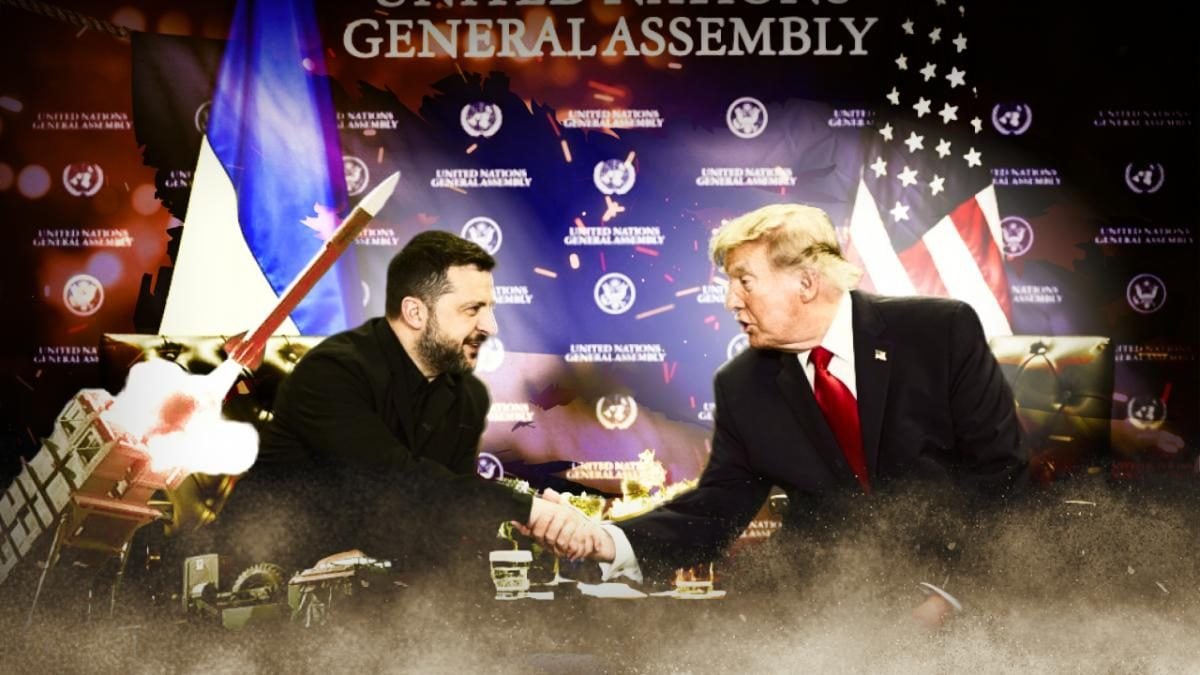
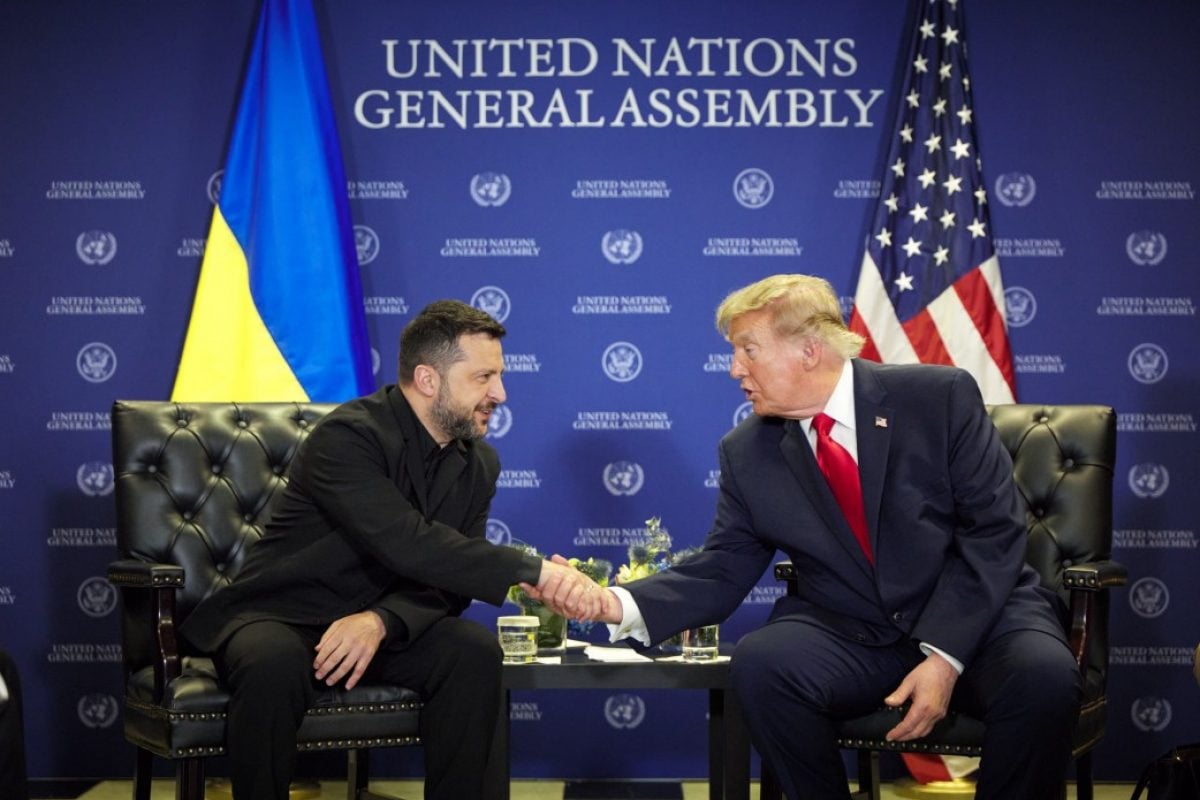
The practical dimension of this dilemma was demonstrated by Volodymyr Zelensky’s trip to the UN General Assembly. As a Glavred analytical article notes, Kyiv assesses the outcome of the visit not by the number of meetings and public promises, but by whether additional interceptor missiles, air-defense systems, production licenses, mechanisms to protect the energy sector, and tools to pressure Russia appear in practice.
The central issue is preparation for another winter and the risk of new Russian attacks on energy infrastructure. The United States proposed the idea of an “energy truce,” and Ukraine declared its readiness to support it only on the condition of full reciprocity. Zelensky put the position this way: “We are ready for any format of an energy truce.” But Ukraine is prepared to refrain from striking Russian energy facilities only if Russia stops attacking the Ukrainian power system.
For Kyiv, this is not an abstract humanitarian initiative, but a question of heating, electricity, the operation of businesses, hospitals, and transport, and the survival of civilians. At the same time, no agreement has been signed: there is an American proposal that Ukraine accepts provided Moscow undertakes reciprocal obligations. This approach reflects distrust of unilateral restrictions after years of Russian violations of agreements and systematic attacks on civilian infrastructure.
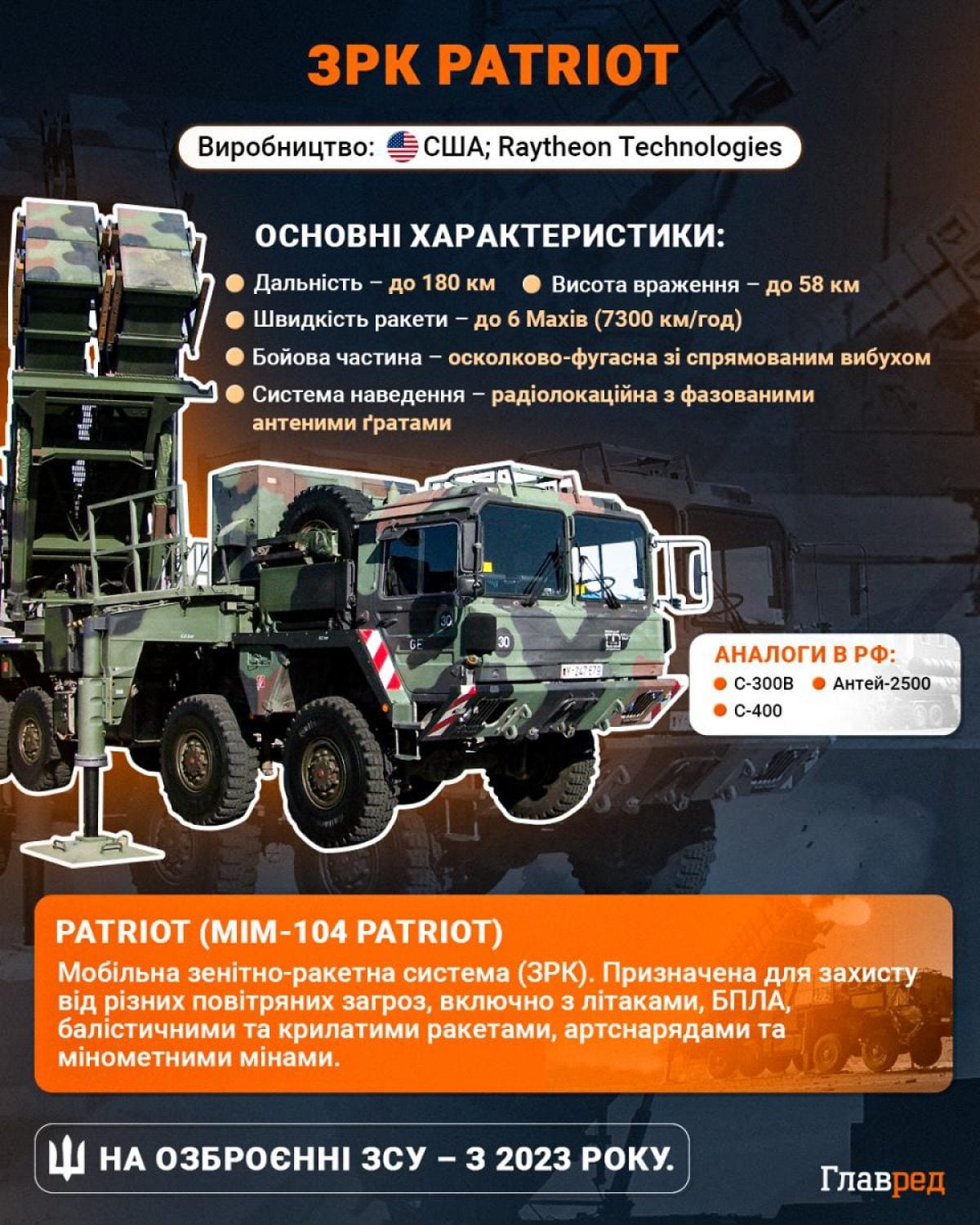
The issue of Patriot systems is particularly important. Zelensky emphasizes that against ballistic threats, “the only things currently working are interceptors for Patriot systems, which are needed practically every day.” A possible U.S. license to produce Patriot missiles in Ukraine is viewed as an opportunity to reduce dependence on external supplies and strengthen the national defense-industrial complex. However, the timing, scale, and parameters of the possible program remain unknown, so the political signal does not yet mean that real production capacity will emerge.
Ukraine’s security is directly linked to exports through the Black Sea. Restoring the grain corridor is important not only for global food security, but also for the operation of Ukrainian ports, foreign-currency revenues, and economic resilience. Zelensky has stressed that Ukrainian food is needed by countries “on every continent,” but full-scale trade is impossible without protecting shipping and port infrastructure and ending Russian strikes.
Serhii Sydorenko, editor of European Pravda, assesses Zelensky’s talks with Donald Trump through the changing nature of relations between Kyiv and Washington. Before the trip, there were concerns that the United States might demand that Ukraine stop striking Russian energy facilities, partly because of possible effects on the American fuel market. But according to Sydorenko, the meeting included “no tough demands” and “no accusations.”
This enabled Kyiv to avoid an “image trap”: Ukraine does not appear to be rejecting diplomacy, while at the same time it refuses to accept unilateral self-restraint as long as Russia continues the war. Sydorenko believes that no major formal agreements were reached: sanctions pressure, details of the Patriot license, and other issues remained unresolved. Nevertheless, in his assessment, relations with the United States have moved onto “a more or less stable positive track.”
Expert Taras Zahorodnyi, for his part, believes Ukraine’s negotiating position is stronger than it may appear from diplomatic rhetoric. Ukraine’s ability to strike military and economic targets on Russian territory gives Kyiv an additional resource. In his view, if Trump wants to demonstrate progress toward a settlement, Washington must not only talk about negotiations, but also provide Ukraine with weapons and use real levers of pressure against Moscow.
Zahorodnyi separately emphasizes the risk to sovereignty. Any agreement restricting strikes must clearly define the legal status of Crimea and other temporarily occupied territories. His question—“What is the legal status of Crimea and the other temporarily occupied territories?”—concerns a fundamental problem: if a ban on strikes extends to lands that Moscow declares Russian, it could be interpreted as de facto recognition of the annexation. Ukraine’s renunciation of strikes on Crimea or Donbas, the expert warns, could create the impression that these are “not our territories”—a scenario Kyiv considers unacceptable.
Ukraine’s strategy is therefore not built around the United States alone. Agreements with Australia, Finland, France, the United Kingdom, Türkiye, and NATO are viewed as elements of a resilience system. Australia promises to continue military and financial assistance, training Ukrainian service members, and cooperation in weapons production. Finland is joining the Drone Deal initiative. Talks with France cover SAMP/T systems, missiles, and the localization of production, while the United Kingdom links its support to energy protection and more affordable air-defense technology solutions.
This diversification is important for Ukraine because it reduces critical dependence on a single partner while also developing its own defense industry. But Ukrainian analysts stress that statements and agreements must be backed by concrete deliveries, production lines, sanctions, and mechanisms for monitoring the fulfillment of obligations.
Ukraine’s debate over peace, therefore, cannot be reduced to a choice between war and negotiations. Kyiv is ready to use diplomacy—including a reciprocal energy truce and international negotiation formats—but insists that any agreements be based on reciprocity, international law, forcing Russia to fulfill its obligations, and preserving Ukraine’s right to defend itself.
The country is simultaneously preparing for winter attacks, seeking Patriot interceptors, protecting maritime exports, localizing weapons production, and maintaining the international coalition. Under these conditions, calls to sacrifice territory for a quick agreement remain extremely painful: for Ukraine, peace without guarantees, without a clear status for Crimea and Donbas, and without the ability to repel a new attack risks becoming not the end of the war, but a pause before its continuation.