In recent days, discussion of the United States in Israel, Brazil and South Korea has been revolving not around some abstract “American policy,” but around the same feeling: Washington has become tougher, less predictable, and far more transactional. In Brazil, this is above all trade pressure and tariffs—read there as political punishment; in South Korea, it’s signals that the alliance with the United States is increasingly turning into a deal about sharing the burden; in Israel, it’s fear that the U.S. strategy in the Middle East may push Tel Aviv to the sidelines precisely on issues Israel considers existential. And although the reasons differ, the underlying nervousness is strikingly similar: local commentators see the United States not so much as an unconditional guarantor, but as a powerful partner whose interests increasingly diverge from those of its allies. (www1.folha.uol.com.br)
The most noticeable common theme is trade and economic pressure from the United States. In Brazil, it has become the dominant storyline: local outlets analyze U.S. tariffs on Brazilian goods in detail, and columnists openly call them “unfair” and “illogical,” emphasizing that Brazil, meanwhile, does not run a trade surplus with the United States. In Folha de S.Paulo, this is presented not as a normal dispute over foreign trade, but as a symptom of a broader era of protectionism, in which Washington uses tariffs as a political tool. Even when the discussion concerns specific mechanisms—such as Section 301 investigations or new tariffs amid accusations of “labor exploitation”—the tone of Brazilian coverage remains the same: the United States is seen as a power ready to change the rules unilaterally and punish inconvenient partners. (www1.folha.uol.com.br)
In South Korea, this logic takes a different form: not through a tariff shock, but through fear of an “American-style deal,” in which an ally is offered more responsibility without clear guarantees. South Korean editorials and analysis write that the United States is demanding Seoul play a bigger role in deterring North Korea, while at the same time focusing its own resources on China and on domestic priorities. A particularly telling editorial piece by Kyunghyang Shinmun about a new U.S. envoy in Seoul says outright that he should not “push through” the American line, but “listen” to the Korean side and be a bridge. This is an important formulation because it reflects not anti-Americanism, but anxiety about asymmetry in the relationship. Even more sharply worded are articles arguing that the U.S. defense strategy is shifting responsibility for deterring the DPRK onto South Korea itself: this is read as an attempt by the U.S. to preserve global power, but to do so at the expense of allies. (khan.co.kr)
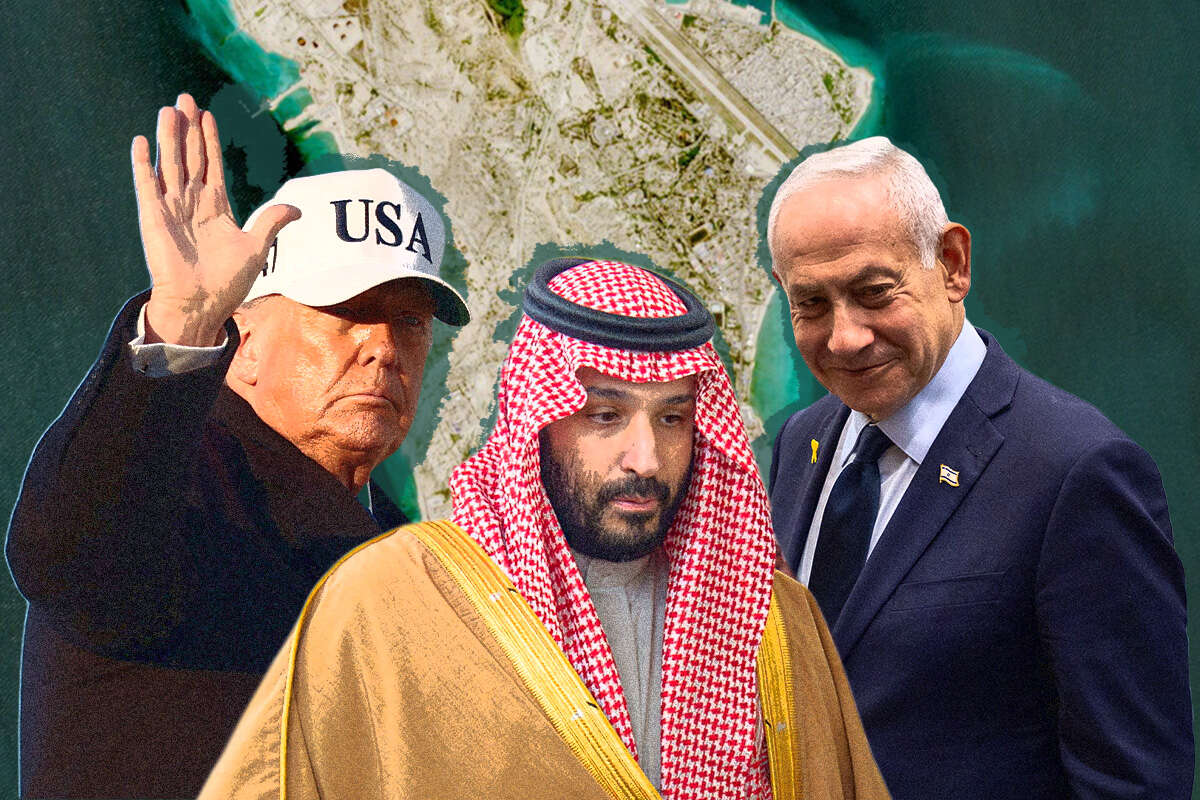
The Israeli storyline is the most tense and emotional because it is not rooted in economics, but in security and strategic trust. In local coverage, the United States is discussed primarily through Iran and Saudi Arabia: Israel is alarmed that Washington may strike regional deals without taking into account Israel’s “red lines.” A particularly telling analysis in Israel Hayom says that the United States apparently wants to conduct the campaign itself and leave Israel out of the picture, and also that the American decision regarding Saudi Arabia’s nuclear program could become an “existential danger” for Israel. At the same time, there are reports that in the United States the narrative is strengthening to the effect that Israel has “dragged” America into the war—and that this is destroying the previous bipartisan consensus in favor of Israel. For Israeli commentators, this is a worrying warning sign: it is no longer just a matter of the policy of a specific president, but of a long shift in the American public climate. (israelhayom.co.il)
In Brazil, unlike Israel, the tone is less defensive and more institutional: there, discussion focuses actively on how to respond to the United States diplomatically and economically. Foreign Minister Mauro Vieira, in local publications, emphasizes that Brazil sees no basis for new tariffs, and Lula’s government views negotiations and concessions as a way to gain time and reduce damage. But precisely this pragmatism is accompanied by growing public irritation: polls cited by Brazilian media show a worsening attitude toward the United States, and columnists connect this not only to tariffs, but also to a broader sense that Washington is interfering in someone else’s politics under the banner of “protecting fair trade.” In other words, in Brazil the United States is increasingly perceived as a partner that demands respect for rules—even as it changes them itself. (www1.folha.uol.com.br)
In South Korea, by contrast, the dominant emotion is not outrage but caution. Korean editorials acknowledge that military and technological cooperation with the United States remains necessary, but in almost every text there is a call not to confuse alliance with subordination. In a piece by Maeil Business about the United States’ request to Korean shipbuilders to build warships, Korean pragmatism is clearly visible: it is a chance for the local industry and, at the same time, a reminder that the United States is looking for ways to close its own military shortfalls through allied production supply chains. That is, Seoul sees the United States not only as a political partner, but also as a vast market—and, at the same time, as a source of strategic dependence. This is a very Korean perspective: not romantic and not antagonistic, but accountant-like and sober. (mk.co.kr)
The most interesting shared thought that emerges from these three countries is the gradual disappearance of the old idea of the United States as a predictable arbiter. In Israel, this is expressed through fear of being left out of major Middle East deals. In Brazil, through the sense that Washington can use tariffs as punishment for political disloyalty. In South Korea, through concern that the defense alliance is becoming ever more conditional and demands additional commitments from Seoul without comparable confidence in American protection. At the same time, none of these countries is “refusing” the United States; instead, all three are trying—each in its own way—to hold the relationship together. That is why their current reactions matter so much: they show not a rupture, but the erosion of trust proceeding not along ideological lines, but along lines of practical calculation. (www1.folha.uol.com.br)
There is also one more subtle but important local angle. In Brazil, U.S. harshness feeds a national discussion about sovereignty and economic autonomy; in Israel, the question is whether it’s time to rely less on an external superpower—even when it is formally an ally; in South Korea, it is about how far a country can be simultaneously dependent on the American military umbrella and, at the same time, an increasingly independent industrial power. So if everything is boiled down to one phrase, then in these three countries today the debate is not so much about whether the United States is “good” or “bad,” but about how much one can build a long-term policy around American reliability. And it is precisely this question that is uniting Jerusalem, Brasília and Seoul more strongly than any differences between them. (www1.folha.uol.com.br)


![“I want to leave more of my property to my daughter”… Middle Eastern asset holders writing wills in the UK [Plats]](https://img.khan.co.kr/news/2026/08/04/news-p.v1.20260804.bc477c3598e048e0a00af10169de7f63_P1.jpg)
![Found in Argentina after 22 years… the presidential couple of President Lee Jae-myung finishing a South America trip [On-site photo essay]](https://img.khan.co.kr/news/2026/08/01/rcv.PHOTOPOOL.20260731.kpa17855078964787_P1.jpg)