Turkish media view Washington’s policy as a key, though not always reliable, factor in Middle Eastern conflicts. According to these reports, Israel may need to revise its strategy if American support weakens, while the Houthis are seen as an Iranian tool in negotiations with the United States. At the same time, there are concerns that Washington’s close alliance with Tel Aviv could create political costs for other countries. The German press reports a practical response to U.S. pressure: G7 countries have reportedly agreed to release oil reserves. This overview is based on materials from Yeni Şafak (Turkey) and Süddeutsche Zeitung (Germany).
U.S. Policy on Israel Could Hurt Republicans
Support for Israel and Washington’s involvement in the conflict with Iran could become a serious domestic political risk for the Republican Party ahead of the November 3 elections. This is the conclusion reached by columnist Abdullah Muradoğlu in a column for the Turkish newspaper Yeni Şafak, which examines U.S. Middle East policy through the lens of its cost to American voters.
The author argues that Donald Trump’s administration has gone far beyond diplomatic, financial, and political support for Israel. In his assessment, the United States has effectively assumed the military, economic, and political consequences of a conflict described in the article as “Israel’s war.” Muradoğlu believes this situation is provoking irritation not only among independent voters but also among part of the traditional Republican electorate.
As a historical parallel, the article cites the 2006 midterm elections. At the time, Republicans suffered losses amid the Iraq War and a sharp rise in fuel prices. The author quotes Republican Senator Steve Daines, known for his support of Israel: “Back then, six out of 10 Americans opposed the Iraq War. Gas prices doubled. Sound familiar? In the end, we lost six seats.”
For a Turkish audience, the parallel with Iraq carries particular significance. In Turkey, the U.S. invasion of that country is often viewed as one of the key sources of regional destabilization: it was accompanied by the destruction of a neighboring state, waves of refugees, heightened security threats, and long-term consequences for the entire Middle East. Against this backdrop, the current escalation around Iran is seen not as a distant crisis but as a factor directly affecting Turkey’s border security, energy markets, and the state of the regional economy.
Muradoğlu also points to the gap between Trump’s campaign rhetoric and his current foreign-policy course. Trump came to power as a “peace president,” criticized neoconservatives, opposed costly overseas interventions, and said he intended to focus U.S. policy on the Western Hemisphere. However, according to the author, by starting a war with Iran, he chose the exact opposite path.
This assessment fits with widespread criticism of American interventionism in Turkey. From this perspective, Washington’s decisions in the Middle East are explained less by the defense of the international order or U.S. national interests than by Israel’s influence and that of pro-Israel political circles in the U.S. capital. The author insists that dependence on this course is forcing the United States to bear the costs of conflicts from which Israel benefits above all.
According to the column, dissatisfaction with the war is supported by an AP/NORC poll. The figures cited indicate that 71% of Americans disapprove of the way Trump is conducting the war against Iran together with Israel, while 69% believe the war was not worth the costs incurred. At the same time, more than half of respondents, according to the article, report that the overall economic situation, as well as the condition of the national and local economies, has worsened since Trump took office.
The combination of military conflict, fuel costs, and voters’ everyday well-being is becoming crucial to the Republicans’ political prospects. Rising energy prices and a sense of economic instability could make foreign policy part of the domestic electoral agenda—just as happened in 2006.
The author sees a separate contradiction in the actions of pro-Israel Republicans. Even while warning of possible electoral losses, politicians such as Daines continue to support legislative and political initiatives aimed at protecting Israel. In Muradoğlu’s view, Democrats may exploit this inconsistency during the campaign, portraying Republicans as a force willing to place foreign commitments above the economic and political interests of their own voters.
The Yeni Şafak column does not claim to offer a neutral news analysis of the U.S. elections. It is a political interpretation reflecting a critical Turkish view of the U.S.-Israeli alliance. It presents a possible Republican defeat as the price of ignoring public dissatisfaction with the war, rising costs, and Washington’s involvement in yet another Middle Eastern conflict.
G7 to Release 100 Million Barrels of Fuel Amid Iran War
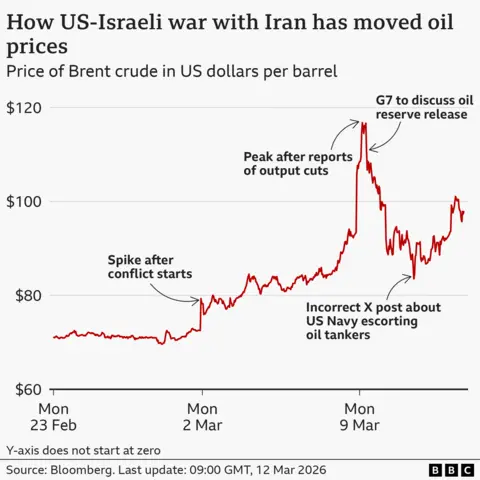
G7 countries have agreed to release 100 million barrels of oil and diesel fuel from strategic reserves in an attempt to contain the effects of the war with Iran on the global energy market. According to Süddeutsche Zeitung, the decision was made amid “unprecedented volatility in oil markets” and a sharp rise in fuel prices.
Supplies are to begin immediately and continue for four months. Particularly large volumes of diesel are planned to be released onto the market during the program’s first 20 days. Coordination will be carried out through the International Energy Agency, which should prevent fragmented national measures and preserve the principle of collective energy security.
The current release of reserves follows a record intervention in March, when countries had already sent 400 million barrels onto the market in response to the consequences of the war with Iran. The new step shows that previous measures were insufficient to bring about a sustained reduction in tensions: the risks of supply disruptions and price spikes remain high.
The decision is especially significant for Germany. Europe’s largest industrial economy is particularly vulnerable to shortages and rising diesel prices, as road freight, logistics, agriculture, and parts of industrial production depend on the fuel. For Berlin, this is not only an expression of allied solidarity but also an attempt to protect the domestic economy from a new energy shock after the painful experience of dependence on Russian gas and the price instability of recent years.
The political context of the decision is also linked to pressure from the United States. President Donald Trump welcomed the agreement, saying that Europe had agreed to immediately release substantial volumes from its “well-stocked” diesel reserves. For Washington, lower fuel prices also have domestic significance: they could affect voter sentiment ahead of the congressional elections scheduled for November 3.
For European countries, including Germany, the situation highlights the contradiction between their own needs and those of their ally. Lower fuel prices serve the interests of European industry and consumers, but the use of strategic reserves amid U.S. political pressure raises questions about the limits of American influence over European energy policy.
Reserves can ease short-term shortages and curb price increases, but they cannot eliminate the root cause of the crisis—the military conflict and the uncertainty surrounding oil supplies. The G7 decision is therefore both an emergency crisis-management measure and a signal of how limited Western countries’ ability is to offset the consequences of a prolonged war using strategic reserves alone.