New signals from Washington are prompting both allies and rivals of the United States to reassess their calculations. As tensions with Iran escalate, calls for de-escalation are growing, while uncertainty over support for Ukraine and Canada, pressure on Turkey and Azerbaijan, and disputes over America’s role in Europe and Asia are deepening doubts about the reliability of its commitments. The consequences of U.S. decisions on migration, the economy and technology are also in focus. Based on reporting by Asharq Al-Awsat and Al Jazeera (Saudi Arabia), News.by and UNN (Russia).
Gulf states call for de-escalation between the U.S. and Iran
Tensions between the United States and Iran are increasingly seen by Persian Gulf countries as a direct threat to their security, trade and energy exports. Saudi and Qatari approaches converge on one key point: decisions on sanctions, military strikes and the terms of negotiations may be made in Washington and Tehran, but neighboring states—from Bahrain and Kuwait to Qatar and Saudi Arabia—are at risk of feeling the consequences of escalation first.
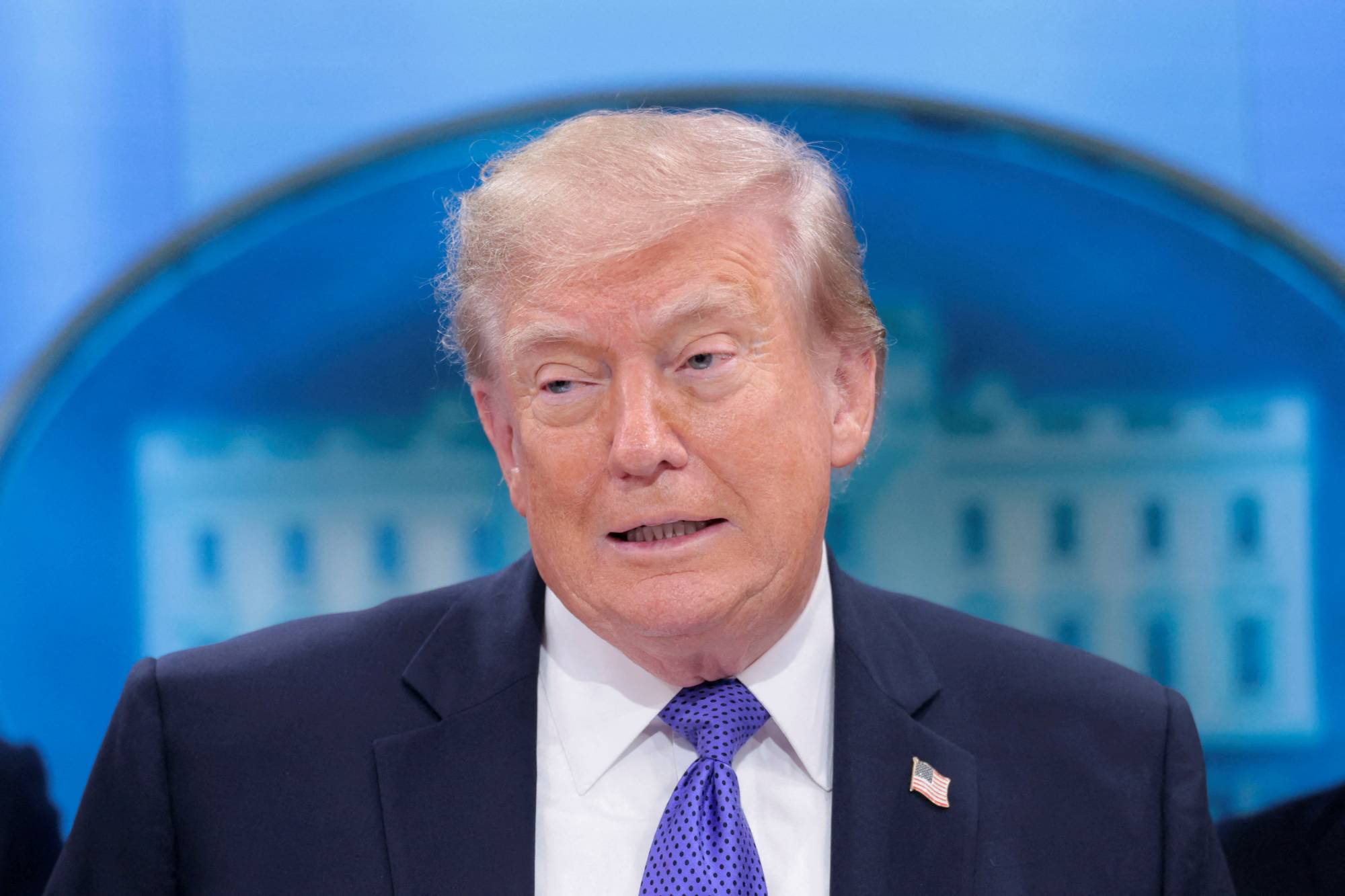
In an analysis by Asharq Al-Awsat, this asymmetry is illustrated by the contrast between international meetings attended by U.S. President Donald Trump and conditions in the region. While threats from Iran are being discussed in Manila, residents of Manama and Kuwait are hearing air-raid sirens. As the publication notes, “Washington can choose when to resume bombing, while Tehran can make its neighbors bear some of the cost of waiting.”
The Saudi newspaper identifies the Strait of Hormuz, maritime routes and energy infrastructure as key vulnerabilities for members of the Gulf Cooperation Council. In this view, Iran can use threats to shipping not only to pressure the United States but, above all, to put pressure on its regional partners. Repeated strikes on Bahrain and an attack on a U.S. base in Kuwait are interpreted as a signal to neighboring countries: Tehran can raise the cost of conflict for them, hoping they will, in turn, urge Washington to make concessions.
The economic impact of instability around the Strait of Hormuz is a particular source of concern. Even if oil exports continue physically, insurance and shipping costs rise, delivery times lengthen, and the effects are felt in trade, prices and investor sentiment. According to an estimate cited in the Saudi report, the Strait of Hormuz’s share of Gulf states’ oil exports has fallen from 83% to approximately 60% as a result of efforts to find alternative routes.
For Saudi Arabia, freedom of navigation is important not only militarily but also strategically and economically. It affects the stability of oil revenues, market confidence and the prospects for long-term modernization programs, including Vision 2030. Riyadh and its neighbors therefore have an interest in ensuring that threats to shipping do not become a permanent instrument of pressure in U.S.-Iran relations.
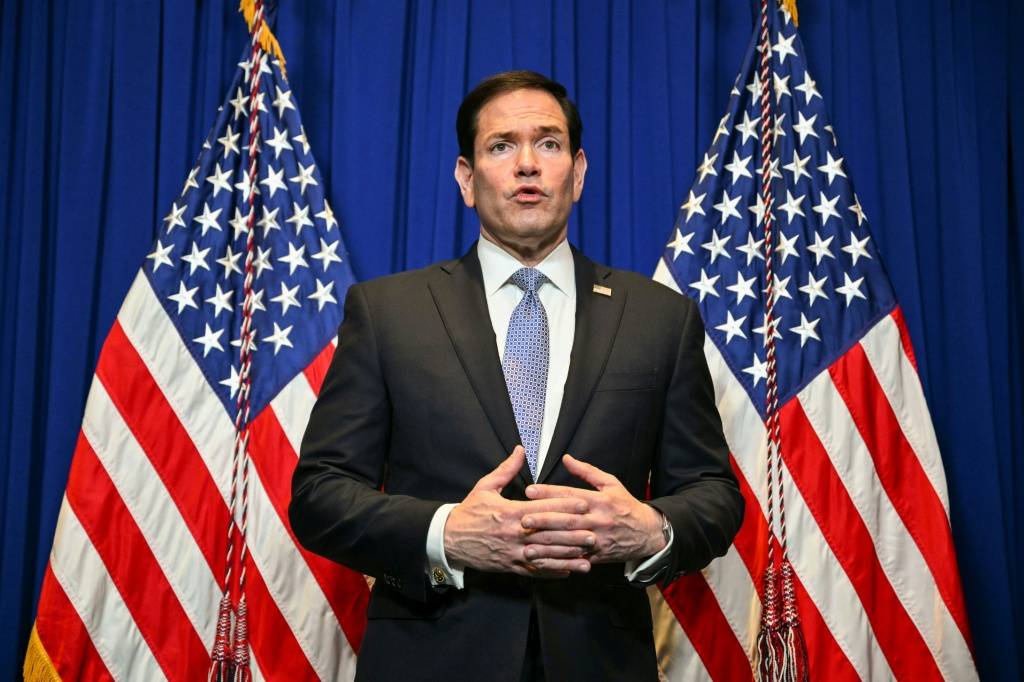
As Asharq Al-Awsat notes, the U.S. position also contains an internal contradiction. Secretary of State Marco Rubio justifies a hard line by arguing that Iran has, in his words, been waging war against the United States since 1979, and that its nuclear program, ballistic missiles and network of allied armed groups are all parts of a single threat. Donald Trump, meanwhile, has tied the outcome of the conflict to the fate of Iran’s leadership, saying that if the current authorities in Tehran remain in power until the end of his presidential term, it would be a personal defeat for him.
For Gulf states, this rhetoric heightens the risk of uncontrolled escalation. If Tehran believes Washington’s ultimate goal is regime change, concessions on nuclear or military issues may not be seen as a guarantee that the pressure will end. This narrows the scope for compromise and increases the likelihood that Iran will continue to use regional leverage—from military threats to pressure on trade routes.
Qatar is seeking to play a prominent role against this backdrop. In an Al Jazeera report on the Qatar-U.S. strategic dialogue, Doha presents itself as a mediator for whom preventing war is a matter of national security. Qatar’s prime minister and foreign minister, Sheikh Mohammed bin Abdulrahman Al Thani, said the Middle East “cannot withstand a new escalation” between the United States and Iran.
Qatar’s diplomacy is built on a combination of a strong alliance with the United States and the preservation of working channels with Tehran. Doha says it is continuing efforts to bring the parties back to negotiations, although no agreement has yet been reached. Speaking about the eighth round of strategic dialogue with Washington, Sheikh Mohammed bin Abdulrahman Al Thani said: “We continue to build on what was achieved in the eighth round and to expand areas of cooperation in a way that serves the interests and aspirations of our countries.”
For Qatar, de-escalation is directly linked to the security of shipping, liquefied natural gas exports, the country’s investment appeal and the resilience of regional energy infrastructure. With potential threats to the Strait of Hormuz, diplomacy is seen not as a secondary humanitarian initiative but as a practical way to protect the economies and populations of Gulf states.
The Qatar-U.S. dialogue is not limited to defense issues. The two sides signed a memorandum on critical minerals and discussed cooperation in artificial intelligence and investment opportunities involving the Qatar Investment Authority. For Doha, this reflects an effort to develop ties with Washington not only in the military sphere but also in technology, investment and industry, strengthening its position in global supply chains.
As Al Jazeera reports, Marco Rubio praised Qatar’s international mediation efforts and urged continued coordination with Doha on deterring threats and strengthening regional stability. In Qatar’s view, this recognition confirms the value of a policy based on maintaining ties simultaneously with Washington, Tehran and other regional players.
Iran’s diplomatic contacts with Pakistan and Oman, Qatar’s role in seeking a compromise, and discussions of frozen Iranian assets and preliminary conditions for negotiations show that mediation by neighboring states is becoming a necessity rather than a diplomatic formality. For Gulf states, the acceptable scenario is controlled de-escalation: the region has no interest either in constant Iranian pressure on shipping or in a large-scale war without a clear and achievable political goal.
The Saudi analysis also points to domestic pressure on Iran: protests in Abadan, high inflation, a weakening rial and fuel restrictions are complicating the authorities’ position. These factors may push Tehran toward economic bargaining, but they do not automatically mean it is ready to make concessions or that the system is close to collapse.
Thus, Saudi and Qatari assessments of the U.S.-Iran conflict differ in emphasis but share a common concern. Riyadh focuses above all on the vulnerability of sea routes, oil exports and neighboring countries’ security in the face of Iranian pressure. Doha is betting on mediation and dialogue as a means of preventing war. In both cases, the central question is whether Washington and Tehran can keep their confrontation within political bounds—or whether the cost of miscalculation will once again be paid in the security and economic well-being of the entire Persian Gulf.
Ukraine talks expose divisions between the U.S. and Europe
Discussions of possible negotiations between Russia, Ukraine and the United States involve not only disputes over the terms of a settlement but also marked differences in views within Western countries. The Belarusian state outlet News.by sees the developments as evidence of declining U.S. influence in Europe and a crisis in Western strategy, while the Ukrainian outlet UNN focuses on the risks that Washington’s dialogue with Moscow could pose for Ukraine and European security.
In the Belarusian report, historian and political scientist Aleksey Belyaev links the Donald Trump administration’s activity on Ukraine to domestic U.S. politics. In his view, after the congressional elections, the negotiation process became a way for Trump to restore his political standing and “his last chance to bolster his authority.” Belyaev believes Washington is trying to present even individual outcomes of Moscow-Kyiv contacts, including prisoner exchanges, to the American public as its own achievements.
In this interpretation, Russia’s position remains unchanged: Moscow, it is claimed, is not prepared to make territorial compromises and is demanding that Ukrainian forces withdraw from the Donetsk, Luhansk, Zaporizhzhia and Kherson regions, which Russia considers its territory following referendums held there. This approach treats the issue not as an international legal dispute over sovereignty but as a restoration of borders “as Moscow sees them.” Belyaev believes Kyiv’s refusal to accept these terms sharply limits the prospects for a quick peace agreement.
A separate issue is Vladimir Putin’s demand that Western military contingents not be deployed in Ukraine even after a possible ceasefire. In Russia’s security calculus, the presence of NATO forces near the country’s borders is seen not as a temporary peacekeeping measure but as a way for the West to establish a long-term military foothold. The Belarusian outlet interprets possible Polish, German and French participation in such arrangements as a risk of new bases, arms supply channels and Ukraine’s deeper integration into Western military infrastructure.
The article describes Poland in particularly stark terms. Belyaev claims that Warsaw has “long had its eye” on Ukraine’s western regions and may seek to annex them in practice. This assessment echoes a view common in Russian and Belarusian media that Kyiv’s allies are guided not only by concerns about Ukraine’s security but also by their own geopolitical interests. However, the report provides no evidence of Polish territorial plans.
The authors link these arguments to the broader claim that the era of “American guardianship” over Europe is coming to an end. In this picture, European states remain dependent on the United States but are increasingly trying to pursue independent policies that could intensify conflict. For Moscow, the key conditions remain consolidating control over the territories it claims and preventing a foreign military presence in Ukraine.
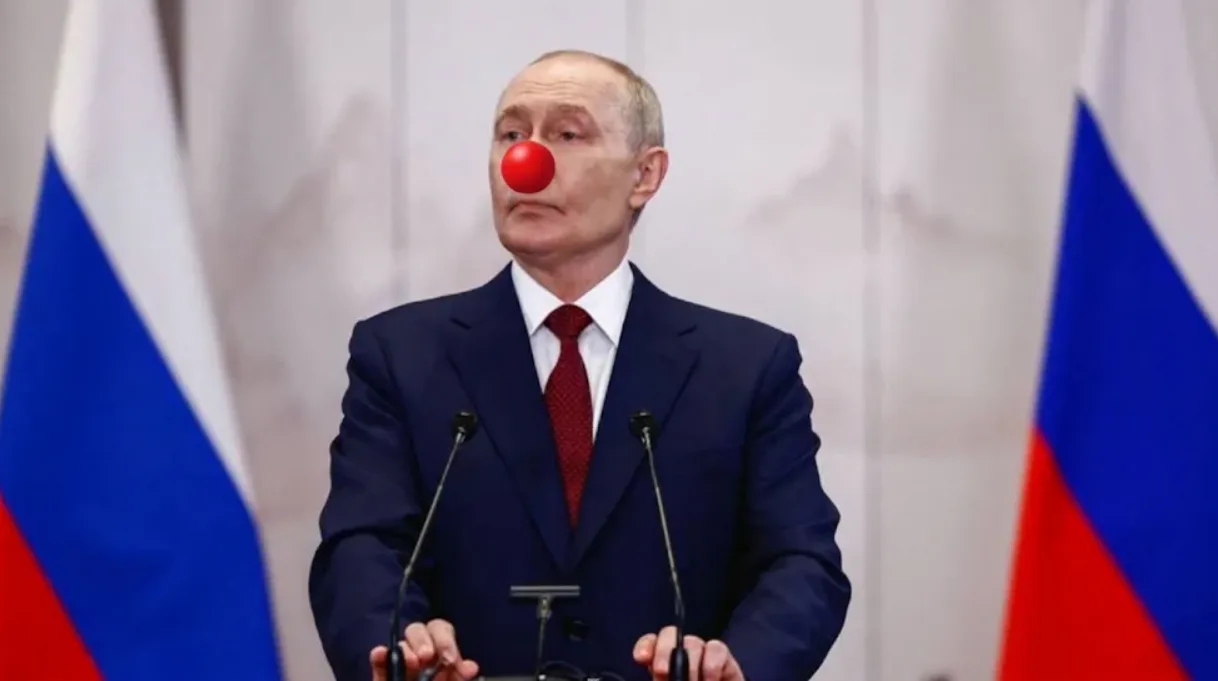
Against this backdrop, a public debate has unfolded in the United States after Donald Trump called Vladimir Putin a “friend” at a summit in China. According to UNN, U.S. Director of National Intelligence Jay Clayton offered a direct clarification: “He is not America’s friend in Ukraine. Not at all.”
At the same time, Clayton did not rule out the need for working contacts. He suggested that Trump’s words be viewed in the context of relations among the leaders of the three largest nuclear powers—the United States, Russia and China. Trump himself explained his position in pragmatic terms: it is preferable to maintain relations with a country that possesses thousands of nuclear warheads rather than refuse dialogue.
In the Russian political tradition, this approach may amount to an implicit recognition that questions of nuclear weapons, strategic stability and global security cannot be discussed without Moscow’s participation. From this perspective, the issue is less one of personal “friendship” between leaders than of the need for direct engagement among nuclear powers, even amid an acute conflict over Ukraine.
The Ukrainian report, by contrast, views Trump’s remarks through the prism of the risks they pose to Kyiv and its European partners. The article includes no comments from Russian officials, the Kremlin, Russia’s Foreign Ministry or Russian experts. It does, however, cite Polish Prime Minister Donald Tusk, who said that Putin “is not and never will be” a friend of Poland.
Thus, the dispute over one of Trump’s remarks points to a deeper contradiction. Some members of the U.S. political establishment are open to pragmatic dialogue with Russia as a nuclear power, while Ukraine’s European allies and Ukrainian media see such rhetoric as a dangerous political signal. At the same time, the Belarusian interpretation emphasizes Western weakness and disunity, attributing the difficulties of reaching a settlement not only to the incompatibility of Russian and Ukrainian demands but also to domestic crises in the United States, distrust of NATO and competing interests among European states.