While attention inside the United States is fixed on the upcoming elections and new hardline measures by the Trump administration, discussions about America in Brazil, Turkey and South Africa are taking place from very different angles. For Brazil, the U.S. today is primarily a risk of new tariffs and of interference in the election campaign. For Turkey, it is a partner and simultaneously the main source of strategic uncertainty in NATO and the Middle East. For South Africa, it is a power willing to radically reshape bilateral relations for ideological reasons: from accepting "white refugees" to imposing strict conditions on domestic policy. Against this background a new common line is emerging: the U.S. is increasingly perceived less as a universal guarantor of order and more as a powerful but unpredictable actor whose intervention must be both feared and exploited.
The sharpest conflict of recent days is Washington’s intention to impose additional 25 percent duties on a wide range of countries, including Brazil, under the pretext of investigations under U.S. trade law. The Brazilian press almost unanimously read this as a political move aimed at increasing leverage over the country in a year of its national elections. José Paulo Kupfer, a columnist for the economic portal UOL, writes bluntly that trade is being used by the White House "as camouflage for the goal of interfering in Brazilian elections," reminding readers that the previous wave of tariffs in 2025 produced only limited economic effect for the U.S. but seriously shook Brazil’s internal political climate. The author emphasizes that the new tariff package covers many sectors sensitive for Brazil, yet the selection of particular items appears selective and politically motivated rather than purely economic, linking this to Trump’s line of supporting right‑wing candidates across Latin America. (economia.uol.com.br)
Notably, for Brazil’s agribusiness and business press the key question is not only the tariff level itself but which specific goods are targeted and which are not. A Forbes Brasil piece highlights that USTR’s proposal for 25 percent tariffs on Brazilian ethanol and textiles deliberately leaves beef untouched, although beef is one of Brazil’s most competitive and sensitive exports. The article’s author explains this as a combination of lobbying influence from the American meat industry and the White House’s desire not to provoke a rise in meat prices in a U.S. election year. The subtext is the idea that Washington is waging a subtle "targeted tariff war," trying to hit sectors less protected by domestic allies while preserving leverage over Brazil’s elite. (forbes.com.br)
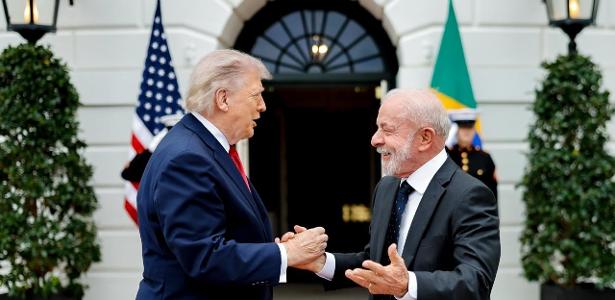
Brazil’s official reaction balances between tough rhetoric and pragmatism. President Luiz Inácio Lula da Silva, in a closed cabinet meeting quoted by the Spanish edition of El País, said: "We cannot accept the way the United States is dealing with Brazil this week," indicating he views the tariff threat as a political humiliation, not merely an economic measure. (elpais.com) At the same time, the government is actively seeking a negotiated solution: Agência Brasil reports that Brazil is trying to convince Washington that a tariff agreement would be better for both sides than a unilateral 25 percent surcharge, hoping to use the G7 summit in France in mid‑June as a venue for behind‑the‑scenes dialogue. (agenciabrasil.ebc.com.br) This duality—harsh public statements paired with readiness to strike a deal behind closed doors—reflects a broader Brazilian view: the U.S. is simultaneously a key market and the main threat to the country’s foreign‑policy sovereignty.
Against this backdrop, Latin American intellectuals are discussing American policy not as hypothetical "global hegemony" but as a return to old patterns of direct intervention. In a long Spanish‑language El País article about the "phantom of American intervention" roaming Mexico, Brazil and Colombia, the inclusion of Brazilian criminal groups PCC and Comando Vermelho on the U.S. terrorist list is seen not only as part of the "war on drugs" but as an attempt by the White House to interfere in one of the key domestic debates for Brazilian voters—about public security and methods of fighting crime. The author recalls that as early as 2025 the White House tried to influence the legal proceedings against Jair Bolsonaro, and that current steps—the hardening of trade policy and the "terrorist" label for Brazilian gangs—fit a pattern that also includes support for ultra‑right candidates across the region. (elpais.com) This view casts the U.S. less as a "fighter of drug trafficking" and more as a party in Brazil’s internal political struggle.
In Turkey the tone of discussion about the U.S. is different in character, but the common thread is the same unpredictability and ambiguity of Washington. The catalyst for a fresh wave of commentary was Donald Trump’s planned trip to Ankara on the eve of the NATO summit. Turkish portal Habertürk describes it as an "important leap" in bilateral relations and emphasizes that the summit in Ankara could turn from a routine alliance meeting into a strategic Erdoğan–Trump encounter that effectively redraws the framework of Turkish‑American relations. (haberturk.com) Turkish analyses suggest that for Washington Turkey is simultaneously an indispensable ally on NATO’s southern flank and an inconvenient partner increasingly pursuing autonomous policies in Syria, the South Caucasus and in relations with Russia. For Ankara, the U.S. is both a source of military technology and an actor whose sanctions and restrictions—over the F‑35 program and others—have demonstrated the limits of alliance trust.
Interestingly, public debate on Turkish social media about the U.S. increasingly centers not on specific aid programs or sanctions but on the image of America as a force "to be weaned from." In a popular Reddit thread discussing Middle Eastern countries’ dependence on American aid, one user sharply objects to the thesis "without the U.S. you would have achieved nothing," reminding readers of instances where regional actors successfully resisted rather than submitted to American will. Although not an official position, such discussions illustrate fatigue with the narrative of the U.S. as an unquestionable patron. (reddit.com) At the same time, Turkish expert texts—published, for example, by the analytical center AVİM—stress that the U.S. strategy of containing China continues to give Turkey objective geopolitical weight, and therefore bargaining space, but also the risk of becoming an arena for U.S.–China rivalry. (avim.org.tr)
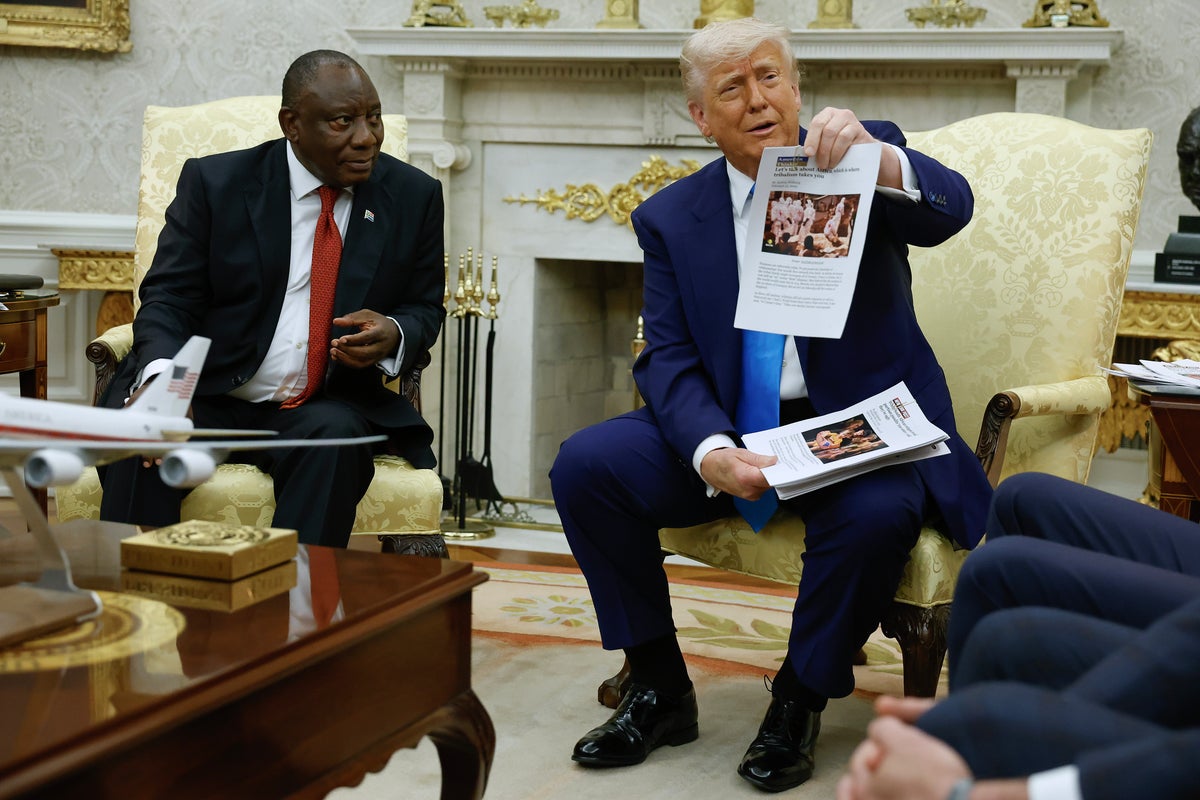
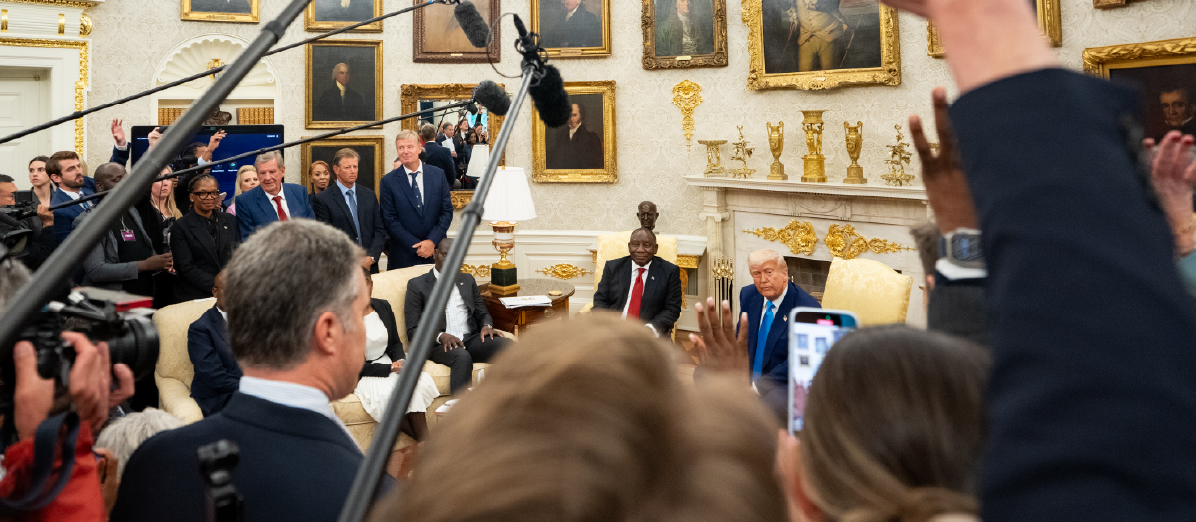
If for Brazil and Turkey the U.S. is primarily a partner with whom complex bargaining is necessary, for South Africa in recent months American policy is increasingly perceived as a direct challenge to sovereignty. Several lines of conflict have overlapped. First, the White House has moved relations to a sharply ideological level by prioritizing the admission to the U.S. of "white South Africans" as refugees from political and racial persecution. According to an investigation by Britain’s The Independent, almost all refugees admitted by the U.S. in this fiscal year are from South Africa; this decision is supported by rhetoric about alleged systematic discrimination against the white minority. South African foreign ministry spokesperson Crispin Phiri told The New York Times that such a program is "politically motivated" and intended to undermine trust in South Africa’s constitutional democracy. (independent.co.uk) In South Africa this is not seen as a humanitarian gesture but as a symbolic vote of no confidence in their legal system.
Second, relations have also soured on a purely diplomatic level. As an analytic piece by the Center for Strategic and International Studies (CSIS) reminds readers, in 2025 Washington took the unprecedented step of expelling South Africa’s ambassador and simultaneously invited Afrikaners to resettle in the U.S., thereby effectively redefining the priorities of its Africa policy. CSIS authors warn that this line, on the one hand, fits a long history of Washington using South African resources—from strategic minerals to energy—to reduce dependence on rivals, and on the other hand risks pushing South Africa further toward deepening ties with China and Russia as a counterbalance to U.S. "unreliability." (csis.org)
Third, the United States has increased pressure on South Africa’s economy through trade policy and human‑rights tools. A recent U.S. investigation into whether South Africa and dozens of other countries have stringent enough laws against imports made with forced labor has become a new point of tension. South African business media such as BusinessTech emphasize the ambiguity of the situation: on the one hand, the U.S. is an important market for South Africa’s agricultural sector, which accounted for about 4% of exports in 2025 worth over $15 billion; on the other, the conditions Washington is demanding on domestic policy and human rights are increasingly seen as interference in internal affairs. (businesstech.co.za) In a BusinessTech piece on "five demands" the U.S. has for South Africa—from a review of affirmative‑action policy (BEE) to attitudes toward the controversial slogan "Kill the Boer"—an American negotiator bluntly states he will not "tiptoe" around issues Washington sees as critical for future relations. For part of South Africa’s elite this looks like an attempt to impose not only economic but also a values agenda in exchange for continued market access.
Finally, broader analyses about Africa increasingly draw the conclusion that Washington’s series of steps—from boycotting the Johannesburg summit to not inviting South Africa to the G20 summit in Miami—are seen on the continent as a signal that the U.S. is prepared to sharply escalate relations with major regional players for ideological positioning. A researcher at the Foreign Policy Research Institute puts it this way: whether Africans view these actions as moral gestures or internal political maneuvers, the effect is the same—the U.S. looks like a partner ready to sever ties with a major African power based on a narrative that many in Africa consider politically loaded and in fact contestable. (fpri.org)
Looking at all three countries together, several recurring themes emerge. The first is the instrumentalization of economic levers. In Brazil this is the obvious use of tariffs as a lever of influence on elections and internal security debates. In South Africa it is a mix of trade investigations and political "demands" on domestic policy, including racial issues, in exchange for preserving preferential access to the U.S. market. In Turkey it is a softer but still tangible dependence on American decisions in defense programs and energy that repeatedly surfaces in discussions about Trump’s visit to Ankara and Turkey’s role in Washington’s strategy to contain rivals. Everywhere trade and investment are ceasing to be simply areas of mutual benefit and are increasingly becoming primary tools of pressure.
The second theme is the return of the motive of "American intervention" in domestic politics, but in a renewed form. In Brazil this is written about directly as a "campaign to interfere in elections" using tariffs and "terrorist" labels for criminal groups. In South Africa the emphasis shifts to the program to accept "white refugees" and public attacks on slogans and laws, which are seen as undermining trust in the architecture of the post‑apartheid democracy itself. In Turkey distrust is expressed more subtly—through the fear that at a critical moment the U.S. might use military and economic dependence as leverage to impose its line on Syria, Israel or Russia. Notably, none of the three countries is willing to simply "break" relations with the U.S.: instead they are trying to build complex strategies of containment and tactical use of American power to their advantage.
The third is competing narratives about human rights and democracy. Washington still builds a significant part of its external legitimacy on human‑rights language—whether fighting forced labor in South Africa or "protecting" the white minority. But in Brazil and South Africa this is increasingly perceived as selective and instrumental, ignoring the U.S.’s own internal problems and local societies’ real priorities. In response, local leaders—from Lula to South African officials—are increasingly appealing to the concepts of "sovereignty" and "constitutional democracy" as shields against external pressure. In the Turkish context, where human rights have long been one of the most contentious topics in dialogue with the West, similar rhetoric is also strengthening but combined with a pragmatic mindset: to extract maximum benefit from Turkey’s geopolitical weight between the U.S., Europe, Russia and China.
There is one more subtle line, rarely visible in American media but clearly audible in foreign commentary: the fear that domestic radicalization in the U.S. is directly being transmitted into foreign policy. When Brazilian authors write of a "tariff campaign for Trump’s electoral aims," and South African commentators talk of an "ideologically charged" narrative about white refugees, they are effectively describing foreign policy as a continuation of America’s cultural wars by other means. Turkish discussions of Trump’s visit to Ankara are similarly infused with this idea: they debate not just "traditional" American strategy but how the personal and electoral interests of the current U.S. president will affect key issues for Turkey from Syria to arms deliveries.
None of this means the U.S. has ceased to be a desirable partner or market. Brazil, Turkey and South Africa still see America as a source of investment, technology and political clout. But the tone of debate is changing: instead of the familiar question "how to strengthen the strategic partnership?" a different question is increasingly being asked—"how to minimize harm from another’s unpredictability while retaining access to its resources?" It is precisely in this context that current disputes over tariffs, refugees and leader visits become not merely isolated episodes but symptoms of a deeper transformation in views of America’s role in the world beyond the Western circle.